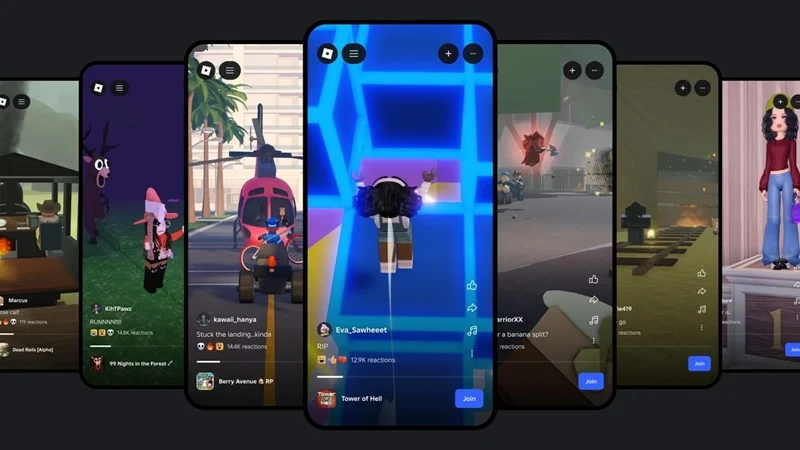
Roblox Corporation has announced a comprehensive suite of platform updates and strategic initiatives at its annual Roblox Developers Conference (RDC), signaling a fundamental shift in its business model from a centralized gaming hub to a decentralized game engine and distribution ecosystem. The most significant revelation, categorized under the "Roblox Everywhere" initiative, involves plans to allow creators to package their experiences as standalone applications for mobile, PC, and console platforms. This move effectively positions Roblox as a direct competitor to established game engines like Unity and Unreal Engine, offering a vertically integrated solution where Roblox manages the complex backend infrastructure while allowing games to exist independently on digital storefronts.
The Strategic Shift Toward Standalone Distribution and "Roblox Everywhere"
For nearly two decades, Roblox has functioned as a "walled garden," where all user-generated content (UGC) was accessible only through the primary Roblox client. The "Roblox Everywhere" announcement breaks this paradigm. By allowing creators to export their experiences as independent apps, Roblox is addressing a long-standing demand from professional development studios who seek greater brand autonomy and direct presence on the iOS App Store, Google Play Store, and console marketplaces.
While Roblox has not yet confirmed the specific distribution logistics or a definitive launch window for the first standalone titles, the implications for the industry are profound. Under this model, Roblox would serve as the foundational technology provider—handling multiplayer networking, server hosting, and cross-platform compatibility—while the game itself carries its own identity. This strategy aims to attract high-tier developers who may have previously avoided the platform due to the perceived limitations of being "just another game" within the Roblox app.
Introducing Offline Functionality and Diversified Gameplay Support
In a departure from its "always-online" roots, Roblox confirmed that offline play is currently in development. This feature will allow creators to design solo gameplay modes that function without an active internet connection. According to the company’s roadmap, this functionality is expected to enter an early access phase before becoming fully available to the developer community by mid-2027. The introduction of offline capabilities is seen as a move to expand the platform’s utility in regions with inconsistent internet access and to support genres that do not inherently require multiplayer interaction.
Simultaneously, Roblox is expanding its engine capabilities to support 2D and puzzle-based experiences more effectively. New engine features and user interface (UI) upgrades are being implemented to cater to these genres, which have historically been underserved by the platform’s 3D-focused architecture. Additionally, turn-based and asynchronous multiplayer games will receive a dedicated notification system. This system will enter testing in the Roblox Studio Beta in October 2024, with a full public release scheduled before the end of the calendar year.
The Creator Economy: Roblox Wallet and the $5 Billion Milestone
The financial ecosystem of Roblox is undergoing its most significant transformation since the introduction of the Developer Exchange (DevEx) program in 2013. The company announced the upcoming launch of the Roblox Wallet, a financial account managed through a third-party partner that will facilitate daily payouts of creator earnings in real-world currency. This replaces the traditional monthly or periodic withdrawal systems, providing creators with immediate liquidity.
To complement the Wallet, a "Roblox Card" will be introduced, allowing developers to spend their earned balances directly at physical and online retailers. The Roblox Wallet is slated for a United States rollout later this year, with international expansion planned for 2025. The physical or digital Roblox Card is expected to follow globally by 2027.
These financial tools are introduced against a backdrop of massive economic growth for the platform. Roblox revealed that creators have earned more than $5 billion through the DevEx program since its inception. Notably, $1.7 billion of that total was earned in the past year alone, highlighting an accelerating revenue curve for the platform’s UGC contributors. To further incentivize growth, Roblox is testing a new ranking metric that prioritizes "first-time players." This metric rewards creators who successfully bring new users onto the platform, shifting the focus from purely maintaining high engagement within the existing user base to active platform expansion.
AI-Driven Development and the Expansion of "Build"
Roblox is doubling down on its commitment to generative AI to lower the barrier to entry for game creation. The company’s prompt-based creation tool, known as "Build," is expanding its testing phase from New Zealand into Serbia and Singapore. Build is designed for users who may not have traditional coding or 3D modeling expertise; it allows them to generate environments and game logic through natural language prompts.
Data provided by Roblox suggests that Build has already been used to publish nearly 9,000 games. Crucially, 71% of the creators using Build had never previously utilized Roblox Studio, the platform’s professional-grade development environment. Upcoming updates to Build include:
- Desktop Support: Moving beyond mobile-only creation to allow for more complex project management on PCs.
- Enhanced Asset Libraries: A wider array of pre-made components for rapid prototyping.
- In-App Advertising: The ability for creators to launch and manage ad campaigns for their games directly from their mobile devices.
- Scene Generator: A new tool arriving later this year that converts a text prompt and a reference image into a fully realized 3D layout. This tool is designed to bridge the gap between "Build" and "Studio," allowing creators to start a project with AI and then refine it using professional tools.
Technological Optimization and Global Accessibility
In the weeks leading up to RDC, Roblox unveiled "Slim," a new avatar compositing technology designed to optimize performance on low-end hardware. This is a critical component of Roblox’s global strategy, particularly in emerging markets where mid-to-low-tier Android devices are the primary means of internet access. Slim technology allows complex, highly customized avatars to render efficiently without taxing the device’s processor or memory, ensuring that the visual quality of the experience remains consistent across the hardware spectrum.
Chronology of Key Implementation Targets
The roadmap shared at RDC 2024 outlines a phased rollout of these features over the next three years:
- Q4 2024: Launch of the Roblox Wallet (US); Testing of turn-based notification systems; Introduction of the Scene Generator tool; Expansion of Build to Serbia and Singapore.
- 2025: International expansion of the Roblox Wallet; Full release of 2D and puzzle game support features.
- 2026: Projected initial rollout of standalone app packaging for select partners (estimated).
- 2027: Full release of offline solo mode; Global availability of the Roblox Card.
Analysis of Market Implications and Industry Reaction
The transition of Roblox into a standalone app provider represents a significant challenge to the current mobile gaming status quo. By offering to handle the "backend"—including server infrastructure, moderation, and payment processing—Roblox is removing the most significant technical and financial hurdles for small-to-medium-sized developers.
Industry analysts suggest that this move is a defensive and offensive play against Epic Games, which has been integrating similar creator tools into Fortnite. However, by allowing games to leave the Roblox app entirely, Roblox is taking a step that Epic has yet to match. This could lead to a future where a significant portion of the App Store’s top-grossing games are "Powered by Roblox" without the consumer ever needing to interact with the main Roblox social hub.
Furthermore, the shift in ranking metrics to favor "new user acquisition" suggests that Roblox is reaching a saturation point with its current demographic and is looking to creators to help bridge the gap into older or more diverse audiences. By rewarding developers for bringing in new players, Roblox is essentially outsourcing its marketing and user acquisition to its creator community.
The reaction from the developer community has been cautiously optimistic. While the prospect of standalone apps and daily payouts is highly attractive, some developers have expressed concerns regarding the "take rate" or revenue split that Roblox will demand for these standalone experiences. Currently, Roblox’s revenue sharing model is often criticized for being less favorable than the standard 70/30 split offered by Steam or Apple, as Roblox deducts costs for hosting and platform fees. Whether the standalone model will offer a more competitive financial structure remains a key point of interest for the industry.
Conclusion
The RDC 2024 announcements mark the beginning of a new era for Roblox. No longer content with being a singular destination, the platform is evolving into a pervasive technological layer for the gaming industry. Through "Roblox Everywhere," AI-integrated development tools, and a modernized financial system, Roblox is positioning itself as the essential infrastructure for the next generation of digital creators. As these features roll out through 2027, the boundary between a "Roblox game" and a "traditional game" is expected to become increasingly indistinguishable.
About the Author