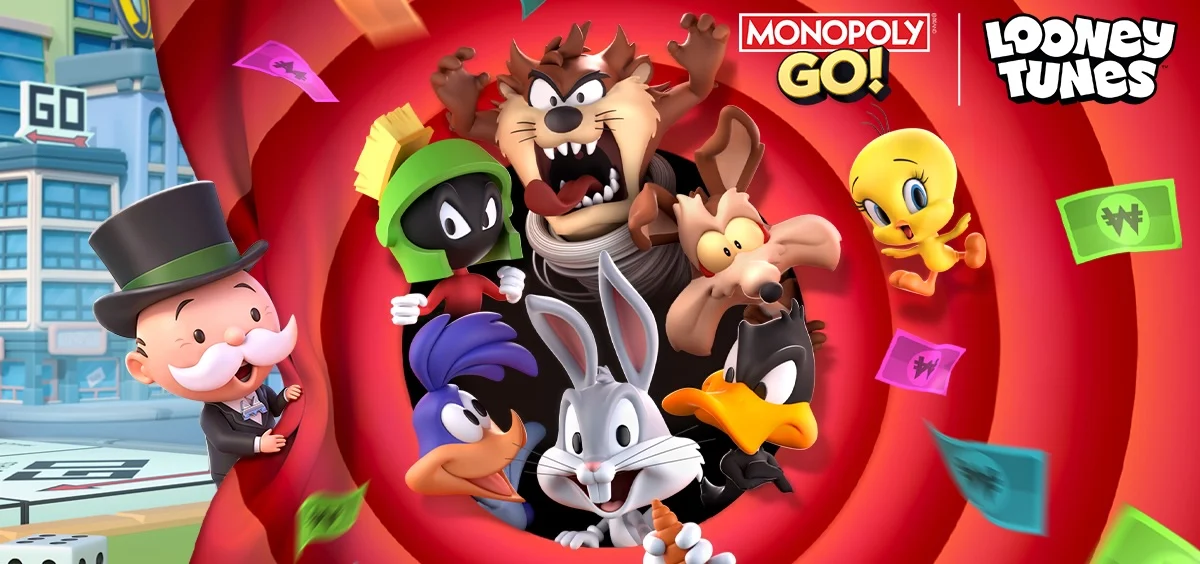
Scopely has officially launched its latest seasonal integration for the global mobile hit Monopoly Go, transitioning from its previous collaboration with The Simpsons to a comprehensive takeover featuring the Looney Tunes intellectual property. This new event, titled the Happy Harvest Season, introduces a wide array of iconic characters including Bugs Bunny, Daffy Duck, and the Road Runner into the game’s ecosystem. The collaboration is scheduled to run through September 23, 2026, marking one of the most significant brand crossovers in the title’s history. This transition comes at a time of unprecedented financial success for the game, which has maintained its position as a dominant force in the mobile gaming sector since its record-breaking launch.
The Happy Harvest Season represents a deep integration of the Looney Tunes universe, moving beyond mere cosmetic changes to include thematic gameplay mechanics and official voice acting. Scopely confirmed that it worked closely with Warner Bros. Discovery and the official voice talent for Bugs Bunny, Daffy Duck, and Tweety Bird to ensure the authenticity of the experience. This level of production quality is a hallmark of Scopely’s strategy, which focuses on high-fidelity IP integrations to drive player engagement and retention. The update includes a series of Acme-themed live events and competitive tournaments, reflecting the chaotic and whimsical nature of the classic cartoons within the framework of the Monopoly board.
New Gameplay Mechanics and Thematic Features
The Looney Tunes integration introduces two primary gameplay features designed to evolve the core Monopoly Go loop: Infinite Harvest and Porky’s Cafe. These features are intended to address long-standing player feedback regarding the utility of duplicate resources and the desire for more interactive board elements.
Infinite Harvest allows players to grow and collect various crops directly on the game board squares. This adds a secondary layer of strategy to the dice-rolling mechanic, as players must navigate the board to optimize their harvest yields. The collected crops can be traded for in-game currency, rolls, or special Looney Tunes-themed rewards. This mechanic effectively blends the "social casino" elements of Monopoly Go with "farming simulator" dynamics, a genre that has seen significant crossover appeal in the mobile market.
Porky’s Cafe introduces a new utility for duplicate stickers, a common element of the game’s collection system. Previously, players often found themselves with an excess of common stickers after completing specific sets. Under the new system, these duplicates can be "spent" at Porky’s Cafe to purchase temporary boosters, rare character tokens, or entries into exclusive Acme-themed events. By providing a clear sink for duplicate items, Scopely is enhancing the perceived value of every pack opened by the player, thereby strengthening the game’s monetization loop.
In addition to these mechanics, the update brings a suite of new visual assets. The game’s traditional board has been overhauled with Looney Tunes aesthetics, featuring Acme Corporation branding and character-specific animations. A series of high-production-value trailers have also been released both in-game and across social media platforms to promote the season, signaling Scopely’s intent to leverage the global recognition of the Looney Tunes brand to attract lapsed players and new audiences alike.
Financial Performance and Market Position
The launch of the Looney Tunes season coincides with the release of mid-year financial estimates for 2026, which underscore the massive scale of Monopoly Go’s commercial success. According to data from AppMagic, Monopoly Go ranked as the eighth top-grossing mobile game globally by in-app purchase (IAP) revenue during the first half of 2026. The title generated an estimated $604 million in IAP revenue during this six-month period alone.
It is important to note that these figures likely represent a conservative estimate of the game’s total earnings. The $604 million figure does not account for revenue generated through Scopely’s proprietary webshop, a direct-to-consumer platform that allows players to purchase in-game currency and items outside of the Apple App Store and Google Play Store ecosystems. By bypassing these platforms, Scopely is able to avoid the standard 30% commission fee, significantly increasing its net margins. Industry analysts suggest that if webshop revenue were included, the game’s total earnings for H1 2026 could be substantially higher.
Scopely previously confirmed in early 2026 that the game generates approximately $200 million in gross monthly revenue. This consistent performance has made Monopoly Go one of the fastest mobile games to reach the $2 billion and $3 billion lifetime revenue milestones. The game’s success has also provided a significant financial windfall for Hasbro, the owner of the Monopoly license. In its most recent quarterly earnings report, Hasbro disclosed that it earned $44 million in royalty payments from Scopely in a single quarter. This partnership has become a cornerstone of Hasbro’s "digital-first" strategy, helping the toy and game giant offset declines in traditional physical retail sectors.
Strategic Context: The Power of IP Integration
The shift from The Simpsons to Looney Tunes highlights Scopely’s aggressive strategy of rotating high-value intellectual properties to maintain player interest. In the highly competitive mobile gaming landscape, where user acquisition costs are rising and player attention spans are shortening, IP collaborations serve as a powerful tool for both organic growth and re-engagement.
The Looney Tunes brand offers a unique demographic advantage. Much like The Simpsons, it possesses a multi-generational appeal that resonates with older players who grew up watching the original cartoons, as well as younger audiences introduced to the characters through modern reboots and films like Space Jam: A New Legacy. By integrating these characters into Monopoly Go, Scopely is able to tap into a sense of nostalgia while providing a fresh coat of paint to the game’s established mechanics.
Furthermore, the "Acme" theme of the current season is particularly well-suited to the Monopoly Go experience. The brand’s association with traps, gadgets, and unpredictable outcomes mirrors the "Chance" and "Community Chest" elements of the board game. This thematic alignment allows for a more natural integration of the IP, making the collaboration feel like a cohesive expansion of the game rather than a superficial marketing tie-in.
Chronology of Major Monopoly Go Events
The introduction of the Looney Tunes season is part of a broader timeline of major updates that have defined Monopoly Go’s trajectory since its launch. The game has transitioned through several high-profile phases:
- Initial Launch and Rapid Scaling: Monopoly Go launched to immediate success, leveraging its social-heavy gameplay to go viral on platforms like Facebook and TikTok.
- The Marvel Integration: A significant turning point for the game was its collaboration with Marvel, which introduced superhero-themed boards and collectibles, proving that the Monopoly framework could successfully host diverse IPs.
- The Simpsons Takeover: Preceding the Looney Tunes event, The Simpsons integration saw Springfield landmarks and characters dominate the board, driving record engagement levels during the first quarter of 2026.
- Happy Harvest Season (Current): The Looney Tunes era, running from late summer through September 23, 2026, focuses on seasonal mechanics like farming and character-driven events.
This chronological progression demonstrates Scopely’s ability to manage a "live service" model effectively, ensuring that there is always a new "hook" to keep the community active. The end date of September 23 suggests that Scopely already has a successor IP or a major seasonal event (likely Halloween-themed) prepared to take over for the final quarter of the year.
Broader Industry Implications and Analysis
The sustained success of Monopoly Go and its high-profile collaborations reflect broader trends within the mobile gaming industry. First, the move toward "social casino" and "casual competitive" games continues to dominate the top-grossing charts. Monopoly Go succeeds by taking the familiar, non-threatening mechanics of a classic board game and infusing them with modern mobile "retention loops"—daily login bonuses, limited-time events, and social pressure via the "heist" and "shutdown" mechanics.
Second, the financial data reveals the growing importance of licensing for traditional media companies. For Warner Bros. Discovery and Hasbro, Monopoly Go is not just a game but a vital revenue stream and a brand-extension tool. As the film and television industries face challenges with streaming profitability and box office volatility, the steady, high-margin income from mobile game licensing has become indispensable.
Finally, Scopely’s performance since its acquisition by Savvy Games Group (a subsidiary of Saudi Arabia’s Public Investment Fund) suggests that the company has the capital and resources to continue securing the world’s most expensive licenses. The $4.9 billion acquisition in 2023 provided Scopely with the financial runway to invest heavily in marketing and IP partnerships, a strategy that is clearly paying dividends in 2026.
As the Happy Harvest Season progresses, the industry will be watching to see if the Looney Tunes integration can push Monopoly Go even higher in the global rankings. With a $200 million monthly run rate and a constant stream of new content, the title remains the benchmark for how to successfully modernize a classic brand for the digital age. Players can expect the Acme-themed chaos to continue until the next major shift in the Monopoly Go universe this autumn.
About the Author