Blender, the free and open-source 3D creation suite, continues to democratize access to professional-grade digital art tools. In a move to further empower aspiring 3D artists, Ryan King Art, a prominent Blender educator and YouTuber, has released a comprehensive video tutorial specifically designed for absolute beginners venturing into the world of digital sculpting. Titled "Sculpting Quick Start Guide for Absolute Beginners," the tutorial aims to demystify the sculpting workflow within Blender, offering a clear and accessible entry point for those with little to no prior experience in this specialized area of 3D modeling.
The tutorial, published on March 22, 2026, addresses a significant barrier for many newcomers to 3D art: the perceived complexity of sculpting. While Blender’s traditional polygonal modeling tools are well-documented, its sculpting environment, with its vast array of brushes, modifiers, and dynamic topology options, can appear daunting to the uninitiated. Ryan King Art’s approach focuses on foundational principles, breaking down the process into manageable steps that build confidence and understanding.
Demystifying the Sculpting Process
At its core, digital sculpting in Blender mimics the process of traditional clay sculpting. Instead of manipulating vertices, edges, and faces directly, users employ a variety of brushes to push, pull, smooth, and carve a digital mesh. This allows for organic forms, intricate details, and a more intuitive approach to character design, creature modeling, and the creation of highly detailed objects.

The "Sculpting Quick Start Guide" emphasizes the fundamental tools and techniques that form the bedrock of any sculpting project. Viewers are guided through the initial setup of a sculpting scene, the selection and application of essential brushes, and the understanding of brush settings that control their behavior. Key concepts such as brush size, strength, falloff, and symmetry are explained in practical terms, demonstrating how these parameters influence the sculpted outcome.
A significant portion of the tutorial is dedicated to introducing the concept of dynamic topology, often referred to as "d-topo." This feature allows Blender to dynamically add or remove geometry as the user sculpts, ensuring that sufficient detail can be achieved in areas where it’s needed without requiring manual retopology until later stages. For beginners, understanding how d-topo works is crucial for avoiding stretched or overly dense meshes, which can hinder the sculpting process. King Art’s explanation of d-topo is designed to make this powerful but potentially confusing feature accessible, highlighting its role in enabling fluid artistic expression.
From Basic Forms to Expressive Details
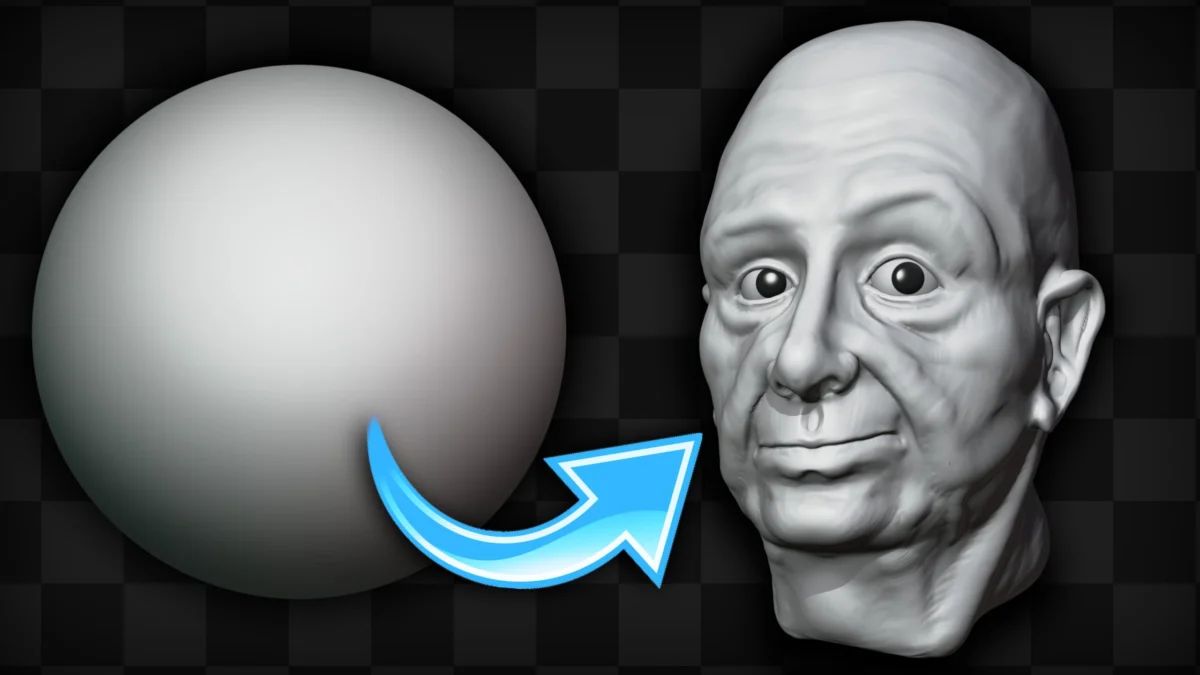
The tutorial progresses from the creation of simple geometric primitives to the refinement of more complex forms. Viewers learn how to start with a basic shape, such as a sphere, and gradually transform it into a recognizable object or character. This iterative process of adding and refining detail is a hallmark of digital sculpting. King Art demonstrates techniques for blocking out major forms, defining primary and secondary shapes, and then moving on to finer details like wrinkles, pores, or textures.
The importance of anatomical structure and form is implicitly conveyed through the sculpting exercises. While the tutorial focuses on the technical aspects of using Blender’s sculpting tools, the underlying principle of understanding how shapes relate to each other in three-dimensional space is crucial for creating believable results. By guiding beginners through practical examples, the tutorial encourages an observational approach to modeling.

The Role of Video Tutorials in Skill Acquisition
The release of this tutorial by Ryan King Art underscores the continued significance of video-based learning in the 3D art community. Platforms like YouTube have become invaluable resources for artists seeking to acquire new skills, with creators like King Art playing a vital role in disseminating knowledge. The visual nature of video is particularly well-suited for demonstrating complex software workflows, allowing viewers to observe techniques in action and replicate them at their own pace.
The data surrounding online learning for creative software indicates a strong preference for video content. A 2025 study by Creative Tech Insights reported that over 70% of aspiring 3D artists cite video tutorials as their primary learning resource. This trend is driven by the ability to pause, rewind, and rewatch sections, as well as the direct visual feedback provided by watching an instructor manipulate the software. Ryan King Art’s established presence on YouTube, with a subscriber base that has grown steadily over the past decade, signifies his expertise in this educational medium. His channel is dedicated to providing a wide range of Blender tutorials, from introductory concepts to advanced techniques.
Context and Implications for the Blender Community
The "Sculpting Quick Start Guide for Absolute Beginners" arrives at a time when Blender’s capabilities are expanding at an unprecedented rate. Recent updates to the software have introduced performance enhancements and new features across various modules, including sculpting. The accessibility of such a comprehensive introductory guide is therefore timely, as it helps new users navigate these evolving tools.
For the broader Blender community, tutorials like this serve multiple purposes. They onboard new users, expanding the ecosystem of artists and developers who contribute to and benefit from the software. They also provide a foundation for users who may have previously only engaged with Blender’s modeling or animation tools, encouraging them to explore its full potential.

The economic implications of accessible 3D art education are also noteworthy. As the demand for 3D artists continues to grow across industries such as gaming, film, animation, and virtual reality, training individuals with the necessary skills is paramount. By offering free, high-quality educational content, Ryan King Art and platforms like BlenderNation contribute to a more skilled workforce and foster innovation.
Future Directions in Blender Sculpting Education
As Blender’s sculpting tools mature, educators will likely focus on more specialized areas. This could include advanced techniques for hard-surface sculpting, stylized character creation, detailed environmental assets, and integration with 3D printing workflows. The current tutorial, by laying a solid groundwork, prepares beginners for these more advanced topics.
The success of this introductory guide could also inspire further development of similar resources. The creation of interactive learning modules, more in-depth case studies, and community-driven challenges focused on sculpting could further enhance the learning experience for Blender users worldwide. The emphasis on open-source collaboration, a core tenet of Blender, extends to its educational resources, fostering a continuous cycle of improvement and knowledge sharing.
In conclusion, Ryan King Art’s "Sculpting Quick Start Guide for Absolute Beginners" represents a valuable addition to the wealth of educational material available for Blender users. By demystifying digital sculpting and providing a clear, step-by-step approach, the tutorial empowers a new generation of artists to explore their creative potential within this powerful 3D creation suite. The ongoing commitment of educators and platforms like BlenderNation to making advanced 3D art accessible is crucial for the continued growth and democratization of the digital arts landscape.
About the Author