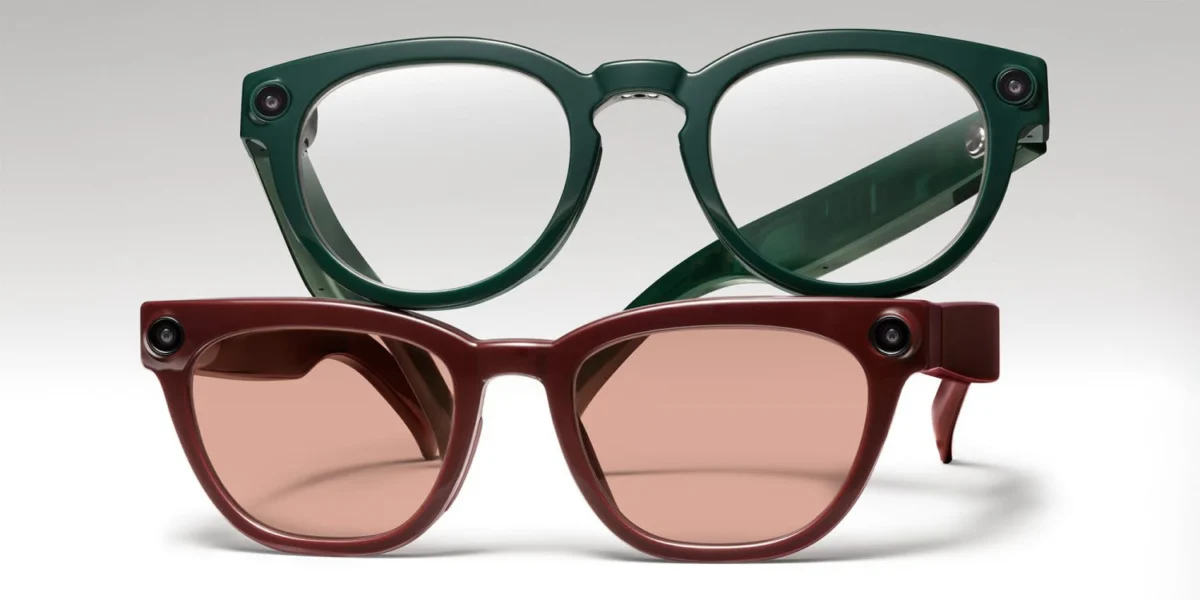
Snap Inc. has officially confirmed the appointment of actor Robert Downey Jr. as its honorary Chief Customer Experience Officer (CCEO), a strategic move designed to accelerate the adoption of its fifth-generation Spectacles. According to official corporate filings and press releases, Downey Jr. will serve as a bridge between the company’s advanced engineering teams and the broader consumer market. His role involves guiding the public’s imagination regarding the capabilities of see-through augmented reality (AR) and collaborating with the Spectacles organization to shape new Lens experiences and original content.
This partnership follows months of industry speculation regarding a high-value brand ambassadorship. While Snap has not disclosed the exact financial terms, industry analysts estimate the deal to be valued in the tens of millions, potentially reaching the $100 million mark rumored in earlier reports. The appointment coincides with Snap’s transition of Spectacles from a niche experimental peripheral to a standalone spatial computer. The current iteration of the hardware is priced at approximately $2,200 (or a $99 monthly developer subscription), positioning it as a high-end enterprise and creator tool rather than a mass-market consumer device.
Strategic Marketing vs. Developer Ecosystem Support
The decision to allocate significant capital toward celebrity endorsement has sparked a debate within the Extended Reality (XR) community regarding resource allocation. Critics argue that the $100 million figure represents a missed opportunity to fund the developer ecosystem. For comparison, a $100 million fund could theoretically provide $2 million in seed hardware and software grants to 50 independent startups, potentially yielding a "killer app" for the AR platform.
However, Snap’s strategy appears focused on "glamorizing" wearable technology. By leveraging Downey Jr.’s association with the technologically advanced "Iron Man" persona, Snap aims to normalize the aesthetic of AR glasses. This move is essential for the company as it competes with Meta’s Ray-Ban collaboration, which has seen significant success by prioritizing style and brand recognition over raw technical specifications.

Samsung and Google Reveal Competitive Specs for Upcoming AR Glasses
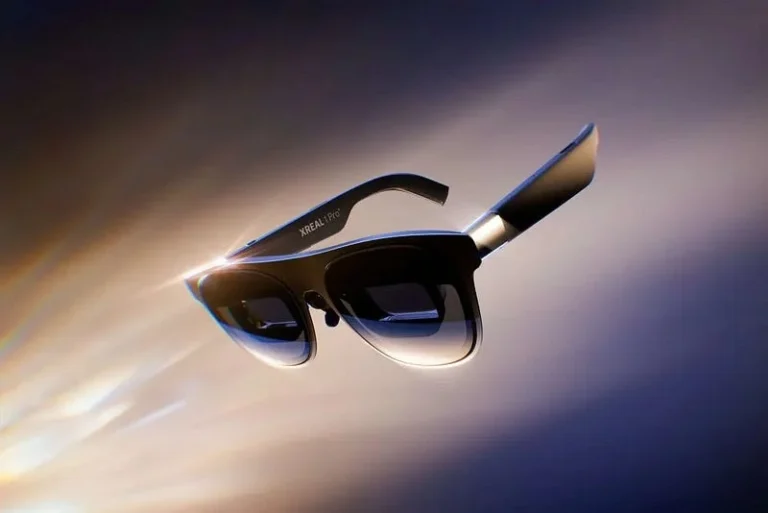
As Snap maneuvers for mindshare, a significant leak via SammyGuru and 9to5Google has unveiled the technical specifications for Samsung’s upcoming smartglasses, developed in collaboration with Google and Qualcomm. The leaked data suggests a device designed to compete directly with the third-generation Meta Ray-Bans.
The specifications include:
- Weight: 41 grams (notably lighter than the standard Meta Ray-Bans).
- Processor: Qualcomm Snapdragon AR2 Gen 2.
- Camera: 12MP sensor.
- Battery: Approximately 155mAh.
- Partnerships: Design collaborations with Gentle Monster and Warby Parker, including support for prescription lenses.
The 41-gram weight is a critical benchmark in the "wearability" race. For AR glasses to achieve all-day use, industry consensus suggests they must remain under 50 grams to avoid user fatigue. While the Samsung glasses share many hardware characteristics with Meta’s offerings, the lighter frame and the integration of the Google ecosystem (likely utilizing a specialized version of Android XR) could provide a competitive edge. A formal launch is anticipated as early as November.
Standardization of Spatial Multitasking: The OpenXR Update
The Khronos Group, the consortium responsible for industry standards in 3D graphics and VR, has announced the inclusion of "spatial containers" within the OpenXR standard. This development marks a pivotal shift in how mixed reality (MR) software is architected.
Spatial containers allow for "bounded" AR/MR experiences—3D applications that exist within a defined volume (e.g., a 1-meter cube) rather than taking over the user’s entire field of view. This enables true multitasking, similar to window management on a traditional PC desktop. Features of this new standard include:

- Persistence: Bounded apps can remain active in the user’s physical environment while they interact with other tasks.
- Scalability: An application can start as a bounded "widget" and transition into a fully immersive experience upon user command.
- Cross-Platform Interoperability: By standardizing these containers, developers can build a single spatial widget that functions across the Apple Vision Pro, Pico Space Pro, and Meta Quest ecosystems.
Technical Infrastructure and Software Stability Improvements
The past week also saw critical updates to the underlying software infrastructure that powers PC-based VR. NVIDIA released Driver version 621.01, which specifically addresses a long-standing "freezing" bug affecting Meta’s Horizon Link (formerly Quest Link). This bug had previously forced many users to migrate to third-party solutions like Steam Link or Virtual Desktop.
Simultaneously, VRChat has integrated native face tracking support into its Avatar SDK. While face tracking was previously possible through Open Sound Control (OSC) workarounds, native support allows for more seamless social interaction. This update arrives as hardware manufacturers increasingly include eye and face-tracking sensors in enterprise and prosumer headsets, such as the Meta Quest Pro and the upcoming Samsung/Google glasses.
Market Volatility: The Shutdown of Zenith and the Return of AltspaceVR
The XR industry continues to experience significant turbulence in the social and MMO sectors. Ramen VR announced the permanent shutdown of Zenith: The Last City, one of the first major VR-exclusive Massively Multiplayer Online games. Despite raising millions in venture capital, the high cost of maintaining server infrastructure for a niche user base proved unsustainable. The servers are scheduled to go offline on December 18.
Conversely, the social VR space saw a surprising revival with the relaunch of AltspaceVR. After Microsoft shuttered the original platform in 2023, the team behind Sidequest has rebooted the service. While initial reception has been modest, the move reflects a persistent demand for community-driven virtual spaces, particularly as other enterprise-focused platforms like ENGAGE scale back their operations.
Industry Chronology and Notable Content Developments
The XR landscape is currently characterized by a rapid succession of hardware leaks, standard updates, and content releases:

- October 2024: Snap announces RDJ partnership; NVIDIA fixes Quest Link drivers.
- Late October 2024: Steam Next Fest concludes, showcasing over 40 PC VR demos.
- November 2024 (Projected): Samsung expected to announce or release its Google-partnered glasses; Zero Caliber 2 launches on PS VR2.
- December 2024: Zenith servers close; Loony Laps launches on Quest.
In the fitness sector, the Supernatural app has completed its "reboot," transitioning from Meta-owned infrastructure back to the original founders under the Supernatural Health banner. This transition allowed users to migrate fitness data seamlessly, maintaining a 4.9-star rating on the Horizon Store and demonstrating a rare successful "spin-back" of a major VR property to its original creators.
Broader Implications for the XR Market
The convergence of celebrity marketing, hardware standardization, and technical stability indicates that the XR industry is entering a "refinement phase." The move toward lighter hardware (Samsung’s 41g glasses) and standardized multitasking (OpenXR spatial containers) suggests that manufacturers are prioritizing comfort and utility over pure immersion.
Furthermore, the involvement of figures like Robert Downey Jr. signals a shift in the target demographic. As AR glasses move toward a price point and form factor that rivals high-end smartphones, the narrative is shifting from "gaming peripherals" to "the next evolution of personal computing." The success of these initiatives will likely depend on whether the $100 million marketing budgets can be matched by the development of meaningful, everyday use cases that justify the high cost of entry.
About the Author