Jeff Atwood, a prominent figure in the technology sector known for co-founding Stack Overflow and Discourse, has announced a significant philanthropic initiative aimed at preserving and revitalizing the American Dream. Citing an "unprecedented point in American history" and concerns that the nation may be "losing sight" of its foundational ideals, Atwood’s family has committed to two distinct phases of giving: an immediate disbursement of eight $1 million donations to non-profit organizations addressing urgent needs, followed by a pledge of half their remaining wealth over the next five years to support long-term systemic change. This dual approach underscores a deep conviction that both immediate relief and foundational shifts are necessary to ensure equitable access to the American Dream for all citizens.
The Philanthropic Initiative: A Dual Approach to National Renewal
The announcement, made public through Atwood’s blog, outlines a comprehensive plan for significant wealth redistribution. The initial phase has already seen the allocation of $8 million across various non-profit groups, each receiving $1 million, specifically chosen for their effective work in assisting those currently most in need across America. While specific recipients were not named in the initial announcement, the focus is clearly on addressing immediate societal challenges such as poverty, lack of access to healthcare, and educational disparities that hinder individuals from achieving economic stability and upward mobility. This initial tranche of funding is designed to provide critical support at a time when many Americans face significant economic pressures and social vulnerabilities.
Immediate Impact: Addressing Urgent Needs
The decision to make substantial, immediate donations highlights a recognition of pressing societal needs. Non-profit organizations across the country often serve as critical safety nets, providing food, shelter, medical care, and educational resources to underserved communities. Data from organizations like Feeding America consistently show millions of households facing food insecurity, while reports from the National Alliance to End Homelessness indicate persistent challenges in housing stability. Furthermore, escalating healthcare costs continue to burden millions, pushing many into medical debt or forcing them to forgo necessary treatment. Atwood’s immediate contributions are positioned as a direct response to these immediate crises, aiming to bolster the efforts of groups working on the front lines of community support.
Long-Term Vision: Reimagining the American Dream
Beyond immediate aid, the Atwood family’s commitment extends to a profound long-term strategy. Over the next half-decade, half of their remaining wealth will be channeled into initiatives designed to foster deeper, more sustainable changes. This substantial pledge is motivated by the belief that merely addressing symptoms is insufficient; fundamental transformations are required to ensure the American Dream remains accessible. Atwood explicitly states, "We must also work toward deeper changes that will take decades to achieve." This strategic outlook suggests an investment in areas such as policy reform, educational infrastructure, civic engagement, and projects that promote social cohesion and democratic resilience. The commitment signifies a shift from traditional posthumous giving to a more active, immediate involvement in societal improvement, reflecting a growing trend among philanthropists to deploy capital during their lifetime for greater impact.
The Genesis of a Vision: Atwood’s Personal Journey
Atwood’s philanthropic resolve is deeply rooted in his personal history and experiences, which he openly shares as a testament to the challenges and potential of the American narrative. His parents hailed from "hardscrabble rural West Virginia and rural North Carolina origins," struggling to climb into the lower-middle class. Their lives were further complicated by alcoholism, a "destructive" force that ultimately led to his parents’ divorce when he was 16. Atwood credits this difficult period with a subsequent healing process for his family, allowing them to overcome their struggles and teaching him "how to fully, deeply receive love, and the profound joy of reflecting that love upon everyone around you." This early exposure to adversity and eventual recovery appears to have instilled in him a profound sense of empathy and a drive to contribute positively to society.

From Hardscrabble Roots to Tech Entrepreneurship
His educational journey further illustrates the diminishing accessibility of the American Dream. Atwood attended public schools in Chesterfield County, Virginia, and graduated from the University of Virginia in 1992, an institution founded by Thomas Jefferson. During his college years, he worked part-time as a cashier at Safeway, earning the federal minimum wage, and piecing together Pell grants, scholarships, and other odd jobs to cover tuition. Despite these efforts, he recounts that it was "rocky," and he "could barely manage tuition payments." This experience contrasts sharply with the present reality for many students.
The Rising Cost of Opportunity
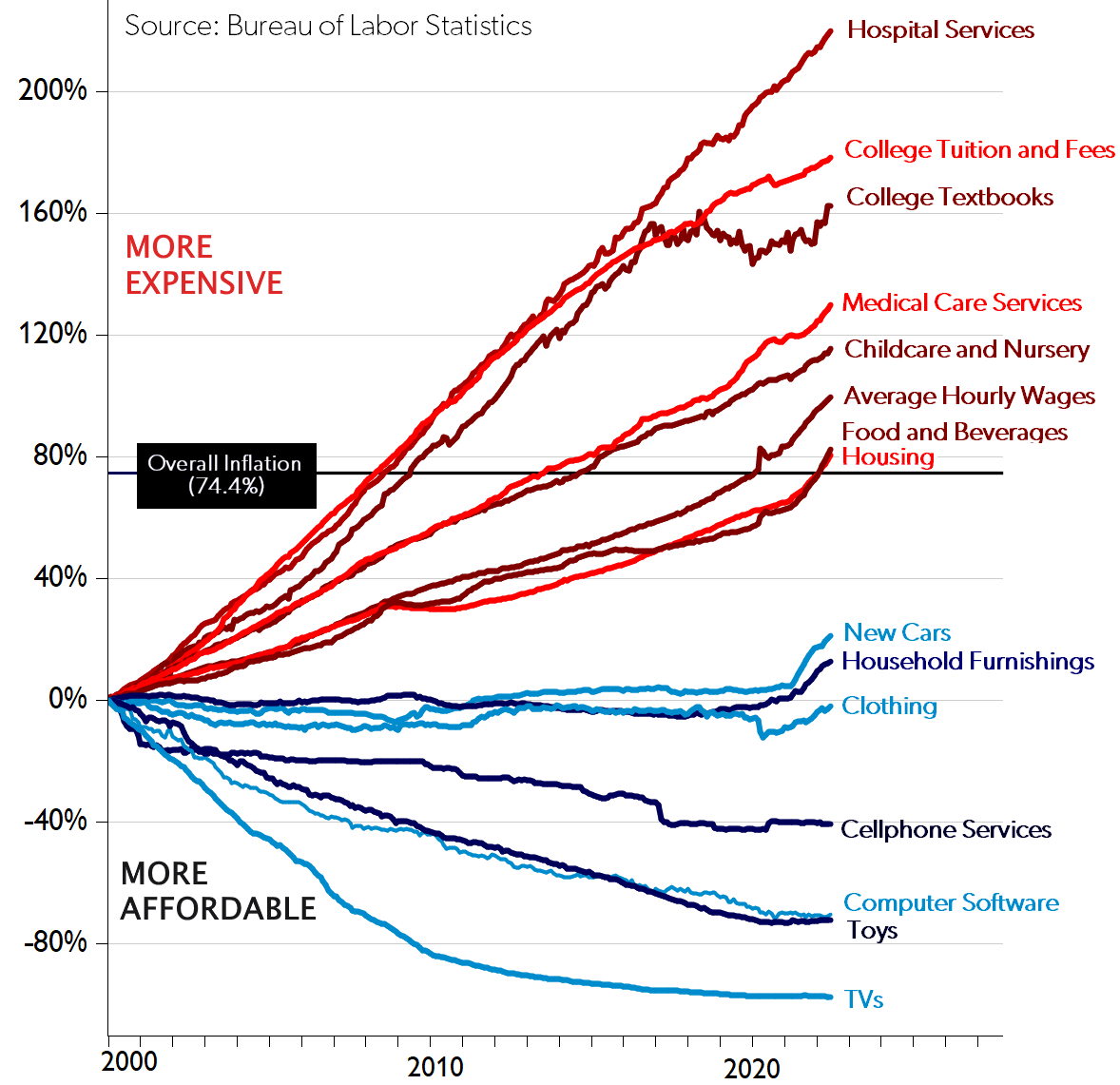
Atwood highlights the alarming escalation of costs that now threaten the very foundation of the American Dream. He notes that in 1992, annual tuition at his state university was approximately $3,000. Today, that figure has soared to $23,000 per year—an eight-fold increase in three decades. This dramatic rise in educational expenses, coupled with similar spikes in healthcare and housing costs, represents a significant barrier to entry for many aspiring individuals. Economic data consistently shows that while wages for many Americans have stagnated, the costs of essential goods and services, particularly in these critical sectors, have far outpaced inflation. This trend exacerbates income inequality and makes it increasingly difficult for individuals from modest backgrounds to achieve the same level of upward mobility that was once more attainable. According to the College Board, the average tuition and fees for public four-year in-state institutions increased by 213% between the 1992-93 and 2022-23 academic years, a statistic that underscores Atwood’s personal observations.
Building Digital Democracies: Stack Overflow and Discourse
Atwood’s professional career has been marked by his commitment to building collaborative, democratic platforms. In 2008, alongside co-founder Joel Spolsky, he launched Stack Overflow, a groundbreaking question-and-answer website for programmers. This platform quickly became an indispensable resource, creating a shared Creative Commons knowledge base. Atwood emphasizes its democratic structure, where users vote to rank questions and answers and elect community moderators using ranked-choice voting, effectively creating a "digital democracy – of the programmers, by the programmers, for the programmers." The success of Stack Overflow, culminating in its reported $1.8 billion acquisition, validated this community-driven model.

Innovations in Collaborative Knowledge
The lessons learned from Stack Overflow informed his next venture, Discourse, a free, open-source tool for constructive, empathetic community discussions. Discourse was designed to empower communities to establish and enforce boundaries through democratic governance and strong moderation, promoting "digital democracy and empathy, for everyone." Atwood posits that for digital democracy to function effectively, individuals must "see each other through our screens," extending kindness online in ways often reserved for real-world interactions. This philosophy challenges the prevalent anonymity and often toxic nature of online discourse, advocating for platforms that foster genuine connection and understanding. Both Stack Overflow and Discourse are described by Atwood as "projects for the public good" that operate as corporations, embodying his belief that commercial success can align with societal benefit.
A Reassessment of Wealth and Purpose
Despite his considerable financial success, Atwood experienced a profound reevaluation of the meaning of wealth and the American Dream. He initially believed that earning millions was the "final part" of the dream, but this perspective shifted following a theatrical performance of S.E. Hinton’s "The Outsiders" at his son’s high school. The play’s iconic "stay gold" message resonated deeply, leading him to understand that "staying gold" actually meant "sharing the American Dream."
The "Stay Gold" Revelation
The director’s program notes reinforced this epiphany: "This play is a reminder that strength lies not just in overcoming hardships but in staying true to ourselves and lifting up those around us… connect with the enduring themes of resilience, empathy, and unity." This realization spurred Atwood to confront the unintended consequences of extreme wealth, observing that it "starts to unintentionally distance my family from other Americans." He notes that immense wealth removes the necessity of considering costs or challenges that are daily realities for the majority, leading to an increasing awareness of the profound inequalities in American life.
Confronting Wealth Disparity
Atwood goes further, asserting that being a billionaire is "unamerican," a sentiment that echoes growing public discourse on wealth inequality. He cites stark statistics: in 2012, the top 1% of Americans held 24% of the nation’s wealth, a figure that climbed to 30% by 2021. Globally, Oxfam reports that the richest 1% now possess nearly twice as much wealth as the rest of the world combined. This concentration of wealth, Atwood argues, fundamentally undermines the principle of equal opportunity inherent in the American Dream. He aligns his critique with W.E.B. Du Bois’s philosophy, emphasizing that national prosperity should be measured "not by the number of millionaires, but by the absence of poverty, the prevalence of health, the efficiency of the public schools, and the number of people who can and do read worthwhile books."
Challenges to American Democracy and the Dream
Atwood’s pledge is also a direct response to what he perceives as significant threats to American democracy and the foundational ideals enshrined in the Declaration of Independence. He highlights the enduring struggle to live up to the self-evident truths of "Life, Liberty and the pursuit of Happiness," noting that these rights are not always equally available to every American. He references Jimi Hendrix’s iconic Woodstock rendition of "The Star-Spangled Banner" as a powerful artistic representation of this "distortion" of the dream.
The Erosion of Democratic Participation
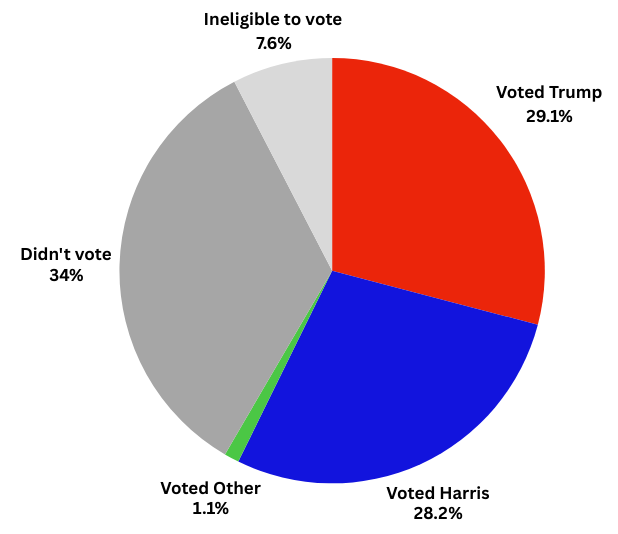
The 2024 United States presidential election serves as a critical backdrop to Atwood’s concerns. He points out that 34% of eligible adults did not vote, and an additional 7.6% were ineligible (primarily non-citizens or those with felony convictions), meaning 42% of adults living in America had "no say" in the election. This significant disenfranchisement raises questions about voter suppression, gerrymandering, and a pervasive sense among some citizens that their vote does not matter. The implications for democratic representation are substantial, leading to concerns about the legitimacy and inclusiveness of electoral outcomes.

Political Polarization: A Threat to Unity
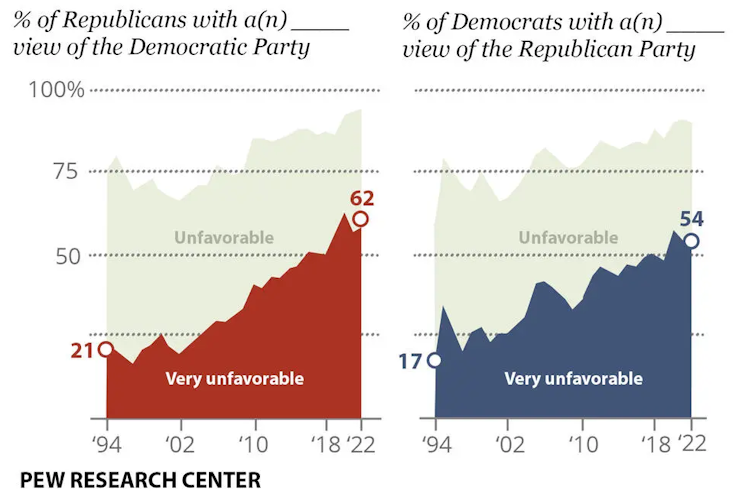
Atwood attributes governmental slowdowns in delivering change to the "increased polarization of our two-party system." He notes that political polarization in the United States is at "historically high levels and rising," creating a counterproductive and potentially dangerous environment. This gridlock hinders progress on critical issues and fosters a sense of disillusionment with political institutions. The last meaningful constitutional amendment, the 26th (lowering the voting age to 18), was passed in 1971, nearly 60 years ago, underscoring the current difficulty in achieving broad political consensus for structural reforms.
The Declaration’s Unfulfilled Promise
To address these democratic deficiencies, Atwood proposes several reforms: making Election Day a national holiday, implementing universal mail-in voting, and adopting ranked-choice voting. These measures, he argues, would make it easier for more eligible Americans to participate and ensure that all votes carry greater weight, thereby strengthening institutions like state and local election boards and the Federal Election Commission. He suggests that many Americans who did vote are signaling their belief that the government is no longer "effectively keeping America fair for everyone," thereby jeopardizing the nation’s status as a leading democracy. The question he poses—"Do we all still believe in the same American Dream?"—underscores the ideological divide threatening national unity.
Rethinking Capitalism and Philanthropy
Atwood’s critique extends to the prevailing models of capitalism and philanthropy. While acknowledging that the "version of capitalism" he experienced delivered substantial wealth for his hard work, he found traditional philanthropic pledges, even those as grand as Warren Buffett’s, to be "incomplete." Buffett’s initial pledge of giving "more than 99% of my wealth… during my lifetime or at death" left open the timing and immediate impact. Atwood notes Buffett’s recent amendment, which specifies transferring wealth at death to a charitable trust managed by his adult children, raising questions about the immediacy and focus of such long-term trusts.
A New Paradigm for Philanthropy
In contrast, Atwood’s decision to pledge half his wealth within five years, rather than posthumously, represents a more urgent and hands-on approach. He explicitly states that the 2024 election "raised the stakes," compelling him to act now. He is reserving only enough wealth to ensure his children can afford college educations and buy a home, recognizing the increasing difficulty for young people to access these cornerstones of the American Dream. This immediate and substantial deployment of capital during his lifetime marks a departure from conventional practices, aligning more with "giving while living" philosophies that seek to address current challenges directly.
Beyond the Buffett Model
Atwood’s commitment is not merely financial but also philosophical. He explicitly states his family’s pledge is "toward an American Dream founded on love," juxtaposing this with what he describes as "the path of hate" and "the path of love" perpetually contending throughout American history. This framing emphasizes a vision of a shared, empathetic, and inclusive society where collective well-being takes precedence over unchecked individual accumulation. His perspective aligns with growing calls for a more equitable form of capitalism that prioritizes social responsibility and broad-based prosperity.
A Call for Collective Action and a "Dream Founded on Love"
Atwood’s announcement is ultimately a powerful call to action for all Americans. He encourages everyone to "contribute soon, however you can, to organizations you feel are effectively helping" those in need. More broadly, he aims to empower and advise others who share his vision for a revitalized American Dream. His emphasis on collaboration—"There is no single solution, so let’s work together"—underscores the belief that fundamental change requires collective effort.
Empowering Grassroots Change
The initiative seeks to inspire not just financial contributions but also civic engagement and a renewed commitment to democratic ideals. By explicitly linking his philanthropy to the core values of the Declaration of Independence and the spirit of "good trouble" championed by figures like John Lewis, Atwood positions his efforts within a broader historical context of striving for a more perfect union. His upcoming "Cooper Union talk co-presented with Alexander Vindman" on "Rebuilding the American Dream: A Path Forward" further indicates a commitment to public discourse and collaborative problem-solving.
The Path Forward: Love Over Division
Atwood concludes his statement with an optimistic yet challenging message: "Stay gold, America." This evokes the enduring ideal of youthful innocence and shared humanity from "The Outsiders," urging the nation to remember its best self. His final declaration that the family’s pledge is "toward an American Dream founded on love" articulates a hopeful vision for a future where empathy, unity, and shared opportunity triumph over division and disparity. This initiative represents a significant commitment from a leading tech entrepreneur to not only address the immediate crises facing Americans but also to foster a long-term societal transformation guided by principles of justice, equity, and compassion.
(Jeff Atwood expressed gratitude for the support of his partner Betsy Burton and his family, as well as Steve McConnell for inspiring his blogging journey, and numerous individuals who provided feedback to improve his statement.)
About the Author