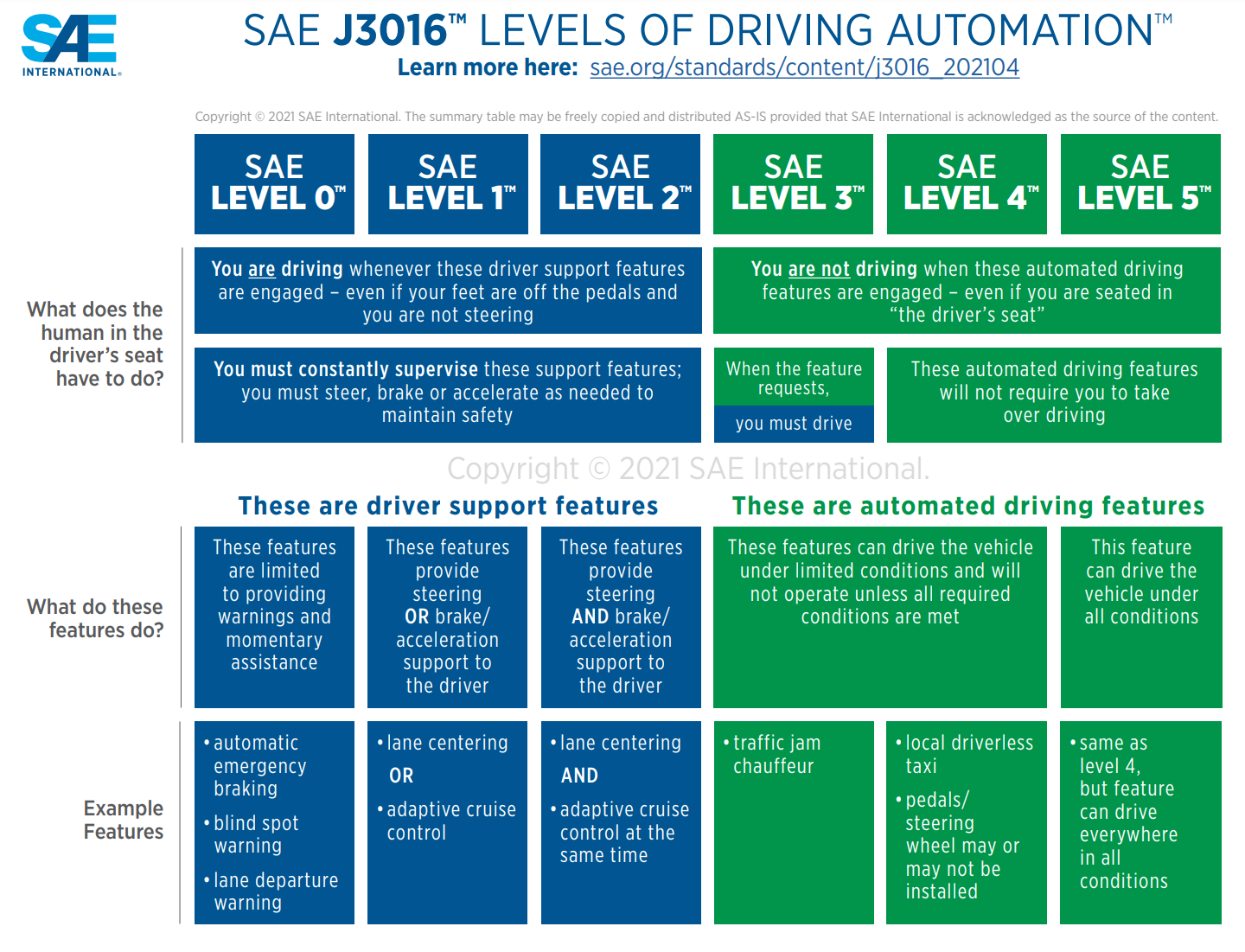
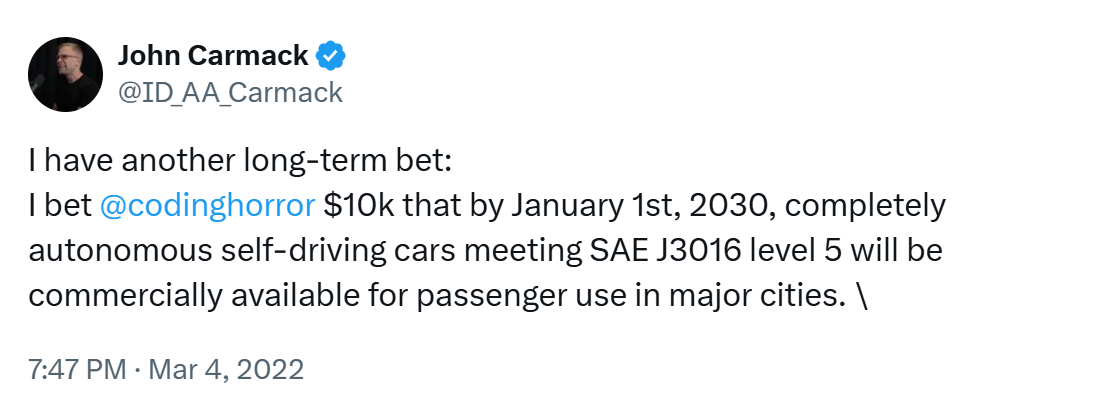
A high-stakes, long-term wager has been initiated between two titans of the technology world: Jeff Atwood, the renowned programmer and author behind the popular Coding Horror blog and co-founder of Stack Overflow, and John Carmack, the legendary programmer responsible for groundbreaking video games like Doom and Quake, and a pioneer in virtual reality technology. The friendly bet, set at $10,000, will be directed to a 501(c)(3) charity of the winner’s choice and hinges on a pivotal technological milestone: the commercial availability of completely autonomous, SAE J3016 Level 5 self-driving cars for passenger use in major U.S. cities by January 1st, 2030. Atwood has taken the position against this achievement, while Carmack is betting for it.
Defining the Terms: What Constitutes Level 5 Autonomy?
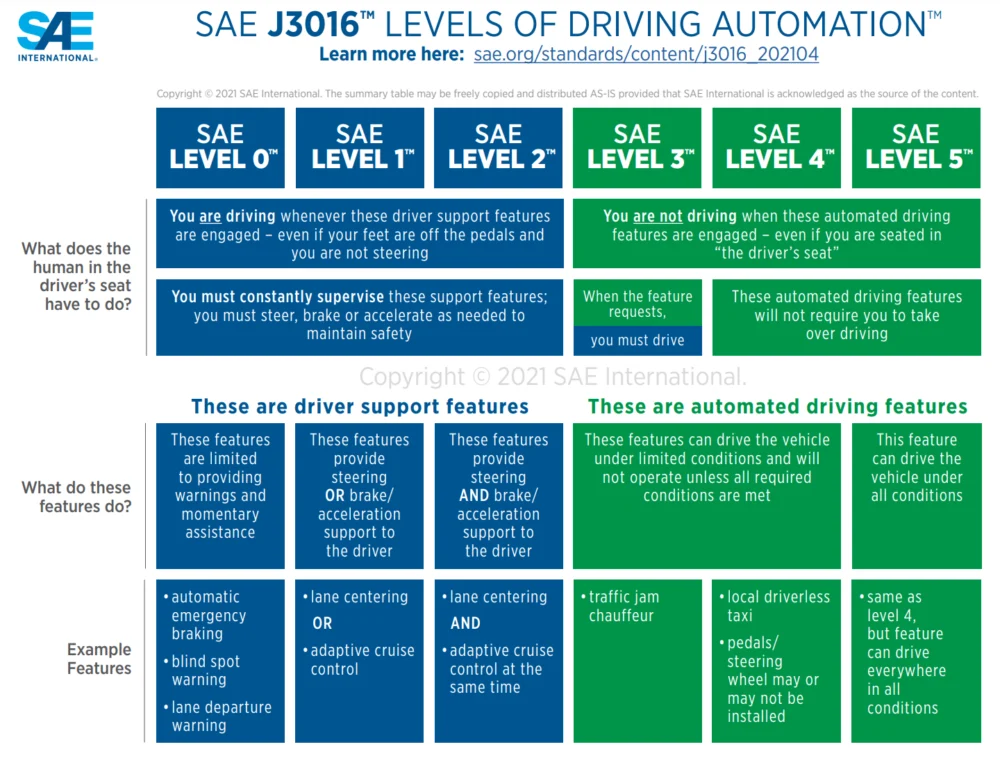
The core of the wager rests upon a precise definition of "completely autonomous" as outlined by the Society of Automotive Engineers (SAE) International’s J3016 standard, which categorizes driving automation into six distinct levels, from Level 0 (no automation) to Level 5 (full automation).
- SAE Level 0: No Automation. The human driver performs all driving tasks.
- SAE Level 1: Driver Assistance. The vehicle features a single automated system, such as adaptive cruise control or lane-keeping assist, but the human driver remains responsible for all other aspects of driving.
- SAE Level 2: Partial Driving Automation. The vehicle can take over both steering and acceleration/deceleration in specific scenarios, but the driver must constantly supervise the system and be ready to intervene immediately. Examples include Tesla’s Autopilot or GM’s Super Cruise.
- SAE Level 3: Conditional Driving Automation. The vehicle can perform all driving tasks under specific conditions (Operational Design Domain or ODD) and monitor the driving environment, but requires the human driver to be available to take over if the system requests it. The driver can be disengaged from driving for periods but must be ready to respond to a "take over request."
- SAE Level 4: High Driving Automation. The vehicle can perform all driving tasks and monitor the driving environment within a specific ODD. In this level, the vehicle can handle unexpected events or system failures without human intervention, and if it cannot continue, it will execute a minimal risk maneuver (e.g., pull over safely). The driver is not expected to take over, even if available. Commercial robo-taxis operating in geofenced areas, like Waymo in Phoenix or Cruise in San Francisco, largely fall into this category.
- SAE Level 5: Full Driving Automation. This is the ultimate goal: the vehicle performs all driving tasks under all conditions, without any human attention or interaction required from start to finish. A human passenger simply enters the vehicle, selects a destination, and the vehicle handles everything else, irrespective of road type, weather, or time of day. The only exceptions would be natural disasters or extreme emergencies beyond any reasonable operational capability. The vehicle would effectively be a robotic chauffeur, capable of navigating anywhere a human driver could.
For the purpose of this wager, "major cities" refers to any of the top 10 most populous cities in the United States. Based on recent census data, these typically include New York City, Los Angeles, Chicago, Houston, Phoenix, Philadelphia, San Antonio, San Diego, Dallas, and San Jose. The stipulation implies that Level 5 vehicles must not only exist but be commercially available for public passenger use within at least one of these bustling metropolitan environments.
The Contrasting Stances: Optimism vs. Pragmatism
Jeff Atwood’s position as the "against" bettor stems from a deeply considered belief that the general public and even many within the tech industry are significantly underestimating the sheer complexity and difficulty involved in achieving true Level 5 autonomy. While a vocal proponent of technological advancement and an admirer of self-driving concepts – expressing a personal desire to spend travel time reading or engaging with family rather than driving – Atwood views Level 5 as an "incredibly challenging computer science problem" whose full realization within the next six years is overly ambitious. His skepticism is not a rejection of the technology’s potential, but rather a realistic appraisal of the timeline required to overcome the myriad technical, regulatory, and societal hurdles. He extends an open challenge to the industry: "Prove me wrong! Make it happen by 2030, and I’ll be popping champagne along with you and everyone else!" This mirrors his previously stated, more pessimistic view on the widespread, world-changing adoption of virtual reality, where he sees augmented reality and projection technologies having a far more immediate and significant impact.
John Carmack, on the other hand, embodies the characteristic optimism often found among pioneering technologists. While the article doesn’t explicitly detail his reasoning for betting "for," his career trajectory is marked by a relentless pursuit of pushing technological boundaries and a belief in rapid innovation. From revolutionizing 3D graphics in gaming to his foundational work in virtual reality at Oculus and his current ventures in artificial general intelligence at Keen Technologies, Carmack has consistently been at the forefront of transformative technologies. His wager likely reflects a conviction that the pace of AI and sensor technology development, coupled with immense investment, will accelerate sufficiently to surmount the remaining challenges for Level 5 deployment within the decade. The bet itself, he suggested, serves as a "fun way to generate STEM publicity," highlighting his commitment to advancing scientific and technological discourse. Atwood has long held Carmack in high esteem, referring to him as "one of my biggest heroes" and recommending his biography, Masters of Doom.
A Brief History of the Autonomous Vehicle Journey
The concept of self-driving cars has captivated engineers and futurists for decades, but serious development began gaining traction in the early 2000s. The Defense Advanced Research Projects Agency (DARPA) Grand Challenge series, starting in 2004, is widely considered a pivotal moment. These competitions spurred university teams and private companies to develop autonomous vehicles capable of navigating challenging desert and urban environments. While early attempts were fraught with difficulties, the 2005 Grand Challenge saw Stanford University’s "Stanley" robot successfully complete the 132-mile desert course, ushering in a new era of possibilities.
Following the DARPA challenges, major tech companies and automakers intensified their research. Google’s self-driving car project, now known as Waymo, began in 2009 and is often credited with reigniting public and industry interest. Tesla, under Elon Musk, introduced its Autopilot system in 2014, leveraging camera-based vision systems and over-the-air software updates to continuously improve its semi-autonomous capabilities. Other significant players like Cruise (acquired by General Motors), Argo AI (backed by Ford and Volkswagen), Mobileye (an Intel company), and Zoox (acquired by Amazon) have emerged, each pursuing different technological approaches and deployment strategies. The progression has largely been incremental, moving from advanced driver-assistance systems (ADAS) to increasingly sophisticated partial and conditional automation, with Level 4 deployments now operating in specific, geofenced areas.
The Current Landscape: Progress, Hurdles, and the Path to 2030

As of the mid-2020s, the autonomous vehicle industry stands at a fascinating crossroads. Companies like Waymo and Cruise are operating commercial robotaxi services in select U.S. cities, including Phoenix, San Francisco, and Austin. These services, while impressive, are primarily Level 4, meaning they operate within a defined Operational Design Domain (ODD) – specific geographical areas, certain weather conditions, and often with remote human oversight capabilities. The leap from Level 4 to Level 5 is not merely an incremental step but a monumental engineering and regulatory challenge.
Technological Hurdles:
- Edge Cases and Unforeseen Scenarios: One of the most significant challenges for Level 5 is the sheer infinite variability of real-world driving. While AVs excel in structured, predictable environments, they struggle with "edge cases" – rare, unusual, or chaotic situations that humans handle instinctively but are difficult to program. This includes complex interactions with pedestrians, cyclists, emergency vehicles, unexpected road debris, construction zones, or nuanced human behaviors (e.g., a driver waving another through).
- Adverse Weather Conditions: Rain, snow, fog, sleet, and even strong glare from the sun severely impede the performance of current sensor suites (cameras, LiDAR, radar). While progress is being made, achieving reliable operation in all weather conditions, a prerequisite for Level 5, remains a formidable obstacle.
- Sensor Fusion and Redundancy: Robust Level 5 systems require seamless integration and interpretation of data from multiple sensor types. Ensuring redundancy and fault tolerance, where the vehicle can continue operating safely even if one sensor fails, adds layers of complexity.
- Artificial Intelligence and Generalization: The AI driving the vehicle must not only perceive its environment accurately but also predict the actions of other road users and plan safe, efficient trajectories in real-time. This requires a level of artificial general intelligence (AGI) for driving that is still aspirational. The ability to "generalize" learned behaviors to entirely new environments, rather than relying on extensive pre-mapped data, is crucial for Level 5.
- Computational Power: Processing the vast amounts of sensor data and executing complex AI algorithms in real-time demands immense computational power, which must be energy-efficient and reliable for mass-market vehicles.
Regulatory and Legal Obstacles:
- Patchwork of Laws: In the United States, autonomous vehicle regulations are primarily handled at the state level, leading to a fragmented legal landscape. There is no comprehensive federal framework for the deployment or operation of Level 5 vehicles, creating uncertainty for developers and operators.
- Liability: Determining fault in an accident involving a fully autonomous vehicle is a complex legal question, impacting insurance models, manufacturing responsibilities, and consumer protection.
- Certification and Testing: Establishing universally accepted safety standards and certification processes for Level 5 vehicles will require unprecedented collaboration between governments, industry, and safety organizations.
Public Acceptance and Trust:
- Safety Concerns: High-profile incidents involving autonomous test vehicles, though rare, have significantly impacted public perception and trust. Rebuilding and maintaining public confidence in the safety of driverless cars is paramount for widespread adoption.
- Ethical Dilemmas: The "trolley problem" – how an autonomous vehicle should be programmed to make decisions in unavoidable accident scenarios – remains a philosophical and ethical challenge that has yet to be definitively resolved to public satisfaction.
- Cost: The advanced hardware and software required for Level 5 autonomy are currently prohibitively expensive for individual consumers. Mass production and economies of scale are necessary to make these vehicles commercially viable.
Implications of Achieving (or Failing to Achieve) Level 5 Autonomy
The successful commercial deployment of Level 5 autonomous vehicles by 2030 would trigger a societal transformation akin to the advent of the internet or the automobile itself.
- Revolutionizing Transportation: Personal mobility would be redefined. Car ownership could significantly decrease, replaced by ubiquitous, on-demand autonomous ride-sharing services. Traffic congestion might be reduced through optimized routing and platooning, potentially leading to more efficient use of road infrastructure. Long-haul trucking and logistics would be fundamentally altered, potentially reducing costs and increasing efficiency.
- Urban Planning and Infrastructure: Cities could see less demand for parking spaces, allowing for the repurposing of valuable urban land for housing, parks, or commercial development. Road design might evolve to accommodate AVs, though Level 5 implies operation on existing infrastructure.
- Economic Impact and Job Displacement: While new jobs in AV maintenance, software development, and data management would emerge, significant job displacement would occur in sectors reliant on human drivers, such as taxi services, ride-sharing, and trucking. This would necessitate extensive retraining and social support programs.
- Dramatic Improvement in Safety: Human error is a factor in over 90% of all traffic accidents. Level 5 AVs, if proven safer than human drivers, could drastically reduce fatalities and injuries on roads, saving countless lives and reducing healthcare burdens.
- Legal and Insurance Overhauls: The entire legal framework surrounding vehicle ownership, liability, and insurance would require a complete overhaul. The focus would shift from individual driver responsibility to manufacturer or software provider accountability.
- Accessibility and Social Equity: Fully autonomous vehicles could offer unprecedented mobility to the elderly, disabled, and those unable to drive, fostering greater independence and social inclusion.
Conversely, if Level 5 autonomy is not achieved by 2030, it would signal a more gradual, iterative progression for the industry. This might lead to continued focus on Level 4 solutions, with human oversight or geofenced operations remaining the norm for longer. Investment might pivot towards more attainable, specific use cases, and public expectations might be tempered, potentially leading to a renewed focus on improving Level 2 and 3 ADAS features. The implications for urban planning and job markets would be delayed or less pronounced, and the ambitious vision of a truly driverless world would remain a distant horizon.
The Broader Significance: A Catalyst for Progress
The Atwood-Carmack wager is far more than a simple financial bet. It serves as a public intellectual challenge, leveraging the credibility and influence of two industry stalwarts to focus attention on one of the most complex and potentially transformative technological endeavors of our time. It provides a tangible, publicly stated deadline against which progress can be measured, stimulating discussion, debate, and, crucially, innovation within the STEM community.
By framing it as a challenge, Atwood encourages engineers and researchers to push boundaries, highlighting the immense effort required to solve such a multifaceted problem. The charitable aspect further elevates the wager, transforming it into a mechanism for good, regardless of the outcome. The specific mention of potential inflation adjustment for the $10,000 stake by 2030 underscores the long-term thinking behind this friendly contest, ensuring that the philanthropic impact remains significant.
This wager also aligns with Atwood’s broader efforts to promote computing and programming. He notes that he and Carmack are still seeking code contributions for a project to update "the single most influential book of the BASIC era," with proceeds also designated for charity. These initiatives collectively demonstrate a shared commitment to fostering technological advancement and giving back to the community, using public engagement as a powerful tool for inspiration and progress.
As the clock ticks towards January 1st, 2030, the technology world will be watching closely to see whether the optimistic vision of John Carmack or the pragmatic assessment of Jeff Atwood proves to be more accurate. The journey towards Level 5 autonomy continues to be a testament to human ingenuity and perseverance, regardless of whether the finish line is crossed within the ambitious timeframe of this notable wager.
About the Author