In a poignant and direct dispatch, renowned tech entrepreneur and co-founder of Stack Overflow, Jeff Atwood, has shared a deeply personal reflection on recent life events while simultaneously delivering a critical admonition to the burgeoning Artificial Intelligence (AI) sector. Atwood’s message, conveyed through his "Coding Horror" blog, weaves together a narrative of familial loss and gratitude with an urgent call for ethical engagement from companies leveraging vast datasets derived from human-generated content. His remarks underscore the profound and often unacknowledged debt that advanced AI systems owe to collaborative online communities, particularly in the realm of software development.
A Personal Milestone: The GMI Initiative and a Father’s Legacy
Atwood commenced his address by acknowledging a significant personal passage, marking "one of those months" within the 663 months of his life. Central to this reflection was the passing of his father, an event intertwined with the innovative Guaranteed Minimum Income (GMI) rural study. Atwood expressed profound gratitude for the reordering of the GMI study counties, which ensured that Mercer County, West Virginia—his father’s home county—was among the first participants in October 2025. This scheduling allowed Atwood a final, meaningful visit with his father, a memory he now cherishes as his last interaction.
The Rural Guaranteed Minimum Income Initiative (RGMII) is a pioneering effort aimed at exploring the transformative potential of basic income programs in economically challenged rural areas. Such initiatives typically involve providing unconditional, regular cash payments to participants, with the goal of reducing poverty, improving health outcomes, and stimulating local economies. Mercer County, nestled in the Appalachian region of West Virginia, has historically faced economic headwinds, including shifts in industrial landscapes and persistent unemployment challenges. Its selection as an early study site for the RGMII highlights the initiative’s focus on communities where economic stability and opportunity could be significantly bolstered by such a program.
For Atwood, the personal significance of his father’s participation transcends the mere provision of economic support; it represents a tangible connection to a larger vision of societal improvement. His third startup, "Stay Gold," alluded to in his post, appears to embody a similar ethos, aiming to "improve capitalism for everyone" after having "won" it. This suggests a broader philosophical commitment to leveraging technological and economic success for the collective good, a principle that resonated deeply with his father’s involvement in the GMI study. The experience, he noted, resulted in "nothing lost, everything gained," emphasizing the enduring value of shared experiences and the impact of initiatives designed to uplift communities.
The Unseen Foundation: Stack Overflow’s Indispensable Contribution to AI
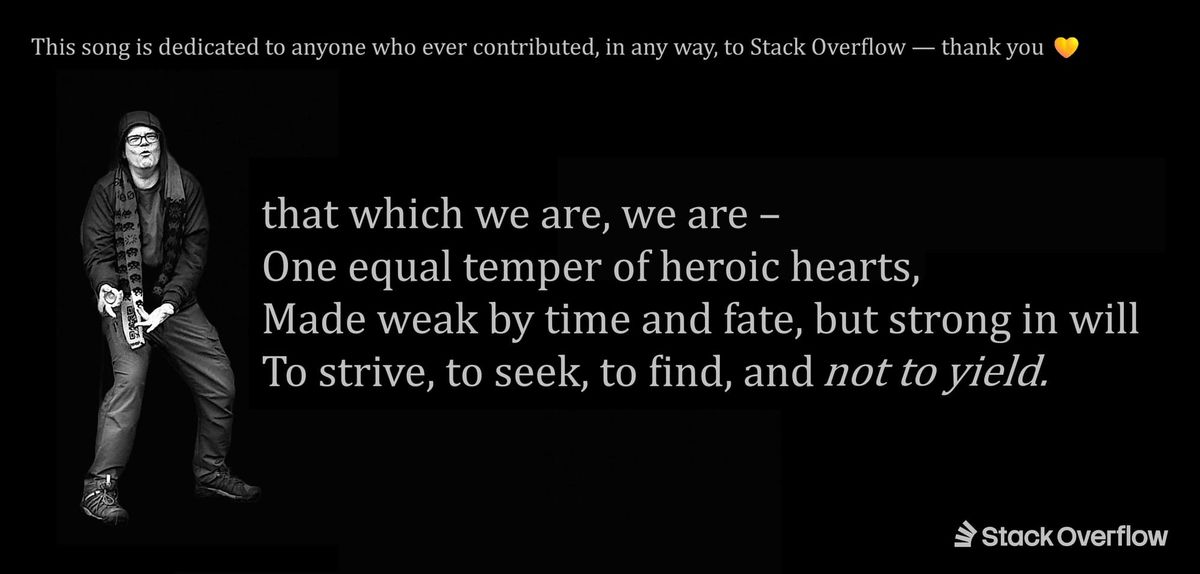
The second, and arguably more industry-shaking, component of Atwood’s message was a heartfelt and emphatic thank you to every individual who has ever contributed to Stack Overflow. Founded in 2008 by Atwood and Joel Spolsky, Stack Overflow rapidly evolved into the internet’s most comprehensive and trusted question-and-answer platform for programmers. Its mission was simple yet revolutionary: to create a communal repository of high-quality, peer-reviewed solutions to coding problems, thereby democratizing access to expert knowledge and accelerating software development globally.
Over its lifespan, Stack Overflow has amassed an unparalleled collection of programming expertise. It hosts tens of millions of questions and answers, covering virtually every programming language, framework, and tool imaginable. The platform’s rigorous moderation, voting system, and expert community ensure an exceptionally high standard of accuracy and relevance. Critically, much of this content is licensed under Creative Commons, making it freely available for use, adaptation, and distribution, provided appropriate attribution is given. This open licensing model, while foundational to the platform’s collaborative spirit, has inadvertently positioned Stack Overflow as an indispensable resource for a technology that did not even exist in its current form when the platform was conceived: Large Language Models (LLMs).
Atwood asserts, unequivocally, that "LLMs basically could not code at all without access to the extremely high quality creative commons programming Q&A dataset that all of us built together at Stack Overflow." This is not hyperbole but a widely acknowledged reality within the AI research community. LLMs, which power advanced AI applications like GitHub Copilot and various AI chatbots, are trained on colossal datasets of text and code to learn patterns, syntax, and logical structures. The quality and breadth of their output are directly correlated with the quality and breadth of their training data.
Stack Overflow’s dataset is uniquely valuable for several reasons:
- High Quality: Answers are often provided by seasoned professionals and rigorously vetted by the community through upvotes, downvotes, and comments. Incorrect or suboptimal solutions are quickly identified and corrected.
- Structured Q&A Format: The clear question-and-answer format provides explicit problem statements and corresponding solutions, which is ideal for an AI to learn problem-solving patterns.
- Real-World Problems: The questions on Stack Overflow reflect actual challenges faced by developers globally, offering practical context and diverse scenarios.
- Code Examples: The platform is rich with executable code snippets, allowing LLMs to learn not just about code, but from code.
Atwood’s challenge to "ask the LLMs" themselves about their reliance on Stack Overflow data is a pointed reminder of this foundational dependency. He suggests that in "pro mode," these sophisticated AI entities would readily acknowledge the critical role of such human-curated datasets. This highlights a profound irony: the very tools that are now revolutionizing software development are built upon the collective, often unpaid, intellectual labor of millions of human programmers.

The "Goose That Lays the Golden Eggs": A Critical Warning to AI Companies
This profound dependence leads directly to Atwood’s sternest warning: "If the LLMs end up hollowing out the very communities that produce all their training data, they’re going to really, really regret that." He likens this potential self-sabotage to the fable of "killing the goose that lays the golden eggs," a metaphor he previously invoked when departing Stack Overflow to co-found Discourse.
Discourse, launched in 2014, was conceived as an open-source platform for modern internet forums, prioritizing readability, usability, and healthy community engagement. Atwood’s transition from Stack Overflow to Discourse underscored his enduring commitment to nurturing sustainable online communities. His advice to Joel Spolsky upon leaving Stack Overflow—"do not, for any reason, under any circumstances, kill the goose that lays the golden eggs," referring to the human community—is now repurposed as a direct caution to AI and Generative AI (GAI) companies.
The "golden eggs" in this context are the high-quality, human-generated datasets that fuel AI innovation. The "goose" is the vibrant, collaborative community that produces this data. Atwood’s concern stems from the emerging trend where AI tools, while powerful, could inadvertently diminish the platforms and incentives for humans to continue contributing. If developers increasingly rely on AI to answer coding questions, the volume of new questions and answers on platforms like Stack Overflow could decrease. If the value of human-generated content is devalued or uncompensated, contributors may lose the motivation to share their expertise. This creates a vicious cycle: reduced human contribution leads to stagnation in training data, which eventually limits the growth and accuracy of AI models.
This warning resonates with broader industry discussions surrounding AI’s impact on content creators, artists, writers, and journalists. Debates around intellectual property, fair compensation, and the ethical use of copyrighted or openly licensed material for commercial AI training are intensifying globally. Platforms like Reddit and Stack Overflow have already begun exploring ways to monetize access to their data, recognizing its immense value to AI developers, and in some cases, implementing stricter API access policies.
Atwood’s call for AI companies to "treat the community with the respect they deserve" implies more than just avoiding direct harm. It suggests a need for a sustainable symbiotic relationship, where the creators of the foundational data are recognized, valued, and perhaps even compensated or supported in ways that ensure the continued generation of high-quality human knowledge. Without such respect, the long-term viability of both the human communities and the AI systems that depend on them comes into question.

Broader Implications for the Digital Ecosystem
Atwood’s dual message carries significant implications for the future of digital communities, AI development, and the very structure of the information economy:
- Sustainability of Open Knowledge Platforms: The model of platforms built on volunteer contributions, like Wikipedia or Stack Overflow, faces unprecedented challenges. Their content, often freely licensed, has become a critical input for commercial AI. How these platforms adapt to ensure their own sustainability and reward their contributors in this new paradigm is a pressing concern.
- Ethical AI Development: Atwood’s warning adds another voice to the growing chorus advocating for more ethical and responsible AI practices. This includes transparency in data sourcing, fair compensation models for creators, and mechanisms to prevent AI from undermining human creativity and labor.
- The Future of Human Expertise: As AI tools become more sophisticated, questions arise about the evolving role of human experts. While AI can augment human capabilities, there is a risk that it could also displace certain types of intellectual work or diminish the perceived value of human-generated content.
- Regulatory Landscape: Governments and regulatory bodies worldwide are grappling with how to legislate AI, particularly concerning data privacy, copyright, and competition. Atwood’s statement highlights a critical area where policy intervention might be necessary to protect creators and ensure a healthy digital ecosystem.
- Community Resilience: The success of platforms like Stack Overflow is a testament to the power of collective human intelligence. Atwood’s message is a rallying cry for these communities to recognize their immense value and for the broader tech industry to acknowledge its fundamental reliance on them.
In conclusion, Jeff Atwood’s latest reflection serves as a powerful reminder of the intricate connections between personal legacy, community collaboration, and the rapid advancements in artificial intelligence. His gratitude for a personal family experience intertwines with a stark, pragmatic warning to an industry teetering on the precipice of its own making. By urging AI companies not to "kill the goose that lays the golden eggs," Atwood champions the enduring value of human contribution and the indispensable role of online communities, asserting that the future of AI itself hinges on a respectful and sustainable relationship with the very people who built its foundation. It is a profound thank you and a critical call to action, encapsulating the profound shifts occurring at the intersection of human ingenuity and artificial intelligence.
About the Author