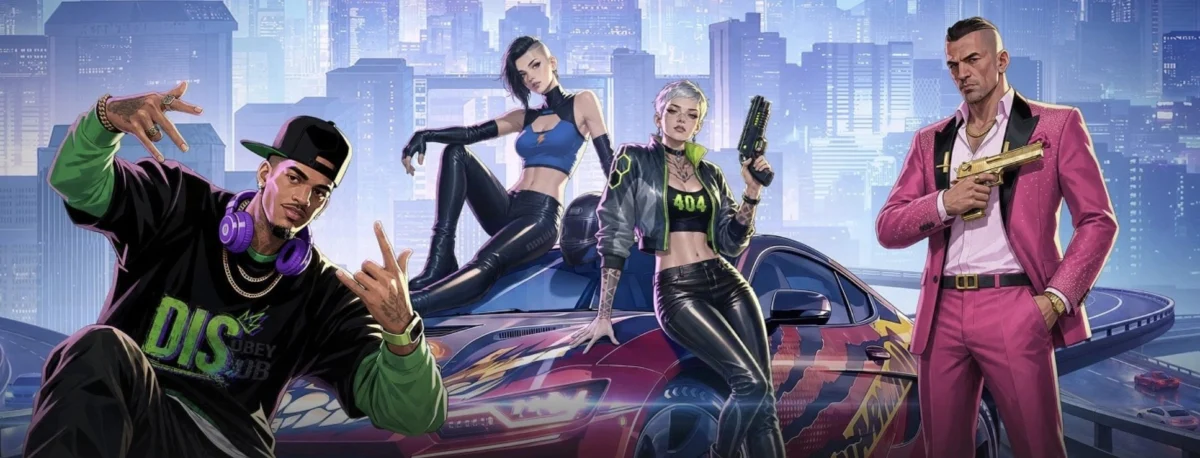
Tencent’s publishing arm, Level Infinite, has officially commenced the regional rollout of Gangstar Mirage City, a high-budget open-world title that seeks to bridge the gap between urban crime simulation and futuristic aesthetics. Starting today, August 20, the game is becoming available on iOS and Android platforms across a specific selection of high-growth markets, including Latin America, the Middle East and North Africa (MENA), South Asia, Southeast Asia, and parts of Eastern and Central Europe. This launch represents a significant milestone for the Gangstar franchise, an intellectual property originally established by Gameloft, as it transitions into a new era under Tencent’s operational umbrella. The game is being positioned as a hybrid experience, drawing stylistic and gameplay inspirations from industry titans such as Rockstar Games’ Grand Theft Auto series and CD Projekt Red’s Cyberpunk 2077.
A New Era for the Gangstar Intellectual Property
The Gangstar series has long been a cornerstone of mobile gaming, dating back to the early days of the App Store and Google Play. Originally developed and published by Gameloft, the series gained popularity by offering a "sandbox" experience on mobile devices when such technical feats were rare. With the release of Gangstar Mirage City, the franchise undergoes a fundamental shift. While the game remains an officially licensed continuation of the series, the development and publishing responsibilities have moved toward Level Infinite, the international publishing brand of Tencent Games.
This transition highlights a broader trend in the gaming industry where established Western mobile IPs are being revitalized through the technical and financial resources of major Chinese conglomerates. By leveraging the Gangstar name, Tencent aims to tap into a pre-existing fan base while modernizing the core mechanics to meet the expectations of contemporary players who demand high-fidelity graphics and deep social integration.
Setting the Stage: The Mechanics of Mirage City
Gangstar Mirage City is set in the eponymous Mirage City, a sprawling fictional metropolis designed to evoke a sense of high-tech grit and urban decay. Unlike previous entries in the series, which focused primarily on single-player narratives, Mirage City introduces a "heavier multiplayer focus," according to early developer insights. The game is categorized as an open-world crime RPG, a genre that combines traditional action-adventure elements with character progression and economic management.
Players are tasked with ascending the ranks of the criminal underworld through several interconnected gameplay pillars:
- Story Missions: A central narrative thread that introduces players to the various factions vying for control over Mirage City.
- Gang Turf Battles: A persistent multiplayer component where players or clans can seize and defend specific districts, generating passive income and prestige.
- Business Ventures: An economic layer that allows players to invest in and manage illicit or legitimate enterprises to fund their criminal empires.
The aesthetic of the game is a departure from the realistic or semi-stylized environments of previous Gangstar titles like Gangstar Vegas or Gangstar New Orleans. By incorporating "Cyberpunk" elements—such as neon-drenched districts, advanced vehicular technology, and cybernetic themes—Level Infinite is clearly targeting a younger demographic that has shown significant interest in the sci-fi subgenre following recent successes in the broader media landscape.
Development Timeline and Regional Testing Phases
The path to the current regional launch has been characterized by a multi-stage testing strategy typical of large-scale mobile titles. Gangstar Mirage City first emerged publicly under the working title "Codename Crime-Vice Open World." Tencent Games initially revealed the project in late 2023, signaling a departure from Gameloft’s traditional development pipeline.
Since its reveal, the game has undergone rigorous regional testing to ensure server stability and gameplay balance. These tests were conducted in diverse geographical locations, including:
- The Philippines and Indonesia: Serving as primary testing grounds for Southeast Asian infrastructure and player retention metrics.
- Canada and the United States: Focused on gathering feedback from Western audiences regarding monetization and narrative quality.
The decision to launch today in Latin America, MENA, and South Asia before a potential worldwide release suggests a strategic focus on emerging markets. These regions currently lead the world in mobile gaming growth, often bypassing PC and console gaming in favor of high-end smartphone experiences.
The Strategic Importance of Emerging Markets
The specific regional availability of Gangstar Mirage City—concentrating on LATAM, MENA, and Asia—reflects a data-driven approach to global distribution. According to market research data from 2023 and early 2024, regions like Southeast Asia and Latin America have seen a double-digit percentage increase in the consumption of "hardcore" mobile games.
By prioritizing these markets, Level Infinite can refine its live-service operations in environments where mobile-first gaming is the norm. Furthermore, the MENA region has recently become a focal point for the gaming industry, with significant investments from sovereign wealth funds and a rapidly growing population of young, tech-savvy gamers. Launching in these territories allows Tencent to establish a dominant foothold before competing with the inevitable marketing saturation that will accompany the global launch of major Western titles.
Competitive Landscape: The "GTA-Alike" Category
The timing of the Gangstar Mirage City rollout is inextricably linked to the broader landscape of the gaming industry, specifically the anticipation surrounding Rockstar Games’ Grand Theft Auto VI (GTA 6). The "GTA-alike" category on mobile has seen a resurgence in interest as players look for ways to engage with urban crime simulations on the go.
Market analysis reveals that Rockstar’s own mobile ports and related titles have generated over $100 million in revenue on mobile platforms. This success has prompted other major publishers, including Garena and NetEase, to move into the space. Tencent’s move with Gangstar Mirage City is a direct attempt to capitalize on this hype. By offering a "Triple-A" quality experience that is free-to-play, Level Infinite aims to capture a segment of the market that may be priced out of high-end console gaming or simply prefers the accessibility of mobile devices.
Technical Specifications and Accessibility
As a modern open-world title, Gangstar Mirage City pushes the limits of current mobile hardware. While the game features high-resolution textures and complex lighting effects to achieve its Cyberpunk-inspired look, Level Infinite has reportedly implemented scalable settings to ensure compatibility across a wide range of devices. This is particularly crucial in the launch regions, where hardware capabilities vary significantly from entry-level smartphones to flagship devices.
On iOS, the game is expected to require modern chipsets (A12 Bionic or newer) to maintain stable frame rates, while the Android version will likely demand mid-to-high-tier processors and a significant amount of storage space to accommodate the vast open-world assets.
Official Positioning and Future Outlook
While Level Infinite has not yet released a definitive statement regarding a worldwide launch, the pre-registration site remains active for global users to sign up for updates. This suggests that the current rollout is a "soft launch" or a "limited release" phase designed to stress-test the multiplayer servers and the in-game economy.
Industry analysts suggest that if Gangstar Mirage City performs well in these initial regions, a North American and Western European launch could follow in late 2024 or early 2025. The success of the game will likely be measured not just by download numbers, but by the longevity of its multiplayer community and the effectiveness of its "battle pass" and microtransaction systems.
Implications for the Mobile Gaming Industry
The launch of Gangstar Mirage City is more than just a new game release; it is a testament to the evolving nature of mobile game development. The collaboration between a legacy IP holder (Gameloft) and a global publishing powerhouse (Tencent/Level Infinite) indicates a shift toward more complex, high-production-value mobile titles.
As the mobile platform continues to close the graphical gap with traditional consoles, games like Gangstar Mirage City set a new benchmark for what players can expect from the open-world genre. For Tencent, this represents another step in its goal to become a truly global publisher, moving beyond its domestic success in China to dominate international markets with localized, high-quality content.
As of today, players in the supported regions can download Gangstar Mirage City from the Apple App Store and Google Play Store. The global gaming community will be watching closely to see if this "Mirage" can deliver a reality that rivals the giants of the genre.
About the Author