In a recent communication, prominent technology entrepreneur and thought leader Jeff Atwood offered a poignant reflection on personal loss intertwined with significant developments in his ongoing work, specifically highlighting the commencement of a Guaranteed Minimum Income (GMI) rural study and issuing a stark warning to the artificial intelligence industry regarding its foundational reliance on human-generated data. Atwood’s remarks underscore a critical period of transition, both in his personal life and in the broader technological landscape he has profoundly influenced.
The Genesis of the Rural GMI Initiative and a Personal Connection
Atwood revealed that October 2025 marked a pivotal moment for the Rural Guaranteed Minimum Income Initiative (RGMII), as Mercer County, West Virginia – his father’s home county – became the inaugural location for its GMI study. This timing held profound personal significance for Atwood, coinciding with the final weeks of his father’s life. He expressed deep gratitude for the strategic re-ordering of the study counties, which ensured his father witnessed the launch of this critical program. "I knew dad was close to the end, and sure enough, that was the last time I ever saw him," Atwood stated, linking the program’s commencement to a final, cherished memory.
The RGMII, a $50 million initiative, aims to fund comprehensive rural GMI studies across the United States. Its core mission is to explore how a guaranteed minimum income can expand economic opportunity, strengthen local economies, and bolster democratic participation in underserved rural communities. The selection of Mercer County, situated in the heart of Appalachia, is particularly notable. This region has historically faced significant economic challenges, including deindustrialization, population decline, and limited access to essential services. Proponents of GMI and Universal Basic Income (UBI) argue that such programs can provide a crucial safety net, stimulate local spending, reduce poverty, and improve health and educational outcomes in areas struggling with economic precarity.
Understanding Guaranteed Minimum Income in a Rural Context
Guaranteed Minimum Income, often discussed interchangeably with Universal Basic Income (UBI), involves providing regular, unconditional cash payments to individuals. While UBI typically targets a broad population without means-testing, GMI can sometimes be more targeted or have specific conditions. The RGMII’s focus on rural areas distinguishes it from many earlier UBI pilot programs, which often concentrated on urban environments. Rural communities present unique challenges and opportunities for GMI implementation, including distinct employment patterns, reliance on local small businesses, and varying access to social services.
Previous UBI trials, such as those in Finland, Stockton, California, and various Canadian cities, have yielded mixed but generally positive results, showing improvements in mental health, financial stability, and engagement in education or entrepreneurship, without significant reductions in employment. The RGMII aims to contribute to this growing body of research by specifically examining the efficacy and impact of GMI in rural settings, where economic conditions and social structures can differ significantly from urban centers. The program’s long-term vision, as outlined on the RGMII website, emphasizes "sharing the American Dream" by empowering individuals and communities through financial security.
Stack Overflow’s Unseen Foundation for Artificial Intelligence
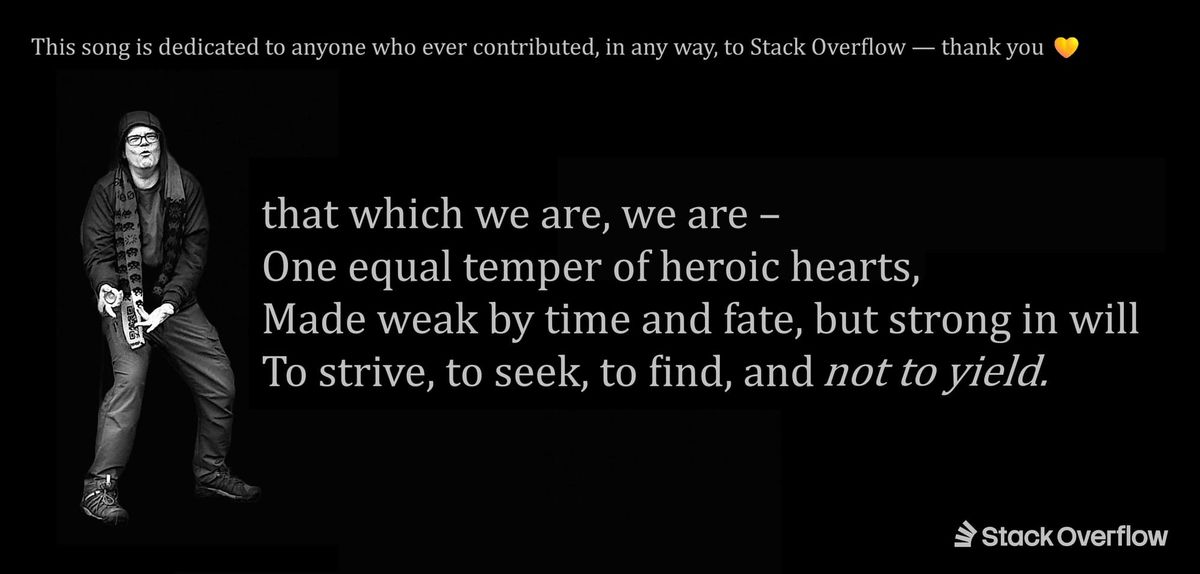
Beyond his personal reflections and GMI advocacy, Atwood directed a significant portion of his commentary towards the artificial intelligence industry, particularly concerning its profound, yet often unacknowledged, reliance on community-generated data. He extended a heartfelt thank you to every individual who has ever contributed to Stack Overflow, the question-and-answer platform for professional and enthusiast programmers that he co-founded in 2008.
Atwood asserted a critical, often overlooked, truth: Large Language Models (LLMs) and Generative AI (GAI) systems would be largely incapable of coding effectively without access to the "extremely high quality creative commons programming Q&A dataset" collectively built by the Stack Overflow community. This statement highlights a fundamental dependency of modern AI on human intellectual capital. Stack Overflow, with its vast repository of expertly curated questions and answers covering nearly every programming language, framework, and concept imaginable, has served as an unparalleled training ground for AI models seeking to understand, generate, and debug code.
The Data Engine: How Stack Overflow Fueled AI
Since its inception, Stack Overflow has grown into one of the internet’s most active and respected knowledge bases for software developers. It hosts millions of questions and answers, contributed and meticulously vetted by a global community of developers. This content, often released under Creative Commons licenses, became an accessible and high-quality dataset that AI researchers and developers leveraged extensively.
Before the rise of sophisticated LLMs, programmers relied on Stack Overflow for problem-solving, learning new technologies, and understanding complex coding challenges. The platform’s system of upvoting, downvoting, and accepted answers ensured that the most accurate and helpful information rose to the top, creating an incredibly clean and well-structured dataset. When AI companies began developing models capable of understanding and generating code, this meticulously organized, human-generated knowledge base proved invaluable. It provided the contextual understanding, common coding patterns, error diagnostics, and best practices necessary for AI to move beyond rudimentary code generation to more sophisticated, contextually aware programming assistance. Without this vast, collaboratively built resource, the current capabilities of AI in software development would likely be significantly curtailed.

A Stern Warning: Don’t "Kill the Goose that Lays the Golden Eggs"
Atwood did not mince words in his advice to LLM and GAI companies, cautioning them against practices that could undermine the very communities from which their training data originates. He reiterated a piece of advice he famously gave to Joel Spolsky, his co-founder at Stack Overflow, when Atwood left to start Discourse: "do not, for any reason, under any circumstances, kill the goose that lays the golden eggs," referring to the human community around a product that performs "all the real work."
This analogy serves as a potent warning about the potential long-term consequences of AI models disincentivizing or hollowing out the human communities they rely upon. If human contributors cease to generate new, high-quality data because their work is being absorbed without adequate recognition, compensation, or reciprocal value, the quality and freshness of the data available for AI training will inevitably decline. This could lead to a phenomenon known as "model collapse," where AI models begin to train on increasingly stale, repetitive, or even AI-generated data, leading to a degradation in their performance, creativity, and accuracy over time.
Atwood’s call for treating the community "with the respect they deserve" touches upon ongoing ethical and economic debates surrounding AI and intellectual property. As AI models ingest vast quantities of internet data, questions arise about fair use, copyright infringement, and whether original creators should be compensated or acknowledged. The implicit contract between online communities and the platforms that host them, and now with the AI systems that consume their output, is under intense scrutiny. A failure to address these concerns, Atwood suggests, could have catastrophic implications for the future development and utility of AI.
Atwood’s Enduring Legacy of Community Building and Innovation
Jeff Atwood’s career has consistently revolved around fostering online communities and empowering individuals through technology. His blog, "Coding Horror," became a highly influential platform for developers worldwide, sharing insights on software development and industry trends. This led directly to the co-founding of Stack Overflow, which revolutionized how developers sought and shared programming knowledge.
Following his departure from Stack Overflow, Atwood co-founded Discourse, an open-source discussion platform designed to create better online communities. Discourse emphasizes features that promote healthy conversations, moderation, and user engagement, reflecting Atwood’s deep understanding of the dynamics required to sustain vibrant online interactions. His latest venture, StayGold.us, is his "third startup," though details remain less publicly known. However, its existence points to his continued entrepreneurial drive and commitment to innovation.

These ventures collectively demonstrate a consistent philosophy: that human collaboration and community building are essential engines for progress. His current involvement with the RGMII, aimed at fostering economic stability in rural areas, further extends this ethos into the realm of social and economic empowerment. He sees the "winning of capitalism" not as an endpoint, but as an opportunity to "help improve it for everyone."
Broader Implications for the Future of AI and Human Collaboration
Atwood’s dual message – celebrating a personal milestone tied to a community-focused economic initiative while simultaneously issuing a stern warning to the AI industry – highlights a critical tension of our era. The rapid advancement of AI presents unprecedented opportunities but also significant challenges regarding data ownership, creator rights, and the sustainability of the digital commons.
The dependence of AI on human-generated content underscores the irreplaceable value of human creativity, problem-solving, and community interaction. As AI systems become more sophisticated, the ethical imperative to acknowledge and support the human ecosystems that feed them grows stronger. Failure to do so risks not only diminishing the quality of future AI models but also eroding the very foundations of collaborative knowledge creation that have defined the internet era.
Atwood’s gratitude to his community, articulated with the heartfelt closing "Thank you for being a friend, because there’s no way I could have done any of this without you," serves as a powerful reminder of the collective effort behind individual achievements and technological revolutions. His insights provide a timely call for introspection within the AI industry, urging a more equitable and sustainable relationship with the human communities that remain its ultimate source of intelligence and innovation.
About the Author