Jeff Basladynski, a specialized woodworker known primarily for his exotic wooden chopsticks, has emerged as a pivotal figure in the grassroots expansion of the virtual reality (VR) industry. Operating under the pseudonym “Bazitron” within digital communities, Basladynski has spent the last eight years bridging the gap between high-tech hardware and the general public. Through his organization, VR Villa, he has successfully reinvented the traditional Local Area Network (LAN) party for the spatial computing era, facilitating tens of thousands of first-time VR experiences at major conventions across the United States, from Hawaii to Washington, D.C.
From Woodcraft to Virtual Worlds: The Evolution of VR Villa
The trajectory of VR Villa began in 2016, coinciding with the commercial launch of the HTC Vive and Oculus Rift. At the time, Basladynski was traveling across the country to sell custom-crafted chopsticks through his business, Baz LLC. Recognizing a burgeoning interest in immersive technology, he began bringing a single VR headset to conventions to share with fellow exhibitors and attendees after show hours. What started as an informal hobby quickly evolved into a sophisticated logistical operation.

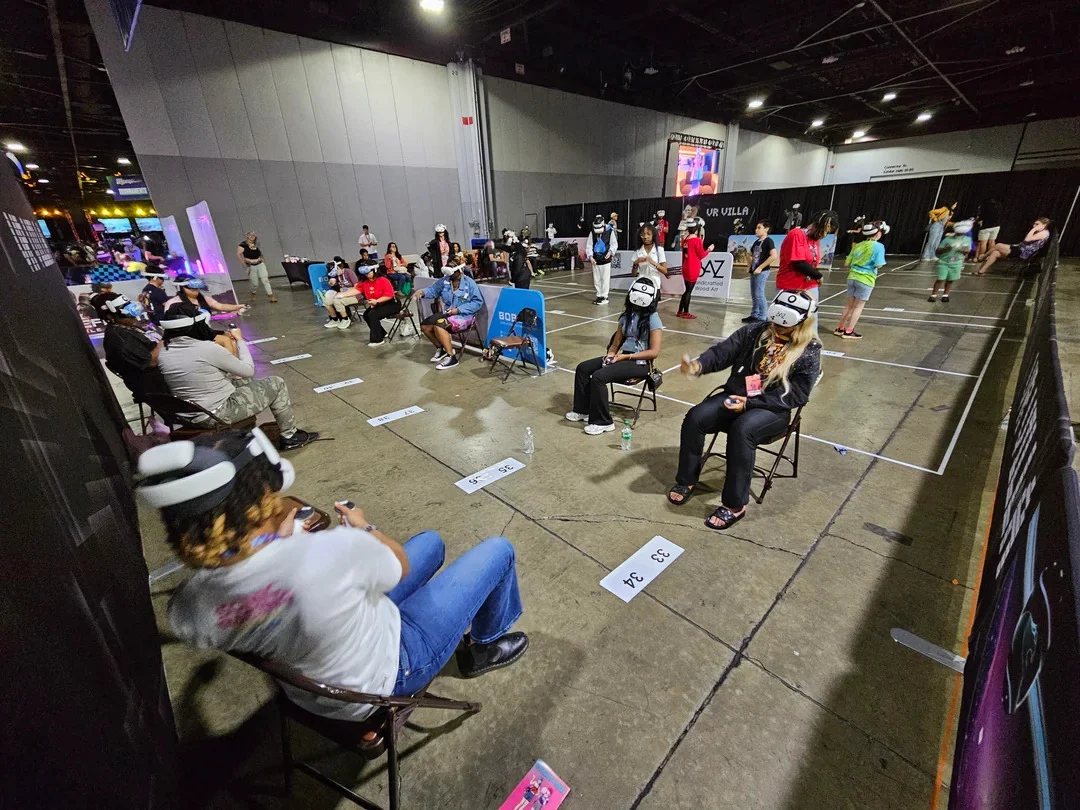
By formalizing the group as VR Villa—a name intended to reflect a "village" of hundreds of collaborative gamers—Basladynski transitioned from a casual enthusiast to a "Director of VR Content" for major events. The organization now operates as a community-centric computer club, utilizing a massive inventory of hardware to create free-to-play installations that often span up to 10,000 square feet. This expansion has been fueled by Basladynski’s ability to leverage his existing retail logistics, "piggybacking" VR equipment onto the transport vans used for his woodworking business.
Quantifying the Impact: A Data-Driven Approach to VR Adoption
While many VR initiatives struggle to maintain long-term engagement, VR Villa has produced significant metrics regarding user behavior and demographics. According to Basladynski, the organization has serviced over 80,000 players in the last four years alone. In the previous calendar year, the group facilitated approximately 30,000 individual sessions across various events.
The data suggests a steady increase in user engagement. In 2022, the average play session lasted approximately 22 minutes. By 2023, this figure rose to 32 minutes per session. Furthermore, VR Villa reports a high "rebooking" rate, with one out of every five participants immediately signing up for a second session after their initial experience.

The demographic breakdown of these participants challenges the industry narrative that VR is exclusively a medium for younger audiences. VR Villa’s internal tracking shows:
- Ages 10–18: 30% of the player base.
- Ages 19–26 (Young Professionals): 26% of the player base.
- Ages 27 and older: 44% of the player base, including significant participation from parents and grandparents.
Notably, despite the technology being available for nearly a decade, approximately 30% of VR Villa’s participants are first-time users. This statistic highlights a persistent "accessibility gap" that traditional retail and marketing strategies have failed to close.
Strategic Partnerships and Software Preferences
The success of these large-scale installations is heavily dependent on partnerships with software developers. VR Villa currently collaborates with 68 different studios, including Resolution Games, Schell Games, and Mighty Coconut. These partnerships allow Basladynski to showcase high-quality, curated content rather than the limited "tech demos" often found in retail environments.

Statistical analysis of game selection at these events reveals a strong preference for social and collaborative experiences:
- Cook-Out (Resolution Games): Consistently the most popular title, accounting for approximately 20-25% of all play sessions.
- Fruit Ninja VR: Favored for its low barrier to entry for new users.
- Space Pirate Trainer: A staple for short, high-energy sessions.
- Blaston: Popular for its competitive, motion-heavy gameplay.
- Walkabout Mini Golf: Frequently chosen for its relaxing, social atmosphere.
While active, motion-based games draw the largest crowds, Basladynski has also observed a niche for long-form content. Some players have been recorded playing Demeo, a virtual tabletop RPG, for up to four and a half hours in a single sitting at these conventions.
Overcoming Logistical and Financial Barriers
Organizing a VR installation of this magnitude requires navigating complex logistical hurdles. At major events like DreamHack Atlanta, Basladynski has deployed upwards of 100 headsets simultaneously. This requires significant infrastructure, including professional-grade audio solutions from companies like KIWI Design and BOBOVR to ensure comfort and immersion in loud convention halls.

Unlike commercial VR arcades or "location-based entertainment" (LBE) centers such as Sandbox VR or Zero Latency, VR Villa operates on a free-to-play model. Basladynski funds the operation by negotiating with event organizers for cost coverage, which includes travel, lodging for staff, and shipping expenses. By positioning VR Villa as a community service rather than a commercial vendor, the group gains access to prime floor space and "host hotel" accommodations that would be prohibitively expensive for a traditional startup.
Analysis of the Retail Impasse: Community vs. Corporate Marketing
The persistent success of VR Villa provides a stark contrast to the struggles of major corporations like Meta in the retail sector. Meta has recently announced plans to reintroduce VR demos into 50 Best Buy locations, yet Basladynski remains skeptical of the impact. He points to three primary reasons why corporate retail demos often fail to convert "VR-curious" consumers:
- Staffing and Expertise: Retail employees often lack the specialized training to troubleshoot fit, comfort, and software mechanics. VR Villa utilizes trained volunteers who are active members of the VR community.
- The "Sales Rep" Barrier: Consumers are often wary of demos that feel like a sales pitch. VR Villa’s community-first approach fosters a "what should I try?" dialogue rather than a "should I buy?" pressure tactic.
- Environmental Context: Traditional retail demos often require users to stand in a busy aisle while holding a headset to their face. In contrast, VR Villa provides dedicated play spaces and social environments where friends can play together.
Internal surveys conducted by Basladynski suggest that the social dynamic is the strongest driver of hardware sales. In a study of 3,600 participants, 57% reported a positive shift in their perspective on VR after a 20-minute session. Crucially, 17% of participants stated they would have purchased a headset "on the spot" if one had been available for sale immediately following a successful multiplayer session with friends.

Implications for the Future of the VR Industry
As the VR industry moves toward a more mature market, Basladynski advocates for a shift toward "sustainability pathways." While industry giants have previously projected a billion users within a decade, the current reality sits at approximately 11 to 12 million active monthly users on the Meta platform.
The success of VR Villa suggests that the industry’s growth may not come from massive television ad campaigns or "bleeding-edge" spec sheets, but from removing the physical and social barriers to entry. By providing guided, high-quality first experiences, grassroots organizations are doing the heavy lifting of consumer education that multi-billion dollar corporations have struggled to master.
Basladynski’s dual life as a craftsman of physical chopsticks and a curator of virtual experiences serves as a unique case study in modern entrepreneurship. It demonstrates that the most effective way to promote emerging technology is not through a screen, but through the hands-on, community-driven passion of enthusiasts who are willing to "do the work" of introducing the world to the next frontier of gaming. For the VR industry to reach the next level of mainstream adoption, it may need to look away from the boardroom and toward the convention floor.
About the Author