The marketing landscape is undergoing a profound transformation, driven by the accelerating adoption of artificial intelligence (AI). This shift is not merely about efficiency; it’s about empowering marketers to craft more intelligent, personalized, and impactful campaigns than ever before. A recent industry survey highlights the growing recognition of AI’s significance, with a striking 61% of marketers identifying AI software as the cornerstone of their data strategy. For those who may feel they are just beginning to explore the potential of AI in marketing, the journey is more accessible than anticipated. This comprehensive overview explores eleven leading AI marketing tools that are poised to redefine strategic execution and deliver superior results.
The AI Imperative in Modern Marketing
The pressure on marketing teams to deliver measurable results in an increasingly fragmented and competitive digital environment is immense. Consumers are bombarded with messages across numerous channels, making it challenging for brands to cut through the noise and establish meaningful connections. Traditional marketing approaches, often reliant on broad segmentation and manual analysis, struggle to keep pace with evolving consumer expectations for personalized experiences.
Artificial intelligence offers a powerful solution to these challenges. By analyzing vast datasets at speeds and scales impossible for humans, AI can uncover intricate patterns, predict consumer behavior, and automate complex tasks. This allows marketers to move beyond guesswork and implement data-driven strategies that resonate with individual customers. The integration of AI is no longer a futuristic concept; it is a present-day necessity for organizations aiming to maintain a competitive edge. The industry’s embrace of AI is further evidenced by significant investments in AI-powered marketing technologies, with global spending projected to reach tens of billions of dollars in the coming years, underscoring its perceived value and transformative potential.
Revolutionizing Content Creation with Jasper AI
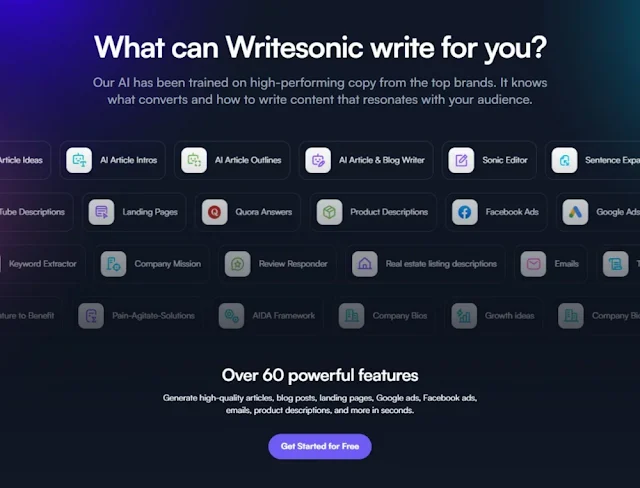
At the forefront of AI-powered content generation is Jasper AI, formerly known as Jarvis. This sophisticated tool leverages artificial intelligence to identify optimal word choices and sentence structures, catering to specific writing styles and mediums with remarkable efficiency and accessibility. Jasper AI aims to democratize content creation, enabling marketers to produce high-quality written material at an accelerated pace.
Key Features of Jasper AI:
- AI-Powered Writing Assistance: Generates various forms of content, from blog posts and social media updates to website copy and email subject lines.
- Brand Voice Adaptation: Learns and replicates a brand’s unique tone and style for consistent messaging.
- Plagiarism Checker: Ensures originality and adherence to content integrity standards.
- Multiple Content Templates: Offers pre-built templates for diverse marketing needs, streamlining the creative process.
A notable incentive for new users is an offer of 10,000 free credits upon signing up through designated affiliate links, encouraging broader adoption and experimentation with the platform’s capabilities. This promotional strategy aims to lower the barrier to entry, allowing businesses to experience the benefits of AI-driven content creation firsthand.
Hyper-Personalization Through Intelligent Segmentation
The ability to deliver tailored messages to individual consumers is a hallmark of effective modern marketing. AI tools are significantly advancing this capability, moving beyond basic demographic segmentation to understand nuanced consumer interests and behaviors.
1. Personalize: This AI-powered technology excels at identifying and executing highly targeted sales and marketing campaigns. By continuously tracking the products and services that individual contacts show the most interest in, Personalize provides real-time insights. Its sophisticated algorithm identifies each contact’s top three interests, which are dynamically updated based on their recent online activity. This dynamic approach ensures that marketing efforts remain relevant and timely, significantly boosting engagement rates.
Key Features of Personalize:
- Real-time Interest Tracking: Monitors user behavior to identify immediate product and service interests.
- Dynamic Segmentation: Creates highly specific audience segments based on evolving interests.
- Personalized Recommendations: Facilitates the delivery of tailored product or content recommendations.
Optimizing Email Deliverability and Engagement
Email marketing remains a critical channel, but its effectiveness is challenged by overflowing inboxes and declining open rates. AI is stepping in to address these challenges by optimizing send times and content relevance.
2. Seventh Sense: This platform offers advanced behavioral analytics designed to capture customer attention within crowded inboxes. The perennial challenge of determining the optimal day and time for email delivery is a significant hurdle. While general trends exist, individual recipient habits vary widely. Seventh Sense alleviates this stress by employing an AI-based platform that ascertains the most effective send timing and email frequency for each contact, based on their historical engagement patterns. This intelligent approach ensures that emails land in inboxes when recipients are most likely to engage, thereby maximizing open and click-through rates. The tool is particularly well-suited for users of HubSpot and Marketo, integrating seamlessly with these popular marketing automation platforms.
Key Features of Seventh Sense:
- AI-Driven Send Time Optimization: Determines the ideal moment to send emails to individual recipients.
- Personalized Email Cadence: Adjusts email frequency based on user engagement.
- Behavioral Analytics Integration: Leverages user interaction data to inform delivery strategies.
- HubSpot and Marketo Compatibility: Seamless integration with leading marketing automation systems.
3. Phrasee: Specializing in the critical element of email subject lines, Phrasee employs artificial intelligence to craft more effective and engaging copy. Its AI-based Natural Language Generation system analyzes data-driven insights to produce millions of natural-sounding copy variations that align with a brand’s voice. The platform features an end-to-end learning model: as results are fed back, the prediction model continuously rebuilds and refines its understanding of audience preferences, ensuring ongoing improvement in subject line performance.
Key Features of Phrasee:
- AI-Generated Subject Lines: Creates compelling and high-performing email subject lines.
- Brand Voice Consistency: Ensures all generated copy aligns with brand identity.
- Continuous Learning Algorithm: Adapts and improves based on campaign performance data.
- A/B Testing Capabilities: Facilitates experimentation with different copy variations.
Enhancing Search Engine Visibility and Content Strategy
In the digital realm, visibility is paramount. AI is proving invaluable in helping marketers navigate the complexities of search engine optimization (SEO) and develop robust content strategies.
4. HubSpot SEO: This integral tool for content teams leverages machine learning to understand how search engines interpret and categorize content. HubSpot SEO assists in improving search engine rankings and outperforming competitors. Search engines favor websites that organize content around core subjects, or "topic clusters." HubSpot SEO helps marketers identify and rank for topics that are most relevant to their business and audience, fostering a more structured and authoritative online presence.
Key Features of HubSpot SEO:
- Machine Learning for SEO Analysis: Understands search engine behavior to optimize content.
- Topic Cluster Identification: Helps organize content around relevant themes.
- Competitor Analysis: Provides insights into competitor SEO strategies.
- Keyword Research and Ranking: Supports the identification and targeting of high-impact keywords.
5. Evolv AI: Website testing and optimization can be a time-consuming process, often limited by the ability to test only a few variables at a time. Evolv AI revolutionizes this by enabling the simultaneous testing of numerous ideas. It employs advanced algorithms to pinpoint top-performing concepts, combine them, and iteratively refine the process to achieve the optimal website experience. This approach dramatically accelerates the optimization cycle, leading to faster improvements in conversion rates and user engagement.
Key Features of Evolv AI:
- Simultaneous A/B/n Testing: Tests multiple variations of website elements concurrently.
- Algorithmic Optimization: Identifies and combines winning elements for peak performance.
- Accelerated Conversion Rate Optimization (CRO): Reduces the time required to achieve significant website improvements.
6. MarketMuse: This AI-powered tool assists marketers in building comprehensive content strategies. MarketMuse’s algorithm identifies strategic keyword targets for ranking within specific topic categories and recommends keywords that, if pursued, could lead to topic authority. It also pinpoints content gaps and opportunities for new material, prioritizing them based on their potential impact on search engine rankings. By comparing a site’s content against thousands of related articles, the algorithm uncovers missing information and areas for strategic content development.
Key Features of MarketMuse:
- AI-Driven Content Strategy: Provides data-backed recommendations for content development.
- Topic Authority Identification: Helps marketers identify and target keywords for comprehensive topic coverage.
- Content Gap Analysis: Uncovers missing content opportunities and potential ranking improvements.
- Prioritization of Content Initiatives: Ranks content opportunities based on their predicted impact.
Streamlining Content Quality and Consistency
Maintaining a consistent brand voice and high-quality content across all touchpoints is a significant challenge, especially for large organizations. AI tools are emerging to automate and enhance these processes.
7. Acrolinx: This enterprise-grade content alignment platform is designed to help brands scale their content creation efforts while significantly improving quality. Major global brands like Google, Adobe, and Amazon rely on Acrolinx to manage their extensive writing operations. Instead of manually searching for and correcting errors across multiple documents, Acrolinx centralizes this process. Users define their preferences for style, grammar, tone of voice, and company-specific terminology. Acrolinx then evaluates existing content, scores its performance, and provides real-time guidance and suggestions for improvement. This ensures that all content adheres to brand standards, strengthening weaker pages and enhancing overall communication effectiveness.
Key Features of Acrolinx:
- Content Quality Scoring: Evaluates content against predefined brand and style guidelines.
- Real-time Writing Guidance: Offers instant suggestions for grammar, style, and tone.
- Brand Voice Enforcement: Ensures consistent messaging across all content.
- Scalable Content Management: Facilitates high-volume content creation and quality control for large enterprises.
Revolutionizing Customer Communication and Engagement
In the fast-paced world of e-commerce, real-time communication and personalized customer interactions are crucial for driving sales and fostering loyalty. AI is enabling businesses to meet these demands more effectively.
8. Copilot: This suite of tools is engineered to help e-commerce businesses maintain continuous, real-time communication with their customers throughout every stage of the sales funnel. Copilot enables businesses to promote products, recover abandoned shopping carts, and send timely updates or reminders directly via messaging platforms like Messenger. This proactive and personalized approach can significantly reduce cart abandonment rates and enhance the overall customer journey.
Key Features of Copilot:
- 24/7 Customer Communication: Provides automated, real-time interaction capabilities.
- Funnel Stage Personalization: Delivers relevant messages at each point in the customer journey.
- Abandoned Cart Recovery: Re-engages customers who have left items in their cart.
- Product Promotion: Facilitates targeted product marketing through messaging channels.
Leveraging Customer Feedback with Deep Learning
Understanding customer sentiment and feedback is vital for product development and marketing strategy. AI is transforming how businesses analyze and act upon this crucial information.
9. Yotpo: Yotpo utilizes deep learning technology to meticulously evaluate customer product reviews, enabling businesses to make more informed decisions. Its AI engine identifies key topics that customers mention in relation to products, along with their expressed sentiments. By extracting relevant insights from past buyer reviews and presenting them in intelligent displays, Yotpo helps convert new shoppers by showcasing social proof. Furthermore, Yotpo significantly reduces the manual effort involved in review moderation. Its AI-powered moderation tool automatically assigns a score to each review and flags those with negative sentiment, allowing marketing teams to focus on quality control and strategic response rather than manual oversight.
Key Features of Yotpo:
- AI-Powered Review Analysis: Extracts sentiment and key topics from customer reviews.
- Smart Review Displays: Showcases relevant reviews to influence purchasing decisions.
- Automated Review Moderation: Identifies and flags negative or problematic reviews.
- Enhanced Social Proof: Leverages customer feedback to build trust and drive conversions.
Autonomous Campaign Management with Albert AI
For businesses seeking to automate and optimize their marketing campaigns at scale, Albert AI offers a self-learning software solution. This platform analyzes vast amounts of data to autonomously run optimized marketing campaigns. Marketers can input their creative content and target markets, and Albert AI uses its extensive database to identify key characteristics of high-intent buyers. It then identifies potential customers matching these traits and conducts trial campaigns on small customer groups, refining the results before launching on a larger scale. Albert AI integrates seamlessly with existing marketing technology stacks, providing access to accounts, ads, search, and social media channels. It meticulously maps tracking and attribution to the source of truth, allowing businesses to clearly determine which channels are driving their growth.
Key Features of Albert AI:
- Autonomous Campaign Management: Automates the creation and optimization of marketing campaigns.
- Data-Driven Buyer Identification: Identifies high-intent customers based on comprehensive data analysis.
- Trial Campaign Optimization: Refines campaign strategies through controlled pilot programs.
- Integration with Existing Stacks: Works seamlessly with current marketing technology.
- Attribution and Channel Performance Tracking: Provides clear insights into channel effectiveness.
The Future of Marketing is Intelligent
The rapid evolution of artificial intelligence is fundamentally reshaping the marketing industry. The tools discussed represent a snapshot of the innovative solutions available today, empowering marketers to achieve unprecedented levels of personalization, efficiency, and effectiveness. As AI continues to advance, we can anticipate even more sophisticated capabilities that will further redefine how brands connect with their audiences.
While this list highlights a selection of influential AI marketing tools, the ecosystem is constantly expanding. Organizations are encouraged to explore these resources and identify those that best align with their specific strategic objectives. The adoption of AI is no longer an option but a strategic imperative for businesses seeking to thrive in the dynamic and data-driven future of marketing. The ongoing development of AI promises new marketing strategies that are currently beyond our imagination, but for now, these tools provide a robust foundation for integrating artificial intelligence into the core of any successful marketing mix.
Note: This article contains affiliate links. A small commission may be earned if a premium plan is purchased through these links, supporting the continued provision of such insights.
About the Author