The extended reality (XR) hardware landscape is currently witnessing a significant shift in biometric integration, highlighted by the recent emergence of Immersix, a Western startup that debuted its proprietary eye-tracking solution at the VR/AR Expo China in Shanghai. Unlike the industry-standard pupil-tracking methods utilized by major players such as Meta and Apple, Immersix has developed a system that focuses on the human retina. This technological pivot aims to address long-standing hurdles in the mixed reality (MR) sector, specifically regarding calibration stability, hardware form factor, and power efficiency.
Technical Architecture and the Shift to Retina Mapping
Current eye-tracking technologies predominantly rely on "glint-based" or pupil-center corneal reflection (PCCR) methods. These systems typically require a ring of infrared (IR) light-emitting diodes (LEDs) to create reflections on the eye’s surface, which are then captured by high-speed cameras to calculate the gaze vector. While effective, these systems are highly sensitive to the physical positioning of the headset. If a device shifts slightly on the user’s face—a common occurrence during active movement—the mathematical model often breaks, necessitating a recalibration.
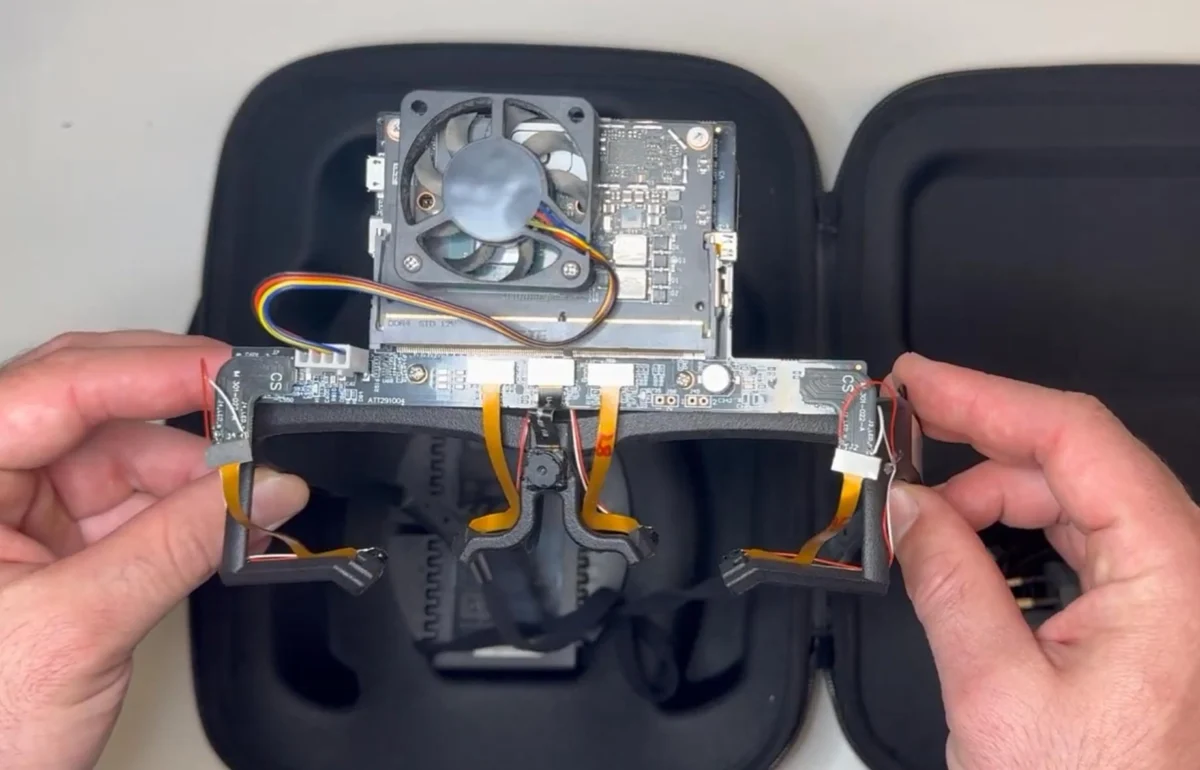
Immersix proposes an alternative that treats the internal structure of the eye as a fixed reference point. The hardware module for the Immersix system is notably minimalist, consisting of a single camera and one IR LED per eye. This reduction in components allows for a smaller physical footprint, making the technology particularly attractive for the burgeoning "smart glasses" market, where internal space is at a premium and every millimeter of circuitry must be justified.

The core innovation lies in the software’s ability to look through the pupil to image the retina’s unique vascular patterns. By treating the retina as a "ground truth" or a biological fingerprint, the system can determine eye orientation by matching the currently visible segment of the retina against a pre-constructed map. Because the retina’s internal structure remains static regardless of how the headset sits on the nose, the system maintains sub-degree accuracy even after the user removes and replaces the device.
The Calibration Chronology and Biometric Mapping
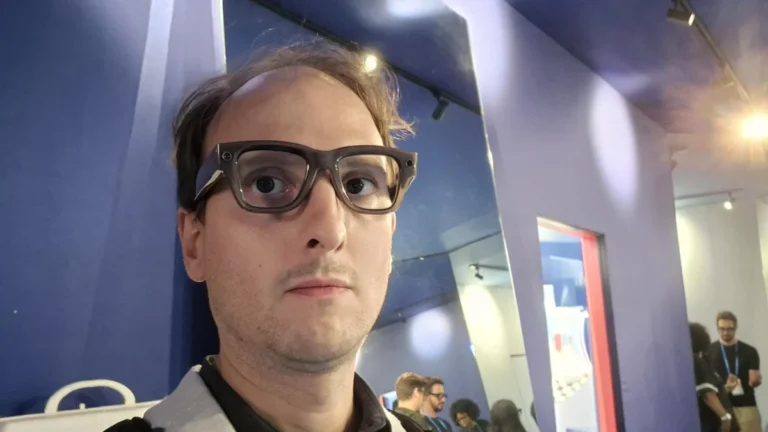
The implementation of the Immersix system begins with a specialized calibration phase designed to build a comprehensive feature map of the user’s eye. During field demonstrations at the VR/AR Expo, the process was showcased using a prototype frame connected to a workstation. This initial setup utilized external markers to establish a spatial relationship between the user’s gaze and the display.
The calibration process follows a specific chronological sequence:
- Initial Illumination: The single IR LED illuminates the interior of the eye, allowing the camera to capture high-resolution imagery of the retinal blood vessels.
- Dynamic Sweeping: The user is prompted to follow a visual target across a display. In the demonstration, this was presented as an "erasing" task, where the user moved a gaze-controlled pointer to clear a rectangular area on the screen.
- Feature Reconstruction: As the eye moves to the periphery, the camera captures different segments of the retina. The software then stitches these images together in real-time, creating a high-fidelity "fingerprint" of the entire retinal surface.
- Persistent Storage: Once the map is generated, it serves as a permanent reference. Because the retina does not change significantly over a human’s adult life, this calibration can theoretically persist for years, eliminating the "calibration fatigue" often cited by users of current high-end VR headsets.
Following this two-to-three-minute procedure, the system transitions into active tracking. In this state, the algorithm identifies the specific retinal landmarks currently in view and instantly calculates the eye’s rotation relative to the stored map.

Performance Data and Field Validation
Performance metrics provided by Immersix indicate that the system is capable of a 120Hz refresh rate, matching the demands of high-end gaming and professional enterprise applications. During technical evaluations, the system demonstrated sub-degree accuracy, a critical threshold for "foveated rendering"—a technique where the computer only renders high-detail graphics exactly where the user is looking to save processing power.
In practical testing environments, the system was used to navigate a grid-based interface similar to the operating systems found in contemporary spatial computers. The accuracy remained consistent across the entire field of view, including lateral positions where traditional pupil tracking often struggles due to the distortion of the pupil’s shape at extreme angles.
A key differentiator highlighted during the demonstrations was the "re-wearing" stability. Testers were encouraged to intentionally shift the glasses and take them off entirely before putting them back on. In each instance, the system resumed tracking immediately without requiring the user to repeat the calibration process. This robustness addresses a major friction point for enterprise training and location-based entertainment, where multiple users frequently share hardware.
Broader Industry Implications and Market Context
The move toward retina tracking comes at a time when the XR industry is desperate for power-efficient biometrics. As Meta and other manufacturers move toward true AR glasses—devices that look like standard eyewear but possess holographic capabilities—battery life and heat management become the primary engineering constraints. A tracking module that requires only one LED instead of a full array could significantly reduce the power draw of the biometric stack.

Furthermore, the "persistent calibration" offered by Immersix could change the user experience (UX) standards for the next generation of headsets. If a device can recognize a user instantly by their retinal map, it could simultaneously handle user authentication (logging into a profile) and gaze-tracking calibration in a single, seamless step.
However, the transition to retina-based systems introduces new challenges in the realm of data privacy. Retinal scans are considered highly sensitive biometric data, often used in high-security military or government identification systems. To gain mainstream acceptance, Immersix and its potential partners will likely need to implement "on-device" processing, ensuring that the retinal feature maps are encrypted and never leave the local hardware’s secure enclave.
Analysis of Future Integration
While the Immersix technology is currently in the prototype and developer kit stage, its successful demonstration in Shanghai suggests it is ready for integration evaluation by major Original Equipment Manufacturers (OEMs). The startup is currently offering evaluation kits to hardware developers, signaling a move toward licensing the technology rather than producing a consumer headset of their own.
If adopted by industry leaders like Pico, Meta, or Sony, this retina-centric approach could set a new benchmark for the "invisible" interface—where the technology adapts to the user’s biology rather than forcing the user to adapt to the technology’s limitations. As the XR market matures, the focus is shifting from simply achieving functionality to perfecting the nuances of human-computer interaction; in this regard, Immersix’s contribution to eye-tracking stability represents a significant step forward in the quest for truly seamless spatial computing.
About the Author