The contemporary digital landscape, once heralded as a democratizing force for creators and a boundless arena for community building, has evolved into a highly centralized system, raising significant concerns among artists, policymakers, and digital rights advocates regarding discoverability, authentic engagement, and the very nature of artistic expression. This transformation, largely driven by the actions of dominant technology companies and the perceived inaction of governmental regulatory bodies, has fundamentally reshaped the pathways for artists to connect with audiences, leading to a "top-heavy" internet where visibility is increasingly dictated by complex algorithms rather than organic merit or genuine human interest.
From Decentralized Dreams to Algorithmic Gatekeeping: A Brief Chronology
The internet’s evolution can be broadly understood through distinct phases, each profoundly impacting the creative ecosystem. In its nascent stages, often referred to as Web 1.0 (roughly 1990s to early 2000s), the internet functioned largely as a static information repository, but it also fostered early forms of digital communities through forums, personal websites, and the burgeoning "blogosphere." Discovery, while rudimentary by today’s standards, was often organic, relying on web rings, directories, and word-of-mouth.
The advent of Web 2.0, around the mid-2000s, ushered in an era of user-generated content and social interactivity. Platforms like MySpace, early YouTube, and nascent social media sites promised to empower individuals, offering unprecedented avenues for self-expression and direct audience connection. Around 2010, many independent creators experienced a golden age of digital discovery. Anecdotal evidence from game developers, musicians, and visual artists from this period often recounts how projects, even those with modest production values or limited marketing budgets, could gain significant traction. For instance, a game released in 2010, despite initial bugs and inconsistent artwork, could organically generate fan art, gameplay videos, and media interviews simply because the underlying architecture of the internet facilitated broader, less mediated discovery. This era saw a more distributed engagement model, where a larger number of creators could each cultivate a respectable, engaged following.
However, the period following 2010 marked a significant shift. Driven by a relentless pursuit of user attention, advertising revenue, and data aggregation, major technology platforms began to implement sophisticated algorithms designed to curate content feeds. Initially presented as a way to enhance user experience by delivering "relevant" content, these algorithms rapidly became opaque gatekeepers, prioritizing specific types of content, often favoring viral trends, established entities, or material optimized for maximum engagement metrics (likes, shares, comments).
The Concentration of Digital Power: Supporting Data and Market Dynamics
The consequences of this algorithmic shift are profound and quantifiable. Data from various digital analytics firms consistently indicates a growing disparity in online visibility and engagement. While precise, real-time figures are proprietary and constantly fluctuating, trends suggest that a disproportionately small percentage of creators now capture the vast majority of audience attention. For illustrative purposes, industry analysts frequently cite models where, if a decade ago 100,000 creators might each garner 100 dedicated fans, today, a mere 100 creators might command 100,000 fans each, leaving millions of others struggling for even basic visibility.
This "winner-take-all" dynamic is not unique to the individual creator but mirrors broader trends of corporate conglomeration across various industries. The gaming industry, for example, has seen significant consolidation, with fewer, larger corporations like Activision Blizzard, Tencent, and Take-Two Interactive acquiring independent studios. This parallels the digital landscape where major platforms, through their control over discovery algorithms and user data, effectively act as vast digital conglomerates, absorbing or marginalizing smaller players. The "bar for entry" for creators is no longer merely about talent or innovation but increasingly about the ability to invest heavily in marketing, understand and manipulate algorithmic logic, and produce content optimized for maximum platform engagement, often at the expense of artistic integrity or nuanced expression.
A 2023 report by the Creator Economy Council highlighted that while the "creator economy" is booming in terms of gross revenue, the distribution of this wealth is highly skewed. Less than 1% of creators on major platforms account for over 80% of the total earnings, leaving the vast majority struggling to generate sustainable income. This financial pressure further incentivizes creators to conform to algorithmic demands, perpetuating a cycle that stifles diversity and independent voices.
Regulatory Inertia and Calls for Intervention
A critical component of this centralization, as articulated by tech critics and digital policy experts, is the perceived failure of governments worldwide to adequately regulate the rapidly evolving digital marketplace. Existing antitrust laws, often designed for industrial-era monopolies, have struggled to adapt to the unique characteristics of digital platforms, which wield power through data control, network effects, and algorithmic dominance.
From the mid-2010s onwards, despite growing concerns about market concentration, data privacy, and the spread of misinformation, many governments either chose not to enforce existing antitrust legislation against tech giants or failed to introduce new, comprehensive regulations tailored to the digital age. This regulatory vacuum allowed platforms to expand unchecked, consolidating their power over content distribution, user data, and advertising revenue. Debates around issues like net neutrality, Section 230 in the United States, and the European Union’s Digital Markets Act reflect ongoing attempts to address these imbalances, but progress has been slow and often met with significant lobbying efforts from large tech companies.
Critics argue that a more proactive regulatory approach in the early to mid-2010s could have preserved a more decentralized, equitable internet – one characterized by a vibrant "blogosphere," diverse thriving communities, functioning and unbiased search engines, and a fundamental principle of organic content discovery. Without such interventions, many believe that even immediate legislative action today would require years, if not decades, to meaningfully restructure the digital environment and restore a healthier ecosystem.
The Open Mic as a Paradigm: Reclaiming Authentic Engagement
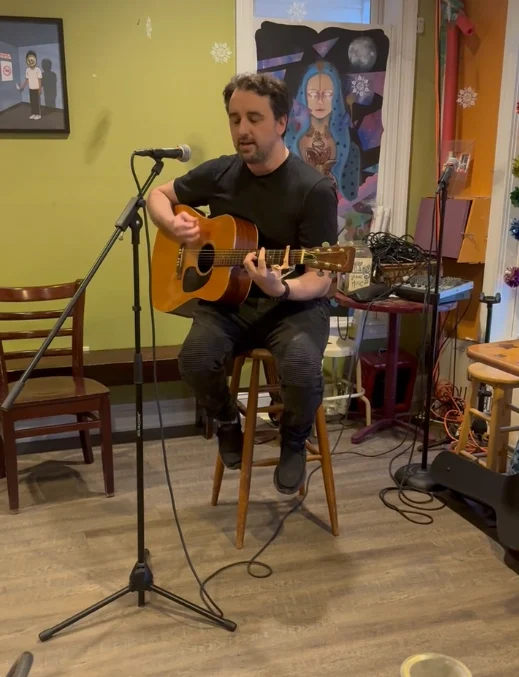
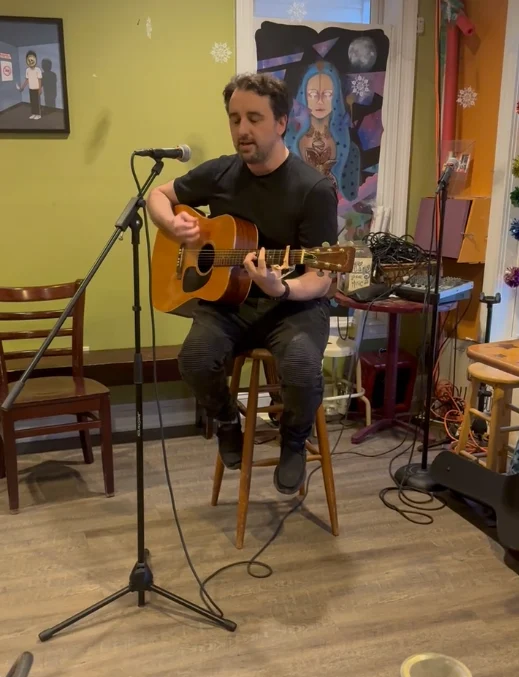
In stark contrast to the algorithm-driven, centralized internet of 2025, many are turning to physical spaces as models for authentic human connection and equitable artistic sharing. The "open mic" event serves as a potent metaphor for an alternative paradigm. In an open mic setting, the myriad pressures and optimizations of the digital world—algorithmic bias, marketing budgets, corporate gatekeepers—dissolve. Everyone present, regardless of background, appearance, or social status, is granted an equal opportunity—typically a fixed time slot of 3-5 minutes—to share their art. Whether it’s poetry, music, comedy, or simply a personal reflection, the value is placed on direct human connection, presence, and shared experience.
This model embodies several principles sorely lacking in the current mainstream internet:
- Equity of Access: Every participant gets a turn, eliminating algorithmic filtering or "pay-to-play" visibility.
- Direct Human Engagement: Feedback is immediate, personal, and unmediated by digital metrics. The audience’s presence and attention are the primary forms of validation.
- Community Building: Participants share a common space, fostering a sense of camaraderie and mutual curiosity. The focus is on being "there" together.
- Freedom from Optimization: Creators are free to express themselves authentically, without the pressure to tailor their work for an algorithm.
While the broader "IRL" (in real life) art world is certainly not immune to arbitrary barriers, biases, and corporate influence, particularly where significant money is involved, the open mic represents a grassroots, low-stakes environment where these commercial pressures are largely absent. Its power lies in its simplicity and its focus on the inherent human desire to create, share, and connect directly.
The Hybrid Future: Blending Digital Accessibility with Physical Authenticity
The growing disillusionment with centralized digital platforms has sparked renewed interest in fostering community in physical spaces. This movement is not merely a nostalgic retreat but a pragmatic response to the limitations of purely digital interactions. For many, being physically present—whether at an open mic, a community gathering, or a protest—offers a level of engagement and solidarity that screens cannot replicate. This physical presence is vital not only for artistic inspiration and collaboration but also for civic engagement and collective action, particularly in an increasingly complex and politically charged world.
Yet, the internet remains an indispensable tool for global reach, information dissemination, and maintaining connections across distances. The challenge, therefore, lies in demanding and developing digital environments that embody the principles of the open mic: equitable access, genuine interaction, and decentralized control. Platforms like Discord, with their emphasis on smaller, self-moderated communities where all chatters theoretically operate on a more equal playing field, offer a glimpse into how digital spaces can be designed to foster more authentic connection, albeit on a smaller scale than the broad discovery of the early internet.
The trajectory of the internet is not predetermined. It is a product of design choices, regulatory frameworks, and societal priorities. Moving forward, a concerted effort from policymakers, technology developers, and users themselves will be necessary to advocate for and build a digital future that prioritizes human connection, artistic freedom, and equitable access over algorithmic control and corporate profit. This involves revisiting antitrust enforcement, exploring decentralized web technologies (Web3, federated platforms), and fostering hybrid models that leverage the global reach of digital tools while preserving the irreplaceable authenticity and community found in physical gatherings. The demand for an internet that functions more like an open mic—open, fair, and focused on shared human experience—is not just an artistic aspiration but a critical imperative for a vibrant, democratic, and truly connected society.
About the Author