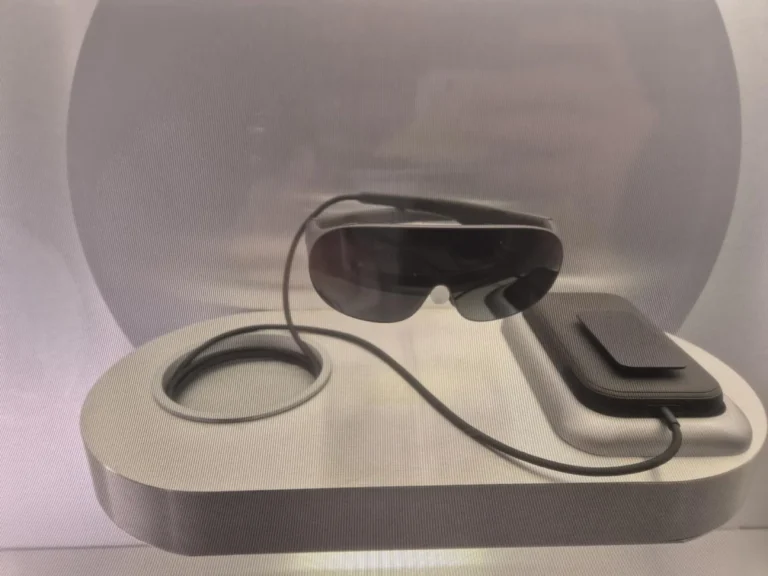
The adult entertainment industry has historically served as a primary catalyst for the adoption and refinement of emerging technologies, acting as a high-stakes testing ground for hardware scalability, monetization models, and user retention. As the broader technology landscape shifts from isolated virtual reality (VR) toward integrated mixed reality (MR) and augmented reality (AR), the adult sector is once again leading the transition. The emergence of high-fidelity passthrough technology, particularly following the release of consumer-grade headsets like the Meta Quest 3 and Apple Vision Pro, has transformed AR from a mobile-based novelty into a sophisticated spatial computing medium.

The Experimental Phase: The Limitations of Mobile AR (2018–2020)
Between 2018 and 2019, the initial foray into augmented reality adult content was primarily restricted to mobile devices. Utilizing frameworks such as Apple’s ARKit and Google’s ARCore, developers produced short, looping 3D animations that users could project onto flat surfaces via their smartphone cameras. While these experiments provided a proof of concept for "spatial presence," they were hampered by significant technical and ergonomic hurdles.
Tracking instability was a frequent issue; digital assets would often "drift" or jitter, breaking the illusion of environmental integration. Furthermore, early mobile AR lacked sophisticated occlusion—the ability for a virtual object to be hidden behind a physical object, such as a piece of furniture. Ergonomically, the "window effect" of holding a handheld device for extended periods proved uncomfortable for users, limiting engagement to short sessions. Consequently, while these mobile demos hinted at the potential of AR, the format lacked the infrastructure necessary for a sustainable commercial ecosystem.

The Passthrough Turning Point and the Rise of Mixed Reality
The transition from mobile AR to passthrough MR marked a fundamental shift in the industry. Passthrough technology utilizes onboard cameras to capture the user’s physical surroundings in real-time, overlaying digital content onto the video feed. This approach allows the user to remain grounded in their actual environment while interacting with digital performers, addressing the sense of isolation often cited as a drawback of traditional fully immersive VR.
The pivotal moment for this medium arrived with the stabilization of full-color passthrough on consumer headsets. Earlier iterations of passthrough were often monochromatic and low-resolution, intended primarily for safety and boundary setup. However, the introduction of high-resolution, low-latency color cameras allowed digital performers to blend naturally with real-world lighting and textures. Industry data suggests that the release of the Meta Quest 3 in late 2023 served as the primary driver for mass-market adoption, providing the necessary hardware base for studios to justify investment in dedicated MR production.

Technical Methodologies: Why Video-Based Passthrough Dominates
A critical debate within the spatial computing sector involves the choice between volumetric capture and video-based passthrough. Volumetric capture involves recording a subject with dozens of cameras to create a 3D model that can be viewed from any angle. While visually impressive, the logistical and financial costs of volumetric production remain prohibitive for long-form content.
In contrast, video-based passthrough has emerged as the industry standard due to its balance of realism and scalability. By utilizing chroma-key (green screen) filming techniques, studios can isolate performers and composite them into the user’s view. This allows for:

- Production Efficiency: Studios can leverage existing VR filming workflows, camera rigs, and editing suites.
- Visual Fidelity: High-resolution video (often up to 8K) maintains a level of photographic realism that current real-time 3D renders struggle to match.
- Scalable Distribution: Video files are easier to stream and store than complex volumetric datasets, ensuring compatibility across a wider range of hardware.
The Role of Artificial Intelligence in Content Conversion
The integration of Artificial Intelligence (AI) has further accelerated the growth of the MR adult sector. One of the most significant challenges in creating passthrough content is "matting"—the process of cleanly separating the performer from the background. Traditional manual rotoscoping is time-consuming and expensive.
In 2022, major industry players like SexLikeReal began implementing AI-driven algorithms specifically trained to recognize and isolate human forms in stereoscopic VR environments. Initial off-the-shelf AI tools achieved approximately 60% accuracy, often struggling with fine details like hair or fast motion. To address this, specialized in-house AI models were developed to handle the unique lighting and proximity requirements of adult media. These tools have enabled studios to retroactively convert vast libraries of traditional VR content into MR-compatible formats, rapidly expanding the available content for passthrough-capable headsets.

Emergent Technologies: Gaussian Splatting and Spatial Reconstruction
While video-based passthrough remains the current commercial leader, the industry is exploring next-generation rendering techniques such as Gaussian Splatting. Unlike traditional 3D meshes or flat video, Gaussian Splatting reconstructs a scene as a dense cloud of millions of 3D "splats," each encoding color, opacity, and spatial orientation.
This technique offers a middle ground between video and volumetric capture. It allows for natural parallax—where the perspective of the performer changes as the viewer moves their head—without the massive overhead of full 3D modeling. Projects like BraindanceVR have demonstrated that Gaussian Splatting can create highly realistic, spatially anchored performers that exhibit consistent depth and occlusion behavior. Although currently computationally demanding, the optimization of splat-based rendering on mobile chipsets is expected to be a significant trend in the 2025–2026 period.

Infrastructure and Discovery: The Shift to Aggregation
As the volume of MR content grew, the industry faced a fragmentation problem. Unlike traditional "tube" sites that offer centralized discovery, early passthrough content was scattered across independent studio platforms. This led to the evolution of dedicated passthrough hubs, such as the transition of Arporntube from a news blog to a specialized content aggregator.
These platforms serve a vital role in the ecosystem by:

- Standardizing Quality: Supporting high-bitrate 8K previews to ensure spatial realism is maintained.
- Improving User Experience: Allowing users to evaluate "spatial anchoring" and "POV realism" before committing to a purchase.
- Supporting Independent Creators: Providing a centralized marketplace for smaller studios that lack the marketing budget of major conglomerates.
Broader Implications and Future Outlook
The trajectory of the adult MR sector provides a roadmap for other industries, including telemedicine, remote education, and retail. The transition from "novelty" to "infrastructure" in this sector highlights several key requirements for any successful spatial media format: hardware ecosystem stability, repeatable production workflows, and centralized discovery mechanisms.
Looking forward, the industry is expected to move toward fully interactive, real-time MR experiences. This will likely involve the convergence of live-streaming cam technology with AI-driven background removal, allowing for real-time interaction between performers and users within a shared physical-digital space. As hardware ergonomics continue to improve and fields of view expand, the distinction between virtual and physical presence will continue to blur, solidifying mixed reality as a distinct and permanent medium in the digital landscape.
About the Author