The adult entertainment industry has historically served as a primary catalyst for the adoption and refinement of emerging technologies, ranging from home video formats to high-bandwidth internet streaming. In the current era of spatial computing, this sector is once again acting as a critical stress test for immersive realities, specifically focusing on the transition from fully immersive Virtual Reality (VR) to integrated Augmented Reality (AR) and Mixed Reality (MR). As hardware capabilities stabilize and production workflows mature, AR adult content is evolving from a fragmented landscape of mobile experiments into a sophisticated, commercially viable medium characterized by high-fidelity passthrough experiences and AI-driven production pipelines.

The Experimental Phase: Limitations of Early Mobile AR (2018–2021)
Between 2018 and 2019, the initial foray into AR adult entertainment was primarily confined to smartphone-based frameworks such as Apple’s ARKit and Google’s ARCore. These early experiences were characterized by short, looping 3D animations that users could project onto physical surfaces. While these demonstrations provided a proof-of-concept for digital performers inhabiting real-world spaces, they were hindered by significant technical and ergonomic barriers.
Tracking stability was a persistent issue, with digital assets often "drifting" or failing to maintain spatial anchoring during extended sessions. Furthermore, rudimentary occlusion—the ability for virtual objects to be hidden behind physical objects—meant that performers often appeared to float unnaturally within the environment. Ergonomically, the requirement to hold a mobile device at arm’s length for viewing resulted in low user retention and limited the format’s appeal. Consequently, while these early mobile AR demos generated novelty interest, they lacked the infrastructure necessary for sustainable monetization or long-term audience engagement.

The Passthrough Paradigm Shift and Hardware Maturity
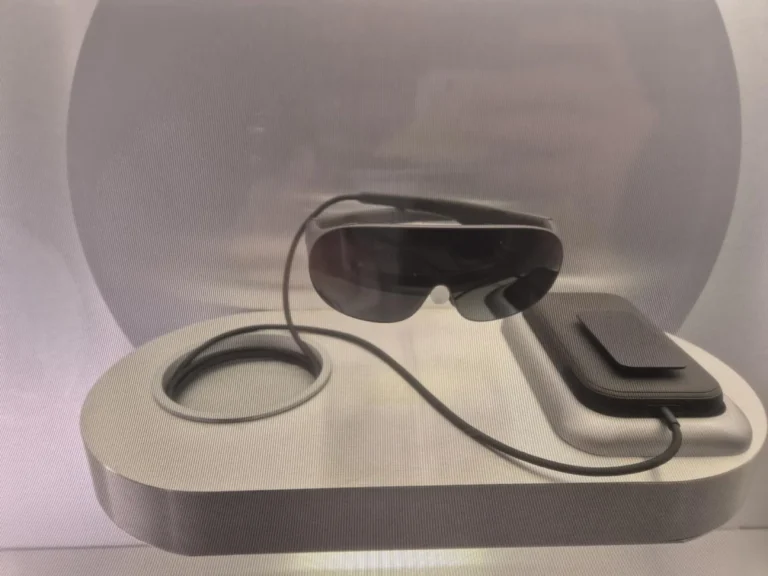
The trajectory of the industry shifted significantly with the arrival of high-quality color passthrough technology in consumer headsets, most notably the Meta Quest 3 and the Apple Vision Pro. Unlike traditional VR, which isolates the user in a fully synthetic environment, passthrough MR captures the user’s actual surroundings via onboard cameras and overlays digital content with high precision.
Industry observers, including Ash, the founder of Arporntube.com, note that passthrough technology solved the primary psychological barrier of VR: environmental isolation. By allowing users to remain grounded in their physical surroundings while interacting with digital performers, the technology created a more comfortable and integrated experience. This shift was supported by rapid hardware adoption; by 2023, the stabilization of consumer-grade MR headsets provided studios with a predictable ecosystem for content distribution, moving the format beyond the experimental phase.

Chronology of Production Innovation (2022–2025)
The maturation of AR adult content can be tracked through a series of specific production milestones:
- 2022: The Emergence of AI Matting: Studios began experimenting with artificial intelligence to retroactively convert VR scenes into AR. Early efforts used off-the-shelf video tools to remove backgrounds, though these often struggled with the specific visual complexities of adult content.
- 2023: Purpose-Built Passthrough Content: SLR Originals and other major production arms began filming scenes specifically for MR. This involved the use of chroma-key (green screen) backgrounds and specialized lighting to ensure digital performers could be cleanly "matted" into a user’s room with realistic scale and lighting consistency.
- 2024: AI-Driven Workflow Optimization: Companies like SexLikeReal developed proprietary AI algorithms specifically trained on immersive adult media. These tools automated the isolation of performers from their original environments, allowing for a "POV Mode" where users could toggle background elements on or off in real-time.
- 2025: Neural Rendering and Gaussian Splatting: The industry began adopting Gaussian Splatting, a technique that reconstructs scenes as dense spatial point clouds. This allows for true volumetric depth and natural parallax, enabling users to move around a performer and view them from multiple angles without the visual distortion common in flat video.
Technical Analysis: Video-Based Passthrough vs. Volumetric Capture
A critical debate within the industry has centered on the most effective method for rendering human performers in AR. While fully volumetric capture—which uses dozens of cameras to create a 3D mesh—offers the highest degree of interactivity, it has proven difficult to scale. The hardware requirements for volumetric filming are prohibitively expensive, and the resulting file sizes are often too large for seamless streaming on current consumer hardware.

In contrast, video-based passthrough has emerged as the dominant commercial format. This method utilizes traditional high-resolution stereo VR filming techniques combined with sophisticated alpha-channel compositing. By focusing on high-quality 8K video and using AI to handle environmental integration, studios can maintain production efficiency while delivering a visual experience that users find more realistic than low-polygon 3D models. This pragmatic approach has allowed the niche to grow by leveraging existing VR production pipelines rather than requiring an entirely new infrastructure.
Market Infrastructure and Content Discovery
As the volume of MR-specific content increased, the industry faced a challenge in discovery and distribution. Unlike the centralized "tube" sites of the 2D era, early AR content was fragmented across various studio-specific platforms and membership walls.

The transition of platforms like Arporntube from blogs to dedicated aggregation sites reflects a broader trend toward infrastructure stabilization. By centralizing previews and trailers that specifically highlight spatial anchoring and environmental blending, these platforms allow users to evaluate the "presence" of a scene before committing to a purchase. Data indicates that the majority of this audience uses Meta Quest devices, emphasizing the importance of platform-specific optimization and high-resolution (8K) playback to maintain the illusion of reality.
Broader Implications for the XR Industry
The evolution of AR in the adult sector provides a blueprint for other industries, such as telepresence, healthcare, and retail. The sector’s success in solving problems related to spatial consistency, lighting estimation, and AI-assisted background removal demonstrates the practical applications of MR beyond gaming.

Furthermore, the industry’s pivot toward "environmental-aware" production—where content is designed to look believable regardless of whether the viewer is in a small bedroom or a large living room—is a direct precursor to the "Spatial Personas" and digital avatars being developed by major tech firms. The adult industry’s ability to monetize these features early provides a roadmap for the commercial viability of spatial computing as a whole.
Future Outlook: Integration and Interactivity
Looking ahead, the distinction between Virtual Reality and Augmented Reality is expected to blur further. Future developments are likely to focus on real-time interactivity, where AI-driven performers can respond to the user’s physical environment and movements. As Gaussian splatting and neural radiance fields (NeRFs) become more computationally efficient, the realism of digital presence will reach a point where the "uncanny valley" is effectively bridged.

In conclusion, AR adult entertainment has established itself as a distinct medium defined by its own set of technical standards and creative philosophies. By aligning technical innovation with practical usability and scalable production models, the sector continues to lead the way in defining how humans interact with digital content in physical spaces. The transition from novelty mobile apps to sophisticated MR ecosystems underscores a broader shift in spatial computing: the move from replacing reality to enhancing it.
About the Author