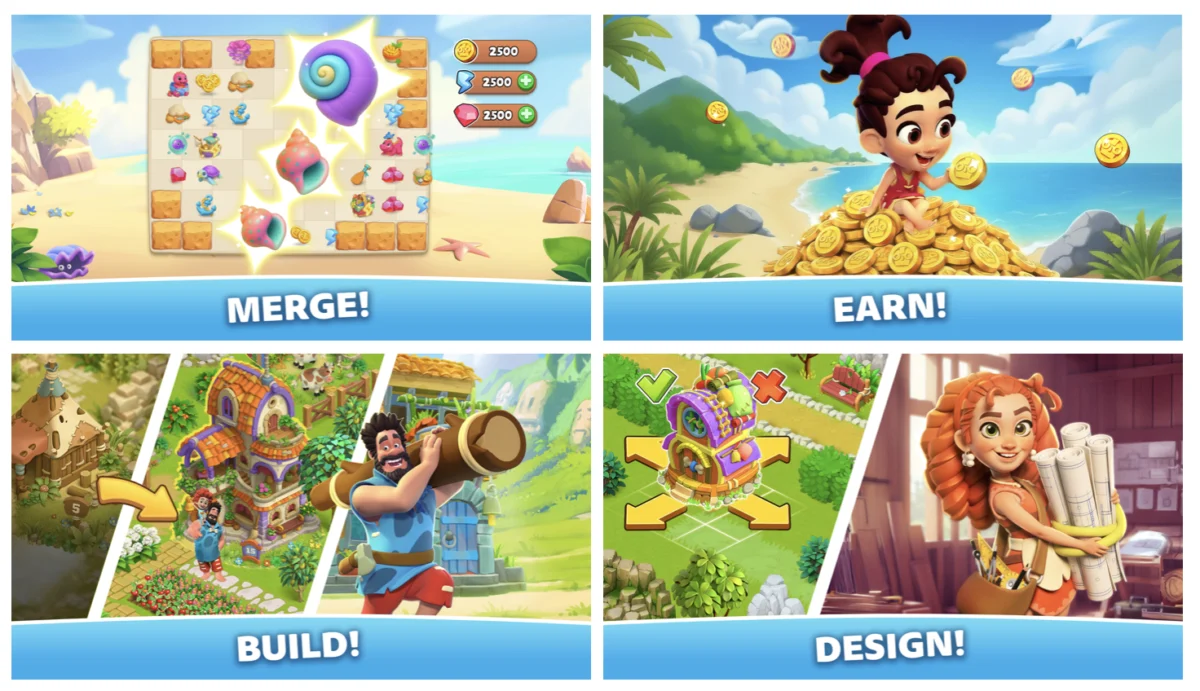
The global mobile gaming industry is currently navigating a period of intense transition, characterized by the strategic deployment of "soft launches" to mitigate the rising costs of user acquisition and the high failure rate of new intellectual properties. As major publishers seek to replicate the success of established franchises on portable devices, the testing phase has become a critical battleground for data-driven development. Recent market intelligence indicates a significant shift in how giants like Blizzard, Ubisoft, and Supercell approach the mobile market, moving away from experimental standalone titles toward high-fidelity adaptations of billion-dollar console and PC franchises. Since the previous industry update, the competitive landscape has seen notable movement, including the withdrawal of Rovio’s CCG title Sonic Blitz from technical testing and the successful global rollout of Moon Active’s Coin Master – Board Adventure.

The Strategic Importance of the Soft Launch Phase
A soft launch serves as a controlled release of a game in specific, often smaller, geographic markets to test its technical stability, player retention, and monetization systems before a worldwide debut. Publishers typically select regions such as the Philippines, Canada, and the Nordic countries, which provide diverse player demographics and representative spending habits. This phase allows developers to refine the "game loop" and balance in-app economies based on real-time data. For instance, the recent activity from Metacore and Playrix demonstrates a "multivariate testing" approach, where several variations of the same game concept are launched under different titles to see which branding resonates most effectively with target audiences.

High-Profile IP Adaptations: Blizzard, King, and Ubisoft
One of the most significant trends in the current testing cycle is the adaptation of massive "Triple-A" franchises for the mobile ecosystem. Blizzard Entertainment’s Overwatch Rush represents a bold attempt to translate the high-octane hero shooter experience into a top-down, mobile-exclusive format. While Blizzard has officially stated that testing will commence in selected countries shortly, data from Appmagic reveals that the iOS version has already surpassed 10,000 downloads in the Philippines, suggesting a quiet technical rollout aimed at stress-testing server infrastructure.

Similarly, the collaboration between King and Mojang on Minecraft Blast highlights the industry’s focus on "genre-mashing." By combining the world-building aesthetics of Minecraft with the puzzle mechanics perfected by King in the Candy Crush series, the publishers are targeting a broad demographic. Although the game was recently removed from the iOS App Store in Malaysia and Canada, Mojang has clarified that the project remains in "extremely early days," indicating that the initial data is being used for internal iteration rather than an immediate global launch.

Ubisoft’s mobile strategy is perhaps the most ambitious, with two major titles—Assassin’s Creed Jade and The Division Resurgence—nearing completion. Assassin’s Creed Jade, a narrative-driven open-world RPG set in 3rd century BCE China, is being developed in partnership with Tencent. This title represents a significant technical milestone, aiming to provide a console-quality experience on mobile hardware. Meanwhile, The Division Resurgence is scheduled for a definitive launch on March 31, following years of iterative testing. These projects underscore Ubisoft’s commitment to the mobile space as a primary growth pillar for its core franchises.

The Battle for the Mobile Open-World Genre
As the gaming community anticipates the release of Grand Theft Auto VI, mobile publishers are rushing to fill the void for open-world crime simulations. Garena, the developer behind the massive hit Free Fire, is currently testing Garena Free City. Initially launched exclusively in Argentina, the game has expanded its testing footprint to the Philippines, Algeria, and Egypt. The game’s mechanics closely mirror the urban exploration and mission-based gameplay of the GTA series, signaling Garena’s intent to diversify its portfolio beyond the battle royale genre.

Miniclip is also entering this space with Pure Crime: Gangster Shooting, developed by its Derby-based studio. Currently appearing as a placeholder on Google Play in the Philippines, this title suggests a strategic pivot for Miniclip, a company traditionally known for casual and sports-themed games like 8 Ball Pool. The emergence of these titles suggests that mobile hardware has finally reached a point where complex, asset-heavy open-world environments can be sustained, allowing for more sophisticated gameplay than previously possible in the casual market.

Evolution of the Casual and Puzzle Segments
Despite the trend toward "hardcore" titles, the casual segment remains the most lucrative sector of the mobile market. Playrix, a leader in the "scapes" genre, is currently testing an unprecedented number of titles, including Austin’s Odyssey, FamilyScapes, Roomscapes, and Match Around. These games often iterate on the successful formula of combining match-3 or merge-2 mechanics with narrative-driven home renovation. By testing multiple variations simultaneously, Playrix can identify which narrative themes—such as family drama or comedy—drive the highest long-term engagement.

Rovio, now under the ownership of Sega, is also expanding the Angry Birds universe with Angry Birds Match World and Angry Birds Rush. The latter, described as a "luck battle" game developed with OhBiBi, represents an attempt to innovate within the physics-puzzle genre that first made the franchise a household name. Furthermore, Sega is leveraging Rovio’s mobile expertise to develop Bloom City Match, a puzzle-and-decorate title that has seen a wide soft launch across Europe and North America.

Console Giants and Cross-Platform Ambitions
The boundary between console and mobile gaming continues to blur as Sony’s PlayStation Mobile division ramps up its activity. MLB: The Show, a staple of the PlayStation ecosystem, is currently in soft launch in the Philippines, Colombia, and the Dominican Republic. This move follows the trend of Sony bringing its first-party IPs to mobile to increase brand reach. Additionally, Ratchet & Clank: Ranger Rumble, a multiplayer platformer-shooter developed by Oh BiBi, has expanded its testing to France and the Nordic regions. These launches are part of a broader strategy by Sony to establish a permanent presence on mobile devices, ensuring that their flagship characters are accessible beyond their proprietary hardware.

Square Enix is following a similar path with Dissidia Duellum Final Fantasy. As a 3v3 team-based arena game, it aims to capture the competitive spirit of the Dissidia series while optimizing controls for touchscreens. With a planned launch in 2026, the long lead time for testing suggests a focus on competitive balance and long-term live-service stability.

Market Analysis: Geographic Trends and Data Insights
An analysis of recent soft launch data reveals that the Philippines remains the premier destination for technical testing due to its high English proficiency and high mobile penetration. However, India and Indonesia have emerged as crucial markets for testing "mid-core" and competitive multiplayer games like Garena Free City and Supercell’s Project Rise. The sheer volume of players in these regions allows developers to test matchmaking algorithms and server latency at a scale that is impossible in smaller European markets.

Furthermore, the data suggests a shift in platform priority. While Android remains the primary platform for initial technical tests due to its more flexible deployment process, iOS is increasingly used for "monetization testing" in high-ARPU (Average Revenue Per User) regions like Canada and the United Kingdom. Titles like Tripledot’s Block Kingdom and Puzzle Solitaire are currently iOS-exclusive in their testing phases, likely to gauge the spending behavior of premium users before committing to a full cross-platform release.

Chronology of Major Mobile Testing Milestones
- June 2024: Supercell reboots Clash Heroes as Project Rise, shifting the focus toward a social action RPG roguelite.
- August 2025: Metacore launches Havisham Park, followed by multiple title variations to test brand resonance.
- November 2024: Hoyoverse commences a closed beta for Petit Planet, a cosmic life simulation game, notably excluding Android from the initial test phase.
- December 2024: Rust Mobile enters a closed beta across North America, Europe, and Asia, marking the transition of the cult survival hit to mobile.
- March 2026 (Projected): The Division Resurgence and MLB: The Show are expected to transition from soft launch to global availability.
Broader Industry Implications and Future Outlook
The current wave of soft launches indicates a "flight to quality" within the mobile industry. As privacy changes and rising marketing costs make it harder to find audiences, publishers are relying on established brands and highly polished gameplay to ensure success. The presence of multiple "GTA-clones" and high-fidelity shooters suggests that the mobile market is maturing, with player expectations now aligning more closely with traditional gaming platforms.

Moreover, the heavy involvement of companies like Tencent and Sega in the development of Western IPs (such as Assassin’s Creed and Angry Birds) points toward an increasingly globalized development cycle. The move toward social and multiplayer features in historically single-player genres, such as in Hill Climb Racing 3 and Petit Planet, reflects a market-wide push toward "community-driven" monetization models.

As these games progress through their respective testing phases, the data gathered will not only determine their individual fates but also shape the strategic direction of the mobile industry for the next decade. The successful transition of these titles from soft launch to global phenomenon will confirm whether the mobile platform can truly sustain the "Triple-A" ambitions of the world’s largest publishers. For now, the industry remains in a state of watchful waiting, as the next generation of mobile blockbusters undergoes the rigorous scrutiny of players in the world’s most critical testing grounds.
About the Author