The extended reality (XR) industry has entered a pivotal phase of maturation, marked by a coordinated effort between Google, Samsung, and Meta to bridge the gap between consumer entertainment and enterprise utility. Recent developments indicate a shift away from experimental prototypes toward stable, long-term platforms supported by robust artificial intelligence and strategic hardware alliances. This transition is highlighted by Google’s significant updates to Android XR, Meta’s deployment of specialized AI models for wearables, and new insights into Apple’s roadmap for smart glasses, collectively suggesting a future where immersive technology is deeply integrated into both professional workflows and daily social interactions.
Android XR and the Enterprise Push for Immersive Computing
Google and Samsung have significantly expanded the capabilities of the Android XR ecosystem, specifically targeting the enterprise sector to compete with established players in the industrial and medical training markets. Central to this update is the full enablement of Android Enterprise features within the Android XR platform. This initiative allows organizations to manage immersive devices using existing Enterprise Mobility Management (EMM) infrastructures. By collaborating with partners such as ArborXR, ManageXR, Microsoft Intune, and Samsung Knox Manage, Google is positioning Android XR as a secure, scalable solution for large-scale corporate deployments.
To address long-standing concerns regarding product longevity—a common criticism of Google’s past hardware and software ventures—the company has officially committed to a five-year lifecycle for Android XR. This commitment includes regular software updates and critical security patches through at least 2030. Industry analysts suggest this move is essential for B2B adoption, as corporations require guaranteed stability before integrating new hardware into their long-term operational budgets.
On the consumer side, Google introduced "auto-spatialization," a feature designed to retroactively enhance existing 2D content. This technology utilizes depth-mapping algorithms to add parallax effects to standard browser-based applications and video content. By allowing 2D windows to react to the user’s head movements, the system creates an illusion of depth, effectively turning standard web content into a spatial experience. While early technical assessments indicate that the feature is still in a refinement phase, it represents a significant step toward making legacy digital content compatible with the spatial computing era.

The Rise of Agentic AI in Wearables and WebXR Development
Meta has accelerated its integration of generative AI within its hardware ecosystem through the introduction of Meta Muse Spark. Developed by the newly formed SuperIntelligence Labs, Muse Spark is the inaugural model in a planned series of multimodal AI systems designed for high-speed reasoning and visual comprehension. Unlike larger language models that require massive cloud-computing resources, Muse Spark is optimized for the low-latency requirements of wearable technology, such as the Ray-Ban Meta smart glasses.
The model introduces an "agentic workflow," where the AI can spawn multiple specialized agents to fulfill complex user requests. For example, the system can now analyze a photograph of a meal to estimate caloric content and nutritional data—a feature Meta is actively marketing for its smart glasses. Furthermore, Muse Spark leverages data from Meta’s social media platforms to provide real-time, localized recommendations based on community-shared content, effectively turning the user’s field of view into an interactive information layer.
Simultaneously, Meta is leveraging AI to lower the barrier to entry for XR content creation. The company announced a new AI-assisted development workflow for its Immersive Web SDK (IWSDK), which integrates with tools like GitHub Copilot and Claude Code. This system allows developers to generate WebXR environments using natural language prompts. A standout feature of this update is the inclusion of automatic testing through Model Context Protocol (MCP) integration. AI agents can now autonomously enter the virtual environment, interact with objects, and verify that the code functions as intended, significantly reducing the time required for rapid prototyping.
Hardware Evolution: Apple’s Design Strategy and Snap’s Silicon Roadmap
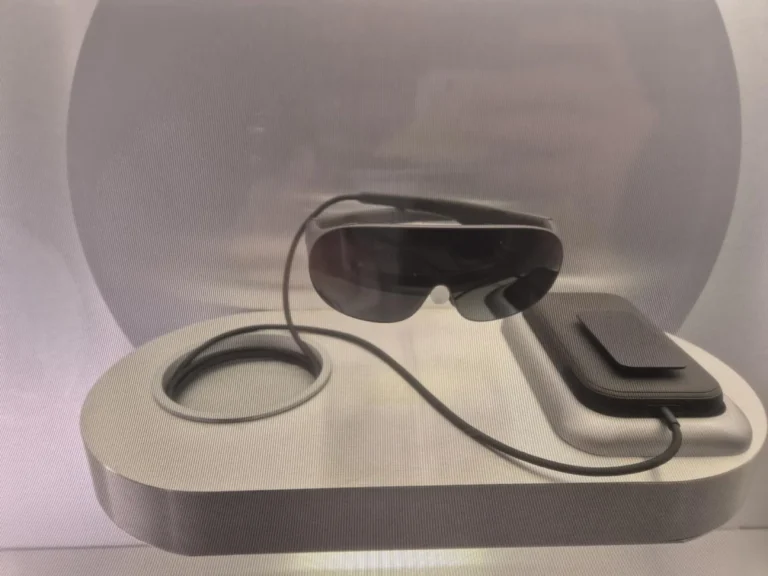
While Meta and Google focus on software ecosystems, Apple is reportedly refining the physical form factor of its future wearables. According to supply chain reports and industry insiders, Apple is currently testing four distinct design iterations for its upcoming smart glasses. These designs prioritize aesthetics and daily wearability, utilizing premium materials like acetate rather than the heavy glass and metal found in the Vision Pro.
The proposed Apple Glasses are expected to feature an audio-centric interface, similar to the current Ray-Ban Meta glasses, and will likely require a tethered connection to an iPhone for processing. A unique design element currently under testing is an oval-patterned camera array on the front frames, accompanied by prominent indicator lights to address privacy concerns. While the official release is projected for 2027, industry observers speculate that a preliminary announcement or developer kit could be unveiled as early as late 2025 to allow the ecosystem to mature ahead of the consumer launch.

In a parallel move to secure its hardware future, Snap Inc.’s hardware division, Specs, has entered into a multi-year strategic agreement with Qualcomm. This partnership ensures that future generations of Snap’s Spectacles will be powered by specialized Snapdragon AR platforms. This alliance mirrors a broader industry trend where hardware manufacturers are seeking deep integration with silicon providers to optimize thermal management and battery life in increasingly smaller form factors.
Strategic Alliances and Ecosystem Standardization
The past week has seen a surge in "multi-year agreements" that signal a consolidation of the XR development stack. Unity and Meta have extended their strategic partnership to ensure that the Unity game engine remains a primary development tool for the Meta Horizon OS. This agreement is vital for the developer community, as it guarantees continued support for advanced rendering features and cross-platform compatibility across Meta’s headset lineup.
In the location-based entertainment (LBE) and educational sectors, Atelier Daruma has partnered with MATTS DIGITAL to distribute its "Large Field Theater" technology. This platform allows hundreds of users to participate in a shared virtual space simultaneously without the need for extensive local server infrastructure. This partnership highlights the growing demand for "phygital" (physical plus digital) experiences in museums, brand activations, and cultural heritage sites.
Furthermore, Niantic has updated its spatial computing suite with the release of Scaniverse and VPS 2.0. These tools enhance the ability of mobile devices to create high-fidelity 3D scans and precisely anchor digital content to real-world locations. By improving the Visual Positioning System (VPS), Niantic is enabling more stable and persistent augmented reality experiences that can be shared across different devices and platforms.
Technical Challenges and Broader Market Implications
Despite the rapid pace of innovation, the industry faces significant hurdles in user interface (UI) design and developer relations. Meta’s recent rollout of the "Navigator UI" for Quest users has met with widespread criticism from the enthusiast community. Users have reported that the new interface, which appears to borrow design cues from Apple’s visionOS, complicates navigation and obscures access to sideloaded applications. Some analysts suggest this UI shift is a preparatory move for "Project Puffin," a rumored lightweight headset designed to compete directly with high-end spatial computers.

Additionally, Meta’s decision to "freeze" the XR Audio SDK at version 85.0 has raised concerns about budget reallocations within the Reality Labs division. While the SDK remains functional, the lack of future feature updates may signal a shift in priorities toward AI and hardware refinement at the expense of specialized developer tools.
The broader impact of these developments points toward a bifurcated market. On one side, enterprise-ready platforms like Android XR and the Quest Pro line are focusing on security, management, and professional training. On the other, lightweight AI-powered glasses from Meta, Snap, and eventually Apple are aiming for mass-market consumer adoption by integrating seamlessly into the user’s social and digital life. As the industry moves toward 2027, the success of these initiatives will likely depend on the ability of tech giants to balance advanced AI capabilities with user privacy and hardware ergonomics.
About the Author