The intrinsic human drive to create and share art, a fundamentally social endeavor, has undergone a profound transformation with the advent and evolution of the internet. Artists consistently seek validation and resonance, mirroring the dynamic of a speaker desiring a listener’s engagement. This feedback loop, whether affirming or constructively challenging, is central to the creative process. Historically, the early days of the internet, particularly around 2010, offered a burgeoning digital ecosystem that appeared to fulfill this need, fostering communities and facilitating genuine interaction between creators and their audiences. However, a decade later, the digital landscape has shifted dramatically, becoming increasingly centralized and algorithmically driven, leading to significant challenges for independent artists seeking discovery and authentic connection.
The Early Digital Promise: A Golden Age of Discovery
In its nascent stages, the internet, often referred to as Web 2.0 in its early consumer-facing iteration, presented an unprecedented opportunity for artists to bypass traditional gatekeepers and connect directly with a global audience. Platforms designed for sharing content – blogs, forums, early social media sites – prioritized organic discovery and peer-to-peer interaction. This era was characterized by a more level playing field, where diverse voices could find traction based on the merit or novelty of their work, rather than extensive marketing budgets or pre-existing fame. Content, whether a blog post, an independent film, or a new game, often benefited from a relatively unmediated path to public consciousness.
A prime example of this phenomenon is the independent game "100 Rogues," released in 2010. Despite being its developer’s inaugural published title, launching with initial bugs, inconsistent artwork, and comparatively lower production values, the game garnered significant community engagement. Players actively created fan art, uploaded gameplay videos, and developers were frequently interviewed by numerous independent gaming websites – a testament to a vibrant, decentralized media landscape. This success was not attributed to a massive marketing campaign or sophisticated public relations efforts, but rather to the inherent design of the internet at the time, which favored discovery and genuine community interaction. This period fostered a sense that talent and unique ideas, rather than immense capital or algorithmic optimization, were the primary drivers of visibility.
The Algorithmic Turn: Rise of Centralized Platforms and the "Top-Heavy" Internet
The internet’s trajectory, however, began to diverge significantly from this initial promise. Over the past decade, a series of strategic decisions by major technology companies, coupled with a perceived lack of proactive regulation from governmental bodies, has reshaped the digital public sphere. The result is what industry analysts term a "top-heavy" internet, where engagement and visibility are increasingly concentrated among a diminishing number of prominent creators and entities.
This shift is largely attributable to the evolution of platform algorithms. What began as tools to personalize user experience and filter content efficiently gradually morphed into sophisticated gatekeepers, dictating what content is seen, by whom, and when. These algorithms, designed to maximize user engagement (and thus advertising revenue) for the platforms themselves, often prioritize content from established accounts, those with high existing engagement metrics, or content that aligns with specific, often opaque, algorithmic preferences.
Illustrative data from various creator economy reports underscores this trend. While precise figures vary, a consistent pattern emerges: a small fraction of creators captures a disproportionately large share of audience attention and revenue. For instance, some studies suggest that the top 1% of creators on certain platforms may command over 80% of total engagement, a stark contrast to a decade prior when a more distributed model allowed for broader visibility. This means that if 10 years ago, thousands of creators might each have cultivated a modest but dedicated fanbase, today, a handful of mega-creators attract millions, leaving the vast majority struggling for even minimal recognition. The algorithmic hurdles to even have content seen, let alone meaningfully engaged with, have grown exponentially. To achieve prominence as a digital artist, game developer, or streamer in the current environment often necessitates not only substantial financial investment in marketing but also the radical optimization of content itself for the algorithms, rather than primarily for human connection or artistic expression. This paradigm shift subtly but profoundly alters the creative process, pushing artists towards formulaic content that aligns with algorithmic biases rather than fostering true innovation.
Market Concentration and its Parallel in Creative Industries
This centralization within the digital creator economy mirrors broader trends of corporate conglomeration observed across various industries. Just as the internet has become dominated by a few major tech platforms, the creative sectors, including gaming, media, and entertainment, have witnessed a significant consolidation of power. In the gaming industry, for example, the past decade has seen numerous independent studios and publishers acquired by behemoths such as Activision Blizzard, Tencent, and Take-Two Interactive. This trend reduces the number of independent voices and diverse creative outputs, channeling resources and audience attention towards a narrower range of commercially optimized products.
This market concentration creates a feedback loop: fewer, larger entities control more of the distribution channels and marketing power, making it exceedingly difficult for independent creators to compete. The "bar for entry" is no longer just about artistic skill or innovation; it now includes navigating complex digital marketing landscapes, understanding intricate algorithmic mechanics, and often, possessing substantial capital.
Regulatory Lapses: A Role for Governance
The current state of the internet, characterized by its top-heavy structure and algorithmic dominance, is not an inevitable outcome of technological progress. Rather, it is increasingly viewed by policy experts and critics as a consequence of governmental decisions, specifically the perceived failure to adequately enforce existing anti-trust laws or to introduce new legislation relevant to the digital age. In many jurisdictions, anti-trust frameworks designed for industrial economies have struggled to adapt to the unique characteristics of digital platforms, which often operate as natural monopolies or duopolies by virtue of network effects and data accumulation.
Critics argue that a lack of robust regulatory oversight has allowed large tech companies to acquire competitors, integrate services, and establish dominant positions without sufficient checks and balances. This has stifled competition, limited user choice, and ultimately concentrated power in the hands of a few. Had governments taken more assertive action to maintain a diverse and competitive digital ecosystem – perhaps by breaking up monopolies, regulating platform algorithms for transparency and fairness, or promoting interoperability – the internet might have retained more of its early, decentralized ethos. Discussions around algorithmic accountability, data privacy, and platform neutrality are now gaining momentum, reflecting a growing recognition that the digital public square requires more deliberate governance to serve public interest.
The "Open Mic" Analogy: A Model for Equitable Engagement
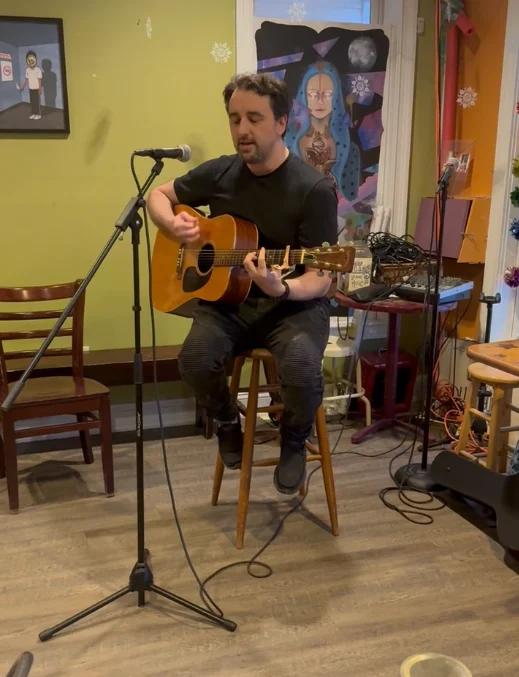
In stark contrast to the algorithmically driven, corporate-dominated internet of today, the physical "open mic" event stands as a powerful metaphor for equitable artistic engagement. In such a setting, the artificial barriers and digital filters of the online world dissolve. Participants gather in a shared physical space, be it a coffee shop, a community hall, or a park, where the rules of engagement are refreshingly simple: everyone gets an equal opportunity – typically a few minutes – to share their art.
At an open mic, there is no algorithm dictating who gets seen or heard. There are no corporate interests optimizing for engagement metrics. Individuals from all backgrounds – diverse ages, ethnicities, socioeconomic statuses, and artistic skill levels – are welcome. A novice poet, an experimental musician, a budding comedian, or someone simply wishing to share thoughts on their day all stand on equal footing. The validation comes directly from a present, attentive audience, whose curiosity and shared humanity foster a spirit of acceptance and mutual discovery. This unmediated interaction, driven by shared presence rather than digital curation, highlights a fundamental difference: the open mic prioritizes human connection and the inherent value of every voice, irrespective of its commercial viability or algorithmic appeal. While acknowledging that the broader physical art world is not entirely free from its own biases and commercial pressures, the open mic represents an idealized model of direct, equitable, and community-driven engagement.
Seeking Hybrid Models: Bridging Digital and Physical Divides
The challenges posed by the current digital landscape necessitate a re-evaluation of how creators connect with audiences. While the internet will undoubtedly remain a central feature of modern life, there is a growing imperative to push for its evolution towards models that prioritize human connection and equitable access. Platforms that foster direct, peer-to-peer interaction, where all participants operate on a relatively equal playing field in terms of attention and visibility, offer a glimpse into a more desirable digital future. Some community-focused platforms, like Discord, are cited as examples where the emphasis on direct chat and group interaction can create more egalitarian digital spaces, allowing for genuine community building outside the hyper-competitive algorithmic feed.
The goal, therefore, is not to abandon the digital sphere but to advocate for its redesign, demanding greater transparency in algorithms, stronger anti-trust enforcement, and innovative approaches to platform design that prioritize human interaction and creative diversity over corporate profit maximization. This includes exploring decentralized web technologies (Web3, blockchain-based platforms) that promise greater creator ownership and more equitable distribution models, though these technologies also present their own set of challenges and complexities.
Beyond Art: The Broader Societal Imperative of Community and Presence
The implications of a centralized, algorithmically-driven internet extend far beyond the realm of artistic creation. The erosion of genuine, distributed community engagement, both online and offline, carries significant societal risks. A populace increasingly isolated within digital echo chambers, consuming content curated by unseen algorithms, may experience a decline in critical thinking, civic participation, and social cohesion.
In an increasingly complex and polarized world, the call for physical presence and community engagement takes on a broader societal imperative. Being present in shared physical spaces fosters empathy, facilitates diverse interactions, and builds resilient communities. It creates opportunities for collaboration, inspiration, and collective action that are difficult to replicate in purely digital environments. This physical presence can translate into meeting future collaborators, witnessing inspirational performances, or becoming a source of inspiration for others. More critically, it reinforces the foundational elements of civil society: individuals gathering, discussing, and collectively addressing shared concerns. In an era marked by rising socio-political tensions and challenges to democratic norms, fostering local, tangible communities becomes a vital act of resilience and collective strength, emphasizing the enduring power of human connection over algorithmic mediation.
About the Author