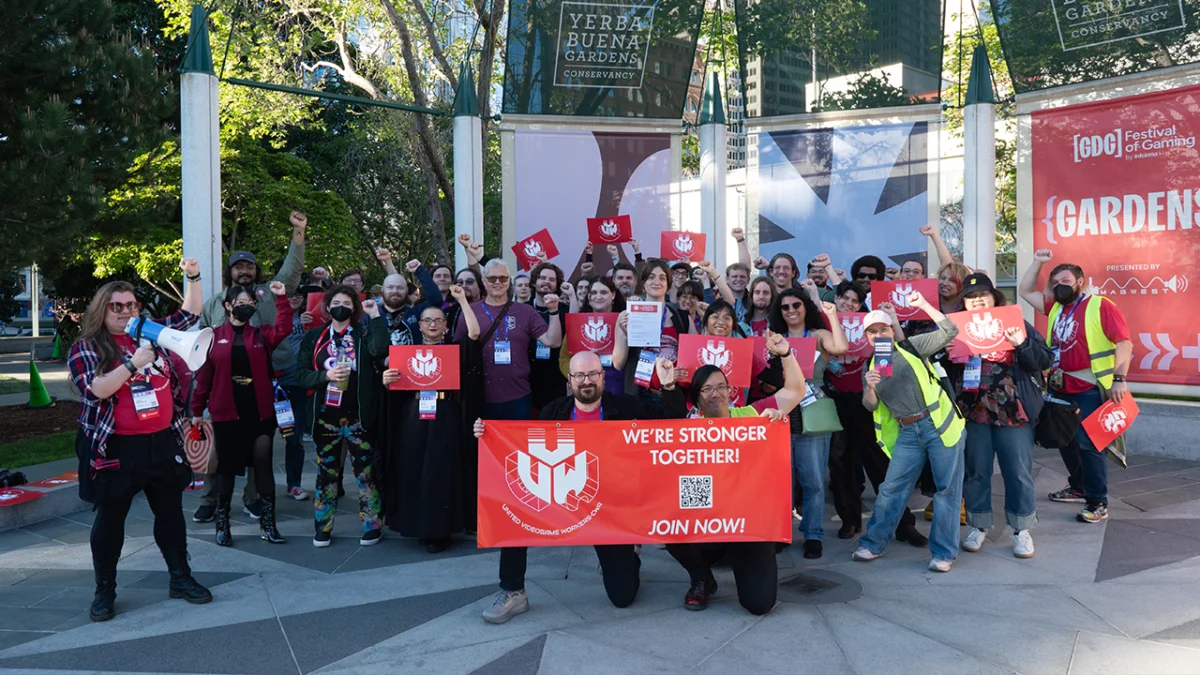
At the GDC Festival of Gaming in San Francisco, held from March 9, 2026, a powerful and unequivocal message emanated from the ranks of unionized video game workers, directed squarely at industry executives: their collective strength should no longer be underestimated. This assertion came at a critical juncture for the global video game sector, grappling with unprecedented mass layoffs, widespread studio closures, and numerous project cancellations, all while the allure of generative artificial intelligence solutions continues to reshape development paradigms. The sentiment articulated by these workers, organized under the Communications Workers of America (CWA) banner, underscored a growing chasm between labor and management, signaling a determined push for greater accountability and equity.
The Unmistakable Roar at GDC 2026: A Confluence of Crisis and Collective Action
The GDC Festival of Gaming, a prominent annual gathering that serves as a vital nexus for developers, publishers, and ancillary service providers, traditionally celebrates innovation, artistic achievement, and technological advancements within the interactive entertainment sphere. However, the 2026 iteration was markedly different, becoming a potent platform for the burgeoning labor movement within the industry. Against a backdrop of economic volatility and widespread job insecurity, the voices of union members resonated with an urgency that transcended the usual discourse on game design and business strategy.
This year’s festival coincided with what many analysts describe as the most turbulent period in the industry’s history. Throughout late 2025 and into early 2026, reports of significant workforce reductions became almost daily occurrences. Data from industry tracking firms indicated that over 15,000 jobs were eliminated across the global video game sector in 2025, a stark increase from previous years, with projections for 2026 suggesting a continuation of this downward trend. Major publishers and independent studios alike cited "restructuring," "market corrections," and "optimization" as reasons, often coinciding with substantial investments in generative AI technologies touted as future-proofing measures. It was within this environment that Chris Kerr, Senior Editor at GameDeveloper.com, engaged with a contingent of union members from the CWA, seeking to understand their message for an executive class perceived as increasingly detached from the realities faced by the rank and file.
A Clarion Call: "Sell Your F***ing Yachts"
Kaitlin Bonfiglio, Secretary of the United Video Game Workers-CWA (UVW-CWA), delivered a particularly pointed and unvarnished response when asked what she would convey to industry leaders. "Sell your fucking yachts," Bonfiglio stated unequivocally. "You don’t need five yachts." This blunt demand, while perhaps hyperbolic in its directness, encapsulates a deep-seated frustration over perceived executive extravagance juxtaposed with widespread worker precarity.
Bonfiglio’s remark immediately struck a chord, tapping into a public perception of a stark wealth disparity within the industry. While she did not specify any particular individuals or vessels, the video game industry has seen its share of high-profile executive spending. Reports from publications like Fortune and Kotaku have previously highlighted instances of game industry moguls investing liberally in luxury assets, including superyachts equipped with advanced features such as submarine garages and gaming PCs, or extensive collections of classic cars. These expenditures, often made public, have become symbolic flashpoints for workers struggling with job security, stagnant wages, and increasing workloads. The sentiment expressed by Bonfiglio reflects a growing belief among workers that executive compensation and lifestyle choices are often disconnected from the operational health and ethical responsibilities of their companies, especially when mass layoffs are simultaneously implemented.
The Rising Tide of Unionization: A Chronology of Empowerment
The surge in unionization within the video game industry is not a sudden phenomenon but the culmination of years of growing discontent. Historically, the creative industries, including video games, were largely un-unionized, often characterized by a culture of "passion" that frequently translated into exploitative practices like "crunch" (prolonged periods of intense overtime). However, the landscape began to shift dramatically in the early 2020s.
Key Chronology of Game Worker Unionization:
- 2019-2020: Early organizing efforts begin to gain traction, often in response to high-profile reports of toxic workplace cultures, sexual harassment, and excessive crunch. Game Workers Unite (GWU) forms, advocating for better working conditions.
- 2021: The Communications Workers of America (CWA) becomes a significant ally, providing resources and expertise to nascent game worker unions. Quality Assurance (QA) departments, often among the most vulnerable segments of the workforce, begin to lead initial organizing drives.
- 2022: The first major wall-to-wall union in a large studio is formed. This period sees a significant increase in publicly announced unionization efforts, signaling a shift from grassroots advocacy to formal collective bargaining.
- 2023: Unionization momentum builds, with several smaller studios and segments of larger companies voting to unionize. Discussions around fair compensation, benefits, and job security intensify.
- 2024: The UVW-CWA (United Video Game Workers-CWA) is officially established as a direct-join union, consolidating various organizing efforts and offering a unified front for workers across the industry. Membership begins to grow rapidly. By the end of 2024, UVW-CWA reported over 300 active members, a substantial increase from its initial formation.
- 2025: The year witnesses exponential growth in union membership, fueled by a wave of industry layoffs that began in late 2024 and accelerated throughout 2025. Workers increasingly view unionization as their strongest defense against arbitrary corporate decisions. Major milestones include the formation of a wall-to-wall union at a significant segment of Microsoft’s gaming division (e.g., Blizzard Entertainment, as referenced in the original article), bringing over 500 workers under collective bargaining agreements. By early 2026, UVW-CWA membership had surged past 550, indicating a sustained and accelerating trend.
This trajectory underscores a fundamental shift in the power dynamic. What was once dismissed as a fringe movement has evolved into a formidable force, increasingly capable of challenging established corporate practices and demanding a seat at the table.
Power Dynamics: A Shifting Landscape and the Challenge to "Brilliance"
Aurelia Augusta, President of UVW-CWA, offered an equally stark warning to industry leaders still grappling with the implications of this rising tide of unionization. "You need to learn to either let go of the power now, or be forced to let go of it later," Augusta asserted. "That’s really the only thing to be said, because the idea that you have the monopoly on brilliance, innovation, talent, and on what the value is in this work is just patently untrue."
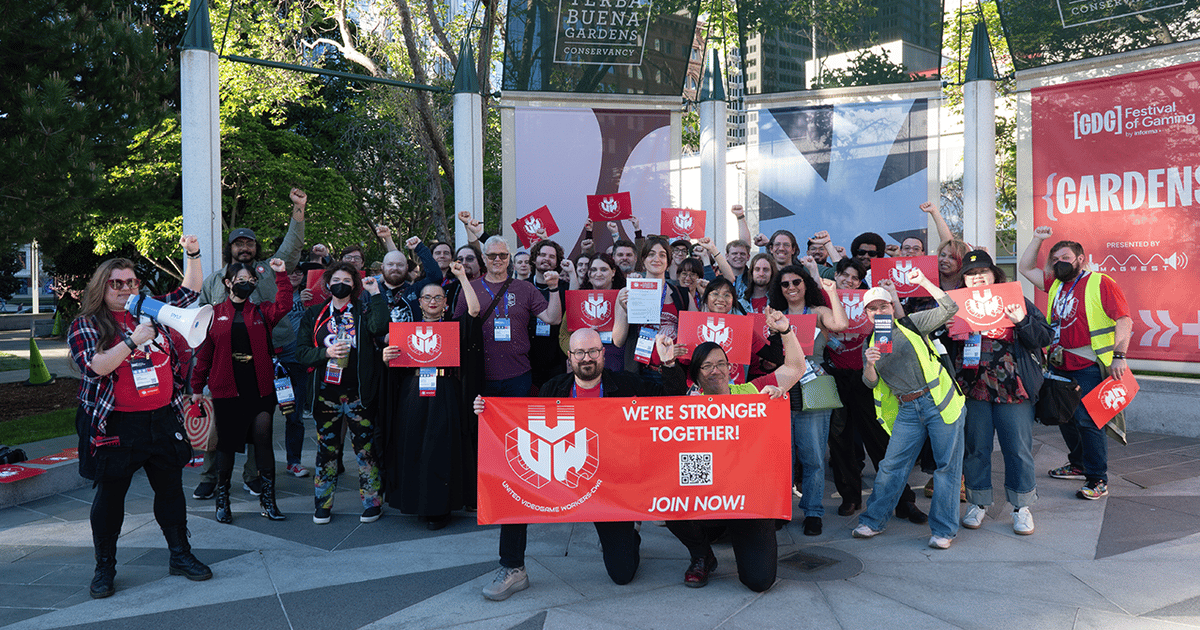
Augusta’s statement directly challenges the long-held corporate narrative that innovation and success are solely the purview of executive leadership. This perspective often posits that executives, by virtue of their strategic vision and business acumen, are the primary drivers of value, with employees serving as implementers. However, Augusta contends that unions are a direct manifestation of workers pushing back against "unjust and structural institutional power," a system from which many in the C-suite have disproportionately benefited. This pushback signifies a fundamental re-evaluation of who creates value in the gaming industry. It argues that the "brilliance" and "talent" reside not just in the executive suite but across all levels of development, from concept artists and programmers to QA testers and community managers, all of whom contribute indispensably to a game’s success. The implication is clear: if executives fail to acknowledge and empower these contributions through fair treatment and equitable power distribution, they risk being compelled to do so by organized labor.
The Human Cost of Corporate Decisions: Beyond the Spreadsheets
Sherveen Uduwana, UVW-CWA local treasurer, articulated the profound human toll of corporate decisions, particularly mass layoffs. Uduwana noted previous attempts to engage with executives on these matters, suggesting that such conversations often "fell on deaf ears." This indicated a potential disconnect, where business leaders might not fully comprehend the weighty consequences of their choices, especially when those choices lead to job eliminations.
"I think the thing I would always say is when you are thinking about layoffs, downsizing, and restructuring – these are all human lives, right?" Uduwana emphasized. "It’s very easy to be in a boardroom looking at spreadsheets and thinking about how to optimize for your business needs, but it’s important to not forget the human aspect." Uduwana expressed a fundamental optimism about human nature, hoping that game CEOs are individuals who genuinely care about people. Yet, the actions taken by many companies present a stark contradiction. "It’s utterly alien to me how you can look at numbers and say ‘we’re going to lay off this many people’ and not do everything in your power to protect your workers in that scenario. At that point you have failed in your responsibility."
Uduwana’s poignant remarks were tragically underscored by events unfolding concurrently with the GDC Festival of Gaming. Since the festival commenced on March 9, 2026, a series of major industry players—including Electronic Arts (EA), Embracer Group, and Ubisoft—have collectively announced further swathes of layoffs. These reductions affected hundreds, if not thousands, of employees across various studios and departments. For instance, EA reportedly laid off key developers from its Battlefield franchise, even after Battlefield 6 shattered sales records. Embracer Group, which had undergone a significant acquisition spree in previous years, continued its steady stream of studio closures and workforce reductions as part of a broad restructuring effort. Ubisoft also announced the elimination of over 100 positions at its Red Storm Entertainment studio, signaling an end to certain game development operations there. These actions, occurring precisely when union members were advocating for worker protections, served as a grim testament to the very issues UVW-CWA members were highlighting.
The Specter of Generative AI: Efficiency vs. Employment
The discussions at GDC also frequently circled back to the role of generative AI. Union members noted that executives were "singing from the generative AI hymn sheet" even as layoffs mounted. This observation highlights a growing tension: while companies champion AI as a tool for efficiency, innovation, and cost reduction, workers increasingly view it as a direct threat to their livelihoods.
Industry reports from late 2025 projected that generative AI tools could automate significant portions of content creation, from initial art assets and code snippets to narrative frameworks and QA testing. While proponents argued that AI would free up human talent for more complex and creative tasks, many workers feared that it would instead lead to widespread job displacement and a devaluation of human skills. Unions are therefore pushing for safeguards, including transparent policies on AI implementation, retraining programs for affected workers, and clauses in collective bargaining agreements that ensure human oversight and ethical use of AI, preventing it from becoming solely a tool for workforce reduction. The executive enthusiasm for AI, coupled with the ongoing layoffs, has fueled a narrative among workers that AI is being weaponized to justify corporate cost-cutting at the expense of human employment.
Industry Responses and Future Outlook: A Precarious Balance
While no direct counter-statements from the referenced executives or their companies were available at the time of reporting regarding the specific demands made at GDC 2026, industry analysts anticipate a range of responses. Typically, corporations facing such public pressure acknowledge the "difficult decisions" made in the interest of "business sustainability" and "long-term growth." Statements might emphasize the need to adapt to evolving market conditions, invest in new technologies like AI, and prioritize shareholder value. Some might express a commitment to "support" affected employees through severance packages and career transition services, without addressing the fundamental critique of executive compensation or the systemic issues raised by unions.
However, the growing strength of organized labor suggests that such boilerplate responses may no longer suffice. The increased union density, particularly the formation of large wall-to-wall unions, provides workers with significantly more leverage. This could lead to:
- Increased Dialogue and Negotiations: Executives may find it increasingly difficult to ignore union demands, potentially leading to more substantive collective bargaining agreements that address issues like severance, job security, AI implementation, and even profit sharing.
- Policy and Legislative Advocacy: Unions, through their broader CWA affiliation, are likely to continue advocating for labor-friendly policies at local, state, and federal levels, which could impact hiring practices, worker protections, and corporate accountability across the industry.
- Impact on Talent Attraction and Retention: Companies that fail to address worker concerns or actively resist unionization may find it harder to attract and retain top talent, particularly younger professionals who are increasingly conscious of workplace ethics and social responsibility.
- Shifting Industry Culture: The long-term implication could be a fundamental reshaping of the video game industry’s culture, moving away from a model often characterized by precarious employment and intense pressure towards one that prioritizes worker well-being, equity, and shared prosperity.
The GDC Festival of Gaming 2026 served as a powerful declaration from unionized video game workers: the era of unquestioned corporate dominance is drawing to a close. Their message, delivered with both passion and precision, underscored a resolute determination to assert their value, challenge entrenched power structures, and demand a more equitable future for an industry that thrives on their collective creativity and labor. The coming years will undoubtedly witness a continued struggle for power, with the stakes exceptionally high for both the future of game development and the livelihoods of those who create its magic.
About the Author