Valve, the pioneering digital distribution company behind the ubiquitous Steam platform, has announced a sweeping series of updates designed to significantly enhance user experience, particularly concerning game wishlists and the gifting mechanism. These comprehensive changes, detailed in official communications yesterday, aim to provide Steam’s vast global user base with more refined organizational tools for their desired game libraries and to dismantle long-standing barriers in the digital gifting of games across international borders. The dual announcement underscores Valve’s ongoing commitment to evolving its platform in response to community feedback and market dynamics, reinforcing Steam’s position as a leading digital storefront in the highly competitive PC gaming landscape.
A New Era for Steam Engagement: Responding to User Demand
The updates are a direct result of persistent requests from the Steam community for more robust management options for wishlists, which have grown increasingly unwieldy for many users as Steam’s game catalog has expanded to encompass tens of thousands of titles. Simultaneously, the overhaul of the gifting system addresses a critical pain point that has historically complicated the process of sharing games with friends and family residing in different geographical regions. By introducing custom categories, intelligent notifications, enhanced search capabilities for wishlists, and crucially, enabling seamless cross-region gifting alongside expanded guest checkout options, Valve is not merely adding features but fundamentally reshaping how users interact with their digital game collections and connect with fellow players globally.
The Evolution of Steam Wishlists: Precision and Personalization
Steam wishlists, initially conceived as a simple means for users to track games of interest and receive notifications for sales, have become an indispensable tool for millions. However, with the exponential growth of games available on the platform since its inception in 2003, many users found their wishlists becoming extensive and difficult to manage effectively. The new updates aim to inject much-needed organization and personalization into this core feature.
Custom Categories and Enhanced Management
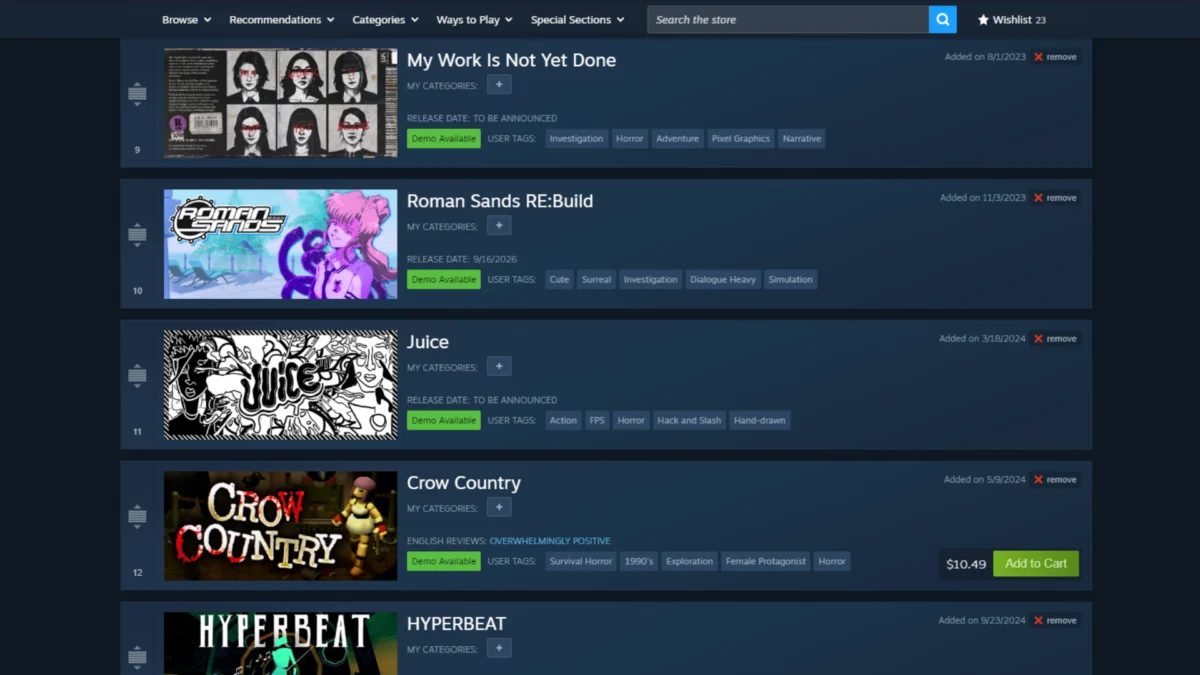
The most prominent addition to wishlists is the introduction of custom categories. This feature allows users to segment their wishlists into bespoke groupings, moving beyond a single, chronological list. For instance, a user might create categories such as "Old School Remakes" for nostalgic titles, "Buy When on Sale" for games where price is a significant factor, "Wait for Reviews" for upcoming releases requiring critical assessment, or "Co-op with Friends" for multiplayer experiences intended to be enjoyed with specific companions. Other practical applications could include categories for specific genres like "Indie Gems," "Upcoming RPGs," "VR Experiences," or even thematic lists like "Halloween Spooktaculars" or "Holiday Wish List." This granular level of organization empowers users to tailor their wishlists to their unique gaming habits and preferences, transforming a passive list into an active management tool. This addresses a long-standing need for better curation, especially for users with hundreds or even thousands of games on their radar.
Intelligent Notifications: Staying Informed Without Overload
Alongside custom categories, Valve has significantly refined the notification system for wishlisted games. Users can now customize which categories trigger notifications. This means that if a user has a category for "Games I’ll Buy Eventually" but primarily wants alerts for "Must-Have Day One Purchases," they can configure notifications to prioritize the latter. These alerts are crucial for informing users when a game goes on sale, transitions from Early Access to a full release, or when a demo becomes available. This intelligent filtering system aims to prevent notification fatigue, ensuring users receive timely and relevant updates for the games they care about most, potentially leading to more informed purchasing decisions and increased sales conversions for developers. For instance, a player specifically waiting for a demo before committing to a purchase can now ensure they receive that exact notification without being barraged by sale alerts for games they aren’t ready to buy.
Streamlined Discovery and Sharing
Further enhancements to the wishlist experience include improvements to the search functionality within the wishlist page itself. Autocomplete has been integrated, allowing for faster and more efficient searching through extensive lists. This seemingly minor addition significantly improves quality of life for users managing hundreds of wishlisted titles. Additionally, games with available demos are now prominently labeled, making it easier for users to identify and try out titles before committing to a purchase.
The social aspect of wishlists has also received an upgrade. While sharing a link to an entire wishlist has long been possible, users can now share specific categories or filtered views of their lists. Valve provided an example of a user creating a tailored list to send to family members for birthday presents, simplifying the process for gift-givers who may not be familiar with gaming terminology or specific titles. This feature not only enhances convenience for users but also broadens the potential for gift-giving, as it makes the selection process less intimidating for non-gamer friends and family. This could potentially increase the volume of gifted games, benefiting both Valve and game developers.
Redefining Gifting: Breaking Down Digital Borders
Perhaps the most impactful update announced by Valve is the comprehensive overhaul of Steam’s gifting system, particularly the introduction of seamless cross-region gifting. For years, the process of gifting a game to a friend in a different geographical region was fraught with complications, largely due to price disparities and currency conversions.
The Historical Challenge of Cross-Region Gifting
The issue stemmed from Valve’s implementation of regional pricing, a strategy designed to make games more affordable and accessible in economies with lower purchasing power. While beneficial for local consumers, this created a significant hurdle for international gifting. If a user in a lower-priced region attempted to purchase a game for a friend in a higher-priced region, the transaction would often be blocked or result in an error message. The official workaround was cumbersome: the gifter had to purchase a digital Steam gift card equivalent to the game’s price in the recipient’s region, which often involved navigating different currency conversions and ensuring the exact amount. This process was confusing, time-consuming, and acted as a deterrent for many users attempting to share games across borders. The previous system inadvertently fostered a sense of geographical isolation within the global Steam community, hindering the natural inclination of friends to share gaming experiences.
Valve’s Cross-Region Solution: A Global Community Enabler
The new system elegantly resolves this long-standing problem. Steam now automatically calculates the cost of the recipient’s region at the point of checkout, allowing the gifter to purchase the game directly from the giftee’s wishlist. This removes the need for gift cards, manual currency conversions, or region-specific price matching. The system dynamically adjusts the price, ensuring that the recipient receives the game at their local market rate, while the gifter pays the corresponding adjusted price. This mechanism not only simplifies the process but also promotes fairness and transparency in international transactions.
Real-World Application: The Argentina Test Case
.png?disable=upscale&width=1200&height=630&fit=crop)
The immediate impact of this change was demonstrated by a test conducted by Game Developer, where an author from Argentina attempted to gift a game to a friend in a higher-priced region. Historically, this scenario would have presented a challenge. In the test, when attempting to purchase Final Fantasy XIII (listed at $12.99 in the author’s region before taxes) as a gift, a small pop-up window appeared, transparently declaring "the price of this item has changed" and displaying the new, higher price of $15.99, reflecting the recipient’s region’s cost. This real-world example confirms the seamless functionality of the new system, which handles the complex regional price adjustments automatically, providing clarity to the purchaser. This level of transparency is crucial for user trust and understanding in international commerce.
Impact on Global Community and Market
The implications of cross-region gifting are profound. It significantly fosters a more integrated and global Steam community, enabling friends, regardless of their geographical location, to easily share games and experiences. This move could also translate into a boost in sales for Valve and game developers, as the friction associated with international gifting is virtually eliminated. It removes a psychological barrier for users who previously found the process too complicated or unclear, potentially unlocking a new segment of gifting transactions. For developers, this means their games can be more easily gifted to a wider international audience, expanding their potential market reach beyond individual regional sales.
Expanding Accessibility: Guest Checkout for Games
In addition to cross-region gifting, Valve has also made two significant improvements to its "guest checkout" process. Previously, guest checkout, which allows users to make purchases on Steam without logging into an account, was limited to digital Steam gift cards and hardware purchases (such as the Steam Deck). This functionality has now been expanded to include direct game purchases.
From Hardware to Digital Titles: Broadening Reach
This expansion means that anyone, even those without an active Steam account, can now purchase a game directly from the Steam store. This is particularly beneficial for individuals who might be buying a game as a gift for a friend or family member who does have a Steam account, but the gifter themselves does not. This lowers the barrier to entry for gift-giving, making it more accessible to a wider audience, including non-gamers or those new to the Steam ecosystem.
Mechanism and Benefits: Seamless Gifting for All
Furthermore, customers utilizing guest checkout can now send gifts via email. When this method is selected, the recipient receives an email containing a secure link. Clicking this link allows them to sign into their Steam account and accept the gifted game directly, integrating it into their library. This streamlined process eliminates any potential confusion or technical hurdles for both the gifter and the recipient. It makes spontaneous gift purchases incredibly convenient, especially during holiday seasons or special occasions when non-gamers might be looking for easy ways to buy digital gifts for gamers. This strategic move by Valve aims to capture a broader market segment, ensuring that the act of giving a game is as straightforward as possible, regardless of the gifter’s familiarity with the platform.
Strategic Implications and Industry Impact
These comprehensive updates from Valve are not merely incremental improvements; they represent a strategic enhancement of Steam’s core functionalities, designed to solidify its dominant position in the PC gaming market. With an estimated 120 million active monthly users and peak concurrent user counts regularly exceeding 30 million, Steam’s user base is immense. Any platform-wide change of this magnitude has significant implications.
Reinforcing Steam’s Dominance
In a competitive landscape featuring platforms like the Epic Games Store, GOG, and various console digital storefronts, continuous innovation in user experience and commerce features is paramount. By addressing long-standing community requests and tackling complex issues like cross-region gifting, Valve demonstrates its responsiveness and commitment to its user base. This proactive approach helps to retain existing users and attract new ones, reinforcing Steam’s reputation as a user-centric platform that constantly strives for improvement. The seamless integration of these new features is a testament to Valve’s robust infrastructure and development capabilities.
Economic Outlook and Developer Benefits
From an economic standpoint, the enhanced wishlist functionality, particularly the customizable notifications and improved sharing options, is likely to increase conversion rates for games on sale or newly released titles. Users are more likely to make purchases when they receive targeted, relevant information without feeling overwhelmed. The cross-region gifting feature is a direct revenue driver, as it removes the friction that previously prevented many international gift transactions, thereby potentially increasing overall sales volume for Valve and, by extension, for the thousands of game developers publishing on Steam. Developers benefit from greater discoverability through better-organized wishlists and an expanded market for gifted titles.
User-Centric Development: A Key Strategy
Valve’s repeated emphasis that these changes stem from "requests from Steam users" highlights a key aspect of its development philosophy: a deep engagement with its community. This user-centric approach has been a cornerstone of Steam’s success, fostering loyalty and trust among its players. By consistently listening to and acting upon feedback, Valve ensures that its platform evolves in ways that directly benefit its primary stakeholders.
The Future of Digital Commerce on Steam
These updates could also foreshadow further developments in Steam’s social and commerce features. The ease of sharing specific wishlist categories could evolve into more sophisticated social commerce tools, allowing for collective purchasing or group gifting events. The expansion of guest checkout to games suggests a potential future where Steam aims to be an even more open and accessible platform for digital goods, catering not just to dedicated gamers but also to the broader public looking to engage with digital entertainment.
In conclusion, Valve’s latest overhaul of Steam wishlists and gifting capabilities marks a significant milestone in the platform’s ongoing evolution. By providing users with unparalleled organizational control over their game interests and by effectively dismantling geographical barriers to digital gifting, Valve is not only enhancing the immediate user experience but also fostering a more connected, accessible, and economically vibrant global gaming ecosystem. These changes underscore Valve’s strategic vision for Steam as a continually adapting and leading force in digital game distribution.
About the Author