The landscape of immersive technology is witnessing a significant shift toward "true" mixed reality, where the boundaries between physical environments and digital simulations are increasingly blurred. Leading this transition is 2Sync, an innovative software solution designed to replicate the layout of a user’s physical surroundings within a virtual world. By transforming real-world furniture and architectural elements into interactive virtual assets, the 2Sync SDK (Software Development Kit) aims to solve long-standing issues regarding user safety, spatial immersion, and passive haptics. Recently demonstrated at the NextReality event in Hamburg, Germany, the technology highlights a move away from static virtual environments toward "responsive" digital spaces that adapt to the user’s specific physical context.

The Mechanics of Responsive Virtual Environments
At its core, 2Sync functions as a bridge between the physical and the digital. Unlike traditional Virtual Reality (VR) experiences that replace the user’s vision with a pre-designed, static environment, 2Sync utilizes the spatial data captured by modern headsets—such as the Meta Quest 3 or Pico 4—to reconstruct the room in real-time. This process, referred to by developers as "responsive VR," mirrors the way a responsive website adjusts its layout based on the screen size of a device.
The system operates via a sophisticated rules-based engine. When a user launches a 2Sync-powered application, the software scans the environment using the headset’s built-in scene perception capabilities. It identifies key structures such as walls, tables, chairs, and sofas. Based on parameters defined by the game developer, the SDK then substitutes these real-world objects with themed virtual counterparts. For instance, in a post-apocalyptic survival game, a kitchen table might be rendered as a heavy wooden crate, while a sofa is transformed into a stone bench. Because the virtual object occupies the exact same spatial coordinates and dimensions as the physical one, the user can interact with the environment naturally, touching or sitting on objects they see in the headset.

Chronology of Development and Public Demonstrations
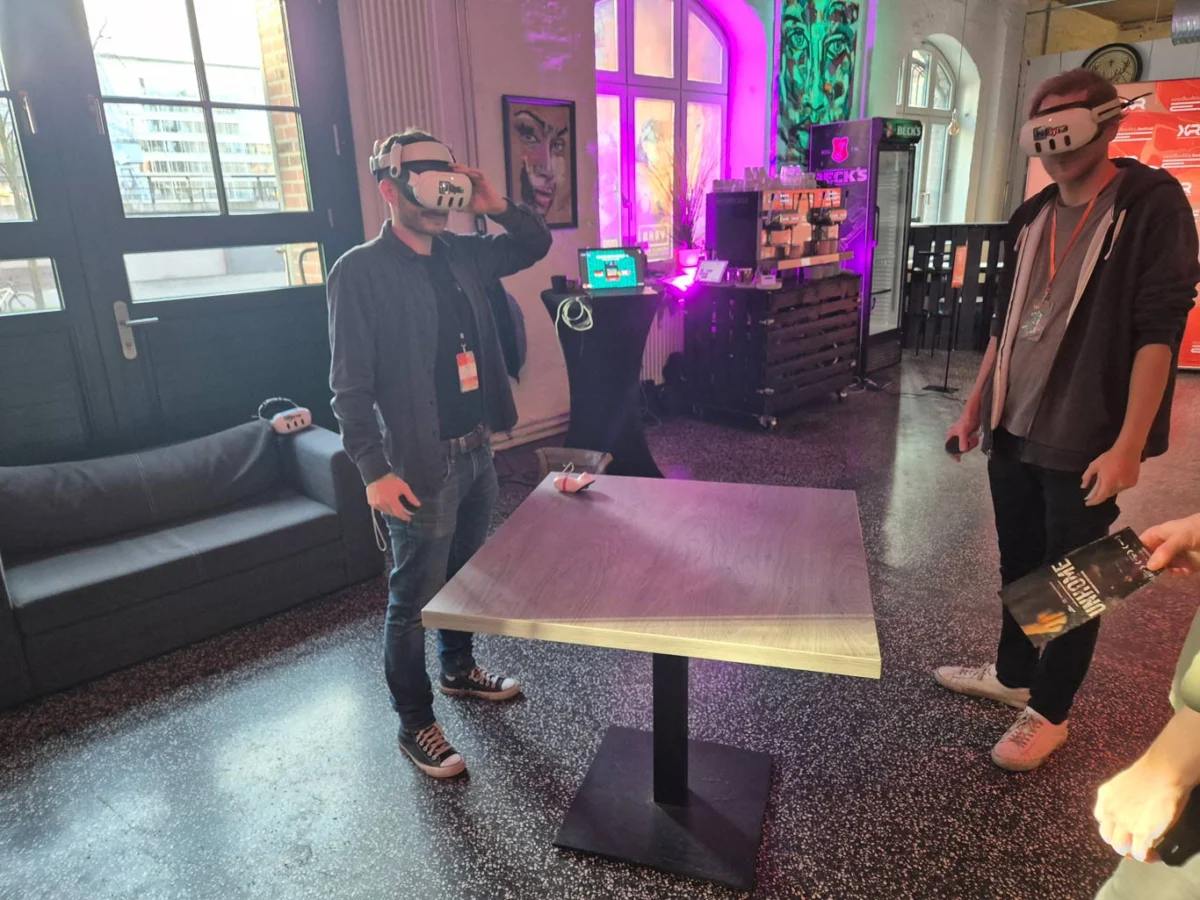
The development of 2Sync reflects a broader industry trend toward spatial computing. While the startup has been refining its SDK for several years, a pivotal moment occurred in late 2023 at the NextReality conference in Hamburg. This event, a prominent gathering for XR (Extended Reality) professionals in Europe, provided a platform for 2Sync co-founder Moritz Loos to demonstrate the technology’s practical applications.
During the event, 2Sync showcased a series of multiplayer demonstrations in a controlled environment equipped with standard furniture. Participants were equipped with Quest headsets and placed into a shared virtual space that mirrored the physical room’s layout. The primary demonstration featured a wave-based defense game, similar in mechanics to popular titles like "In Death: Unchained." However, unlike standard VR titles, players could navigate the physical space with total confidence, knowing that every virtual obstacle corresponded to a real-world object. The demonstration also highlighted the technology’s ability to swap environments instantaneously; players could transition from a medieval tower to a candy-themed world while the physical furniture remained the constant anchor for their movements.

Technical Specifications and Developer Integration
The 2Sync SDK is currently compatible with the industry’s leading development platforms, Unity and Unreal Engine. This cross-platform support is critical for widespread adoption, as it allows developers to integrate responsive environmental mapping into existing workflows.
Key features of the SDK include:

- Automated Object Scaling: The system can automatically scale virtual assets to match the volume of detected physical objects, ensuring a 1:1 ratio between what is seen and what is felt.
- Colocated Multiplayer Support: Multiple users can inhabit the same physical and virtual space simultaneously. The SDK handles the alignment of coordinates so that every player sees the same virtual world anchored to the same physical room.
- Dynamic Room Scanning: The system leverages existing scene setup data from the headset’s operating system (such as Meta’s Scene API), reducing the need for users to perform manual calibrations.
- Multi-Platform Compatibility: While primarily demonstrated on Meta Quest hardware, the SDK is designed to support a range of high-end standalone headsets featuring passthrough and spatial mapping capabilities.
Enhancing Safety and Passive Haptics
One of the most significant contributions of the 2Sync solution is the enhancement of user safety. Traditional VR safety systems, such as Meta’s "Guardian" or SteamVR’s "Chaperone," rely on a digital grid that appears when a user approaches a boundary. However, internal data from public VR exhibitions suggests that many casual users do not instinctively understand these grids, often leading to accidental collisions with furniture or walls.
By rendering physical obstacles as high-visibility virtual objects, 2Sync leverages human instinct. A user is far less likely to walk through a virtual stone wall or trip over a virtual crate than they are to ignore a translucent blue grid. Furthermore, this approach enables "passive haptics"—the sensation of touch provided by the real world without the need for expensive haptic suits or gloves. When a user sees a virtual table and reaches out to touch it, their hand meets the resistance of a real table. This alignment of visual and tactile stimuli significantly reduces the "sensory mismatch" that often leads to a break in immersion or motion sickness.

Strategic Market Positioning: LBVR vs. Home Use
While the 2Sync SDK is available for at-home developers, industry analysts suggest its most immediate impact will be in the Location-Based Virtual Reality (LBVR) sector. Arcades, training facilities, and "escape room" style attractions often struggle with the cost of building physical sets that match virtual environments. 2Sync allows these businesses to use generic furniture and simple room layouts to host a variety of different digital experiences without physical reconfiguration.
For the home market, challenges remain. The requirement for a relatively large, uncluttered walking area limits the technology’s utility in smaller urban living spaces. Additionally, the "sensory mismatch" problem is not entirely eliminated; if a virtual environment depicts a cold, hard rock but the user sits on a plush, soft sofa, the discrepancy can still disrupt the sense of presence. Furthermore, the business success of the SDK will depend on developer adoption. Building "responsive" games requires a departure from traditional level design, as developers must ensure that gameplay remains balanced regardless of whether a user is playing in a vast basement or a cramped bedroom.

Broader Implications for the XR Industry
The move toward responsive mixed reality represented by 2Sync is indicative of the "spatial computing" era championed by major tech players like Apple and Meta. As headsets become more capable of understanding the user’s surroundings, the demand for software that can intelligently utilize that data is expected to grow.
The 2Sync SDK is currently in a closed beta phase, with the company inviting developers to apply for access via their official portal. As the industry moves toward the release of more sophisticated passthrough hardware, solutions like 2Sync will likely play a foundational role in defining how users interact with digital content in their everyday environments. By prioritizing the integration of the real world rather than its total replacement, 2Sync offers a pragmatic and safety-conscious path forward for the next generation of immersive entertainment and professional training.
About the Author