The automotive landscape is undergoing a profound transformation, with a growing number of individuals, once indifferent to vehicle ownership, reporting a radical shift in perspective upon adopting electric vehicles (EVs). This phenomenon, exemplified by the recent experience of tech commentator Jeff Atwood with his 2019 Kia Niro EV, highlights a broader trend where the inherent advantages of electric propulsion are converting skeptics into fervent advocates, challenging the long-held dominance of internal combustion engine (ICE) vehicles. The transition from a utilitarian view of cars to an enthusiastic embrace of electric mobility underscores a significant societal and technological pivot.
The Paradigm Shift: From Automotive Indifference to Electric Advocacy
Historically, many consumers approach vehicle acquisition as a purely practical decision, prioritizing utility, cost, and reliability over performance or brand prestige. This pragmatic stance is reflected in vehicle choices such as station wagons or minivans, selected for their capacity to accommodate growing families rather than their driving dynamics or innovative technology. For instance, the acquisition of a Honda minivan in 2012 by Atwood’s family, following a Volkswagen station wagon in 2011, illustrates a common trajectory driven by evolving family needs, particularly the arrival of twins which necessitated greater space and practicality. Such decisions often reflect a "non-car person" mentality, where vehicles serve merely as tools for transportation.
However, the advent of commercially viable electric vehicles is disrupting this traditional mindset. What begins as a practical consideration, such as exploring hybrid options for perceived environmental benefits or regulatory compliance in regions like California, often escalates into a full commitment to electric. This leap is frequently influenced by earlier, highly positive media portrayals of EVs, such as the widely acclaimed 2014 Oatmeal comic celebrating the Tesla Model S, which introduced the concept of an "Intergalactic SpaceBoat of Light and Wonder" to a broader audience, sparking nascent interest even among those previously disengaged from automotive trends. The subsequent purchase of a fully electric 2019 Kia Niro EV, five years after such initial exposure, marks a definitive pivot from merely considering "partially electric" solutions to embracing a fully electrified future. This personal transformation from indifference to outspoken advocacy is becoming a hallmark of the modern EV adoption curve, as new owners frequently express an overwhelming conviction that electric propulsion offers a superior overall experience.

Evolution of Automotive Preferences: Beyond Practicality
The journey towards EV adoption often begins with a practical trigger. The necessity to replace an aging family vehicle, such as a seven-year-old station wagon, provides an impetus for re-evaluating transportation options. While hybrid vehicles might initially seem a sensible compromise, the rapid advancements in battery technology and the increasing availability of fully electric models are prompting many to bypass intermediate solutions. The allure of "going all the way" resonates with a desire for cutting-edge technology and a more sustainable lifestyle, positioning adopters on the "leading edge" rather than the "bleeding edge" of innovation.
This shift is not merely about environmental consciousness; it is fundamentally about an enhanced driving experience. New EV owners frequently describe the transition as a radical worldview change, perceiving gasoline-powered cars as increasingly "obsolete." The stark contrast in performance—instantaneous torque, quiet operation, and smooth acceleration—coupled with the convenience of home charging, fundamentally redefines the daily commute. The practical advantages of minivans, once seen as the ultimate family workhorse due to their space and versatility, are now being viewed through an electric lens. The observation that, if a fully electric minivan were readily available, it would instantly replace existing gasoline models, underscores the profound impact of the EV experience, even on vehicle segments traditionally resistant to radical change.
The Rise of Electric Vehicles: A Historical Overview
The current wave of EV enthusiasm is the culmination of over a century of development, marked by periods of promising innovation, significant setbacks, and eventual resurgence.
Early 20th Century Promise: Electric vehicles predate their gasoline counterparts in some respects, enjoying popularity in the late 19th and early 20th centuries. They were quieter, cleaner, and easier to operate than early gasoline cars, which required hand-cranking and gear shifting. However, limitations in battery technology, range, and the mass production techniques pioneered by Henry Ford for gasoline cars, ultimately led to their decline by the 1920s.

The "Lost Decade" and "Who Killed the Electric Car?": Interest in EVs re-emerged in the late 20th century, driven by environmental concerns and energy crises. A notable example was the General Motors EV1, produced from 1996 to 1999. This highly experimental vehicle, primarily available for lease in California and Arizona, showcased advanced technology for its time, including lightweight construction and sophisticated aerodynamics. However, its prohibitive cost (estimated between $100,000 and $250,000 per unit, even with subsidies), limited range (especially with early lead-acid batteries), and GM’s decision to recall and crush most of the vehicles, led to its demise. The documentary "Who Killed the Electric Car?" (2006) explored the complex factors behind the EV1’s cancellation, fueling public debate and conspiracy theories, while simultaneously highlighting the strong loyalty of its lessees.
The "Revenge" and Lithium-Ion Revolution: The true turning point for modern EVs came with advancements in lithium-ion battery technology in the early 2000s. This period is chronicled in the sequel documentary, "Revenge of the Electric Car" (2011), which focused on the nascent efforts of three influential players:
- Tesla Roadster (2008): Tesla Motors, a Silicon Valley startup, demonstrated the performance potential of EVs by launching a high-performance, luxury sports car. Priced around $100,000, it proved that EVs could be desirable and exciting, directly challenging the notion that electric cars were slow or bland.
- Nissan Leaf (2010): Nissan introduced the Leaf as one of the first mass-market, all-electric vehicles. Designed as a practical, affordable family car, it focused on urban and suburban commuting, though its initial range was limited, addressing concerns about "range anxiety."
- Chevrolet Volt (2010): General Motors re-entered the electric market with the Volt, a plug-in hybrid electric vehicle (PHEV). While not purely electric, its innovative "range-extended" design allowed it to operate primarily on electricity for daily commutes, with a gasoline engine acting as a generator for longer trips, mitigating range concerns for many consumers.
These vehicles, despite their individual limitations—the Roadster’s high price, the Leaf’s initial range, and the Volt’s hybrid nature—collectively laid the groundwork for the modern EV market by demonstrating commercial viability and consumer appeal.
Technological Advancements Fueling the Transition
The rapid evolution of electric vehicles over the past decade is largely attributable to significant technological breakthroughs:

Battery Technology: The shift from lead-acid to nickel-metal hydride, and then predominantly to lithium-ion batteries, has been paramount. Lithium-ion batteries offer superior energy density, allowing for greater range and lighter vehicle weight. Crucially, battery costs have plummeted. According to BloombergNEF, the average price of lithium-ion battery packs fell from over $1,100 per kilowatt-hour (kWh) in 2010 to around $132/kWh in 2021, and further reductions are projected. This cost reduction is directly translating into more affordable EVs. Advancements continue with solid-state batteries promising even higher energy density, faster charging, and improved safety in the coming years.
Motor Efficiency and Performance: Electric motors are inherently more efficient than internal combustion engines, converting a higher percentage of energy into motive force. Modern EVs boast instant torque, delivering rapid acceleration that often surpasses comparable gasoline vehicles. The simplification of the powertrain, with fewer moving parts, also contributes to lower maintenance requirements.
Charging Infrastructure Development: While still a challenge in some regions, the global charging infrastructure has expanded dramatically. Home charging, often via Level 2 chargers, provides unparalleled convenience, allowing owners to "refuel" overnight. Public charging networks, including rapid DC fast chargers, are becoming more widespread, addressing range anxiety for longer journeys. Governments and private entities are investing heavily in expanding these networks, recognizing their critical role in mainstream EV adoption.
Economic and Environmental Imperatives
The appeal of electric vehicles extends beyond technological novelty to significant economic and environmental advantages.

Total Cost of Ownership (TCO): While the initial purchase price of an EV can still be higher than an equivalent ICE vehicle, the total cost of ownership over the vehicle’s lifespan is increasingly competitive, and often lower.
- Fuel Costs: Electricity is generally cheaper per mile than gasoline, especially when charged at home during off-peak hours.
- Maintenance: EVs have fewer moving parts, no oil changes, spark plugs, or complex exhaust systems, leading to significantly lower maintenance costs.
- Government Incentives: Many governments offer substantial tax credits, rebates, and other incentives for EV purchases, further reducing the upfront cost. For example, federal tax credits in the United States and state-level rebates can reduce the effective price of vehicles like the Kia Niro EV by several thousand dollars, making them highly competitive with popular gasoline sedans or crossovers.
Environmental Benefits: Electric vehicles produce zero tailpipe emissions, contributing to cleaner air in urban areas and reducing respiratory illnesses. When powered by renewable energy sources, the overall carbon footprint of EVs is dramatically lower than that of gasoline vehicles, playing a crucial role in mitigating climate change. This environmental benefit is a primary driver for many consumers, aligning with a broader societal push towards sustainability.
Government Policies and Regulations: Policy decisions are accelerating EV adoption. Regulations like California’s Advanced Clean Cars program, which mandates increasing sales of zero-emission vehicles, exert significant pressure on automakers to innovate and expand their EV offerings. Globally, many countries have set targets for phasing out ICE vehicle sales, signaling a clear governmental commitment to an electric future.
Consumer Experience: The "Electric Advantage"
The most compelling argument for EVs often comes from the drivers themselves. The "electric advantage" refers to the qualitative improvements in the driving experience:
- Driving Dynamics: The immediate availability of torque translates into responsive and exhilarating acceleration. The low center of gravity due to the battery pack often improves handling and stability.
- Quietness and Smoothness: The absence of engine noise and vibrations creates a serene cabin environment, enhancing comfort and reducing driver fatigue. This quiet operation is a stark contrast to the mechanical noise of a gasoline engine.
- Convenience of "Fueling" at Home: The ability to plug in a vehicle overnight, waking up to a "full tank" every morning, is a paradigm shift in convenience compared to regular trips to a gas station.
- Perception of Modernity and Sustainability: Driving an EV often instills a sense of participating in a cleaner, more technologically advanced future. This psychological aspect contributes significantly to the "transformation" reported by new owners.
These attributes combine to create an experience so fundamentally different and often superior that it prompts new owners to question why they ever tolerated the perceived compromises of gasoline cars.
Market Dynamics and Future Outlook
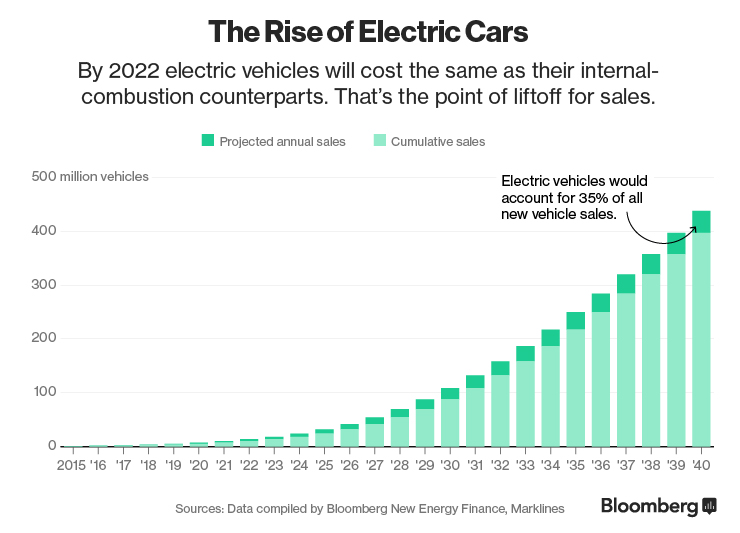
The trend lines for electric vehicles are unequivocally upward.
- Growing Sales Figures: Global EV sales have been surging year-on-year. In 2023, electric vehicle sales reached record highs, with market share continuing to grow across major automotive markets. Countries like Norway have seen EVs dominate new car sales, providing a glimpse into a potential future for other nations.
- Increasing Model Availability: Nearly every major automaker has committed to significant EV investments, with a rapidly expanding range of models across all segments, from compact cars and SUVs to pickup trucks and luxury vehicles. This increased competition is driving innovation and pushing prices down.
- Challenges Remain: Despite rapid progress, obstacles persist. "Range anxiety," while diminishing with longer battery ranges and improved infrastructure, remains a concern for some potential buyers. The initial purchase price, even with incentives, can still be a barrier for lower-income consumers. The speed and reliability of public charging infrastructure also require continuous improvement.
- The Road Ahead: Future innovations, such as advanced solid-state batteries, vehicle-to-grid (V2G) technology allowing EVs to feed power back into the home or grid, and seamless integration with autonomous driving systems, promise to further enhance the EV experience. The electrification of commercial fleets and heavy-duty transport will also play a crucial role in the broader decarbonization of the transport sector.
In conclusion, the journey from automotive indifference to electric vehicle advocacy, as observed in the experiences of new EV owners, is a powerful testament to the transformative potential of electric mobility. What was once considered an "expensive, experimental thing for crazy people" has rapidly evolved into a compelling, competitive, and increasingly accessible alternative to traditional gasoline vehicles. The confluence of technological maturity, economic viability, environmental imperative, and a demonstrably superior driving experience points to an undeniable future. The electric car is not merely an alternative; for many, it represents the future of personal transportation, making gasoline cars appear, quite simply, obsolete. The future, it appears, is absolutely, inexorably, and unavoidably electric.
About the Author