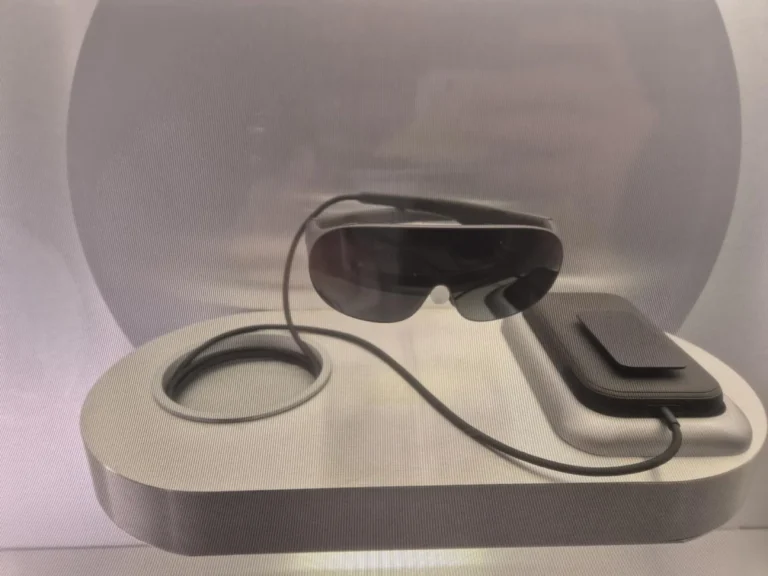
Pico, the extended reality (XR) subsidiary of ByteDance, has officially unveiled its next-generation software and hardware roadmap during a specialized developer event. The announcement centered on two major developments: the introduction of Pico OS 6, a completely redesigned operating system, and the first technical details of its upcoming flagship headset, currently codenamed Project Swan. The event signals a significant strategic shift for the company, moving away from a primary focus on consumer gaming to compete directly in the burgeoning "spatial computing" sector currently occupied by the Apple Vision Pro and upcoming high-end offerings from Samsung and Google.

Strategic Transition to Spatial Computing
The developer event, conducted via a global digital premiere, highlighted Pico’s multi-year effort to refine its ecosystem. While the presentation lasted only fifteen minutes, it established a clear vision for the company’s future. Pico executives detailed a three-year development cycle for Project Swan, positioning it as a high-fidelity productivity and enterprise tool. This transition is underscored by the new "Pico Spatial Engine," a core component of Pico OS 6 designed to handle complex multitasking and environmental awareness.
Industry analysts suggest that Pico’s pivot is a response to the shifting XR landscape. While the Meta Quest series continues to dominate the mid-range gaming market, the high-end segment remains ripe for competition. By adopting a design language and hardware architecture reminiscent of Apple’s Vision Pro, Pico aims to leverage its established presence in the European and Chinese markets to provide a versatile alternative for professional users and prosumers.

Pico OS 6: A New Framework for Multitasking
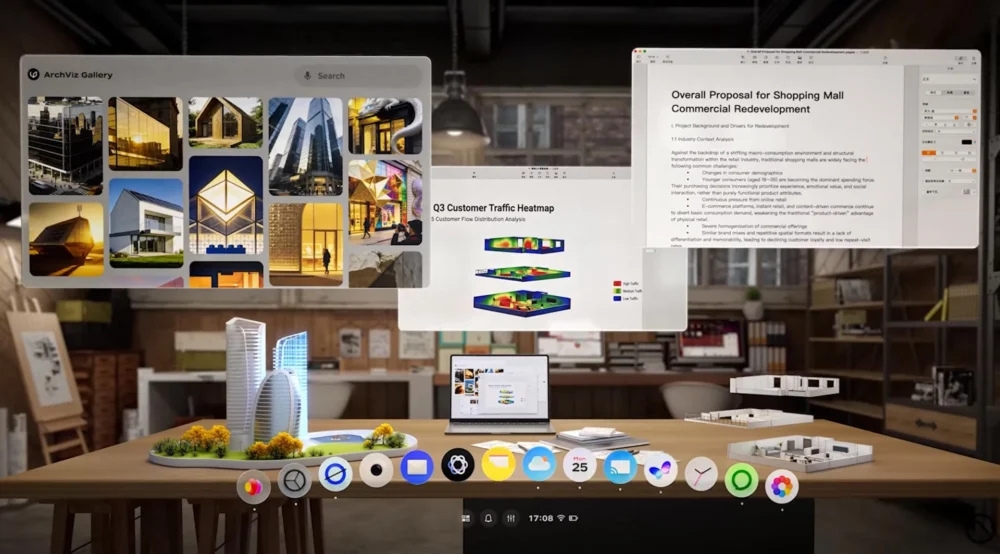
Pico OS 6 represents the culmination of two years of software engineering, built upon three foundational pillars: Efficiency, Intuition, and Openness. The operating system moves away from the traditional siloed application model common in VR, instead favoring a windowed, spatial environment where 2D and 3D applications can coexist.
Efficiency and the Pico Spatial Engine
The centerpiece of the new OS is the Pico Spatial Engine. This architecture offloads the rendering burden from individual applications to the system level, allowing for seamless multitasking. Users can interact with 3D tabletop simulations while simultaneously managing multiple 2D browser windows or productivity apps. This capability is essential for enterprise workflows, such as collaborative design or data visualization, where switching between immersive and flat content has historically been a point of friction.

Intuition through Cloud Crystal Design
To enhance user interaction, Pico introduced "Cloud Crystal," a new design language. This UI framework features translucent elements that adapt to the lighting conditions of the user’s physical environment, ensuring high legibility and visual integration. The system supports a hybrid interaction model, allowing users to switch fluidly between high-precision Pico controllers, hand tracking, and eye tracking. This multimodal approach is designed to reduce the learning curve for new users while providing the precision required for professional tasks.
Openness and Developer Flexibility
Pico emphasized its commitment to an open ecosystem. OS 6 will support a wide range of application types, including standard Android apps, Progressive Web Apps (PWAs), and native XR experiences built on Unity, Unreal Engine, and OpenXR. Notably, the company confirmed full backward compatibility, ensuring that software developed for the Pico 4 and previous iterations will function on the new hardware.

Project Swan: Technical Specifications and Hardware Architecture
While Project Swan was not fully revealed in its final physical form, the technical specifications shared during the event place it at the top of current XR hardware benchmarks. The device is engineered to provide the visual clarity necessary for text-heavy productivity tasks.
Display and Visual Clarity
Project Swan will feature dual 4K displays. The company has customized a dedicated display chip to achieve a resolution of 40 Pixels Per Degree (PPD) on average, with a peak of 45 PPD at the foveated center of vision. For context, most current consumer headsets operate below 25 PPD. This leap in pixel density is intended to eliminate the "screen-door effect" and make reading fine text as comfortable as viewing a high-resolution physical monitor.

Dual-Chip Architecture
Mirroring the architecture seen in high-end competitors, Project Swan utilizes a dual-chip design to manage the intense computational requirements of mixed reality (MR).
- The Flagship SoC: A new, high-performance processor—widely speculated to be a successor to the Qualcomm Snapdragon XR2 Gen 2—will drive the primary applications. Pico claims this chip offers double the CPU and GPU performance of its predecessor.
- Pico Silicon: A custom-built secondary chip dedicated exclusively to sensor fusion and tracking. This chip handles eye tracking, hand tracking, and environmental understanding (spatial meshing and semantic labeling).
By separating application logic from tracking tasks, Pico has achieved a total system latency for mixed reality passthrough of less than 12 milliseconds. This low-latency performance is critical for preventing motion sickness and ensuring that virtual objects appear firmly anchored in the real world.

Chronology of Development and Global Availability
The announcement of Project Swan follows a period of restructuring within Pico, as the company redirected resources toward high-end hardware.
- 2023–2024: Initiation of the "Swan" hardware project and the beginning of Pico OS 6 development.
- Late 2025: Finalization of the Pico Spatial Engine and integration of custom silicon.
- March 2026: Official developer tease and launch of the Global Early Access Program.
- Late 2026: Scheduled commercial release of Project Swan.
Pico has already opened applications for its Global Early Access Program via its developer portal. This initiative aims to provide hardware to experienced development teams several months before the public launch to ensure a robust library of "spatial" applications is available at release.

Market Context and Industry Implications
The introduction of Project Swan places Pico in a complex competitive position. By incorporating features such as high PPD, a dual-chip architecture, and a "spatial" UI, Pico is clearly positioning itself as the primary Android-based alternative to the Apple Vision Pro.
For the enterprise sector, the implications are significant. Pico has long maintained a strong B2B division, providing headsets for training, healthcare, and engineering. Project Swan’s advanced environment understanding—including semantic labeling and persistent spatial anchors—allows the headset to recognize specific objects in a room and remember their location across sessions. This is expected to be a major selling point for industrial applications where digital twins must be overlaid on physical machinery with high precision.

However, challenges remain. The cost of such advanced components suggests a high retail price, potentially exceeding $1,500 to $2,000. This may limit the device’s appeal to the broader consumer market, keeping it within the realms of professional use and the "prosumer" enthusiast segment. Furthermore, the success of Pico OS 6 will depend heavily on developer adoption. While the support for PWAs and Android apps provides an immediate library, the true potential of the "Pico Spatial Engine" will only be realized if developers build native experiences that take advantage of its multitasking capabilities.
Future Outlook
Pico’s developer event has set a high bar for the remainder of the year. With a Global Early Access Program now active, more details regarding the physical design and ergonomics of Project Swan are expected to surface during the Game Developers Conference (GDC) and subsequent industry summits. As the "spatial computing" race intensifies, Pico’s emphasis on an open, developer-friendly ecosystem and high-fidelity hardware may prove to be a compelling proposition for those seeking a professional-grade XR solution outside of the Apple or Meta ecosystems.
About the Author