The global extended reality (XR) landscape is currently undergoing a significant transformation, and at the center of this shift is HTC Vive, a company that once defined the early era of consumer virtual reality. Following a period of relative silence regarding new consumer-grade hardware, industry analysts and the XR community have raised questions regarding the long-term viability of the brand. However, recent communications from HTC spokespeople and a review of the company’s strategic investments reveal a calculated pivot away from being a mere hardware manufacturer toward becoming a comprehensive provider of enterprise-grade XR solutions, spatial computing software, and advanced telecommunications infrastructure.
The prevailing narrative that HTC has scaled back its XR ambitions stems from a noticeable slowdown in the release cycle of its flagship Vive Pro and Vive Focus lines. While competitors like Meta have focused on aggressive consumer pricing and Apple has entered the high-end spatial computing market with the Vision Pro, HTC has adopted a more surgical approach. An official company spokesperson recently clarified that HTC continues to see a "bright future for XR and immersive technology," emphasizing that the organization is composed of multiple business units exploring diverse technological frontiers beyond traditional head-mounted displays (HMDs).

A Chronology of Strategic Shifts
To understand HTC’s current position, one must look at the trajectory of the Vive brand since its inception. In 2016, the original HTC Vive, developed in partnership with Valve, set the gold standard for room-scale PCVR. By 2019, the company began diverging its portfolio, introducing the Vive Cosmos for consumers and the Vive Focus for standalone enterprise use.
By 2021, the release of the Vive Focus 3 signaled a definitive move toward the Business-to-Business (B2B) sector, prioritizing high-resolution optics and swappable batteries—features essential for training and simulation but often secondary for home gaming. The most recent major hardware announcement, the Vive Focus Vision, serves as a bridge between the professional and enthusiast markets, yet the company’s recent activities suggest that the hardware of the future may not look like a traditional VR headset at all.
The Rise of Vive Eagle and the Smartglasses Endgame
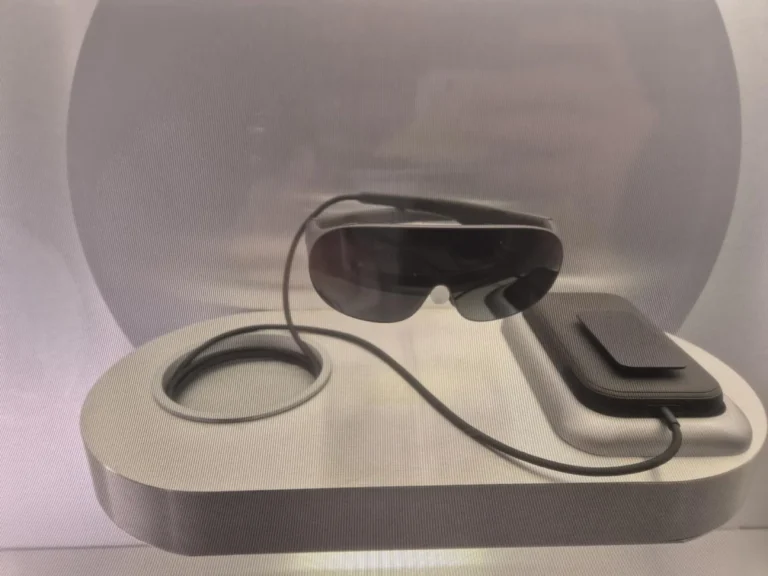
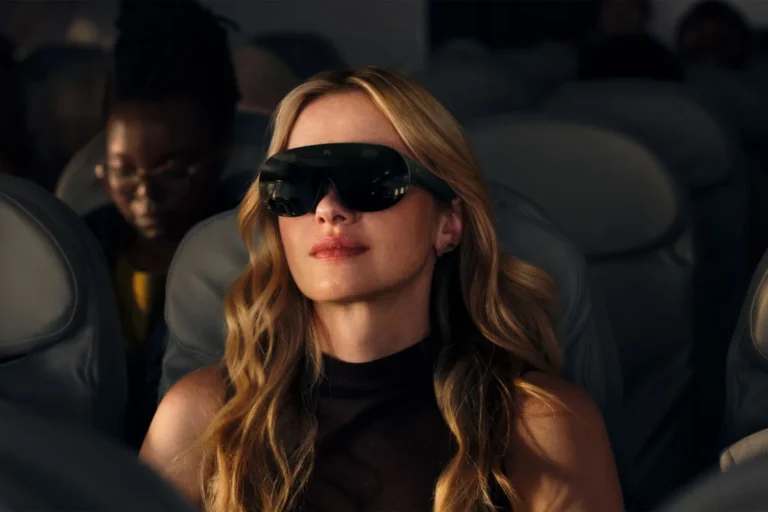
A cornerstone of HTC’s current strategy is the "Vive Eagle" smartglasses. Unlike consumer-oriented smartglasses that prioritize social media integration, Vive Eagle is positioned as a tool for AI-driven productivity. A critical differentiator for HTC in this space is the support for "on-premise" Large Language Models (LLMs). While most smartglasses require data to be processed through third-party cloud services like Meta AI or Google’s Gemini, HTC’s solution allows enterprise clients to run custom LLMs on their own secure servers.

This focus on data sovereignty is a direct response to the needs of the corporate and industrial sectors, where intellectual property and privacy are paramount. HTC’s leadership has indicated that the "endgame" for immersive technology is the convergence of devices into a lightweight, glasses-like form factor. The Vive Eagle represents the first phase of this transition, moving away from bulky HMDs toward wearable AI assistants that can be worn throughout the workday.
5G Infrastructure and the G-REIGN Division
HTC’s commitment to XR is intrinsically linked to its advancements in telecommunications. The company’s G-REIGN division specializes in private 5G network solutions, which are becoming the backbone of industrial XR deployments. The technical challenge of modern XR is the "heavy lifting" of graphical processing. By leveraging high-capacity 5G and Wi-Fi 6/7, HTC is facilitating a move toward cloud-based rendering.
When processing is offloaded to edge servers, the physical device on the user’s head requires less battery power and smaller cooling systems. This infrastructure-first approach explains why HTC has been less focused on releasing iterative VR headsets; they are instead building the ecosystem that will allow the next generation of ultra-lightweight glasses to function.

Dominance in Location-Based Entertainment (LBE)
While the home VR market faces stagnation, the Location-Based Entertainment (LBE) sector remains a high-growth area for HTC. The company has secured a dominant position in "Free-Roaming" VR, where multiple users interact in a shared physical space. Recent collaborations, such as the "La Magie Opéra" experience at the Paris Opera and "Playing With Fire" at the Paris Philharmonie, demonstrate the brand’s shift toward high-culture and educational applications.
To support this, HTC has released significant software updates tailored for LBE operators. This includes an optimized "wheelchair mode" to enhance accessibility, ensuring that immersive storytelling is inclusive. The success of LBE partners like Excurio, which reports consistently strong ticket sales for its virtual expeditions, provides a steady stream of revenue and real-world data that HTC uses to refine its tracking algorithms.
Viverse and the Software Ecosystem
The "Viverse" platform represents HTC’s vision for an open, device-agnostic metaverse. Unlike "walled garden" ecosystems, Viverse is designed to be accessible via browsers, tablets, and non-Vive headsets. Recent updates to the platform have introduced a novel monetization model for creators that rewards content based on engagement and view counts rather than traditional advertising-heavy metrics.

HTC is also facilitating a content pipeline between its LBE successes and the Viverse platform. For instance, the "Versailles: Lost Gardens of the Sun King" experience, originally designed for on-site museum installations, has been ported to Viverse, allowing global audiences to access premium historical content. This cross-platform strategy ensures that HTC’s investments in high-end content have a longer lifecycle and broader reach.
Financial Indicators and Strategic Investments
The notion that HTC is withdrawing from the XR market is contradicted by its recent investment activity. HTC recently led a $6 million funding round for Atlas V, a renowned creative studio behind some of the most critically acclaimed VR experiences. Reports suggest HTC’s direct contribution was approximately $3 million, a significant sum for a company rumored to be "exiting" the space. Such investments indicate a long-term interest in ensuring a steady supply of high-quality content for its hardware and software platforms.
Analysis of the Hardware Future
Despite these successes, the absence of a confirmed "Vive Focus 4" or "Vive Pro 3" remains a point of contention. When questioned about future VR headset releases, HTC spokespeople have remained non-committal, opting to highlight the "convergence of devices." This suggests a strategic pause. In the current market, the cost of developing a new standalone headset to compete with the subsidized pricing of the Meta Quest 3 is prohibitive.

Instead, HTC appears to be waiting for the technology to mature to a point where they can leapfrog the current "goggle" form factor. The industry-wide pivot toward Augmented Reality (AR) and Mixed Reality (MR) suggests that HTC’s next major hardware move will likely be a high-performance, lightweight XR device that blurs the line between the Vive Eagle glasses and the Focus VR headsets.
Broader Industry Implications
HTC Vive’s trajectory is a bellwether for the wider XR industry. The transition from "VR as a gaming peripheral" to "XR as a spatial computing tool" is now in full swing. By diversifying into 5G, AI-integrated wearables, and enterprise software, HTC is insulating itself from the volatility of the consumer gaming market. While the brand may no longer be the primary choice for the average home gamer, its influence in the medical, industrial, and cultural sectors continues to expand. The "death of Vive" is not a reality; rather, it is the rebirth of the brand as a specialized, enterprise-centric powerhouse in the emerging spatial computing era.
About the Author