Meta Platforms Inc. is currently navigating a significant legal and reputational crisis following allegations of privacy violations involving its Ray-Ban Meta smartglasses. The controversy, which stems from reports of human contractors reviewing sensitive user data, has triggered both a class-action lawsuit in the United States and a regulatory investigation in the United Kingdom. This development arrives amid a broader shift in the extended reality (XR) industry, as major players like Valve and Samsung solidify their hardware roadmaps for 2026, and established VR studios face continued economic volatility.
Privacy Litigation and the Human Review Controversy
The legal challenges facing Meta originated from an investigative report by the Swedish publication Svenska Dagbladet. The investigation revealed that images and videos captured by the AI-integrated Ray-Ban Meta smartglasses were being reviewed by human contractors in low-wage regions, specifically Kenya. According to anonymous whistleblowers involved in the review process, these contractors frequently encountered private and intimate moments from the lives of users, many of whom were unaware that their data was being scrutinized by human eyes rather than processed solely by automated algorithms.
In response to these findings, the Clarkson Law Firm filed a class-action lawsuit against Meta in the United States. The litigation focuses on a perceived discrepancy between Meta’s marketing and its data handling practices. While Meta’s terms and conditions mention "human reviews" for AI training—a standard practice in the industry known as Reinforcement Learning from Human Feedback (RLHF)—the lawsuit argues that the company’s public-facing marketing materials are deceptive. Meta has frequently utilized slogans such as “designed for privacy” and “controlled by you,” which the plaintiffs contend are incompatible with the reality of third-party contractors viewing sensitive personal footage.
Simultaneously, the UK Information Commissioner’s Office (ICO) has launched a formal inquiry into the matter. Regulators are examining whether Meta’s data processing transparency meets the standards required by the General Data Protection Regulation (GDPR). This scrutiny places Meta at a potential disadvantage compared to competitors like Apple, which has historically centered its XR strategy on on-device processing and robust privacy safeguards.

Hardware Roadmaps: The 2026 Milestone
Despite the legal headwinds facing the current market leader, the hardware sector is preparing for a significant wave of releases scheduled for 2026. Valve, the operator of the Steam platform, recently provided clarity regarding its upcoming "Steam Frame" hardware. Following a period of speculation regarding potential delays into 2027 due to global semiconductor and RAM shortages, Valve updated its official communications to reiterate a 2026 launch window.
The Steam Frame, along with rumored updates to the Steam Controller and Steam Machine ecosystems, has transitioned to a "coming soon" status on official store pages. Analysts suggest that Valve is aiming to create a seamless hardware-software integration that leverages its dominant position in PC gaming to capture the high-end XR market.
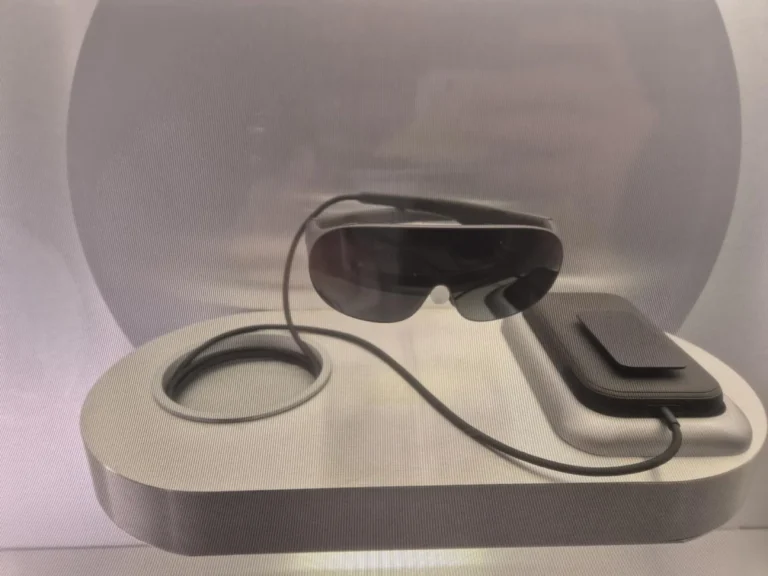
Samsung has also confirmed its entry into the smartglass sector for 2026. Developed in collaboration with Google and Qualcomm, the upcoming Samsung glasses are expected to function as a tethered peripheral to the company’s Galaxy smartphones. This "phone-connected" architecture allows the glasses to remain lightweight while offloading heavy computational tasks to the mobile device’s processor. This strategy mirrors the industry-wide move toward "lite" wearable devices that prioritize aesthetics and comfort over the bulky, standalone form factors of traditional VR headsets.
Industry Consolidation and Economic Challenges
While hardware development continues to progress, the software and studio landscape is experiencing significant contraction. nDreams, one of the most prominent developers in the VR space, recently announced its third round of layoffs within a year. The restructuring includes the complete closure of two subsidiary studios: nDreams Compass and nDreams Near Light. These cuts result in the loss of approximately 78 positions across all levels of the organization, including senior leadership.
The layoffs at nDreams reflect a broader trend of "right-sizing" within the gaming industry. Following a period of rapid expansion during the 2020-2022 period, many VR-focused studios are now struggling with slower-than-anticipated consumer adoption rates and a tightening of venture capital.

In a related shift, HTC has signaled a pivot in its XR business strategy. Once a primary competitor in the consumer "at-home" VR market, HTC is increasingly focusing on enterprise solutions, location-based entertainment (LBE), and its "Viverse" metaverse platform. According to company spokespeople, while HTC remains committed to the XR field, its priorities have shifted toward B2B (business-to-business) applications and specialized content creation tools rather than mass-market consumer headsets.
Technical Innovations and Privacy-First Alternatives
In response to the privacy concerns surrounding cloud-based AI, new market entrants are prioritizing local data handling. Brilliant Labs recently unveiled its "On-Device Privacy Engine" for its Halo smartglasses. This technology ensures that all audio and video data captured by the device is processed entirely on the user’s smartphone rather than being uploaded to external servers. This architecture effectively eliminates the risk of third-party human review and is being positioned as a direct counter-narrative to Meta’s current data practices.
On the software optimization front, Meta has introduced "FrameSync," a new technology for the Horizon OS designed to improve visual consistency. FrameSync allows Quest applications to synchronize frame rates more effectively with the display’s refresh cycle, reducing latency and visual stuttering. This technical refinement is part of Meta’s effort to maintain its lead in the standalone VR market by improving the user experience on existing hardware like the Quest 3.
Furthermore, the industry saw notable movement in the startup ecosystem with the acquisition of Doublepoint by Oura, the maker of the Oura Ring. Doublepoint, known for its advanced gesture-control software that turns smartwatches into input devices for XR, will likely assist Oura in integrating wearable health tech with the emerging augmented reality market.
Market Analysis and Future Outlook
The current state of the XR industry is characterized by a tension between rapid technological innovation and evolving regulatory standards. Meta’s legal troubles highlight a critical hurdle for the adoption of "always-on" wearable cameras: consumer trust. As the industry moves toward 2026—a year that appears set to be a turning point for hardware availability—the ability of companies to prove their privacy credentials may become as important as the hardware specifications themselves.

The emergence of new publishers, such as Evolution Publishing, suggests that there is still confidence in the long-term viability of the VR gaming market. Led by industry veteran Kevin Joyce, Evolution Publishing has already secured three titles for 2026, including "Affected: The Asylum" and "Darts VR2: Bullseye." This influx of new publishing capital, combined with the hardware entries from Samsung and Valve, indicates that while the industry is currently undergoing a painful period of consolidation and legal scrutiny, the fundamental trajectory toward a wearable-first computing future remains intact.
As the legal proceedings against Meta move forward and the UK ICO concludes its investigation, the findings will likely set a precedent for how AI-integrated wearables must disclose and manage human-in-the-loop data processing. For now, the industry remains in a state of watchful transition, balancing the promise of 2026 with the practical challenges of 2024.
About the Author