Microsoft, the parent company of Xbox, is facing significant legal challenges as labor unions in both the United States and Canada have filed Unfair Labor Practice (ULP) charges against the tech giant. These charges stem from allegations that Microsoft mishandled its recent wave of mass layoffs, failing to adequately inform and bargain with union representatives, thereby violating established labor laws. The accusations highlight growing tensions between major corporations and an increasingly organized workforce within the video game industry.
Unfair Labor Practice Charges Filed
The Communications Workers of America (CWA) in the U.S. and CWA Canada have jointly initiated legal action, asserting that Microsoft engaged in unlawful conduct during its recent restructuring. Specifically, the ULP charges, filed on July 15, 2026, allege that Microsoft and its subsidiaries, including Xbox, ZeniMax Media, Inc., id Software, and Bethesda Game Studios, failed to provide crucial information to the CWA and engaged in "bad faith bargaining." These claims are documented on the National Labor Relations Board (NLRB) website, marking a critical juncture in the ongoing dialogue surrounding labor rights within the gaming sector. The unions further claim that Microsoft undertook "coercive actions" and implemented "unilateral changes" to employee contracts, bypassing its legal obligations to consult with the union.
An Xbox spokesperson, when approached by Game Developer for comment on the situation, issued a statement addressing the company’s position. "We respect our employees’ right to make their voices heard, and we recognize that this is a difficult time for many," the spokesperson said. "We reached out to the union to begin effects bargaining and are committed to that process. We remain focused on supporting impacted employees through this transition while positioning the organization for long-term strength." This statement underscores Microsoft’s acknowledgment of the employee unrest and its commitment, at least in principle, to engage in certain forms of negotiation with the union, though the unions contend this engagement came too late and was insufficient.
The Legal Basis of the Union’s Claims
At the heart of the ULP charges lies the principle of collective bargaining rights, particularly pertinent when a company with unionized employees undergoes significant operational changes such as layoffs. In the U.S., under the National Labor Relations Act (NLRA), employers are generally obligated to bargain with a union representing their employees over "wages, hours, and other terms and conditions of employment." This often extends to decisions regarding layoffs and their effects. The CWA’s assertion that Microsoft failed to engage in "decisional bargaining" before announcing its latest round of layoffs is a key point of contention. Decisional bargaining refers to the union’s right to negotiate over the decision to lay off employees itself, rather than merely the effects of those layoffs, such as severance packages or outplacement services, which falls under "effects bargaining."
Carmel Smyth, president of CWA Canada, elaborated on the gravity of the situation in an email to Game Developer. "The unions CWA and CWA Canada have jointly filed unfair labor practice complaints against Microsoft alleging the company has unlawfully fired people without giving notice to or discussing it with the union as the employer is legally obliged to do when we are in the middle of ongoing bargaining a collective agreement," Smyth stated. She further emphasized, "Basically the employer cannot arbitrarily change working conditions while it is engaged in negotiating with the union. We will continue to file legal challenges if necessary, and do all we can to defend the rights of Bethesda Game Studios workers." This highlights the union’s perspective that Microsoft circumvented its legal duties during an active bargaining period, thereby undermining the collective agreement process.
The specific allegations of "coercive actions" and "unilateral changes" to employee contracts further compound the charges. Coercive actions could encompass a range of behaviors designed to discourage union activity or pressure employees, while unilateral changes refer to altering terms of employment without consulting the union, which is typically prohibited during collective bargaining. These actions, if proven, would represent a significant breach of labor law and could result in various remedies ordered by the NLRB, ranging from mandatory bargaining orders to reinstatement of laid-off employees with back pay.
A Timeline of Events Leading to the Charges
The recent wave of layoffs and subsequent legal actions unfolded rapidly. On July 6, 2026, Microsoft announced its intention to eliminate 3,200 roles across its video game division before the end of the current fiscal year. This announcement sent shockwaves through the industry, particularly impacting key subsidiaries like Obsidian, id Software, and ZeniMax Online Studios, as well as Bethesda Game Studios. Employees, including union members, were informed of their termination shortly after this public declaration.
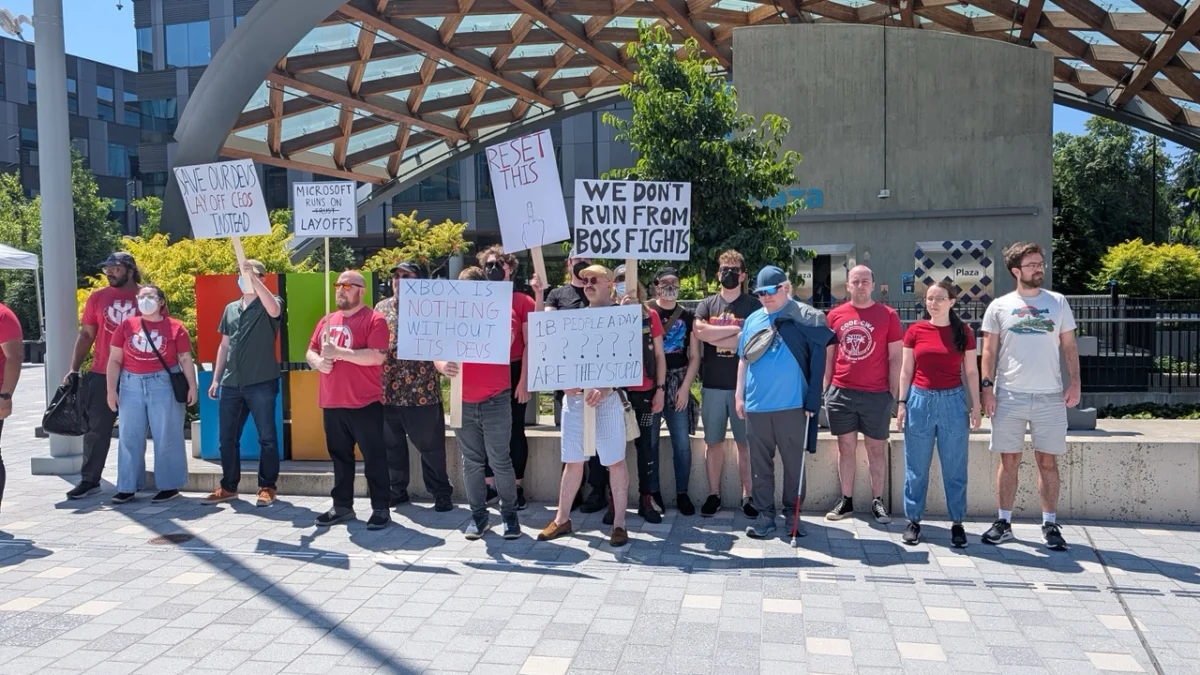
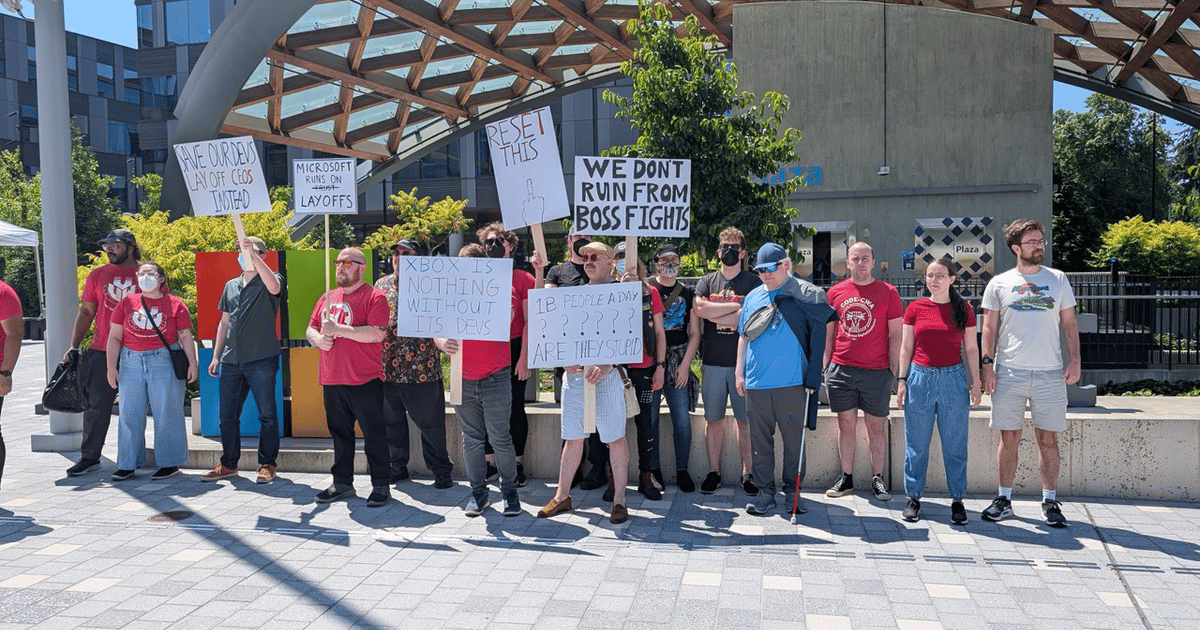
The CWA spokesperson confirmed that Microsoft did not engage in "decisional bargaining" with the union prior to this announcement, a critical omission in the union’s view. Following the abrupt layoffs, unionized Xbox workers, many of whom are employed at studios like Bethesda Game Studios and id Software under the CWA banner, quickly mobilized. On July 15, 2026, the same day the ULP charges were officially filed, impacted employees and their supporters staged "Save Our Devs" rallies. These protests took place across several key locations, including Microsoft’s headquarters in Redmond, Washington, and ZeniMax’s office in Rockville, Maryland. A union organizer reported a strong turnout, with over 150 people participating in the Rockville rally alone, demonstrating the depth of frustration and solidarity among the workforce.
Simon Prefontaine, a union organizer and former Bethesda Game Studios employee, underscored the significance of these coordinated actions. "Union members and our supporters showed up in strong numbers at all six locations yesterday," Prefontaine told Game Developer. "We’re really proud of what we were able to put together in such short time. This was possible because both staff and fans are incredibly upset at Xbox’s actions last week." He further announced the legal offensive, stating, "We also announced today that our lawyers (in the USA and Canada) find these layoffs to be illegal and are therefore filling Unfair Labor Practice actions against Microsoft on both sides of the border. We’re ready to do everything we can to get our members back to work on the games we love." This timeline illustrates a rapid and determined response from the unions and affected employees to Microsoft’s corporate actions.
Widespread Layoffs Amidst Industry Volatility
The 3,200 job cuts within Microsoft’s video game division are part of a larger trend of significant restructuring and layoffs that have plagued the tech and gaming industries throughout 2025 and 2026. This period has seen thousands of jobs eliminated across various companies, driven by factors such as post-pandemic market corrections, shifts in consumer spending, rising development costs, and an overall push for efficiency and profitability. Microsoft’s gaming division, in particular, has undergone massive expansion in recent years, notably with the acquisition of ZeniMax Media and later Activision Blizzard. Such rapid growth often leads to consolidation and rationalization efforts once integration phases are complete, but the scale and manner of these cuts have drawn considerable criticism.
Anonymous laid-off employees, speaking to Game Developer, expressed profound disappointment and anger, claiming the redundancies have led to the loss of irreplaceable talent and accusing Microsoft of abandoning both union and non-union workers. One source lamented, "Does Microsoft care? Absolutely not. And they seem to actually put some level of effort and care into making it as painful as possible." Such sentiments highlight not only the economic impact but also the significant emotional and psychological toll these mass layoffs have on individuals and the broader developer community. The cuts at studios like Obsidian, id Software, and ZeniMax Online Studios are particularly sensitive, as these studios are known for cultivating highly specialized skills and unique creative cultures that can be difficult to rebuild once dismantled.
Microsoft’s Official Stance and the Nuance of Bargaining
Microsoft’s public statement regarding its commitment to "effects bargaining" and supporting impacted employees attempts to frame its actions within acceptable labor practices. However, the critical distinction between "decisional bargaining" and "effects bargaining" is central to the union’s case. While Microsoft appears willing to negotiate the consequences of the layoffs (e.g., severance, health benefits, job placement assistance), the unions contend that the company was legally obligated to negotiate the decision to lay off employees itself, especially given the ongoing collective bargaining agreement negotiations.
Legal experts in labor relations often point out that when a union has established representation, particularly during an active bargaining period for a collective agreement, an employer’s ability to unilaterally make significant changes to terms of employment, including mass layoffs, is severely restricted. Failure to engage in decisional bargaining, where required, can be a significant ULP. Microsoft’s stated focus on "positioning the organization for long-term strength" is a common corporate rationale for such restructurings, but it does not supersede legal obligations to its unionized workforce. The company’s response suggests an awareness of its general duty to bargain but sidesteps the unions’ specific claim that it failed to bargain over the initial decision to cut jobs. This will likely be a key point of contention during the NLRB investigation and any subsequent proceedings.
Developer Protests and Union Solidarity
The "Save Our Devs" rallies on July 15, 2026, served as a powerful demonstration of solidarity and a clear message to Microsoft. The turnout, especially in Rockville, with over 150 attendees, signifies the collective resolve of union members, their peers, and even fans of the affected studios. These protests are not merely symbolic; they are a direct action designed to draw public attention to the alleged unfair practices and to exert pressure on Microsoft to reconsider its approach. The involvement of "fans" alongside staff indicates a broader concern within the gaming community about the well-being of developers and the impact of corporate decisions on the creative integrity of beloved games and studios.
The rapid organization of these rallies, as highlighted by Simon Prefontaine, also speaks to the growing maturity and effectiveness of unionization efforts within the gaming industry. It demonstrates a network of support and a willingness to act decisively when workers’ rights are perceived to be violated. Such public displays of discontent, coupled with formal legal charges, create a multi-pronged approach to advocacy that aims to compel employers to adhere to labor laws and engage in good faith negotiations.
The Broader Landscape of Gaming Industry Unionization
The dispute between Microsoft and the CWA is not an isolated incident but rather a prominent example of a broader trend: the increasing unionization of the video game industry. For decades, the industry was largely un-unionized, characterized by long hours, crunch culture, and job insecurity. However, in recent years, developers have increasingly sought collective bargaining as a means to gain greater job security, fair wages, better working conditions, and a stronger voice in corporate decisions.
The CWA has been at the forefront of many of these efforts, successfully organizing workers at various studios, including ZeniMax Media, a subsidiary of Xbox. These early successes, which led to the unionization of workers at Bethesda Game Studios and id Software, among others, were hailed as significant milestones. This ongoing push for unionization reflects a maturing industry workforce that is no longer willing to accept exploitative practices. This current ULP charge against a tech giant like Microsoft, a company with immense resources and influence, could set a critical precedent for future labor relations across the entire gaming sector, potentially emboldening other developers to organize or strengthening the hand of existing unions.
Implications for Microsoft and Future Labor Relations
The ULP charges and associated protests carry significant implications for Microsoft. Firstly, there is the potential for reputational damage. Microsoft has historically cultivated an image of a progressive and employee-friendly company, and these allegations could tarnish that perception, especially among its vast customer base and the talent pool it seeks to attract. In a competitive industry like gaming, a strong employer brand is crucial for recruitment and retention.
Secondly, the legal process itself can be costly and time-consuming. An NLRB investigation can lead to hearings, settlements, or orders that could compel Microsoft to change its practices, rehire laid-off workers with back pay, or engage in specific bargaining processes. Such outcomes would not only incur direct financial costs but also impose operational adjustments. Furthermore, the case could energize further unionization efforts within Microsoft’s other divisions or among non-unionized gaming studios, leading to a more unionized workforce across the company and the industry. This would fundamentally alter the power dynamics between management and labor.
Finally, the incident underscores the growing scrutiny that large corporations face regarding their labor practices. As the gaming industry continues to grow and mature, so too does the expectation for fair and ethical treatment of its workforce. This case will likely serve as a litmus test for how established tech giants adapt to the rising tide of labor activism and collective bargaining in an industry that has historically resisted it.
Looking Ahead: The Path of Legal Recourse
The filing of Unfair Labor Practice charges initiates a formal legal process. The NLRB will investigate the claims made by the CWA and CWA Canada. This investigation typically involves gathering evidence, interviewing witnesses, and reviewing relevant documents. If the NLRB finds merit in the charges, it may attempt to facilitate a settlement between Microsoft and the unions. If a settlement cannot be reached, the NLRB General Counsel may issue a formal complaint, leading to a hearing before an administrative law judge. The judge’s decision can then be appealed to the full NLRB and subsequently to federal courts.
The Canadian legal system will follow a similar process through its respective labor boards. The unions’ stated determination to "do all we can to defend the rights of Bethesda Game Studios workers" suggests a prolonged and robust legal battle if Microsoft does not quickly agree to terms deemed acceptable by the unions. The outcome of these charges will undoubtedly be closely watched by labor advocates, industry executives, and developers worldwide, as it could shape the future of labor relations and worker protections within the dynamic and ever-evolving video game industry.
About the Author