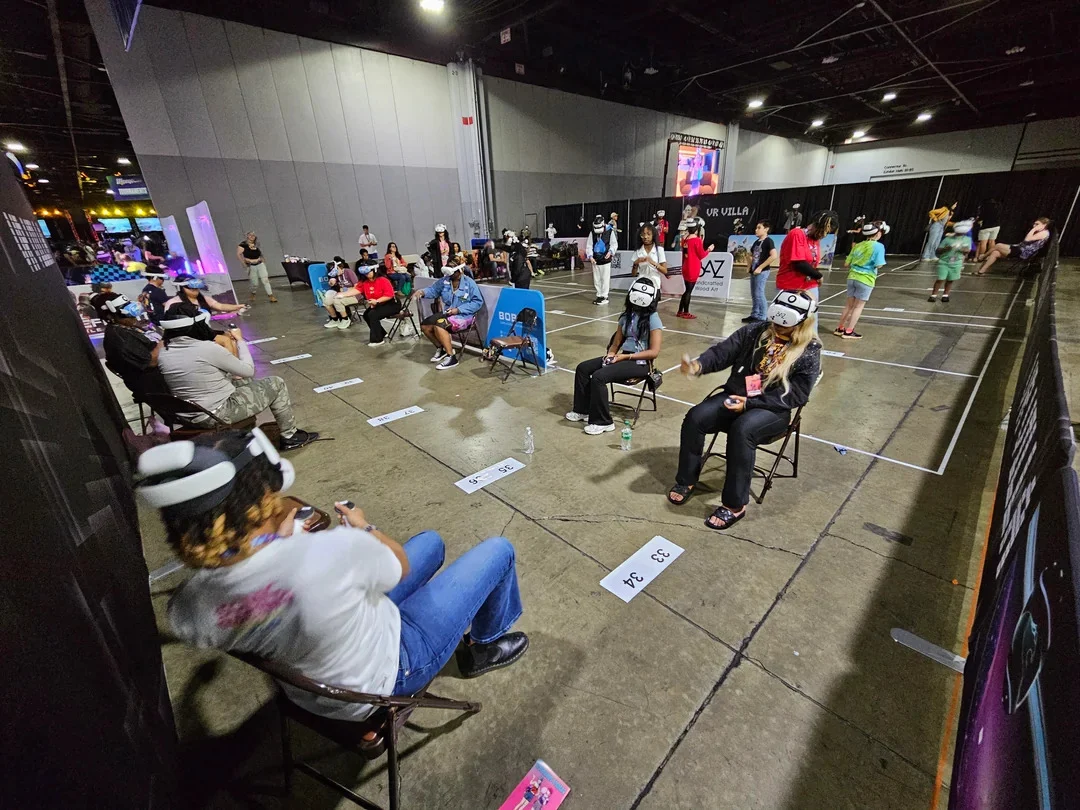
In an era where major technology corporations struggle to bridge the gap between virtual reality (VR) hardware and mainstream consumer adoption, an unconventional figure has emerged as a leading force in grassroots evangelism. Jeff Basladynski, known within digital communities as "Bazitron" and the proprietor of an exotic wooden chopstick company, has successfully orchestrated what is now considered the largest free-to-play VR LAN party operation in the United States. Through his organization, VR Villa, Basladynski has transformed comic-cons, anime festivals, and gaming expos into high-traffic testing grounds, introducing tens of thousands of individuals to immersive technology.
Operating primarily out of a passion for the medium, Basladynski has developed a logistics-heavy model that brings high-end VR experiences to the general public. While his primary vocation involves the artisanal crafting of high-end woodcraft through Baz LLC, his secondary endeavor has seen him manage a fleet of over 200 headsets, traveling from Hawaii to Washington, D.C. This initiative highlights a significant shift in how emerging technologies are marketed, moving away from high-budget corporate advertisements toward experiential, community-driven engagement.

The Evolution of VR Villa: From VR Zone to National Scale
The trajectory of VR Villa began in 2016, coinciding with the commercial release of the HTC Vive and the Oculus Rift. Basladynski, a lifelong gamer, initially integrated his interest in VR into his existing travel schedule for his chopstick business. What began as bringing one or two headsets to post-convention game rooms quickly evolved into a structured community group. Originally branded as "VR Zone," the project was eventually renamed "VR Villa" to reflect a "village" mentality—a network of hundreds of gamers and volunteers across the country who facilitate these large-scale activations.
Over the past eight years, the operation has scaled from informal gatherings to professional installations occupying up to 10,000 square feet at major events such as DreamHack and MomoCon. Basladynski’s role has transitioned from a hobbyist to a de facto director of VR content for various gaming conventions. By partnering with approximately 68 software studios—including prominent names like Resolution Games, Schell Games, and Mighty Coconut—VR Villa ensures that the public has access to high-quality, curated content rather than the rudimentary tech demos often found in retail environments.
Operational Logistics and the "Cost Coverage" Model
The scale of VR Villa’s operations presents unique logistical challenges that typically deter smaller organizations. Basladynski utilizes a "piggyback" logistics strategy, leveraging the transport infrastructure of his primary business to move equipment. For events requiring air travel, such as those in Hawaii, the team manages over 200 pounds of checked equipment, facilitating dozens of simultaneous sessions. For larger continental expos like the LVL UP EXPO, the organization utilizes pallets to ship 60 or more headsets alongside professional AV equipment and projectors.

The financial sustainability of VR Villa relies on a "cost coverage" partnership with event organizers. Rather than charging the public "pay-to-play" fees—a model used by commercial VR arcades like Sandbox VR or Zero Latency—VR Villa operates as a free-to-play feature of the convention. In exchange for providing high-value content that increases attendee engagement, event directors often provide host hotels, logistics support, and stipends for the professional staff Basladynski has trained over nearly a decade.
Data-Driven Outreach: Analyzing the Impact of Physical Demos
Unlike many grassroots projects, VR Villa maintains rigorous metrics to track user engagement and demographic shifts. The data collected over the last four years reveals a significant appetite for VR when barriers to entry are removed.
- Total Reach: The organization has serviced over 80,000 players in the last four years alone. In 2023, VR Villa recorded approximately 25,000 unique participants and nearly 30,000 individual sessions.
- Average Play Time: A key metric of success for VR Villa is the duration of engagement. In 2022, the average play session lasted approximately 22 minutes. By 2023, this increased to 32 minutes per session.
- Retention and Rebooking: One out of every five players rebooks a session immediately after their first experience. In certain "sit-down" titles like Demeo, players have been recorded staying in the headset for up to four and a half hours to complete full campaigns.
- First-Time Users: Despite the technology being on the market for years, 28% to 30% of VR Villa’s participants are experiencing VR for the first time.
The demographic breakdown further challenges industry assumptions that VR is solely a youth-oriented medium. While 30% of players are between the ages of 10 and 18, a significant 26% are young professionals aged 19 to 26. The remaining 44% encompasses a broad range of adults, including parents and grandparents who often engage in collaborative or puzzle-based games while younger family members opt for high-intensity titles.

Content Curation and the Social Factor
The success of these installations is largely attributed to the curation of software. Basladynski emphasizes that "graphics are not the primary driver of fun; social interaction is." The most frequently played title within the VR Villa ecosystem is Cook-Out: A Sandwich Tale by Resolution Games, accounting for roughly one in four sessions. Other high-performing titles include Fruit Ninja VR, Space Pirate Trainer, Blaston, and Walkabout Mini Golf.
The organization prioritizes collaborative multiplayer experiences, which Basladynski posits are more effective at converting "VR-curious" individuals into owners. According to internal surveys conducted across major shows, 57% of participants reported a positive shift in their perspective toward VR after a 20-minute session. Furthermore, 17% of respondents indicated they would have purchased a headset on the spot if a retail option had been available immediately following their social play session with friends.
Industry Implications: The Failure of Traditional Retail Demos
Basladynski’s observations provide a critical critique of current corporate marketing strategies. He argues that the industry is at an "impasse" because major players like Meta have historically struggled with retail presence. Corporate demos, such as those previously held at Best Buy or Target, often fail due to a lack of dedicated, knowledgeable staff and restrictive "aisle-based" environments.

"They are not getting enough play space availability," Basladynski noted, referring to planned retail rollouts. He suggests that corporate demos often force users to hold the headset to their faces rather than using proper head straps, leading to a suboptimal and uncomfortable first impression. In contrast, VR Villa utilizes high-end third-party accessories, such as KIWI Design and BOBOVR head straps, to ensure comfort—a factor that participants frequently cite as their biggest surprise.
Future Outlook and the Path to Sustainability
As the VR industry continues to evolve with the release of hardware like the Meta Quest 3S, Basladynski remains focused on the "sustainability pathway." He expresses skepticism regarding industry claims of reaching a billion users within a decade, suggesting that such projections ignore current technological and social limitations. Instead, he advocates for a market strategy that targets specific demographics through direct, high-quality experiences.
The broader impact of VR Villa lies in its ability to remove the "Google Cardboard" stigma—a lingering misconception where the public equates modern 6DOF (six degrees of freedom) VR with the low-quality phone-based viewers of the early 2010s. By providing one-on-one instruction and high-fidelity social gaming, Basladynski is filling a marketing void that multi-billion-dollar corporations have yet to master.

For the VR industry to achieve long-term growth, Basladynski suggests that enthusiasts and developers must focus on shared passion and social experiences. His advice to the community is simple: "Go play games, get others to go play games, and have a good time." As VR Villa continues its 2024-2025 tour across the United States, it remains a potent case study in how grassroots community efforts can drive technological adoption more effectively than traditional top-down advertising.
About the Author