The landscape of independent game development is often characterized by its volatility, yet few creators have navigated its peaks and valleys as distinctly as Ojiro Fumoto. Known to the gaming community by his pseudonym "Moppin," Fumoto has transitioned from a breakout indie success to a developer within the hallowed halls of Nintendo, and finally back to the vanguard of independent creation. His journey, marked by the release of the critically acclaimed Downwell and the more recent Poinpy, offers a profound case study in the intersection of creative autonomy, corporate structure, and the shifting economics of digital distribution.
The recent rerelease of Poinpy, a title that was previously a cornerstone of the Netflix Games subscription service, serves as a significant milestone in this narrative. Following the expiration of a three-year exclusivity agreement, the game briefly vanished from digital storefronts, raising concerns regarding digital preservation and the longevity of subscription-exclusive titles. However, in a move that deviates from standard industry practices, Fumoto and his long-time publishing partner, Devolver Digital, have returned the game to the public as a free-to-play title without traditional monetization, relying instead on a voluntary "tip" system. This development provides a rare opportunity to examine the career of a developer who has prioritized the purity of game design over the conventional pressures of the mobile marketplace.
The Genesis of a Cult Classic: The Downwell Era
To understand the significance of Fumoto’s recent moves, one must look back to 2015, the year Downwell was released. Developed primarily while Fumoto was a student at Tokyo University of the Arts, Downwell was a masterclass in minimalist design. Published by Devolver Digital, the game featured a distinct three-color palette and a central mechanic—"Gunboots"—that allowed players to slow their descent by firing projectiles downward.
Downwell was not merely a commercial success; it was a critical darling that garnered nominations at the Game Developers Choice Awards and the Independent Games Festival (IGF). Its success was predicated on a "tough-but-fair" difficulty curve and a high level of mechanical polish, traits that are often associated with the golden age of arcade gaming. The title’s availability on PC, iOS, and later PlayStation 4 and Nintendo Switch, established Fumoto as a premier talent in the "neo-retro" movement. It was this reputation for mechanical excellence that eventually caught the attention of the industry’s most storied institution: Nintendo.
The Nintendo Sabbatical: Learning from the Level Design Gods
In 2018, the news that Fumoto had joined Nintendo sent ripples through the indie community. For many, it seemed the ultimate validation—an independent creator being recruited by the company that essentially defined the platforming genre. During his tenure at the Kyoto-based giant, Fumoto contributed to high-profile projects including Ring Fit Adventure and the arcade-style Donkey Kong Bananza.
Reflecting on this period, Fumoto describes his colleagues at Nintendo as "level design Gods." The experience provided him with a front-row seat to the internal mechanics of a global hardware and software powerhouse. He noted that observing how a large-scale, highly talented team operated was "super valuable," offering insights into the meticulous refinement process that defines Nintendo’s output.
However, the corporate environment also served as a catalyst for self-discovery. Fumoto realized that the collaborative, multi-layered nature of AAA development was at odds with his personal creative process. The desire to return to the agility and total control of independent development led to his departure in 2019. This "indie-to-corporate-and-back" trajectory is becoming increasingly common as developers seek a balance between the stability of major studios and the creative freedom of solo projects.
The Netflix Partnership and the Birth of Poinpy
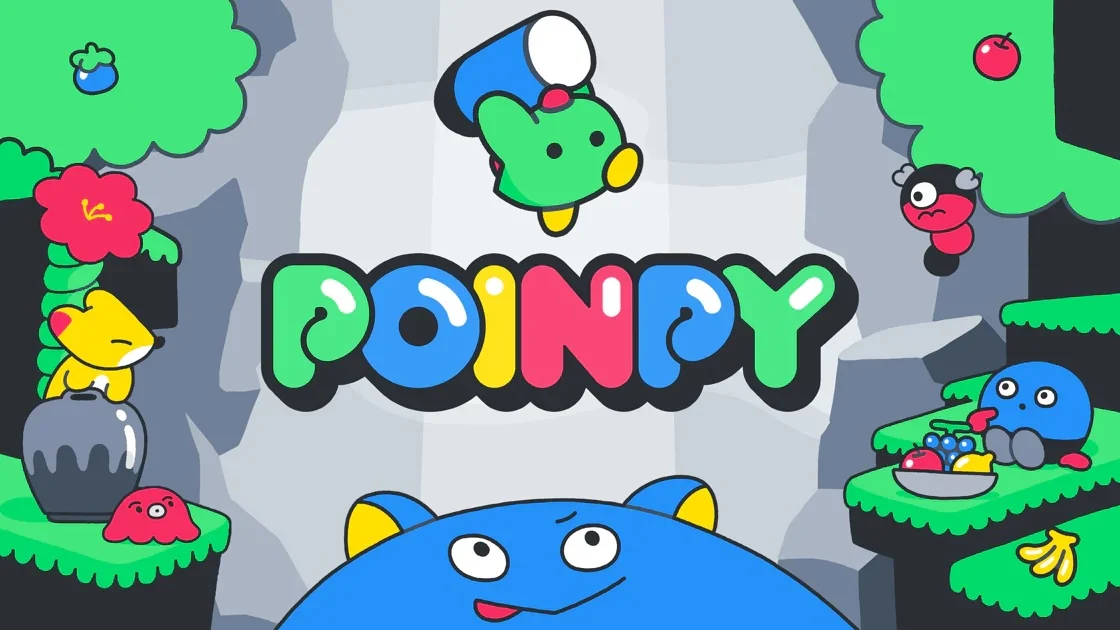
Upon returning to independent status, Fumoto began work on what would eventually become Poinpy. If Downwell was a dark, subterranean descent, Poinpy was its vibrant, colorful antithesis. The game tasks players with propelling a small green creature upward, collecting fruit to create juice for a pursuing monster. Its art style was reminiscent of high-end children’s animation, and its gameplay was optimized for vertical mobile play.
During the development of Poinpy, Netflix was in the midst of a massive expansion into the gaming sector. Seeking to bolster its subscription value, the streaming giant sought out "prestige" indie titles that offered high engagement without the "pay-to-win" mechanics that plagued the mobile market. Poinpy was identified as a flagship title for this initiative.
The game was officially unveiled by Geoff Keighley during Netflix’s 2022 Geeked Week, an event designed to bridge the gap between the company’s television audience and the gaming world. Fumoto notes that the deal was struck while the game was already well into development. "Netflix was great," Fumoto recalled, emphasizing that the platform gave the game a significant spotlight that a solo indie release might have struggled to achieve in the crowded App Store environment.
The Expiration of Exclusivity and the Challenge of Preservation
In mid-2024, Poinpy was removed from the Netflix Games library. This removal was not due to a lack of performance but was the result of the natural conclusion of a three-year exclusivity window. This event highlighted a growing concern within the gaming industry: the ephemeral nature of subscription-exclusive content. When a game is tied to a service like Netflix, Apple Arcade, or Xbox Game Pass, its availability is often tethered to the lifespan of a contract.
For Fumoto, the removal presented a dilemma. While the game had fulfilled its contractual obligations and provided financial stability, the developer felt a moral obligation to ensure the game remained accessible. "I wanted to get the game back out because it’d be a waste not to," Fumoto stated. The process of rereleasing the game was delayed slightly due to personal life events, but the goal remained constant: preservation over profit.
A New Economic Model: The Rerelease and the "Tip" Jar
In a partnership with Devolver Digital, Poinpy returned to iOS and Android last month as a free download. In a market where "free" usually implies a barrage of advertisements or aggressive microtransactions, Poinpy stands out as a pure experience. There are no energy bars, no loot boxes, and no mandatory fees. Instead, the game includes a "tip" option—an in-app purchase that allows players to voluntarily support the developer and publisher.
This decision is rooted in Fumoto’s pragmatic view of his career. He acknowledges that the initial deal with Netflix provided enough financial return to sustain his lifestyle and future projects. "I felt Poinpy already made enough money from its initial release and didn’t need it to make much more," he explained. By removing the price tag, Fumoto has effectively turned Poinpy into a legacy piece—a gift to the community that ensures the game continues to be played and discussed.
From a business perspective, the "tip" model is historically less lucrative than traditional pricing or ad-based models. However, for a developer like Fumoto, who values the creative process over the "business" side of the industry, it represents a path to maintaining a positive relationship with his audience. It also serves as a critique of the current state of mobile gaming, proving that high-quality experiences can exist outside the standard "freemium" ecosystem.
Implications for the Future of Indie Development
Fumoto’s journey and the resurrection of Poinpy offer several key takeaways for the broader industry:
- The Role of Publishers in the Subscription Era: Devolver Digital’s role in this saga cannot be overstated. By handling the logistical, legal, and distributive hurdles of the rerelease, they allowed Fumoto to focus on the creative side. This highlights the evolving role of indie publishers as "stewards" of a creator’s portfolio, rather than just financial backers.
- The Shift Toward PC and Console: Despite his success on mobile, Fumoto indicated that his next project will likely target PC and consoles. He cited the limitations of touch controls, stating that his next design "only makes sense with traditional gamepads in mind." This suggests a potential trend where high-concept indie developers are moving away from mobile due to the platform’s inherent input constraints and the difficulty of standing out in a market dominated by live-service giants.
- Digital Preservation as a Priority: The rerelease of Poinpy serves as a blueprint for other developers whose subscription deals are ending. It demonstrates that with the right partnership, games do not have to disappear into "digital limbo" once a contract expires.
- Accessibility vs. Edge: Fumoto’s time at Nintendo influenced his philosophy on difficulty. While Downwell was known for its "edgy" and difficult nature, Poinpy was more accessible. Fumoto reflects on whether this is an influence of Nintendo’s design philosophy or simply a personal evolution as a developer. This shift toward accessibility without sacrificing depth is a hallmark of "Nintendo-style" design that Fumoto has successfully integrated into his indie work.
Conclusion: The Enduring Legacy of Moppin
Ojiro Fumoto remains a singular figure in the gaming world—a developer who successfully navigated the pressures of a "Big Three" console manufacturer and emerged with his indie spirit intact. His refusal to engage in traditional monetization for the rerelease of Poinpy is a testament to a philosophy that views games as art and cultural artifacts rather than mere revenue streams.
As the industry continues to grapple with the complexities of digital ownership and subscription models, the story of Poinpy provides a rare moment of optimism. It suggests that even in a landscape defined by billion-dollar acquisitions and shifting corporate priorities, there is still room for a "fun little game" to exist simply for the sake of being enjoyed. For Fumoto, the focus now shifts to the early stages of his next project, where the lessons learned from the "Gods" of Kyoto will undoubtedly merge with the rebellious, inventive spirit that first gave the world Downwell. The gaming community waits with bated breath to see where his next descent—or ascent—will lead.
About the Author