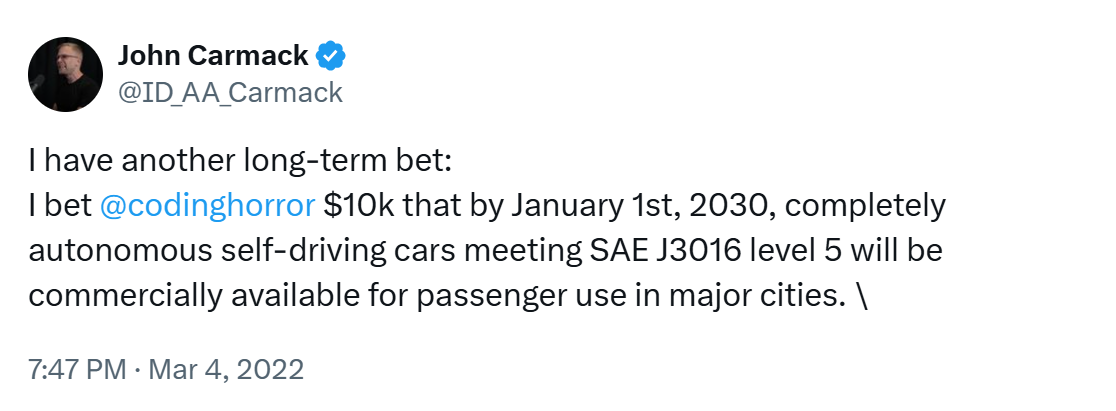
Jeff Atwood, founder of Coding Horror and co-founder of Stack Overflow, has publicly announced a $10,000 wager with legendary programmer John Carmack, co-founder of id Software and former CTO of Oculus VR. The friendly bet centers on the commercial availability of fully autonomous, SAE J3016 Level 5 self-driving cars in major U.S. cities by January 1st, 2030. Atwood is betting against this ambitious milestone, while Carmack is taking the affirmative position. The stakes, while significant, are earmarked for a 501(c)(3) charity of the winner’s choosing, with a mutual agreement to adjust the amount for inflation to ensure its intended impact.
The Terms of Engagement: Defining Level 5 Autonomy
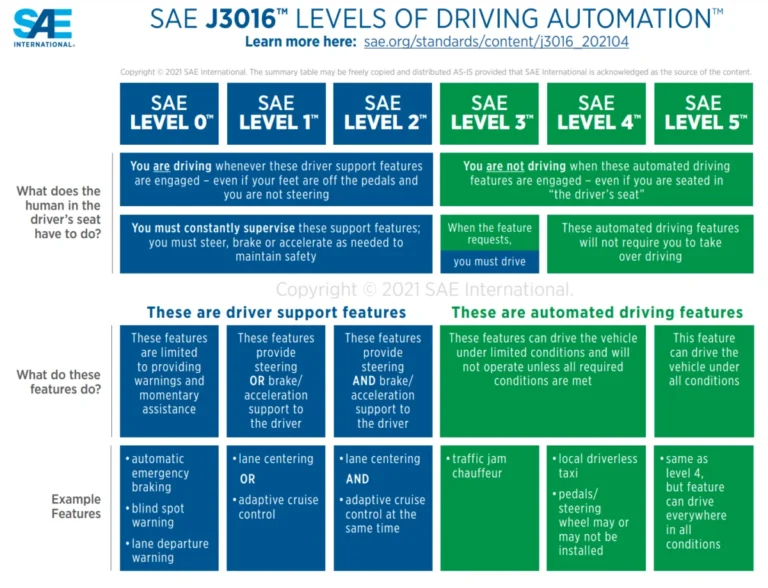
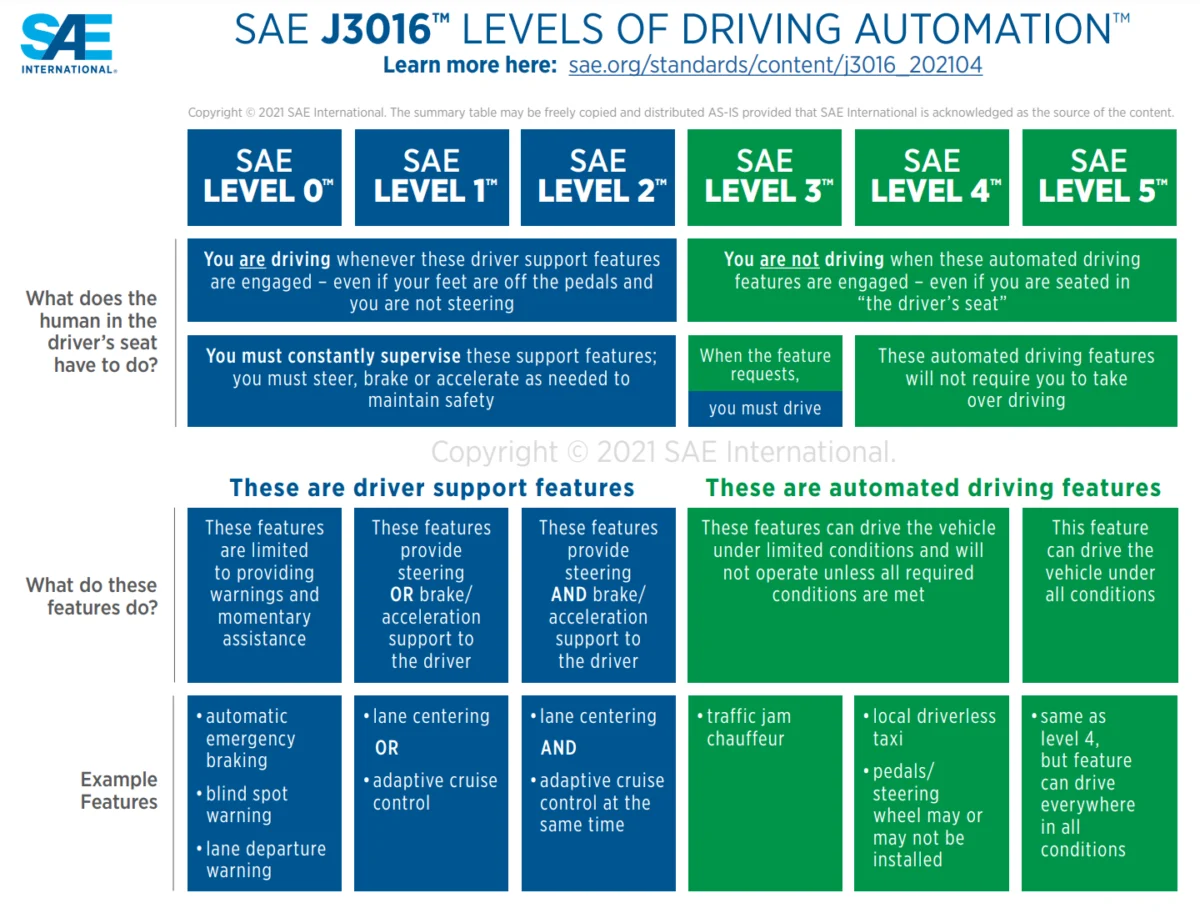
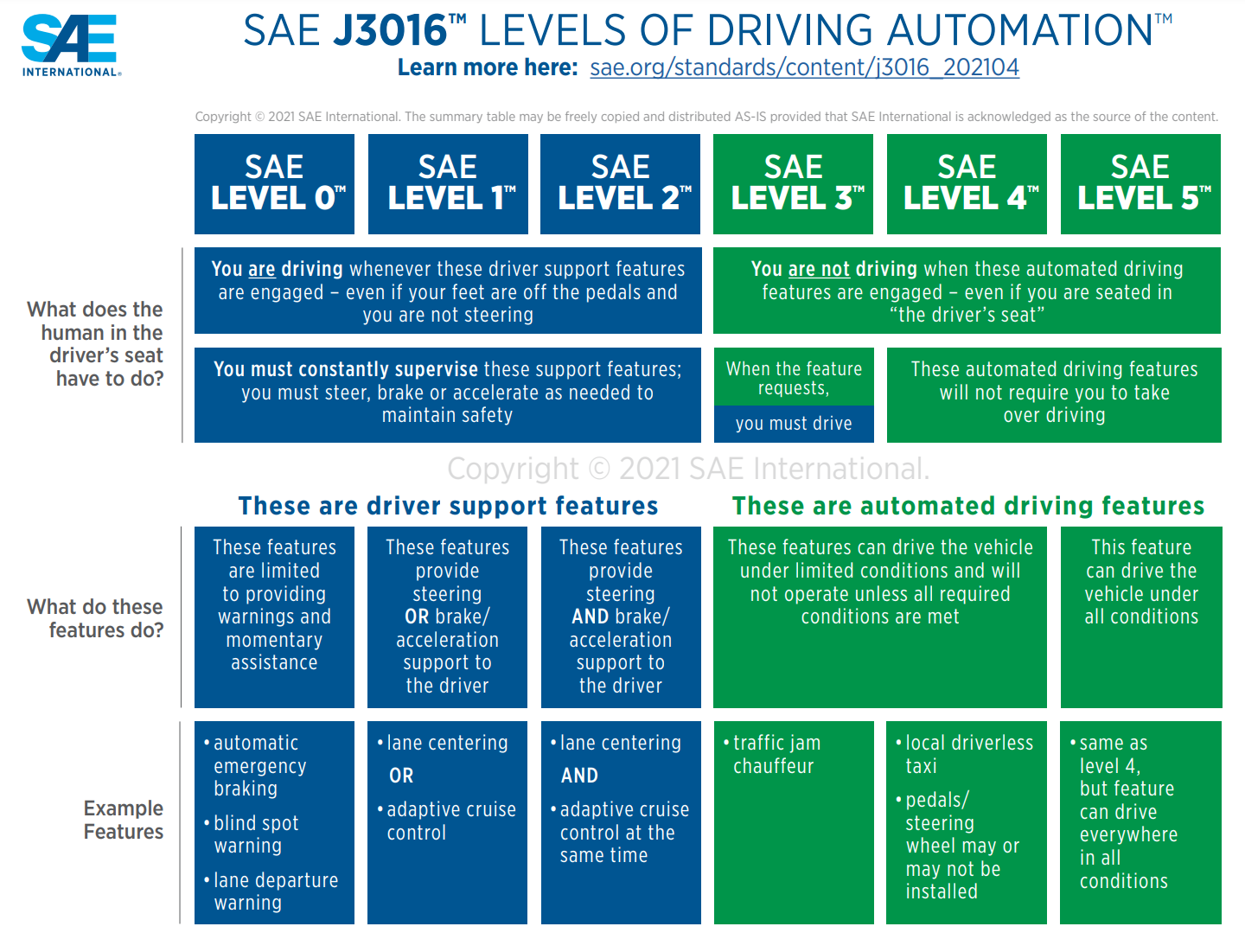
At the heart of this high-profile wager is the precise definition of "completely autonomous" as outlined by the Society of Automotive Engineers (SAE) J3016 standard, specifically Level 5. This standard represents the pinnacle of autonomous driving capability, signifying a vehicle that can perform all driving tasks under all conditions, without any human attention or interaction whatsoever. The only exceptions are natural disasters or emergencies that would render any driving impossible. In a Level 5 vehicle, a passenger would simply enter, select a destination, and the vehicle would handle the entire journey, irrespective of road type, weather, or other environmental factors.
To further clarify the terms, "major cities" for the purpose of this bet are defined as any of the top 10 most populous cities in the United States. This geographical constraint adds a layer of practical challenge, as deploying and operating Level 5 vehicles in dense, complex urban environments presents unique hurdles compared to more controlled settings.
The Contenders: Pioneers of the Digital Age
Both Jeff Atwood and John Carmack are highly respected figures within the technology community, known for their significant contributions and often prescient insights into emerging technologies.
Jeff Atwood gained prominence through his popular blog, "Coding Horror," where he shares his perspectives on software development, computer science, and the broader tech industry. He co-founded Stack Overflow, a widely used Q&A platform for programmers, and Discourse, an open-source forum software. Atwood’s career reflects a deep understanding of software engineering complexities and user experience, often leading him to pragmatic, sometimes skeptical, views on technological hype cycles. His current bet against Level 5 autonomy by 2030 stems from a belief that the inherent difficulties of achieving true full self-driving are significantly underestimated.
John Carmack is a legendary figure in the video game industry, celebrated for his pioneering work in 3D graphics and game engines. As co-founder of id Software, he was instrumental in creating iconic games like Doom and Quake, which revolutionized the gaming landscape. His later career saw him delve into virtual reality as CTO of Oculus VR, a company he helped shape before its acquisition by Facebook. Carmack’s consistent pursuit of cutting-edge technology and his track record of overcoming seemingly insurmountable technical challenges likely fuel his optimistic outlook on Level 5 autonomy. His current venture, Keen Technologies, focuses on artificial general intelligence (AGI), further underscoring his belief in the rapid progression of AI capabilities.
The friendly wager, therefore, is not merely a financial transaction but a public manifestation of a profound intellectual debate between two titans of tech, each approaching the problem from a distinct vantage point informed by decades of innovation.
The Historical Trajectory of Autonomous Vehicles
The concept of self-driving cars dates back decades, with early experiments emerging in the 1980s. Carnegie Mellon University’s "Navlab" projects were among the first to demonstrate autonomous capabilities, albeit in highly controlled environments. The Defense Advanced Research Projects Agency (DARPA) Grand Challenge and Urban Challenge competitions in the 2000s significantly accelerated research and development, pushing academic and industry teams to build vehicles capable of navigating complex real-world terrains and urban settings. These challenges laid the groundwork for the modern autonomous vehicle industry.
In the 2010s, major tech companies and traditional automakers began investing heavily in self-driving technology. Google’s self-driving car project, later spun off as Waymo, became a leading pioneer, demonstrating early successes in limited operational design domains (ODDs). Companies like Tesla, Cruise (General Motors), Argo AI (Ford/Volkswagen), and Mobileye (Intel) joined the race, each pursuing different strategies and timelines for deployment.
Currently, the industry is largely operating at SAE Level 2 (partial automation, requiring driver supervision) and Level 3 (conditional automation, driver must be ready to intervene). Level 4 vehicles, which can operate autonomously within a geo-fenced ODD without human intervention, are in limited commercial deployment, primarily in ride-hailing services in specific cities (e.g., Waymo in Phoenix and San Francisco, Cruise in San Francisco and Austin, though Cruise has faced recent operational challenges). The leap to Level 5, removing all geographical and environmental constraints, remains the ultimate frontier.
The Impasse: Why Level 5 Remains Elusive by 2030
Jeff Atwood’s stance against the commercial availability of Level 5 vehicles by 2030 is rooted in a pragmatic assessment of the technical, regulatory, and societal hurdles that persist. While progress in autonomous driving has been remarkable, the "last mile" problem of achieving universal, truly unsupervised autonomy is exponentially more complex than often perceived.

-
Technical Challenges:
- Edge Cases: The real world is replete with unforeseen and highly improbable "edge cases" – unique scenarios that are difficult to predict, simulate, or program for. These can range from unusual weather phenomena, unexpected road debris, erratic human behavior (pedestrians, cyclists, other drivers), construction zones, or complex accident scenes. Training AI models to handle an infinite variety of these situations robustly and safely is an immense challenge.
- Perception and Prediction: While Lidar, radar, and camera systems have advanced, accurate perception in all conditions (heavy rain, snow, fog, direct sunlight glare) remains imperfect. Predicting the intentions of humans (pedestrians, cyclists) based on subtle cues is also a significant hurdle for current AI.
- Common Sense Reasoning: Human drivers possess a vast repository of common sense, intuition, and contextual understanding. Replicating this in an AI system – enabling it to understand nuanced social cues, anticipate irrational actions, or prioritize in morally ambiguous situations (e.g., the "trolley problem") – is a challenge that borders on Artificial General Intelligence (AGI).
- Computational Power and Cost: The sheer computational power required to process vast amounts of sensor data in real-time, make complex decisions, and ensure redundancy for safety is immense. The cost of integrating such systems into commercially viable vehicles also remains a barrier.
- Mapping and Infrastructure: While not strictly Level 5 dependent, the current reliance on high-definition maps for L4 operations highlights the challenge. A true L5 system should not require pre-mapped environments, implying an even greater reliance on real-time perception and decision-making.
-
Regulatory and Legal Hurdles:
- Lack of Unified Framework: There is currently no unified federal regulatory framework for autonomous vehicles in the U.S., let alone globally. Each state often has its own set of rules, creating a patchwork of regulations that complicates widespread deployment.
- Liability: In the event of an accident involving a Level 5 autonomous vehicle, determining liability (manufacturer, software developer, sensor provider, vehicle owner) remains a complex legal quagmire. Clear legal precedents and insurance models for L5 vehicles are still evolving.
- Certification and Testing: Establishing rigorous and universally accepted testing and certification standards for Level 5 safety is an monumental task. How many miles of testing are sufficient to prove an L5 system is safer than a human driver across all conditions? The statistical significance required is staggering.
-
Public Acceptance and Trust:
- Despite the potential safety benefits, public trust in fully autonomous vehicles has been slow to build. High-profile accidents, even if rare, can significantly erode public confidence. Overcoming inherent human skepticism and fear of machines controlling critical aspects of daily life requires sustained flawless performance.
The Optimist’s Outlook: Why John Carmack Believes in 2030
John Carmack’s affirmative bet likely stems from a deep-seated belief in the accelerating pace of technological progress, particularly in artificial intelligence and machine learning. Proponents of rapid AV development often point to several factors:
- Exponential AI Advancement: The capabilities of deep learning and neural networks have grown exponentially in recent years. Carmack, with his background in AGI research, may believe that breakthroughs in AI architectures and training methodologies could rapidly close the gap on human-like reasoning.
- Sensor Fusion and Redundancy: Continuous improvements in sensor technology (Lidar, radar, cameras, ultrasonic) and the sophisticated algorithms for fusing their data provide increasingly robust environmental perception. Redundant systems are also becoming more commonplace, enhancing safety.
- Massive Data Accumulation: Autonomous vehicle companies are collecting billions of miles of real-world driving data, which is invaluable for training and refining AI models. This continuous feedback loop drives incremental improvements.
- Dedicated Investment: Billions of dollars are being poured into autonomous vehicle research and development by tech giants and automakers globally. This level of sustained investment is expected to yield significant results.
- Societal Imperative: The potential benefits of Level 5 autonomy – drastically reduced traffic accidents (most of which are human-caused), improved traffic flow, increased accessibility for non-drivers, and more efficient use of time – create a strong incentive for governments and industries to push for its realization.
Broader Implications and the Value of the Wager
Beyond the immediate financial aspect, this wager between Jeff Atwood and John Carmack serves several important functions.
Firstly, it acts as a public benchmark for a critical technological debate. By setting clear parameters and a definitive deadline, it crystallizes the discussion around the feasibility and timeline of Level 5 autonomy. It invites scrutiny and provides a tangible measure against which progress can be evaluated.
Secondly, it generates STEM publicity, as noted by Atwood. Such high-profile bets among influential figures can capture public imagination and draw attention to the immense scientific and engineering challenges involved in creating truly intelligent machines. This can inspire a new generation of scientists and engineers to tackle these complex problems.
Thirdly, it highlights the varying perspectives within the tech community. Atwood’s skepticism, born from a deep understanding of software complexity and human behavior, contrasts with Carmack’s optimism, likely fueled by a belief in the relentless march of AI. Both perspectives are valuable in fostering a balanced discourse about the promises and pitfalls of emerging technologies.
Finally, the charitable nature of the bet underscores a broader commitment to societal good. Regardless of who wins, a worthy non-profit organization will benefit, adding a philanthropic dimension to the intellectual challenge.
Atwood’s separate, more pessimistic view on Virtual Reality (VR), where he states it "isn’t going to happen, in any ‘changing the world’ form, in our lifetimes," provides an interesting counterpoint. It demonstrates his willingness to take strong, often contrarian, positions on technological futures, differentiating between what he sees as genuinely transformative (like the long-term potential of AR/projection) and what he views as niche or overhyped. This context further emphasizes that his bet against Level 5 autonomy is not an anti-tech stance, but rather a realistic assessment of an exceedingly difficult engineering problem.
As the industry continues its push towards greater autonomy, the outcome of this wager in 2030 will offer a definitive answer to one of the most pressing questions in modern technology: how close are we truly to a world where cars drive themselves, completely and universally? Until then, the debate, research, and development will continue apace, fueled in part by the intellectual curiosity ignited by such high-stakes predictions.
About the Author