Epic Games, the powerhouse behind the global phenomenon Fortnite and the industry-standard Unreal Engine, announced on Tuesday a significant restructuring that includes the layoff of more than 1,000 employees. CEO Tim Sweeney attributed this drastic measure to a noticeable "downturn in Fortnite engagement that started in 2025," a trend that has led the company to consistently spend more cash than its current revenue streams can sustain. This marks the second major round of job cuts for Epic Games in recent years, following a similar reduction in 2023, signaling persistent financial challenges despite the perceived ubiquity and success of its flagship products.
The Financial Tightrope: Costs Outpacing Revenue
Sweeney’s internal memo to staff detailed the grim reality facing the company, explaining that Epic Games has been operating at an unsustainable burn rate. This declaration echoes his sentiments from the 2023 layoffs, where he candidly stated the company was "spending way more than we earn" as it pursued ambitious investments in "the next evolution of Epic and growing Fortnite as a meta-verse inspired ecosystem for creators." This vision, while grand, has evidently come with a hefty price tag that current operational models cannot support.
The company recently implemented a price increase for its in-game currency, V-Bucks, citing rising operational expenses. In an earlier announcement this month, Epic Games justified the hike by stating, "The cost of running Fortnite has gone up a lot." This move, coupled with the latest layoffs, underscores a critical juncture for the company as it grapples with balancing aggressive investment, platform expansion, and the fundamental economics of a free-to-play model.
Fortnite’s Enduring Success and Emerging Headwinds
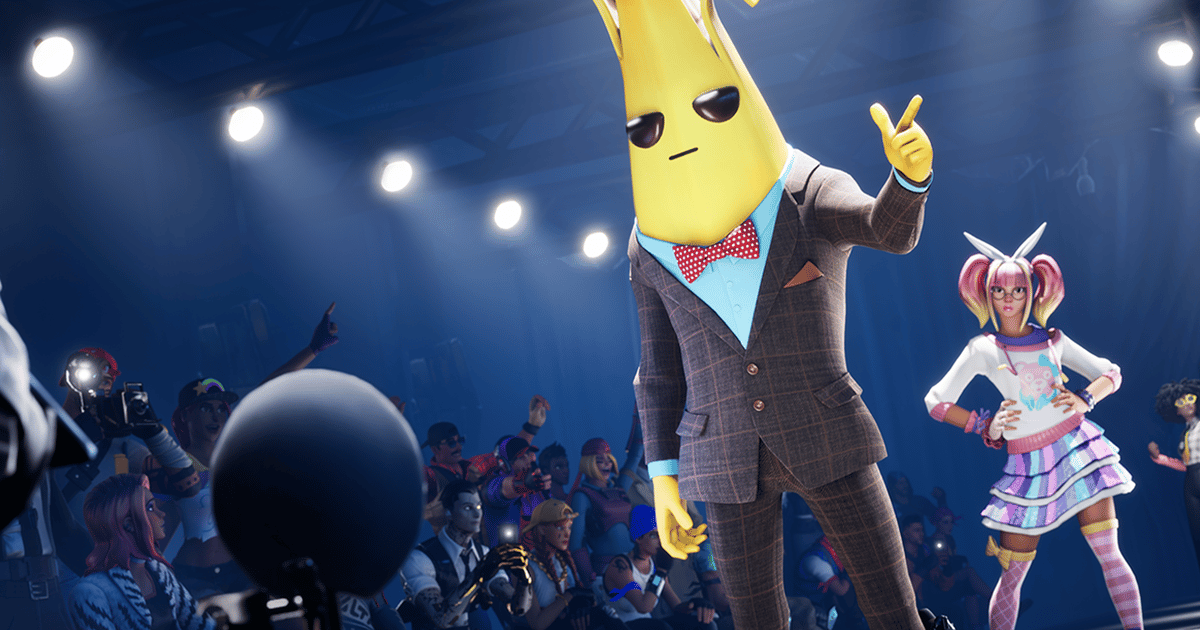
Despite the layoffs, Fortnite undeniably remains one of the world’s largest and most successful games. This fact, even acknowledged by Sweeney, highlights the perplexing nature of Epic’s predicament. For years, Fortnite has been celebrated as a benchmark of success in the gaming industry, a title that transcended gaming to become a cultural touchstone and a vibrant platform for social interaction. Its ability to host massive virtual concerts, integrate iconic pop culture franchises like Marvel and Star Wars, and foster a robust creator ecosystem seemed to solidify its unassailable position.
The game experienced an unprecedented boom during the COVID-19 pandemic, reaching a peak in its player base around 2024. During this period, Fortnite expanded beyond its battle royale roots, evolving into a multi-faceted platform. In a significant vote of confidence in 2024, The Walt Disney Company invested $1.5 billion in Epic Games, aiming to create an "entertainment universe" that would leverage Unreal Engine and integrate Disney’s vast intellectual property into Fortnite. This partnership was seen as a cornerstone of Epic’s metaverse ambitions.
Epic’s commitment to fostering a creator-driven economy within Fortnite was also substantial. In 2024, the company paid out over $350 million to creators who utilized the Fortnite ecosystem to build their own games and experiences. While 2025 figures for creator payouts were not released, the company did report a record $400 million spent by players on third-party PC games on the Epic Games Store, indicating continued activity on its broader platform.
The Epic Games Store: A Strategic, Yet Costly Venture
Beyond Fortnite, the Epic Games Store (EGS) represents another pillar of Epic’s strategy, designed to challenge established digital storefronts like Steam with a more developer-friendly revenue share model (88%/12% after the first $1 million). To date, Epic Games has paid out $2.1 billion to developers and publishers through the EGS. However, this aggressive strategy has come at a considerable cost. As of 2021, legal filings during the Apple vs. Epic Games lawsuit revealed that the EGS was not profitable and was not expected to turn a profit for at least several more years, potentially not until 2027 or even later. The store’s substantial investment in acquiring timed exclusives and offering free games to attract users has clearly weighed heavily on Epic’s finances. Despite these challenges, Fortnite itself remained the top game on the Epic Games Store platform, illustrating its continued drawing power.
The Apple Lawsuit: A Billion-Dollar Battle for "Freedom"
A significant drain on Epic Games’ resources has been its protracted legal battle against Apple. Tim Sweeney disclosed in 2025 that the lawsuit alone had cost Epic Games more than $1 billion. This monumental expenditure stemmed from Epic’s challenge to Apple’s App Store policies, particularly the 30% commission on in-app purchases and restrictions on third-party payment systems. Epic’s decision to implement a direct payment option in Fortnite, bypassing Apple’s system, led to the game’s removal from the App Store.
Sweeney has consistently framed this legal crusade as a fight for digital freedom, a necessary stand against what he perceives as monopolistic practices by platform holders. "I think freedom cannot be purchased at too dear a price," Sweeney told Business Insider in 2025, arguing that without such challenges, "Apple and Google [will extract] all of the profit from all apps forever," preventing a "proper digital economy." In his recent letter to staff, Sweeney alluded to this ongoing struggle, stating, "We’re only in the early stages of returning to mobile and optimizing Fortnite for the world’s billions of smartphones; and in being the industry’s vanguard we have taken a lot of bullets in a battle which is only in the early days of paying off for ourselves and all developers." While the philosophical stance may resonate with some, the financial toll on Epic Games has been undeniable.
Shifting Sands: The Competitive Landscape and Player Engagement
The narrative of Fortnite‘s unassailable dominance has begun to show cracks, particularly concerning player engagement. Piers Harding-Rolls, research director at Ampere Analysis, highlighted a notable decline since 2023. He reported that Fortnite‘s annual peak monthly active players across PlayStation and Xbox dropped by a significant 28 percent. This slow but steady decrease has been observed since the "OG Fortnite" season, which saw a temporary resurgence in interest.
Harding-Rolls further elaborated that recent seasonal updates at the end of 2025 "have not had as big an impact as updates at the end of 2023 and 2024," indicating a potential saturation or waning novelty for some players. Crucially, average monthly playtime has also diminished, falling from 29 hours in 2023 to 15.4 hours in 2025.
Concurrently, competitors have seen surges. Platforms like Roblox, particularly with popular user-created games such as Grow A Garden and Steal A Brainrot, reached peak player base numbers in 2025. For the first time, Roblox surpassed Fortnite in average playtime and daily visits, according to Harding-Rolls. This shift reveals a "more immediately competitive environment for attention and monetisation that Fortnite is operating in." Despite these engagement dips, Statista estimates Epic Games’ revenue to have surpassed $6 billion in 2025, suggesting that while costs are rising and engagement is softening, the company’s top-line revenue is still growing year-over-year. The core issue appears to be an imbalance between ambitious expenditures and the rate of revenue generation, exacerbated by the competitive landscape. Circana industry analyst Mat Piscatella did note on LinkedIn that Fortnite still led February in monthly active users on PlayStation and Xbox, underscoring its continued relevance despite the overall trends.
Impact on Workforce and Acquired Studios
The layoffs, affecting over 1,000 individuals, bring Epic Games’ total workforce down to roughly 4,000 employees, a size comparable to its headcount at the start of the pandemic in 2020. Tim Sweeney, in a post on X, lamented the departure of these "once-in-a-lifetime quality folks," acknowledging the profound human cost of the decision.
While Epic Games has not provided a detailed breakdown of where the layoffs hit hardest, reports from LinkedIn posts and Game Developer sources indicate that Harmonix, the rhythm game developer acquired by Epic in 2021 (known for titles like Rock Band and Dance Central), appears to be particularly impacted. This follows a similar pattern from the 2023 layoffs, which heavily affected Mediatonic, the studio behind Fall Guys, also acquired in 2021.
The restructuring also involves the sunsetting of several Fortnite game modes. Ballistic and Festival Battle Stage are slated for removal on April 16, with Rocket Racing to follow in October. Notably, Rocket Racing was a product of Epic’s 2019 acquisition of Psyonix (developer of Rocket League), and Festival Battle Stage emerged from the Harmonix acquisition. An Epic Games representative clarified to Game Developer that "The teams at Harmonix and Mediatonic have been integrated into the Epic development team for a while," adding that "the Harmonix team continues to work on music features in Fortnite like Festival Main Stage and Festival Jam Stage. Music remains a major part of Fortnite."
However, the redundancies reportedly span the entire company, affecting developers responsible for crucial safety systems, iconic character design, and the lucrative partnerships that have defined Fortnite‘s success. The widespread nature of these cuts raises concerns about the immediate and long-term impact on Fortnite itself, its supporting teams, and the overall trajectory of Epic’s ambitious ecosystem.
Broader Industry Implications and the Shadow of AI
The situation at Epic Games serves as a stark reminder of the economic pressures facing the entire gaming industry. As Piers Harding-Rolls noted, "It tells us that all companies, whatever size or success, are in a battle to manage their costs." He warned that this challenge is unlikely to ease, especially with another round of global inflation anticipated due to geopolitical events like the U.S. and Israel conflict with Iran.
While Epic Games has explicitly stated that artificial intelligence (AI) was not a direct factor in the current layoff decisions, its looming presence cannot be ignored. Harding-Rolls suggested that "the looming backdrop of rising inflation means that games companies of all sizes will be eager to leverage AI to become more efficient. That is likely to have some impact on sector hiring in the future." This implies that even as companies cut costs, the drive for efficiency through technological advancements like AI could fundamentally alter the employment landscape in the gaming industry moving forward.
The layoffs at Epic Games underscore a complex interplay of factors: the ambitious pursuit of a metaverse vision, costly legal battles, shifting player engagement, and a highly competitive market. For a company that has so often defined success in the digital entertainment space, these significant cuts signal a recalibration, prioritizing financial sustainability over unchecked expansion, and highlighting the enduring challenges even for the industry’s giants. The fallout from these decisions will undoubtedly reshape Epic Games for years to come and reverberate throughout the global gaming landscape.
About the Author