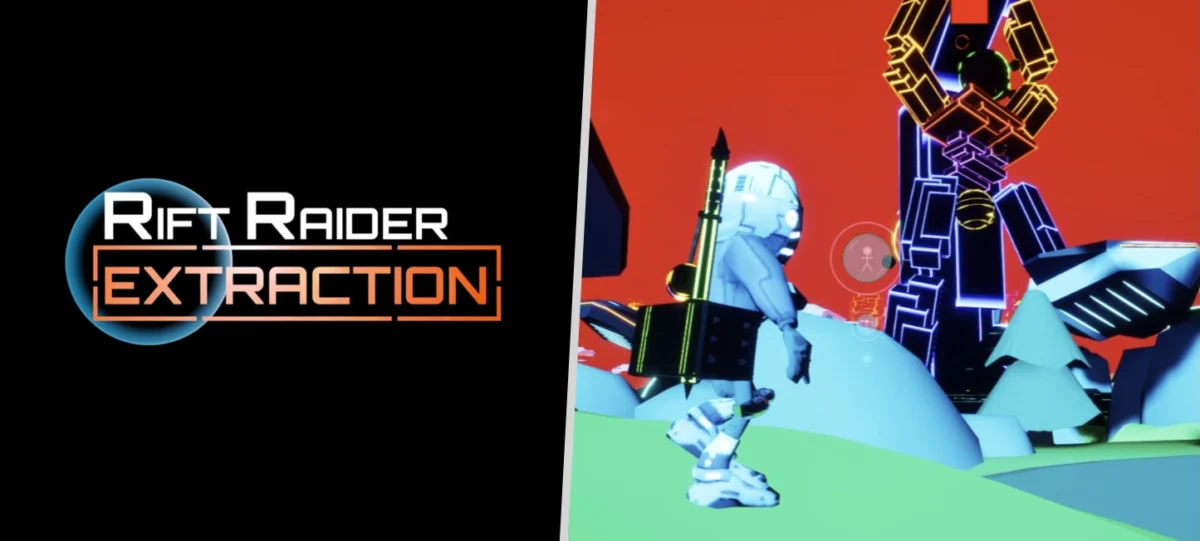
The video game industry, currently navigating a period of significant consolidation and fiscal conservatism, has witnessed a remarkable pivot by veteran level designer Brian Douglas. Following a decade of experience at high-profile studios including Treyarch and Free Range Games, Douglas has successfully transitioned from the AAA sector to solo indie development. His debut mobile title, Rift Raider Extraction, an offline extraction shooter for Android, was conceptualized, developed, and brought to market in a mere seven weeks. This rapid turnaround follows a challenging six-month period during which Douglas attempted to secure funding for a high-fidelity PC and console project, highlighting the shifting dynamics of game financing and the increasing viability of rapid solo development in the modern era.
The Professional Pedigree of Mystic Realm Games
Brian Douglas entered the professional game development sphere during one of the industry’s most prolific eras. As a level designer at Treyarch, he contributed to the development of Call of Duty: Black Ops and its sequel, Black Ops 2. These titles remain benchmarks in the first-person shooter genre, collectively generating billions of dollars in revenue and establishing design philosophies that continue to influence the industry. His tenure at Treyarch provided him with deep insights into player psychology, environmental storytelling, and the technical rigors of maintaining high-performance gameplay on limited hardware.
After his departure from Treyarch in 2014, Douglas continued his career at Free Range Games, a studio known for its diverse portfolio ranging from independent titles to work-for-hire projects for major publishers. However, the volatility of the contemporary gaming market—marked by widespread layoffs affecting over 10,000 workers in 2024 alone—eventually reached Douglas. In March 2025, he was among those laid off from Free Range Games, a catalyst that prompted the founding of his independent studio, Mystic Realm Games.
The Funding Crisis and the Pivot from Project Lich
Before the inception of Rift Raider Extraction, Douglas spent approximately half a year focused on a project codenamed Project Lich. Designed as a vertical slice for a PC and console audience, the project aimed to capitalize on his experience in the shooter genre. Douglas assembled a small team of trusted industry colleagues to refine the pitch and demonstrate the project’s potential to venture capitalists and publishers.
Despite the team’s pedigree, the fundraising process proved symptomatic of the current "funding winter" in the gaming sector. Douglas reported a disconnect between developers and potential investors, noting that many groups appeared to rely on automated tools or artificial intelligence to vet pitches rather than engaging with the creative substance of the work. According to Douglas, almost no potential investors actually played the physical demo, missing the nuanced "magic" of the controller-based gameplay.
After six months of repeated rejections and the exhaustion of traditional avenues for capital, Douglas made the strategic decision to shelve Project Lich temporarily. The experience highlighted a growing barrier for indie developers: the difficulty of securing mid-range funding for projects that fall between small-scale mobile games and large-budget AAA titles. Facing a critical financial juncture, Douglas secured a $10,000 personal loan from his family to pivot toward a more manageable, rapid-release model.
Development Timeline and Technical Execution
The transition from the ambitious scope of Project Lich to the streamlined design of Rift Raider Extraction required a fundamental shift in development philosophy. Douglas set a rigorous seven-week deadline to move from initial concept to a public launch on the Google Play Store. This timeline is exceptionally brief by modern standards, where even small indie games often spend one to two years in production.
To achieve this, Douglas utilized a "tool-assisted" but "non-AI" approach. The game was built using Unreal Engine’s Blueprint visual scripting system, which allows for rapid prototyping and logic implementation without the time-intensive process of writing manual C++ code. This choice was critical for a solo developer needing to manage complex systems such as AI pathfinding, inventory management, and combat mechanics simultaneously.
Visual assets were sourced and modified from the Unreal Fab Store, an online marketplace for 3D models and textures. Douglas emphasized that while base assets were purchased to save time, they were heavily modified in Photoshop and within the engine to ensure a cohesive aesthetic and to optimize performance for the Android platform. This "lean" development methodology focuses on utilizing existing frameworks to allow the developer to focus on the "fun factor" and core loop—in this case, the extraction shooter mechanic.
Platform Strategy: Why Android Preceded iOS
The decision to launch exclusively on Android was driven by both logistical and strategic considerations. From a technical standpoint, Douglas was limited by his hardware; Apple’s App Store requires a macOS environment for the final compilation and submission of applications. Operating solely on a PC laptop, Douglas found the Google Play Store to be the only viable entry point for an immediate launch.
Beyond hardware limitations, the Android market offered a broader reach for an unmarketed indie title. Globally, Android maintains a market share of approximately 70-71%, compared to iOS’s 28-29%. For a solo developer relying on organic discovery, the sheer volume of the Android user base provides a larger testing ground for experimental game types. However, Douglas has confirmed that an iOS version is currently in development, indicating a desire to capture the typically higher per-user revenue associated with Apple’s ecosystem once the necessary hardware is acquired.
Market Performance and Monetization Dynamics
Since its release, Rift Raider Extraction has achieved over 8,000 downloads. While modest compared to viral hits, these figures represent significant traction for a project with zero marketing budget. Douglas reported that the game maintains approximately 1,200 active players, though he acknowledged that technical issues common in early-stage solo projects have impacted player retention.
The game’s success is largely attributed to App Store Optimization (ASO). Douglas noted that the game receives roughly 1,500 organic page views per day with a conversion rate of 12%. In the mobile gaming industry, a 12% conversion rate is considered exceptionally high, particularly for the "extraction shooter" genre, which is typically associated with high-complexity PC titles like Escape from Tarkov and is still finding its footing on mobile devices.
The monetization strategy for Rift Raider Extraction is multi-faceted:
- In-App Purchases (IAP): Players can purchase in-game currency and "cooldown tokens" to bypass gameplay timers.
- Rewarded Video Ads: An opt-in system where players choose to watch an advertisement in exchange for in-game benefits.
- Interstitial Ads: Full-screen advertisements introduced post-launch once Douglas felt the gameplay loop was stable enough to support them without driving away the core audience.
Additionally, Douglas is exploring non-traditional revenue streams, including a potential branded tie-in with an undisclosed comic book series. Such partnerships are rare for games of this scale but could provide a significant boost in visibility and cross-media appeal.
The "No-AI" Distinction in a Changing Landscape
One of the most notable aspects of the Rift Raider Extraction story is Douglas’s firm stance against the use of generative AI in the creative process. This stands in stark contrast to recent trends in the indie community, where developers like Deniz Sancar and Josh Pavey have utilized tools like Claude Code to build games almost overnight. While these AI-assisted projects have seen success on the UK App Store, they have sparked intense debate regarding the future of craft in game design.
Douglas has explicitly stated that his game was built without AI, relying instead on his decades of manual design experience and the efficiency of the Unreal Engine. This distinction is important to Douglas not only as a point of professional pride but as a core component of his professional identity. Despite his success as a solo founder, Douglas continues to apply for positions at established studios. He has encountered a recurring obstacle: being labeled as "overqualified" for mid-range and senior roles. By placing Rift Raider Extraction "front and center" on his CV, he aims to demonstrate that his veteran skills remain sharp and adaptable to the modern mobile-first market.
Broader Implications for the Indie Sector
The journey of Brian Douglas from Treyarch to Mystic Realm Games serves as a case study for the current state of the video game industry. It illustrates a growing "middle-class" struggle where experienced developers find themselves too expensive for traditional employment but face a venture capital market that is increasingly risk-averse and reliant on automated vetting.
The success of Rift Raider Extraction suggests that the "extraction" genre—defined by high-stakes gameplay where players must enter a zone, collect loot, and exit before being killed—has a significant untapped audience on mobile. Moreover, it proves that a single developer, armed with a modest budget and a mastery of modern engines like Unreal, can still find an audience through organic discovery and disciplined execution.
As Douglas continues to support Rift Raider Extraction and prepare for its iOS debut, his story remains a testament to the resilience required in the modern gaming landscape. Whether this project serves as a bridge back to a major studio or the foundation of a permanent independent career, it underscores a shift toward a more agile, developer-centric model of game creation where the "magic" of gameplay is reclaimed from the algorithms of investors.
About the Author