The GB Pixel Art Jam 2024, an annual digital art event hosted on the Itch.io platform, has officially concluded, drawing a significant number of participants who embraced the unique challenge of crafting visuals inspired by the classic Nintendo Game Boy. This year’s iteration summoned artists from across the globe to create pixel art within the stringent technical and aesthetic confines of the iconic handheld console, necessitating adherence to a limited color palette and specific resolution requirements. The event culminated in an impressive collection of 378 submissions, each a testament to the enduring appeal of retro aesthetics and the creative ingenuity of the pixel art community. Following the successful close of the jam, organizers have announced the forthcoming release of a compiled ROM, which will meticulously integrate all submitted artworks into a playable, interactive format, preserving this vibrant collection for enthusiasts and future generations.
The Enduring Legacy of the Game Boy and Pixel Art Revival
The Nintendo Game Boy, first launched in 1989, revolutionized portable gaming and left an indelible mark on visual culture. Its monochrome (or rather, four-shade green/grey) screen with a resolution of 160×144 pixels presented developers and artists with severe technical limitations. Yet, it was precisely these constraints that fostered a distinct aesthetic, forcing creators to distill complex ideas into minimalist, impactful visual forms. This necessity gave rise to what is now celebrated as classic pixel art – an art form characterized by its deliberate placement of individual pixels to construct images. The Game Boy’s influence extended far beyond its initial commercial success, becoming a touchstone for an entire generation and inspiring subsequent artistic movements.
In recent years, pixel art has experienced a significant renaissance, evolving from a technical necessity into a cherished artistic style. Modern artists and game developers actively choose pixel art for its nostalgic charm, distinct visual clarity, and the unique creative challenges it presents. This revival is not merely a regression to older graphical styles but a sophisticated reinterpretation, often blending retro aesthetics with contemporary themes and advanced technical capabilities. The GB Pixel Art Jam stands as a prime example of this trend, leveraging the specific constraints of the Game Boy to inspire a focused and highly creative output from its participants. The deliberate limitation to a four-tone palette (often interpreted as shades of green or grey) and the low resolution compel artists to master principles of composition, lighting, and form in their most fundamental expressions.
Itch.io: A Hub for Creative Game Jams
Itch.io, a prominent open marketplace for independent digital creators, has established itself as a vital ecosystem for fostering creativity through its versatile "Jams" feature. Since its inception, the platform has supported an extraordinarily wide array of themed events, ranging from game development challenges to specialized art contests like the GB Pixel Art Jam. The flexibility of Itch.io’s jam system allows organizers to define custom rules, submission guidelines, and judging criteria, catering to niche interests and fostering dedicated communities. These jams serve multiple purposes: they provide structured environments for creative exploration, act as catalysts for skill development, facilitate community building among like-minded individuals, and offer a public showcase for emerging talent. The success of events like the GB Pixel Art Jam 2024 underscores Itch.io’s role as a crucial platform for independent creators to connect, collaborate, and push artistic boundaries. The platform’s commitment to accessibility and support for diverse creative endeavors is consistently highlighted by its active user base and the sheer volume of unique content generated through its jam system.
Chronology of the GB Pixel Art Jam 2024
The GB Pixel Art Jam is an annual fixture in the pixel art community, known for its consistent theme and challenging parameters. While specific start and end dates for the 2024 iteration were not explicitly detailed in the initial announcement, such events typically span a period of several weeks, allowing participants ample time for conceptualization, creation, and refinement. The call for artists traditionally goes out well in advance, outlining the core requirements:
- Game Boy-inspired aesthetic: Mandating a visual style reminiscent of the classic handheld.
- Limited color palette: Strictly adhering to a four-color scheme, echoing the original Game Boy’s display capabilities.
- Specific technical requirements: This often includes resolution limits (e.g., 160×144 pixels or scaled variations) and sometimes specific sprite or tile limitations, ensuring genuine adherence to the retro hardware’s capabilities.
Artists were encouraged to upload their creations directly to the jam’s page on Itch.io, making their progress and final submissions visible to the community. The submission period concluded recently, leading directly to the current phase: the compilation of all submitted artworks into a singular, playable ROM. This ROM serves not only as an archive but also as an interactive gallery, allowing anyone with a Game Boy emulator (or compatible hardware) to experience the entire collection as if it were a single, expansive Game Boy art cartridge. This unique approach to showcasing submissions distinguishes the GB Pixel Art Jam from many other art contests, emphasizing both artistic creation and technical execution within the Game Boy ecosystem.
Navigating Constraints: Technical Demands and Artistic Solutions
The GB Pixel Art Jam’s core challenge lies in its strict technical constraints, which paradoxically serve as powerful catalysts for creativity. The four-tone palette, for instance, is far from a mere limitation; it forces artists to think critically about light, shadow, texture, and depth using only a handful of values. This often leads to innovative solutions in dithering (the technique of juxtaposing pixels of different colors to simulate new shades) and strategic placement to create optical illusions of greater color depth. Similarly, the low resolution demands an economy of pixels, where every single dot contributes significantly to the overall image. Artists must master the art of suggestion, implying details rather than explicitly rendering them, and focusing on strong silhouettes and essential forms.
The submitted artworks brilliantly demonstrate these principles in practice:
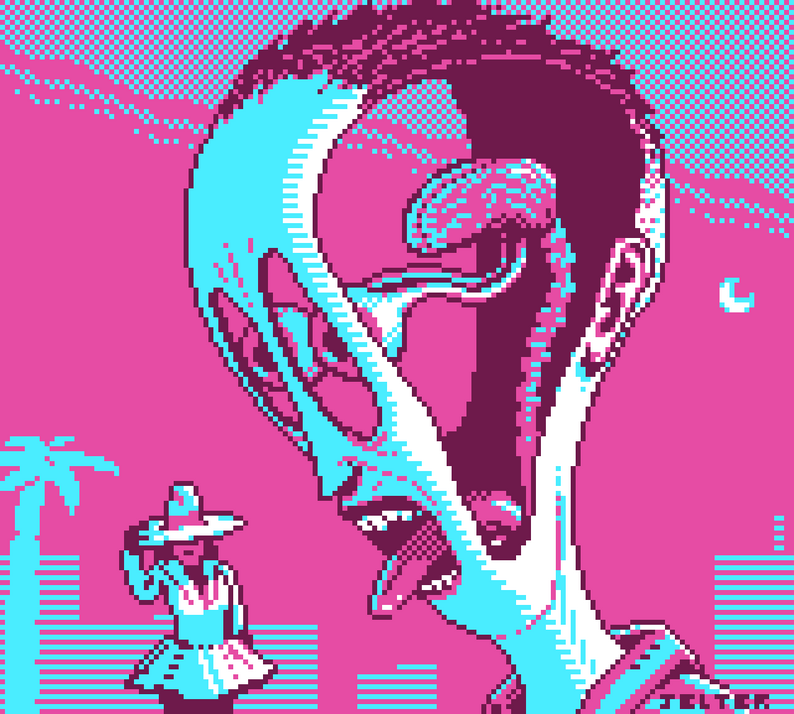
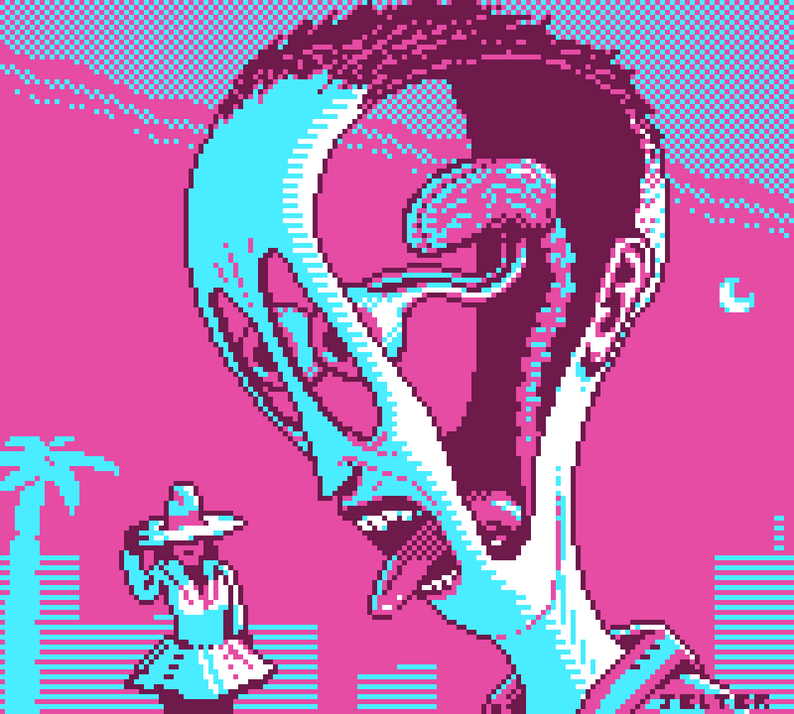
- "Malibu Dream" by BenJelter: This piece exemplifies masterful use of contrast and implied detail. Within the four-tone palette, the artist effectively conveys a sense of depth and atmosphere, likely employing careful dithering and value placement to suggest reflections and textures typical of a serene landscape, demonstrating that even with minimal color, a vibrant scene can be evoked.
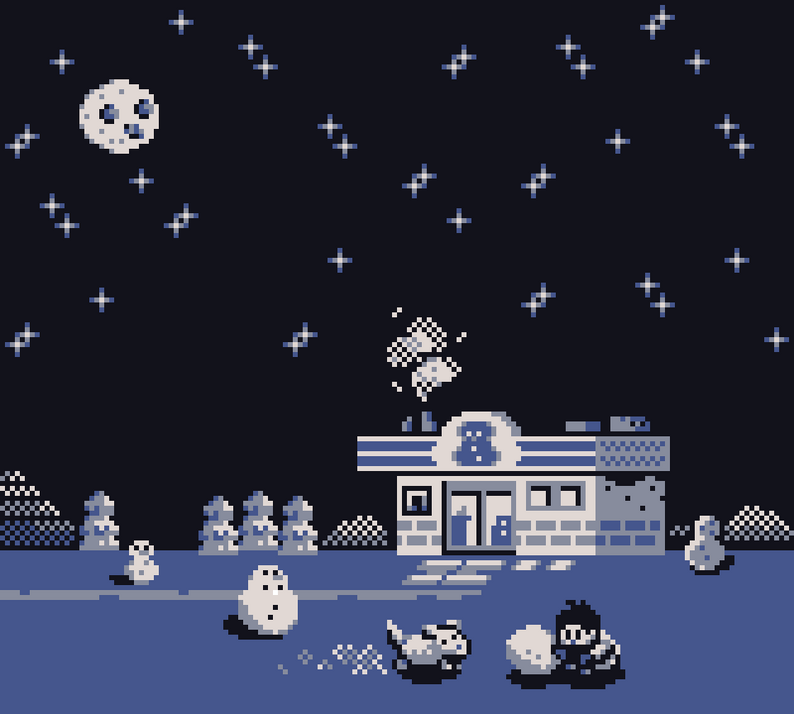
- "Night time at Snowball Conbini" by howdy riceball: This submission stands out for its atmospheric quality. The artist likely leveraged the limited palette to create a compelling nocturnal scene, using the darkest tones for deep shadows and lighter ones for subtle illumination from the conbini, showcasing how mood can be powerfully established through strategic value distribution.
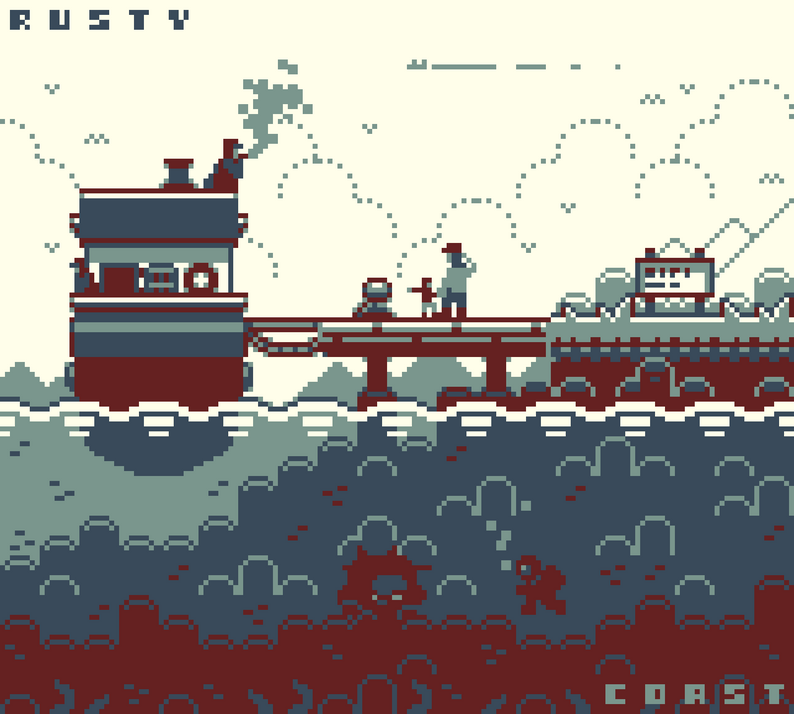
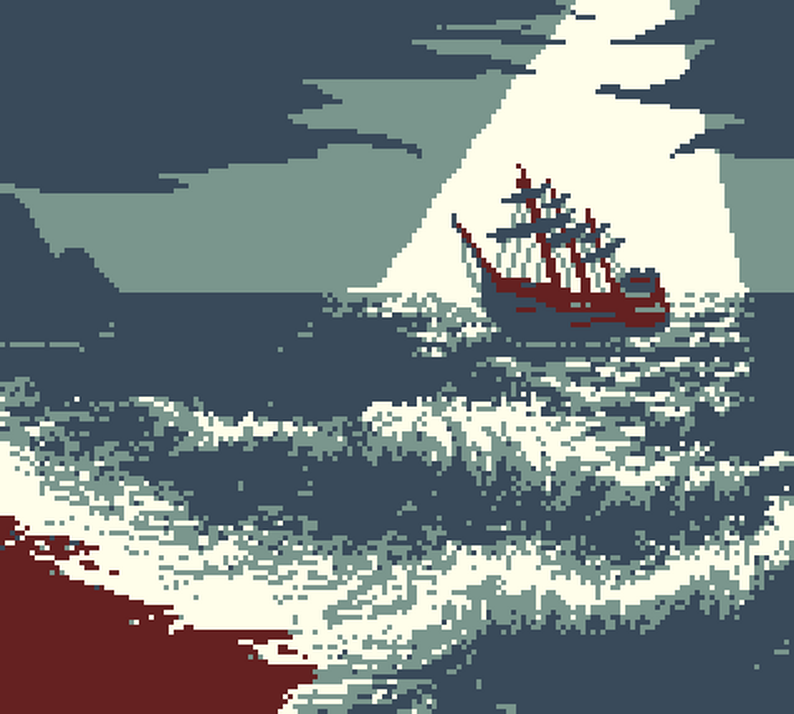
- "Rusty Coast" by Birds Probably: This artwork likely focuses on environmental storytelling and texture simulation. The challenges of rendering rusted metal, eroded rock, and crashing waves with only four colors would necessitate a sophisticated understanding of pixel patterns and forms to convey intricate details within the low resolution.
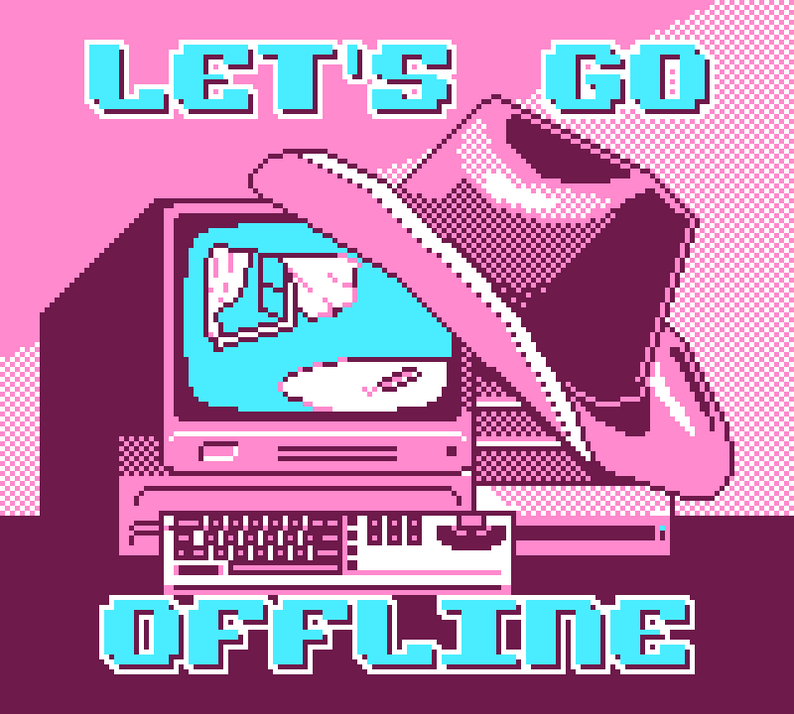
- "Let’s Go Offline" by Robert Doman: This piece appears to blend contemporary themes with retro aesthetics. The title itself suggests a commentary on modern digital life, translated into the pixelated language of a bygone era. The execution would involve carefully chosen iconography and compositional elements to convey its message clearly despite the graphical limitations.
- "A Lament for Forgotten Souls" by Annagmo: The title implies a work exploring emotional depth. This would require the artist to utilize the starkness inherent in the Game Boy palette to evoke feelings of melancholy or introspection, perhaps through dramatic lighting, symbolic imagery, or expressive character design within the limited pixel count.
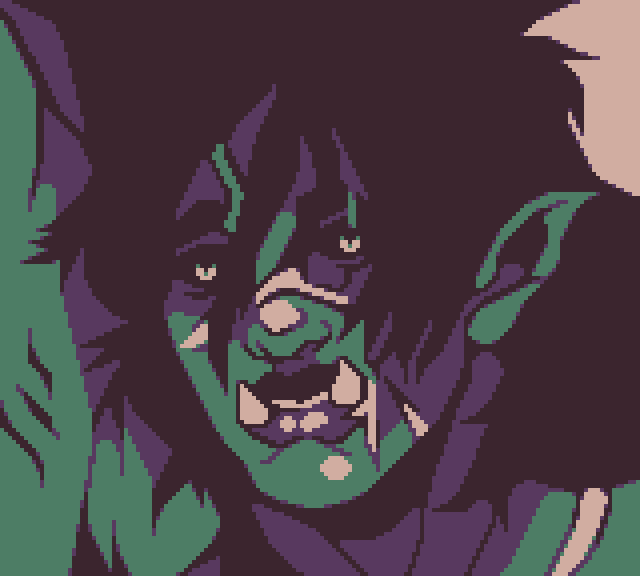
- "Aren, Orc Warrioress" by Rohezk: A character-focused piece, this submission would highlight the artist’s ability to create compelling figures within the pixel art framework. Details like armor, facial features, and dynamic poses would need to be meticulously crafted using minimal pixels and effective value separation to ensure readability and impact.
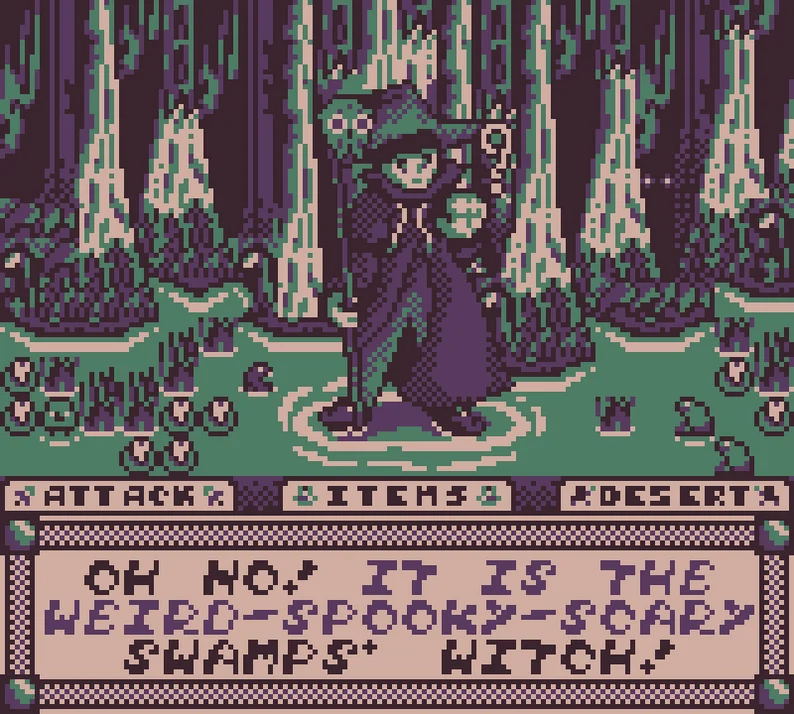
- "Swamps’ witch" by BifStek: This artwork likely uses the Game Boy’s palette to create a mystical, possibly eerie, atmosphere characteristic of a swamp environment. The artist would have employed clever pixel placement to suggest murky water, gnarled trees, and the mysterious presence of a witch, demonstrating the power of suggestion and environmental storytelling.
These selections, along with the other 371 submissions, collectively illustrate the profound depth of artistic expression achievable even when operating under severe technical limitations. They underscore the idea that constraints, rather than hindering creativity, can often refine and intensify it.
Community Engagement and Archival Significance
The GB Pixel Art Jam 2024 attracted a remarkable 378 submissions, a figure that speaks volumes about the vibrancy and dedication of the pixel art community. This level of participation from artists across various skill levels and geographical locations highlights the global appeal of such niche events. The jam serves as a significant platform for both established and emerging artists to hone their skills, receive community feedback, and expand their portfolios. The camaraderie fostered during these events is often a major draw, with participants sharing techniques, offering encouragement, and engaging in constructive criticism through forum discussions and social media.
Beyond the immediate creative output, the initiative to compile all artworks into a singular, playable ROM holds considerable archival and cultural significance. This approach transcends a mere gallery exhibition; it transforms the collective submissions into a digital artifact that can be experienced in a manner authentic to the Game Boy’s original design. This act of preservation ensures that the artistic interpretations of the Game Boy aesthetic from this specific period are not only celebrated but also made accessible and enduring. It contributes to the broader effort of digital art preservation, ensuring that the ephemeral nature of online submissions gains a more permanent, interactive form.
Broader Implications: Nostalgia as a Creative Force and the Future of Digital Art
The continued success of the GB Pixel Art Jam, and similar retro-themed creative challenges, underscores the powerful role of nostalgia as a creative catalyst. For many, the Game Boy represents a foundational experience in their personal and gaming history, and engaging with its aesthetic offers a unique blend of comfort and artistic inspiration. This phenomenon is not limited to pixel art; it is observed across various media where retro styles are reinterpreted and celebrated.
Furthermore, these jams contribute significantly to the democratization of art creation. Platforms like Itch.io, by providing accessible tools and community structures, lower the barriers to entry for aspiring artists. Participants don’t need expensive software or formal training to contribute; passion and a willingness to learn within the defined parameters are often sufficient. This inclusive environment fosters a diverse talent pool and encourages experimentation.
The ongoing relevance of constraint-based art, as exemplified by the GB Pixel Art Jam, also points to a broader trend in digital creativity. In an age of limitless digital tools and infinite possibilities, imposing specific limitations can paradoxically lead to more focused, innovative, and impactful work. By forcing artists to problem-solve within a tight framework, such jams highlight the intrinsic value of design principles over sheer technical horsepower.
While no direct official statements were released at the time of publication, it can be logically inferred that Itch.io views the success of the GB Pixel Art Jam 2024 as a strong validation of its "Jams" feature. The platform consistently expresses satisfaction with the diverse and innovative ways creators utilize its system, emphasizing its commitment to fostering independent creation. Similarly, the organizers of the GB Pixel Art Jam are understood to be driven by a passion for preserving and celebrating retro gaming aesthetics, and the substantial participation rate undoubtedly signifies a successful realization of their objectives. Feedback from participants often highlights the joy of revisiting the Game Boy’s visual language and the rewarding challenge of creating within its unique limitations.
In conclusion, the GB Pixel Art Jam 2024 has not only celebrated the timeless appeal of the Game Boy aesthetic but also underscored the enduring power of creative constraints. With 378 unique submissions now awaiting compilation into an interactive ROM, the event stands as a vibrant testament to the talent and dedication of the global pixel art community. Itch.io’s role as a facilitating platform continues to be central to such initiatives, demonstrating its critical function in nurturing independent digital art and game development. As the community eagerly anticipates the release of the compiled ROM, the success of this jam ensures that the spirit of Game Boy pixel art will continue to inspire and evolve for years to come.
About the Author