The landscape of digital content creation has been irrevocably altered with the advent of Unreal Engine 5 (UE5) and its groundbreaking features, among which the MetaHuman character library stands as a testament to unparalleled photorealism and accessibility. This innovative offering from Epic Games empowers developers, artists, and creators across various industries to integrate incredibly high-fidelity digital humans into their projects, free of charge. Far from being a mere aesthetic upgrade, MetaHumans represent a significant leap forward in democratizing sophisticated character design, previously a costly and time-consuming endeavor reserved for large-scale productions. This guide delves into the systematic process of incorporating MetaHumans into a UE5 project, while also exploring the broader context, technical underpinnings, and transformative implications of this technology.
The Dawn of Digital Realism in Unreal Engine 5

Unreal Engine 5, officially launched in April 2022, introduced a suite of revolutionary technologies designed to push the boundaries of real-time rendering and virtual world creation. Core innovations like Nanite, a virtualized micropolygon geometry system, and Lumen, a fully dynamic global illumination and reflections solution, set new standards for graphical fidelity and environmental realism. However, the true potential of these advancements is fully realized when coupled with lifelike characters. This is precisely where MetaHumans enter the scene, offering a library of pre-configured, production-ready digital humans that seamlessly integrate with UE5’s cutting-edge rendering capabilities.
Before MetaHumans, creating a believable digital human required a team of highly specialized artists, months of work, and significant financial investment. Sculpting, texturing, rigging, and setting up complex material shaders for skin, eyes, and hair were intricate processes demanding expert knowledge and meticulous attention to detail. This often placed high-quality character development out of reach for indie studios, freelance artists, and educational institutions. Epic Games recognized this bottleneck and, through the MetaHuman Project, aimed to abstract away much of this complexity, providing a robust, user-friendly solution that lowers the barrier to entry for photorealistic character creation. The initial announcement of MetaHuman Creator in February 2021, followed by its early access release, generated considerable excitement, promising a future where anyone could craft convincing digital characters with unprecedented ease.
A New Era for Character Design: The MetaHuman Project
The journey to MetaHumans began with Epic Games’ strategic acquisition of Quixel in 2019, a company renowned for its photogrammetry-based 3D asset library, MegaScans. This acquisition laid the groundwork for integrating high-quality, real-world scanned data directly into Unreal Engine workflows. MetaHumans leverage this expertise, building upon extensive scan data of real people to create their highly detailed models. The development timeline saw Epic Games release early access to the MetaHuman Creator in April 2021, allowing developers to experiment with customizing and streaming their own digital humans. The full integration into Unreal Engine 5, alongside the pre-built library, solidified its position as a cornerstone technology for modern game and virtual production.
Epic Games’ vision for MetaHumans, as articulated by company spokespeople, is rooted in democratizing the creation of high-fidelity digital content. "Our goal with MetaHuman is to empower creators of all skill levels to craft realistic, high-quality digital humans with incredible ease and speed," stated a representative upon its launch. This strategic move not only enhances the visual prowess of projects built with Unreal Engine but also fosters innovation by allowing creators to focus on narrative, gameplay, or interactive experiences rather than getting bogged down by the technical intricacies of character development. The ‘free to use’ model further amplifies this accessibility, ensuring that even projects with limited budgets can benefit from AAA-quality character assets.
Accessing the MetaHuman Library: A Step-by-Step Professional Guide
Integrating MetaHumans into an Unreal Engine 5 project is a streamlined process facilitated by the Quixel Bridge application, which acts as a centralized hub for high-quality assets. The following steps outline the procedure for accessing, downloading, and implementing these digital characters.
Initiating the Integration: Opening Quixel Bridge
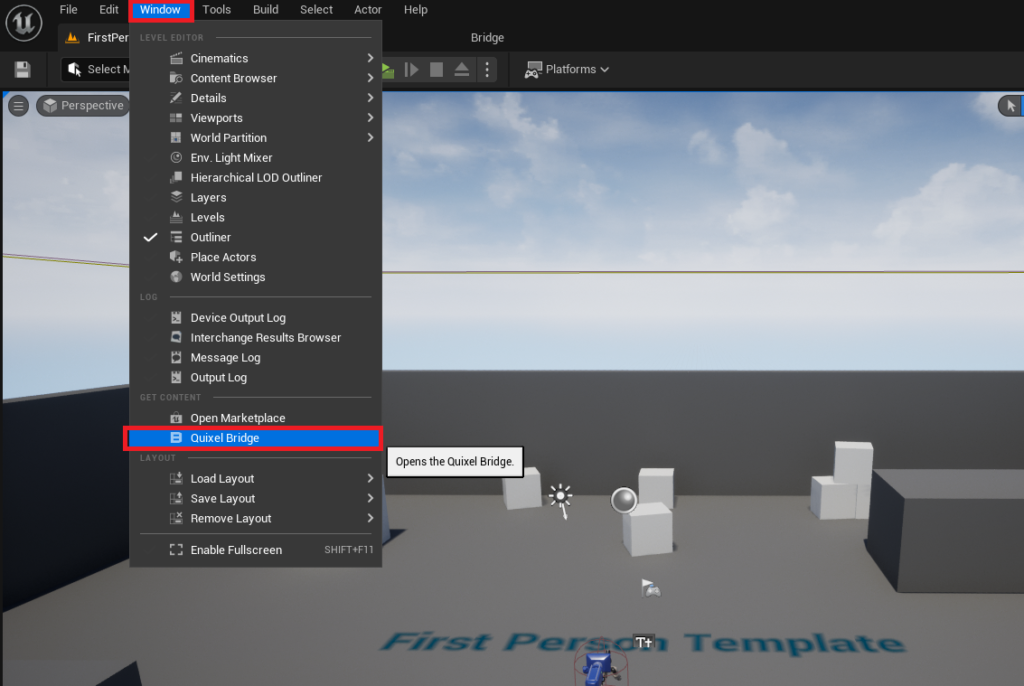
The first crucial step involves accessing Quixel Bridge directly within the Unreal Engine editor. This avoids the need for external applications and ensures seamless asset management. Users should navigate to the top menu bar in the Unreal Engine editor and click on the "Window" tab. From the dropdown menu, select "Quixel Bridge." This action will open the Quixel Bridge interface, typically as a new tab or panel within the editor itself, providing immediate access to the vast library of MegaScans assets and, critically, the MetaHuman collection. Quixel Bridge serves as the primary gateway not only for MetaHumans but also for an extensive array of high-quality environmental assets, textures, and surfaces, all optimized for Unreal Engine.
Navigating the MetaHuman Collection
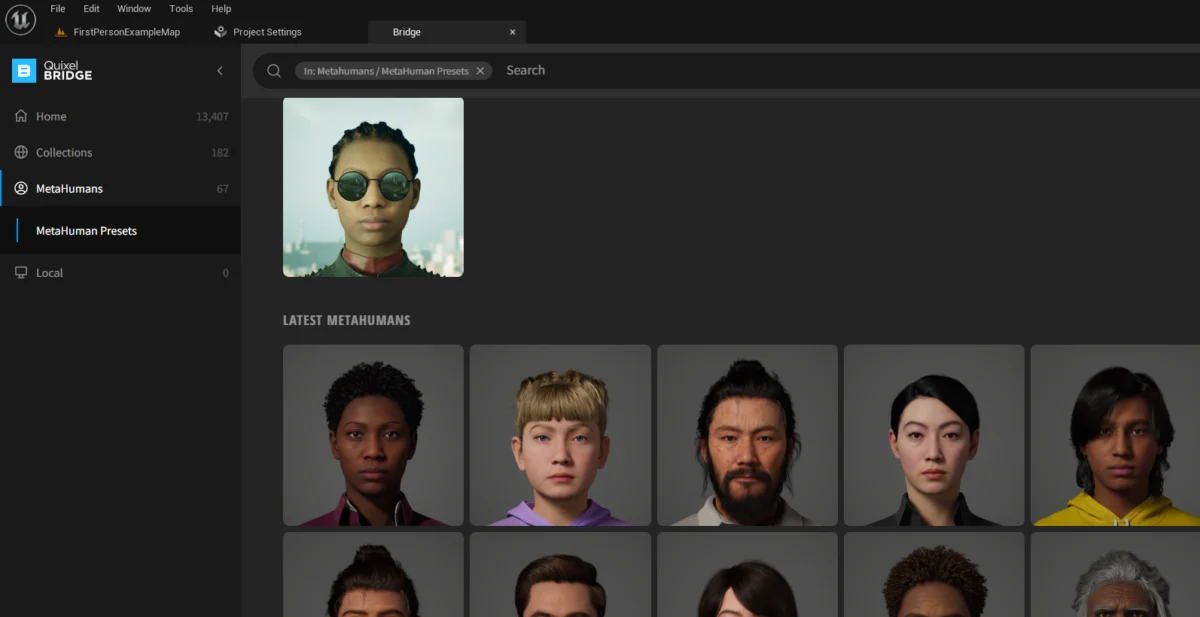
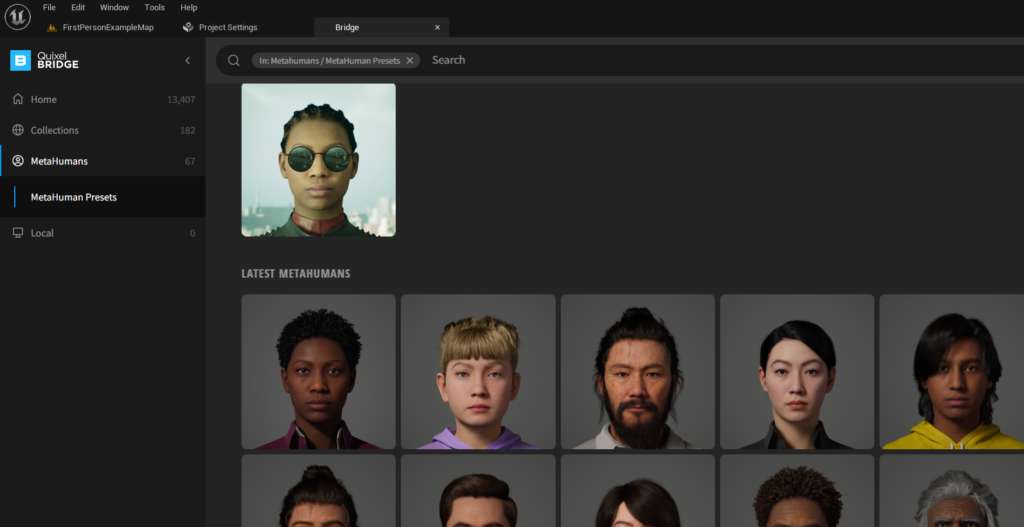
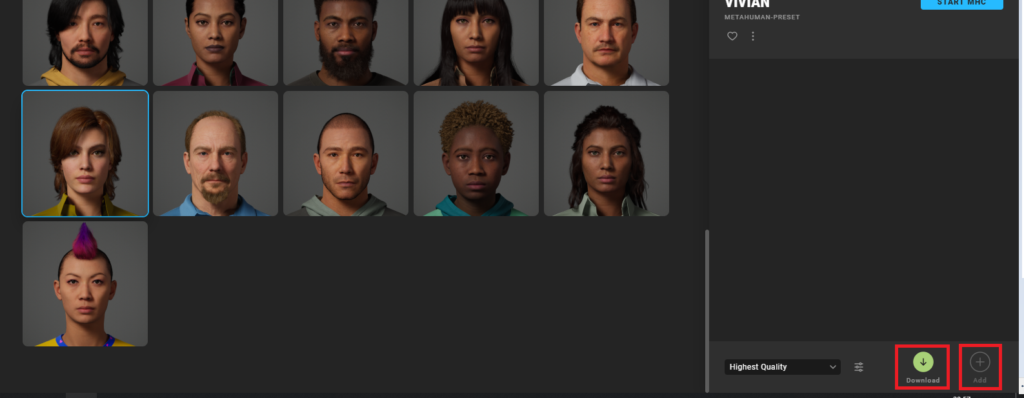
Once Quixel Bridge has successfully loaded within the editor, users will observe several categorical tabs. To specifically locate the digital humans, click on the "MetaHumans" tab. This will filter the content library, presenting a grid of preconfigured MetaHuman avatars. Each avatar represents a unique digital human with distinct facial features, hairstyles, and attire, all crafted to an exceptional standard of photorealism. Browsing this collection allows developers to select a character that best fits the aesthetic and narrative requirements of their specific project. The variety available ensures a broad range of archetypes and appearances can be found, offering a strong foundation for any creative endeavor.

Authentication and Asset Acquisition
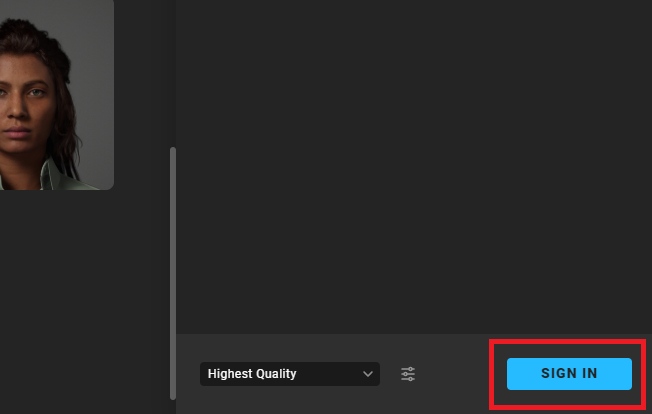
Before any MetaHuman character can be downloaded and added to a project, user authentication is required. This is a standard procedure for accessing licensed content provided by Epic Games. Upon selecting a MetaHuman avatar from the grid, users will typically notice a "Sign In" button, usually located in the bottom right corner of the Quixel Bridge window. Clicking this button will prompt a login window for an Epic Games account. Logging in with a valid Epic Games account grants full access to the Quixel MegaScans and MetaHuman libraries, enabling the download of assets. Once authenticated, the "Sign In" button will transform into a "Download" button. Clicking "Download" initiates the transfer of the chosen MetaHuman’s extensive asset package to the local machine. After the download is complete, an "Add" button will appear, which, when clicked, begins the process of importing the MetaHuman directly into the currently open Unreal Engine project. This process handles the complex setup of meshes, materials, and rigging automatically.
Seamless Project Integration: Handling Dependencies
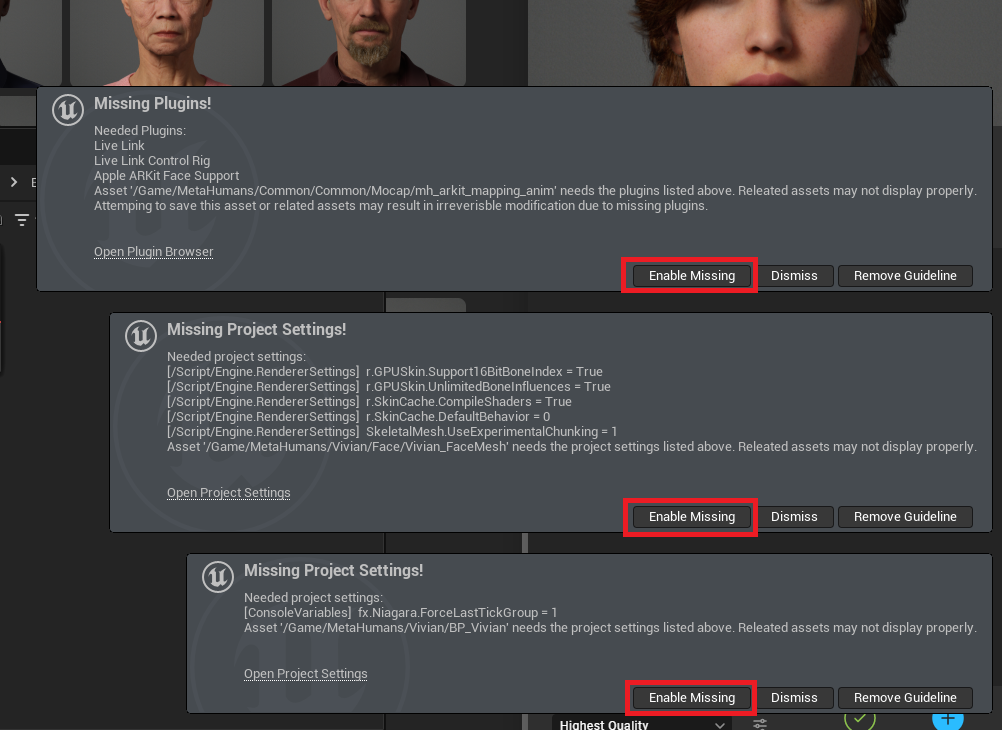
The integration of a MetaHuman into an Unreal Engine project is a sophisticated process that often requires enabling specific plugins and configuring project settings to ensure optimal performance and visual fidelity. As the editor imports the chosen MetaHuman, notifications may appear in the bottom left corner of the screen. These notifications typically prompt the user to "Enable Missing" plugins or settings. It is crucial to heed these prompts and click "Enable Missing." These plugins, such as the "MetaHuman Plugin," "Alembic" (often used for hair and cloth simulation), and potentially "Live Link" (for animation streaming), are essential for the MetaHuman to function correctly and display all its intricate features, including advanced rendering for skin, eyes, and hair, as well as complex skeletal animation. Ignoring these prompts can lead to visual glitches, missing components, or incorrect character behavior.
Restarting the Editor for Configuration Changes
Following the activation of missing plugins and settings, the Unreal Engine editor will likely present a "Restart Now" button. This restart is not optional; it is a critical step to ensure that all newly enabled plugins and project configurations are correctly loaded and applied. A clean restart allows the engine to properly initialize the MetaHuman-specific modules and dependencies, guaranteeing that the digital human will be integrated seamlessly and perform as intended within the project environment. After the restart, the project will be fully prepared to host the high-fidelity MetaHuman asset.
Locating Your Digital Asset: The MetaHuman Blueprint
Once the editor has restarted and all necessary configurations are in place, the newly imported MetaHuman can be located within the project’s content structure. Access the "Content Drawer" (or "Content Browser") and navigate to the "MetaHumans" folder. Within this folder, a new subfolder will have been created, bearing the name of the specific MetaHuman chosen during the download process. Inside this character-specific folder, users will find a collection of assets, prominently featuring a Blueprint asset, typically identifiable by the "BP_" prefix (e.g., "BP_MyMetaHuman"). This Blueprint is the central, ready-to-use MetaHuman character asset. It encapsulates all the individual meshes (body, face, hair, clothing), materials, skeletal rigs, and animation logic, providing a complete, rigged, and animated character that can be dragged and dropped into any scene or integrated into gameplay mechanics.
The Technical Marvel Behind the MetaHumans
The photorealistic quality of MetaHumans is not merely cosmetic; it is the result of advanced technical design and meticulous attention to detail. Several core technologies converge to create these lifelike digital characters:
- Modular Design: Each MetaHuman is constructed from a series of modular components, including body, face, hair, and clothing elements. This modularity allows for significant future customization and interchangeability, making it easier to create variations or combine elements from different MetaHumans.
- Advanced Rigging: MetaHumans come with a sophisticated skeletal rig capable of driving highly detailed facial expressions and body movements. This rig is designed to be compatible with motion capture data and traditional animation techniques, providing animators with a robust framework for bringing characters to life. The facial rig, in particular, boasts hundreds of blend shapes to achieve nuanced emotional states and speech articulation.
- Material Fidelity: The rendering of MetaHuman skin, eyes, and hair leverages physically based rendering (PBR) principles to achieve stunning realism. This includes advanced subsurface scattering (SSS) for skin, which simulates how light penetrates and diffuses beneath the skin’s surface, giving it a natural softness. Eyes feature complex refractive properties and detailed iris textures, while hair uses strand-based rendering for individual hair strands that react realistically to light.
- Level of Detail (LOD) System: To ensure optimal performance across different hardware and viewing distances, MetaHumans incorporate an advanced Level of Detail (LOD) system. This means that as a character moves further from the camera, the engine automatically switches to a less complex mesh and material setup, reducing rendering overhead without a noticeable drop in visual quality to the player. This is crucial for maintaining frame rates in demanding real-time environments.
- Hair & Fur: The hair system is particularly noteworthy, utilizing groom assets that are rendered as individual strands rather than traditional polygon cards. This provides an unparalleled level of detail and natural movement, further enhancing the overall realism.
Broader Implications and Industry Transformation
The introduction of MetaHumans has profound implications that extend far beyond simply making games look better. This technology is a catalyst for significant industry transformation:
- Democratizing Development: Perhaps the most significant impact is the democratization of high-end character creation. Indie developers, small studios, and even individual hobbyists can now access AAA-quality digital humans, leveling the playing field and allowing them to compete visually with much larger productions. This fosters creativity and innovation across the entire spectrum of game development.
- Accelerating Production Workflows: For established studios, MetaHumans dramatically reduce the time and cost associated with character pipelines. Artists can focus on unique designs and narrative rather than the labor-intensive process of building characters from scratch. This accelerates production cycles in games, film, and virtual production, allowing for faster iteration and more ambitious projects.
- Beyond Entertainment: The applications of MetaHumans extend far beyond traditional gaming and film. They are poised to revolutionize various sectors:
- Virtual Training and Simulations: Creating realistic human avatars for medical simulations, military training, or industrial safety protocols.
- Digital Fashion: Showcasing clothing lines on photorealistic digital models.
- Architectural Visualization: Populating virtual spaces with believable human figures to convey scale and atmosphere.
- Virtual Influencers and Digital Doubles: The potential for highly expressive and customizable digital personalities for marketing, social media, and interactive experiences.
- Economic Impact: By significantly reducing the cost and time investment for character assets, MetaHumans enable new business models and lower financial risk for ambitious projects. This could lead to a proliferation of high-quality interactive content.
Future Horizons: The MetaHuman Creator and Beyond
While the pre-configured MetaHuman library is already a powerful tool, the future of digital human creation lies in even greater customization. Epic Games’ MetaHuman Creator tool, available as a cloud-streamed application, allows users to sculpt, blend, and customize their own unique digital humans from a vast library of facial features, body types, hairstyles, and clothing options. This highly intuitive interface provides unprecedented control over character design, ensuring that creators can generate truly bespoke digital individuals.
Looking forward, the evolution of MetaHumans is likely to involve further advancements in several areas. Integration with AI-driven animation systems could allow for more autonomous and intelligent character behaviors. Expanding the diversity of phenotypes and cultural representations will be crucial for global accessibility. Furthermore, continuous optimization for real-time performance will ensure that even more complex MetaHumans can run smoothly on a wider range of hardware.
However, the increasing realism of digital humans also raises important ethical considerations. The "uncanny valley," where characters are almost, but not quite, human, can evoke discomfort. Questions of authenticity, intellectual property, and the ethical implications of creating highly convincing digital doubles will become increasingly pertinent as the technology advances.

Conclusion: Redefining Digital Human Creation
MetaHumans represent a watershed moment in digital content creation. By offering a library of free, photorealistic, and production-ready digital humans, Epic Games has not only elevated the visual fidelity achievable within Unreal Engine 5 but has also democratized a complex art form. The systematic integration process, facilitated by Quixel Bridge, ensures that creators of all skill levels can leverage this technology. From indie game developers to large-scale virtual production studios, MetaHumans empower a new generation of creators to bring their visions to life with unparalleled realism and efficiency, fundamentally redefining the possibilities of digital human creation for years to come.
About the Author