The global mobile gaming industry is witnessing a significant period of realignment as legacy titles return to major storefronts, established toy and media brands deepen their digital footprints, and the creators of viral sensations attempt to capture lightning in a bottle for a second time. This week’s developments, led by the return of Epic Games’ Fortnite to the Google Play Store after a multi-year hiatus, signal a broader trend of platform reconciliation and the aggressive expansion of existing intellectual properties (IP) into the mobile ecosystem. These releases and soft launches reflect a market that is increasingly reliant on brand recognition, genre-blending mechanics, and strategic regional testing to ensure long-term viability in a saturated digital environment.
The Return of a Titan: Fortnite’s Re-entry into the Google Play Store
In a move that marks the end of a nearly six-year standoff, Epic Games has officially brought Fortnite back to the Google Play Store on a global scale. This development is the latest chapter in a tumultuous relationship between Epic Games and Google, which began in 2018 when Epic initially bypassed the Play Store to avoid Google’s 30% revenue share. While the game briefly appeared on the store in 2020, it was swiftly removed after Epic introduced a direct payment system, triggering a high-profile legal battle over antitrust concerns and platform fees.
The return of Fortnite to the official Android storefront coincides with the launch of a new "showdown-themed" season of content, designed to re-engage the massive Android user base that may have drifted away during the game’s period of sideloading exclusivity. For Google, the return of one of the world’s most profitable games represents a stabilization of its gaming ecosystem. For Epic, it is a pragmatic acknowledgment of the friction inherent in third-party distribution. Industry analysts suggest that while Epic continues to advocate for more open mobile ecosystems, the sheer reach of the Google Play Store remains an undeniable asset for maintaining the game’s peak player counts and live-service revenue.
Leveraging Legacy: Mattel and Moon Active Expand Brand Reach
As the mobile market matures, the reliance on established IP has become a cornerstone of publishing strategy. This week, toy industry giant Mattel announced the worldwide release of Mattel Match, a 3D match-puzzler developed in collaboration with Canadian studio Uken Games. The title serves as a digital hub for Mattel’s most iconic brands, including Barbie, Hot Wheels, and Uno. This move follows the massive success of the Barbie film and Mattel’s stated corporate goal of transforming into an IP-driven high-performing toy company. By integrating multiple brands into a single "match-3" framework—a genre that remains one of the most lucrative on mobile—Mattel is positioning itself to capture both nostalgia-driven adult players and younger demographics.

Similarly, Moon Active has launched Coin Master – Board Adventure worldwide on iOS and Android. Moon Active, the developer behind the multi-billion-dollar success of the original Coin Master, spent less than a year in the soft-launch phase for this spin-off. The game translates the "social slot" mechanics of the original into a board game format, a strategic pivot that likely aims to compete with the recent dominance of Scopely’s Monopoly GO!. The game has already received significant visibility through promotion by Apple, suggesting that platform holders view these high-polish spin-offs as essential drivers of App Store engagement.
The Wordle Legacy: Josh Wardle Unveils Parseword
Four and a half years after Wordle became a global cultural phenomenon and was subsequently acquired by The New York Times, creator Josh Wardle has returned with a new project. Co-created with Christopher Dary and a small team of collaborators, Parseword represents a shift toward more complex, intellectual gameplay. Inspired by the logic of cryptic crosswords, Parseword tasks players with deciphering daily linguistic puzzles that offer a higher degree of difficulty than its predecessor.
The release of Parseword on the App Store and its availability via web browsers for Android and PC users highlights a growing niche for "appointment gaming"—low-friction, daily challenges that encourage social sharing. Given Wardle’s track record, Parseword is being closely watched by industry observers to see if it can replicate the organic, viral growth of Wordle without the backing of a major media conglomerate’s initial marketing machine.
Tactical Testing: Soft Launches and Regional Strategies
The current release cycle also highlights the importance of regional testing, with several major publishers utilizing specific markets to fine-tune their products.
- Kick Buds (Konami): The Japanese gaming giant has initiated a playtest for Kick Buds, a football-themed "party royale" game. Currently live in Brazil, France, and Germany, the game blends the chaotic physics of titles like Fall Guys with arcade sports mechanics. Brazil, in particular, has become a preferred testing ground for competitive mobile games due to its massive, mobile-first gaming population.
- Prime Rush (Supergaming): Further emphasizing the importance of the South American market, Supergaming has launched Prime Rush in Brazil. The game attempts to bridge the gap between the waning battle royale trend and the rising "extraction shooter" genre, which has gained popularity on PC and console through titles like Escape from Tarkov.
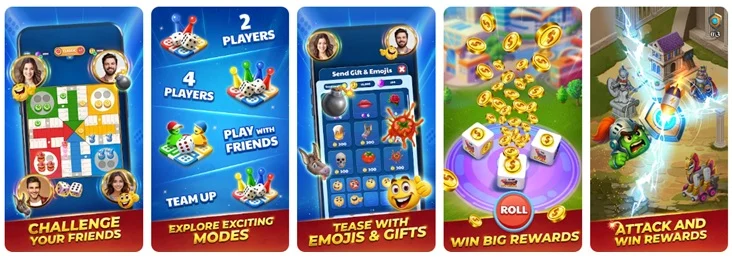
- Parchisi City (Gametion): Following the massive success of Ludo King, Gametion is testing Parchisi City in the United States. The game combines the traditional Indian board game Pachisi with modern city-building meta-layers, reflecting a trend where publishers add depth to casual games to increase long-term player retention.
- Sort Merge – Goods Sorting (Miniclip): Miniclip has entered the "sorting" sub-genre with Sort Merge, currently in soft launch across the US, Puerto Rico, and India. The game focuses on satisfying, tactile organization mechanics, a trend that has seen a surge in popularity on social media platforms like TikTok.
The Evolution of Subscription Models: Apple Arcade’s April Expansion
Apple continues to bolster its Apple Arcade subscription service by integrating high-quality indie titles under its "Plus" (+) branding. The April update is particularly strong, featuring Dredge+, the horror-infused fishing adventure from Black Salt Games that earned iPad Game of the Year honors in 2025. By bringing Dredge to the service, Apple is offering subscribers a premium, ad-free experience of a game that originally found success on PC and consoles.

Joining Dredge+ are Unpacking+ and My Very Hungry Caterpillar+. Unpacking+, developed by Witch Beam, is a zen-like puzzle game that has been praised for its environmental storytelling. The inclusion of these titles suggests that Apple is moving away from purely exclusive "Arcade Originals" in favor of a curated library of "Greatest Hits" that provide clear value to subscribers who want to avoid the monetization-heavy landscape of the standard App Store.
Future Outlook: Roguelites and Cozy Sequels
Looking toward the latter half of the year, several high-profile titles have entered their pre-registration phases. Square Enix is preparing for the launch of Dragon Quest Smash/Grow, a roguelite RPG that brings one of Japan’s most beloved franchises into a modern mobile format. The move toward roguelite mechanics—characterized by procedural generation and permanent progression—reflects a desire to provide mobile players with "infinite" content loops.
Additionally, Neowiz is preparing Cats & Soup: Magic Recipe, a sequel to the viral "cozy" game Cats & Soup. The sequel is currently being tested in the US, Canada, the UK, and Indonesia. The "cozy gaming" genre has seen a massive uptick in interest since the pandemic, and Neowiz’s decision to expand this IP suggests that the market for non-competitive, relaxing mobile experiences remains robust.
Chronology of Key Releases and Events
- 2018–2020: Epic Games removes Fortnite from the Google Play Store, leading to a multi-year legal battle over platform fees.
- Early 2024: Moon Active and Mattel begin soft-launch testing for their respective board and puzzle spin-offs.
- March 2025: Konami begins Kick Buds playtests in Europe and South America; Josh Wardle launches Parseword.
- Late March 2025: Fortnite officially returns to Google Play worldwide; Major League Baseball releases Baseball Hits 26.
- April 2025: Apple Arcade to add Dredge+, Unpacking+, and My Very Hungry Caterpillar+; Kamibox to release Bacon in Zane on April 21.
- Late 2025: Expected worldwide launch of Dragon Quest Smash/Grow and Cats & Soup: Magic Recipe.
Implications for the Mobile Ecosystem
The return of Fortnite to the Google Play Store is perhaps the most significant indicator of the current state of the mobile market. It suggests that despite the desire for independence, the centralized power of the "Big Two" (Apple and Google) remains a dominant force that even the largest publishers must eventually reconcile with.
Furthermore, the proliferation of licensed games—from Mattel to MLB—indicates that the cost of user acquisition has risen to a point where organic discovery is nearly impossible without a pre-existing brand. Publishers are no longer just selling games; they are managing ecosystems where cross-media synergy and regional specialization are the keys to survival. As the industry moves into the second quarter of 2025, the focus will likely remain on these "hybrid" models: games that combine simple, addictive mechanics with deep meta-progression and globally recognized characters.
About the Author