The global mobile gaming sector is currently witnessing a significant surge in activity as major publishers and independent studios prepare for a series of high-profile launches spanning the remainder of 2024 and the first quarter of 2025. This influx of new titles reflects a diversifying market where established intellectual properties (IPs), such as the CookieRun franchise and My Hero Academia, are being leveraged alongside innovative indie projects and technical ports of successful PC titles. As consumer spending in the mobile gaming market continues to stabilize following post-pandemic corrections, these upcoming releases represent a strategic push by developers to capture engagement through a blend of idle mechanics, roguelite action, and high-fidelity ports.
Devsisters Expands the CookieRun Universe with Crumble
Devsisters, the South Korean developer known for the massive success of CookieRun: Kingdom, has officially launched its latest entry, CookieRun: Crumble. This new title enters the market as an idle RPG, a genre that has seen exponential growth in the Asian and Western markets due to its high retention rates and low barrier to entry for casual players. Available now on both iOS and Android platforms, CookieRun: Crumble seeks to capitalize on the existing fanbase of the franchise, which has historically generated hundreds of millions of dollars in revenue.
The shift toward idle mechanics is a calculated move by Devsisters. By reducing the manual input required from players, the studio aims to increase "daily active user" (DAU) metrics by fitting the game into the short, frequent breaks typical of mobile users. Industry analysts suggest that this release is part of a broader strategy to diversify the CookieRun brand into various sub-genres, ensuring the IP remains relevant across different player demographics. The game’s launch follows a period of financial restructuring at Devsisters, making the performance of Crumble a critical indicator of the company’s current trajectory.
KLab Secures Strong Pre-Registration Numbers for My Hero Academia
In the realm of licensed anime adaptations, KLab Inc. is poised for a significant release with My Hero Academia United Survival. The free-to-play roguelite action RPG is scheduled for a worldwide release—excluding mainland China—on August 6. The title will be available on iOS, Android, and PC, highlighting a growing industry trend toward cross-platform accessibility.
KLab has reported that pre-registrations for the title have already surpassed the 800,000 mark, signaling high consumer anticipation. My Hero Academia remains one of the most popular contemporary anime franchises globally, and KLab is looking to replicate the success of its previous licensed hits, such as Bleach: Brave Souls. The roguelite structure of United Survival is particularly noteworthy; this sub-genre has gained traction on mobile for its replayability and "just one more run" gameplay loop. By integrating this with a popular shonen IP, KLab is positioning itself to capture both hardcore anime fans and enthusiasts of the action-RPG genre.
Playdigious Bridges the Gap Between PC and Mobile with 9 Kings
Playdigious, a studio renowned for its high-quality mobile ports of PC and console titles like Dead Cells, has announced the upcoming release of 9 Kings on October 8. Originally a PC-only title published by Hooded Horse, 9 Kings is a roguelike kingdom-builder that combines resource management with tactical combat. The mobile version will feature full cross-progression support via Google Play Games, allowing players to maintain their progress across different devices.
The transition of 9 Kings to mobile reflects the increasing capability of modern smartphones to handle complex simulation and strategy games. Hooded Horse, the original publisher, has seen significant success on Steam with its portfolio of deep strategy games, and the move to mobile via Playdigious suggests a desire to tap into the lucrative "on-the-go" strategy market. Pre-orders for the title are currently open, and industry experts believe the success of 9 Kings could encourage further collaboration between indie PC publishers and specialized mobile porting houses.
Take-Two and Popcore Strengthen Casual Portfolio with Stack Match Jam
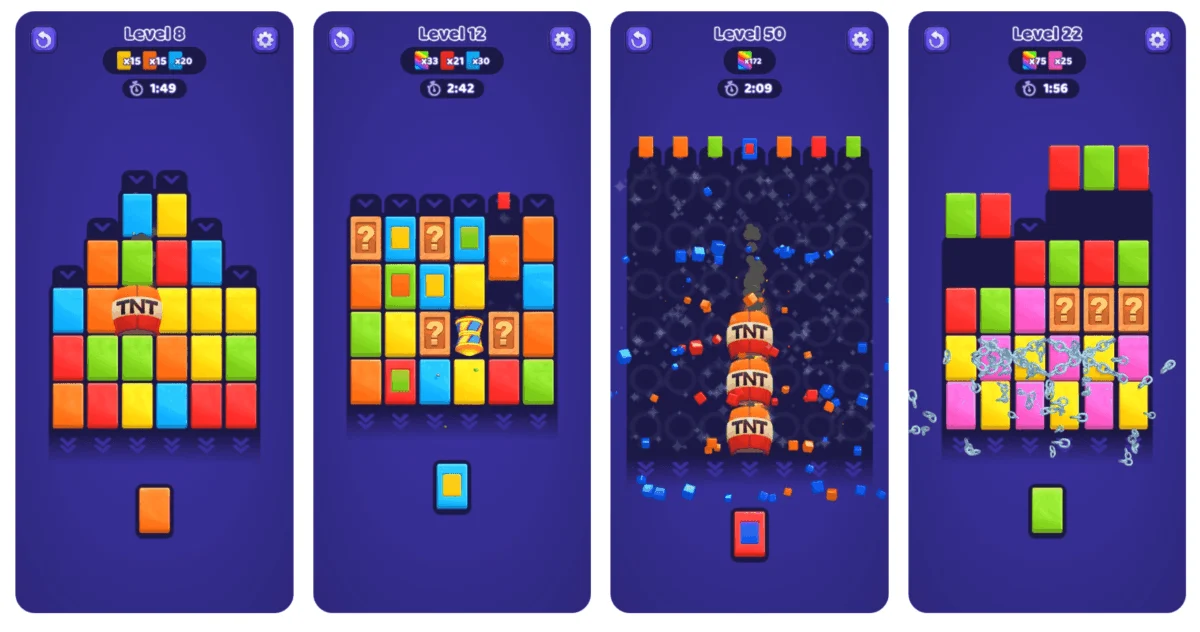
Take-Two Interactive, through its subsidiary Popcore, has launched Stack Match Jam globally on iOS and Android. This free-to-play casual match-3 puzzler represents Take-Two’s continued expansion into the hyper-casual and casual gaming space following its multi-billion dollar acquisition of Zynga. Popcore, based in Berlin, has established a reputation for creating "snackable" content that dominates download charts.
Stack Match Jam enters a highly competitive match-3 market currently led by giants like King and Dream Games. However, by leveraging Take-Two’s extensive distribution network and Popcore’s expertise in ad-monetization and user acquisition, the title aims to carve out a niche. The launch of this game is a testament to the "evergreen" nature of the puzzle genre, which remains the largest revenue generator in the mobile gaming industry.

Nuverse Navigates Geopolitical Challenges with Plants on Fire
Nuverse Games, the publishing arm of ByteDance, is set to release Plants on Fire: Attack & Defend on August 27. The game is a hybrid of the tower defense and autochess genres, and it is already receiving significant visibility through Apple’s "New Game" editorial features. This launch is particularly significant given the recent corporate restructuring at ByteDance and the ongoing regulatory scrutiny surrounding its flagship app, TikTok, in the United States.
Nuverse previously achieved global success with Marvel Snap, proving its ability to manage high-profile IPs and complex live-service operations. Plants on Fire represents a return to internal or partner-driven IP development. The choice of a tower defense/autochess hybrid suggests an attempt to innovate within established genres, offering a more strategic depth than traditional mobile defenders. Analysts are watching this release closely to determine if Nuverse can maintain its momentum in the global gaming market amidst shifting corporate priorities at ByteDance.
The Rise of "Cosy Gaming" on Mobile: Little Corners and I Want to Play the Villain
The "cosy gaming" trend, characterized by low-stress environments and aesthetic-driven gameplay, is making its mark on the upcoming mobile schedule. Weekend Games has announced that Little Corners, a sticker-book decorating simulator currently available on Steam, will arrive on iOS and Android later this year. The game emphasizes creativity and relaxation, catering to a demographic that has traditionally been underserved by the competitive-heavy mobile market.
Similarly, Triomatica Games—the studio behind the critically acclaimed Boxville—has announced I Want to Play the Villain. This theatre-themed logic puzzler is slated for a Q1 2027 release on mobile, PC, and consoles, with a Steam demo appearing as early as August 17. The extended development timeline suggests a high level of polish and a focus on narrative-driven puzzles. These titles indicate that mobile platforms are becoming a primary home for indie developers who prioritize artistic expression and unique gameplay mechanics over traditional monetization loops.
Niche Success and Solo Development: Pigeon: A Love Story and Nitelore
In a display of the industry’s creative diversity, Tiny Dragon and developer Wristwork have launched Pigeon: A Love Story on mobile and Steam. Part of the Tiny Teams festival, the game is a "full-scale pigeon dating sim" where players use their device’s microphone to coo and navigate real-world city recreations. The London map is currently available for $2.99, with other cities planned as expansions. This release highlights the viability of experimental, "weird" games on mobile that leverage unique hardware features like GPS and microphones.
On the technical end of the spectrum, solo developer Crabware is set to release Nitelore on August 15. Inspired by futuristic racers like F-Zero and Wipeout, Nitelore is an anti-gravity racer specifically optimized for iPhone and iPad. Solo-developed projects of this technical caliber are becoming more common as game engines like Unity and Unreal Engine provide powerful tools to individual creators. Nitelore’s focus on high-speed performance and precise touch controls aims to fill a gap in the mobile market for premium-feeling arcade racers.
Broader Impact and Industry Implications
The diversity of these upcoming releases highlights several key trends currently shaping the mobile gaming industry. First, the "PC-to-mobile" pipeline is becoming more robust, with developers like Playdigious and studios like Weekend Games viewing mobile not just as a secondary platform, but as a necessary component of a game’s lifecycle. Cross-progression is no longer a luxury feature but a standard expectation for titles launching across multiple platforms.
Second, the market is seeing a bifurcation between high-budget licensed IPs (My Hero Academia) and highly creative, niche indie titles (Pigeon: A Love Story). This suggests that while the "middle market" of mobile gaming may be squeezed, there is still ample room for both massive corporate ventures and small-scale artistic projects.
Finally, the continued focus on "idle" and "cosy" mechanics points to a shift in player behavior. As the mobile audience matures, there is an increasing demand for games that respect the player’s time while still providing a sense of progression and community. The performance of these titles through the end of 2024 will likely dictate the investment strategies of major publishers heading into the next fiscal year. With pre-registration numbers for major titles hitting the high hundreds of thousands, the appetite for high-quality mobile content remains as strong as ever.
About the Author