Halfbrick Studios, the acclaimed Australian developer behind global mobile phenomena such as Jetpack Joyride and Fruit Ninja, has announced an undisclosed number of layoffs affecting employees in Australia and concluding several international engagements. The studio, which originated in Brisbane but now operates as a fully-remote entity, stated that these significant organizational changes are necessary to navigate a "challenging period" within the volatile video game industry. The news, emerging on March 2, 2026, adds Halfbrick to a growing list of prominent developers and publishers undergoing workforce reductions in what has been characterized as a sustained period of economic recalibration for the sector.
The company’s official statement, posted on LinkedIn, underscored the difficult nature of the decision, emphasizing that the cuts are "driven by organizational and strategic priorities, not individual performance." It further expressed profound gratitude for the contributions of the affected individuals, stating, "The most important thing to say is this: the people affected by this decision have made meaningful contributions to Halfbrick. They have helped shape our games, supported our players, and been an important part of this studio. We are sincerely grateful for everything they have brought to the company." Halfbrick has also made a public appeal to other studios with job openings to consider hiring its former employees, highlighting the "exceptional talent" among those now seeking new opportunities.
A Legacy Forged in Mobile Innovation
Halfbrick Studios has carved out a unique and influential niche in the gaming landscape since its inception in 2001. Founded in Brisbane, Australia, the studio initially focused on console and PC titles before pivoting decisively towards the burgeoning mobile market in the late 2000s. This strategic shift proved prescient, leading to the release of Fruit Ninja in 2010, a deceptively simple yet profoundly addictive touch-based game that became an instant global sensation. Its intuitive gameplay, vibrant graphics, and broad appeal propelled it to millions of downloads, defining a generation of mobile gaming.
Building on this success, Halfbrick launched Jetpack Joyride in 2011, an endless runner featuring protagonist Barry Steakfries. This title, celebrated for its fluid mechanics, character progression, and continuous updates, cemented Halfbrick’s reputation as a powerhouse in the mobile space. Both games have consistently ranked among the most downloaded mobile titles worldwide, generating substantial revenue and fostering a loyal player base for over a decade. The studio’s ability to create highly polished, accessible, and endlessly replayable experiences distinguished it in a rapidly saturating market.
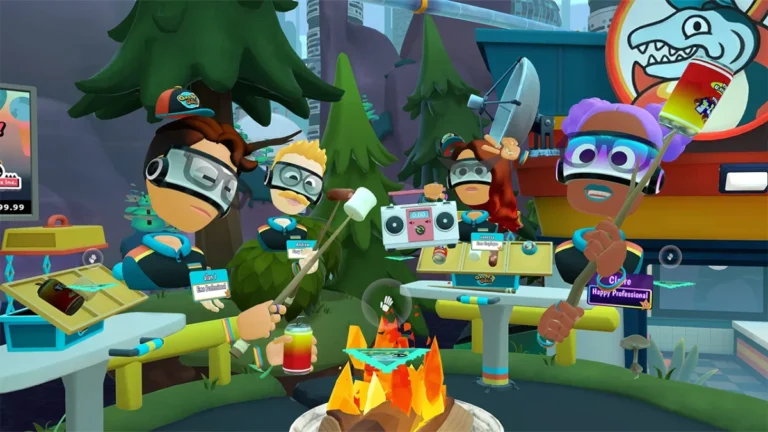
Beyond its mobile dominance, Halfbrick has demonstrated a willingness to explore other platforms and genres. Its Fruit Ninja series successfully transitioned into virtual reality with Fruit Ninja VR in 2016 and its sequel, Fruit Ninja VR 2, in 2021, showcasing the studio’s adaptability to emerging technologies. More recently, Halfbrick expanded its portfolio to include licensed intellectual property, releasing Bluey’s Quest for The Gold Pen in December 2025, a title based on the immensely popular Australian children’s animated series Bluey, for PC and console platforms. This diversification reflects a broader industry trend of studios seeking to broaden their audience reach beyond single-platform ecosystems.
The studio’s evolution from a localized Brisbane-based team to a "fully-remote" operation also mirrors a significant shift within the global tech and creative industries, accelerated by the COVID-19 pandemic. While offering flexibility and access to a wider talent pool, the remote model also presents unique challenges in fostering company culture, managing global teams, and navigating complex international labor laws, which may become particularly pronounced during periods of restructuring.
The Broader Context: A Turbulent Era for Gaming
Halfbrick’s announcement arrives amidst an unprecedented wave of layoffs sweeping across the video game industry. The period from late 2023 through early 2026 has been marked by a profound economic recalibration, following years of what many analysts now describe as unsustainable hypergrowth fueled by pandemic-era lockdowns and readily available investment capital.

According to data compiled by industry trackers, over 25,000 jobs were cut across the global games industry in 2024 alone, a figure that continued to rise into 2025 and early 2026. Major publishers and developers, including those with AAA blockbuster titles, have not been immune, with significant reductions reported at companies like Epic Games, Unity Technologies, Embracer Group, Riot Games, and Microsoft’s gaming divisions. This widespread contraction signals a sobering reality for a sector once thought to be recession-proof.
Several factors contribute to this challenging environment:
- Post-Pandemic Correction: The surge in gaming engagement and spending during the pandemic proved to be temporary. As economies reopened, consumer discretionary spending shifted, and the accelerated growth rates became unsustainable.
- Rising Development Costs: The cost of developing modern video games, particularly AAA titles, has escalated dramatically. Budgets routinely exceed hundreds of millions of dollars, demanding exponential sales figures to turn a profit, which is increasingly difficult in a crowded market.
- Inflation and Interest Rates: Global economic inflation and rising interest rates have increased operational costs for studios while simultaneously tightening access to capital and dampening consumer spending power.
- Market Saturation and Competition: The sheer volume of games released across all platforms means fierce competition for player attention and spending. Even established franchises struggle to stand out, and user acquisition costs for mobile titles have skyrocketed.
- Investment Over-Extension: Many companies engaged in aggressive hiring and acquisition sprees during the boom years, often without commensurate revenue growth, leading to bloated workforces that are now being rationalized.
- Platform Shifts and Monetization Challenges: The mobile market, while still massive, faces maturity challenges. Free-to-play models are becoming harder to monetize effectively without aggressive tactics, and regulatory scrutiny on loot boxes and in-app purchases is increasing. The VR market, while promising, has yet to achieve mainstream adoption and consistent profitability, making investments in that space riskier.
An industry analyst, Dr. Eleanor Vance from Global Gaming Insights, commented on the situation, "What we’re witnessing is a market correction long overdue. Years of unchecked expansion and optimistic projections have collided with economic realities. Studios are now focusing on efficiency, profitability, and sustainable growth, which unfortunately often necessitates painful workforce adjustments. Even studios with beloved IPs like Halfbrick are not exempt from these macro trends."
The Impact and Implications
The layoffs at Halfbrick Studios carry significant implications for the affected individuals, the studio itself, and the broader Australian game development community. For those impacted, finding new roles in an already saturated and contracting market presents a formidable challenge. While Halfbrick’s public support and appeal to other studios are commendable, the reality of a widespread industry downturn means fewer available positions and increased competition. Specialized skills, while valuable, may not always align with the immediate needs of hiring studios, further complicating the job search.
For Halfbrick, these "organizational and strategic priorities" likely signal a re-evaluation of its project pipeline, operational efficiency, and long-term strategic direction. The studio’s diverse portfolio, spanning mobile, PC, console, and VR, might see a consolidation of focus. It is plausible that Halfbrick intends to streamline operations, potentially concentrating resources on its most profitable or strategically vital intellectual properties, or exploring new business models to ensure future sustainability. The recent launch of Bluey’s Quest for The Gold Pen demonstrates a commitment to expanding beyond its core mobile offerings, but the success and long-term profitability of such ventures will be crucial in defining its path forward.
The Australian game development scene, while growing, remains a relatively smaller ecosystem compared to North America or Europe. Reductions at a prominent studio like Halfbrick can send ripples through the local industry, impacting morale and potentially leading to a brain drain if talented individuals seek opportunities abroad. Sarah Jenkins, spokesperson for the Australian Game Developers Association, expressed concern: "Each layoff, especially from a studio as iconic as Halfbrick, represents a loss of incredible talent and experience from our local industry. We must work collaboratively to support these individuals and ensure that Australia remains an attractive place for game development, fostering environments where talent can thrive even in challenging times."
Looking Ahead: A Leaner, More Focused Future?
The coming years are likely to see the video game industry continue its period of consolidation and strategic re-evaluation. For Halfbrick Studios, this means a concerted effort to adapt its operations and output to the new economic realities. The transition to a fully-remote model, while offering flexibility, also means that the impact of these layoffs is distributed across various locations, potentially affecting a global talent pool rather than being concentrated in a single physical office. The challenge for Halfbrick will be to maintain its creative spark and innovation with a leaner team, while ensuring its strategic shifts position it for long-term success.
The studio’s rich history of creating beloved, accessible games provides a strong foundation. However, the dynamics of game development have evolved significantly since the early days of Fruit Ninja. Successful navigation of this challenging period will require not only sound financial management but also a clear vision for product development that resonates with contemporary player expectations and market trends. As the industry grapples with the aftermath of its explosive growth, the focus has firmly shifted from expansion at all costs to efficiency, innovation, and sustainable profitability. Halfbrick’s current restructuring is a stark reminder that even the most iconic studios must continuously adapt to survive and thrive in this ever-evolving digital landscape.
About the Author