The digital storefront itch.io has once again underscored its commitment to accessible and diverse gaming experiences by spotlighting a curated collection of recently released or updated browser-based titles. This initiative caters specifically to players seeking instant entertainment without the commitment of downloads or installations, making it an ideal choice for leisurely weekend exploration. Ranging from introspective visual novels to adrenaline-pumping racing games, and from strategic idle battlers to unsettling psychological horrors, the selection exemplifies the breadth and creativity thriving within the independent game development community, much of it fostered by collaborative game jams.
The Rise of Browser Gaming: An Itch.io Perspective
In an era dominated by high-fidelity AAA titles requiring significant hardware investments and lengthy download times, browser-based games offer a refreshing alternative. They represent a fundamental return to accessibility, leveraging the ubiquity of web browsers to deliver instant playability across a multitude of devices, from desktop computers to laptops and even some mobile platforms. This low barrier to entry, both for players and developers, has been a cornerstone of itch.io’s philosophy since its inception. The platform, known for its "pay what you want" model and strong support for independent creators, has cultivated a vast library of games, with browser titles forming a significant and growing segment.
Historically, browser gaming has evolved significantly, from the early days of Flash games that defined a generation of casual online entertainment to the current landscape powered by HTML5, WebAssembly, and advanced JavaScript frameworks. These modern technologies enable richer graphics, more complex gameplay mechanics, and better performance, bridging the gap between traditional downloadable games and the instant-play convenience of the web. Itch.io has been at the forefront of this evolution, providing robust tools for developers to upload and showcase their web builds, and for players to discover them effortlessly. The platform’s continuous curation of "New & Popular Browser Games" ensures that fresh content is always discoverable, preventing promising titles from getting lost in the sheer volume of releases.
The Genesis of Innovation: Game Jams as Catalysts

A significant proportion of the games featured in itch.io’s weekly showcases, including many in this particular collection, originate from game jams. These intense, time-limited development sprints — often lasting just 48 to 72 hours — serve as powerful incubators for innovation, rapid prototyping, and community building. Developers are challenged to create a game from scratch based on a specific theme, fostering a unique environment where creativity, technical skill, and collaboration converge under pressure.
Several prominent game jams are directly referenced in the context of these featured titles:
- Ludum Dare 56: One of the largest and longest-running online game jams, Ludum Dare consistently attracts thousands of developers globally. Its 56th iteration, which likely occurred recently, has contributed multiple titles to itch.io’s current spotlight, including Hamster Shelter, Mouse Mouse, Play With Me, and Jelly Gang. The intense timeframe of Ludum Dare often results in highly focused, mechanically innovative, and often charmingly unpolished games that prioritize a core idea.
- GBJAM 12: This jam specifically challenges developers to create games within the aesthetic and technical constraints of the original Nintendo Game Boy. Such limitations, rather than stifling creativity, often inspire ingenious solutions and a distinct retro charm. Laura’s Room is a direct product of GBJAM 12, showcasing how a limited color palette and pixel art can amplify atmospheric tension.
- Made With Defold Jam 2024: Dedicated to games built using the Defold engine, this jam highlights the capabilities of specific development tools. Tiny Truck Racing emerged from this jam, demonstrating the engine’s suitability for fast-paced, pixel-art racing experiences.
These jams not only provide a steady stream of fresh content for platforms like itch.io but also serve as vital training grounds for aspiring and established developers alike, pushing boundaries and fostering a vibrant culture of experimentation.
Spotlight on Featured Titles: A Deep Dive
The diversity of genres and themes within this collection is a testament to the indie spirit. Each game, while easily accessible, offers a unique window into creative storytelling, innovative mechanics, or engaging challenges.
Dead Names: A Poignant Sci-Fi Journey
Dead Names stands out as a short science fiction visual novel that delves into profound emotional territory, specifically the act of "letting go." Set against the backdrop of a solitary winter day in a speculative future, the game leverages a minimalist pixel art style, reminiscent of classic Game Boy titles, to create an intensely atmospheric experience. Its inclusion of LGBTQIA themes further enriches its narrative, offering a nuanced perspective often underrepresented in mainstream gaming. The choice of the visual novel format allows for deep character exploration and narrative immersion, while the retro aesthetic adds a layer of nostalgia and intimacy, making the emotional core of the story particularly resonant. This title exemplifies how indie games can tackle complex human experiences with artistic restraint and thematic depth, appealing to players who value narrative over graphical extravagance.
Tiny Truck Racing: Pixelated Velocity
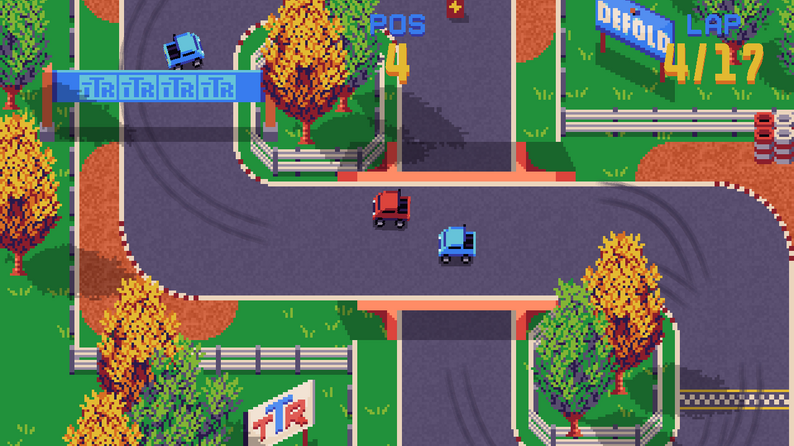
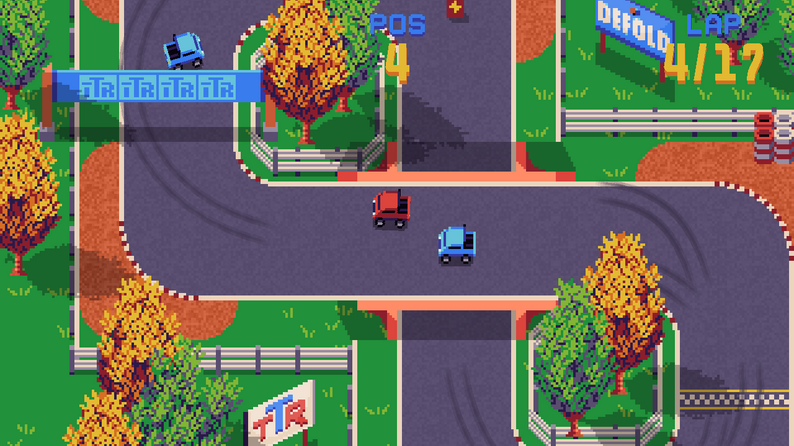
For those craving speed and competition, Tiny Truck Racing delivers fast-paced action on pixel art tracks. Developed for the Made With Defold Jam 2024, this game offers three distinct modes: Single Race for quick thrills, Tournament for a more structured challenge, and Time Trial for perfecting lap times. Players can choose from four unique trucks, each likely possessing different handling characteristics, and strategically collect nitro cans for crucial speed boosts. The game’s vibrant pixel art style, combined with its straightforward yet engaging mechanics, provides an instant dose of arcade-style racing fun. It demonstrates the potential for competitive multiplayer-adjacent experiences within the browser environment, appealing to both casual racers and those seeking to master track layouts.
Nomad Idle: The Art of Passive Progression
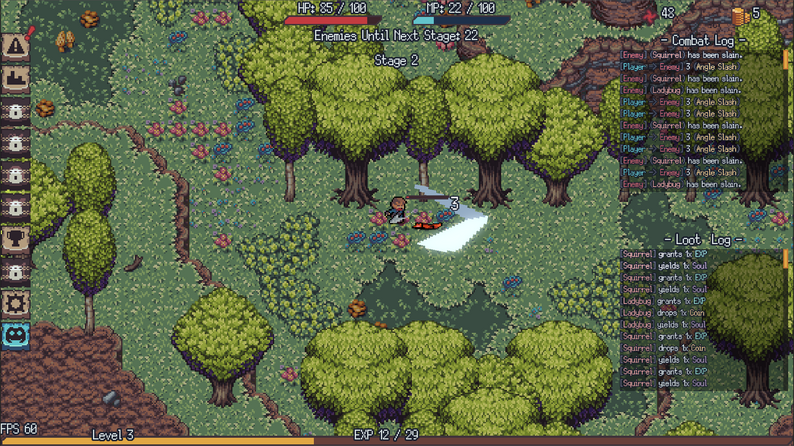
Nomad Idle taps into the popular idle game genre, blending it with auto-battler mechanics and RPG progression. As a recently updated title, it suggests ongoing developer support and community engagement. Players are tasked with creating effective builds for their character, who then automatically battles hordes of enemies. The core loop involves unlocking new features such as leveling up stats, crafting increasingly powerful equipment, and selecting passive skills that enhance the character’s capabilities. While much of the game progresses autonomously, players can actively intervene by using character-specific skills to accelerate progress, striking a balance between passive enjoyment and strategic engagement. This genre’s appeal lies in its ability to provide a sense of continuous progression and reward with minimal active input, making it perfect for multitasking or casual background play.
Laura’s Room: Retro Horror’s Haunting Echo
Emerging from GBJAM 12, Laura’s Room masterfully utilizes the Game Boy’s iconic aesthetic to craft a short yet potent psychological horror experience. Players step into the shoes of Danni, driving down a rainy, dark road, seemingly on the run from an unknown threat. The limited color palette and pixelated visuals, rather than detracting from the horror, enhance it by forcing the player’s imagination to fill in the gaps, creating a more unsettling and personal fear. The atmospheric gameplay, relying on subtle cues and environmental storytelling, proves that true horror can be evoked without cutting-edge graphics. This game showcases the power of retro constraints to amplify psychological tension and create a uniquely immersive, unnerving experience.

Hamster Shelter: Post-Apocalyptic Serenity
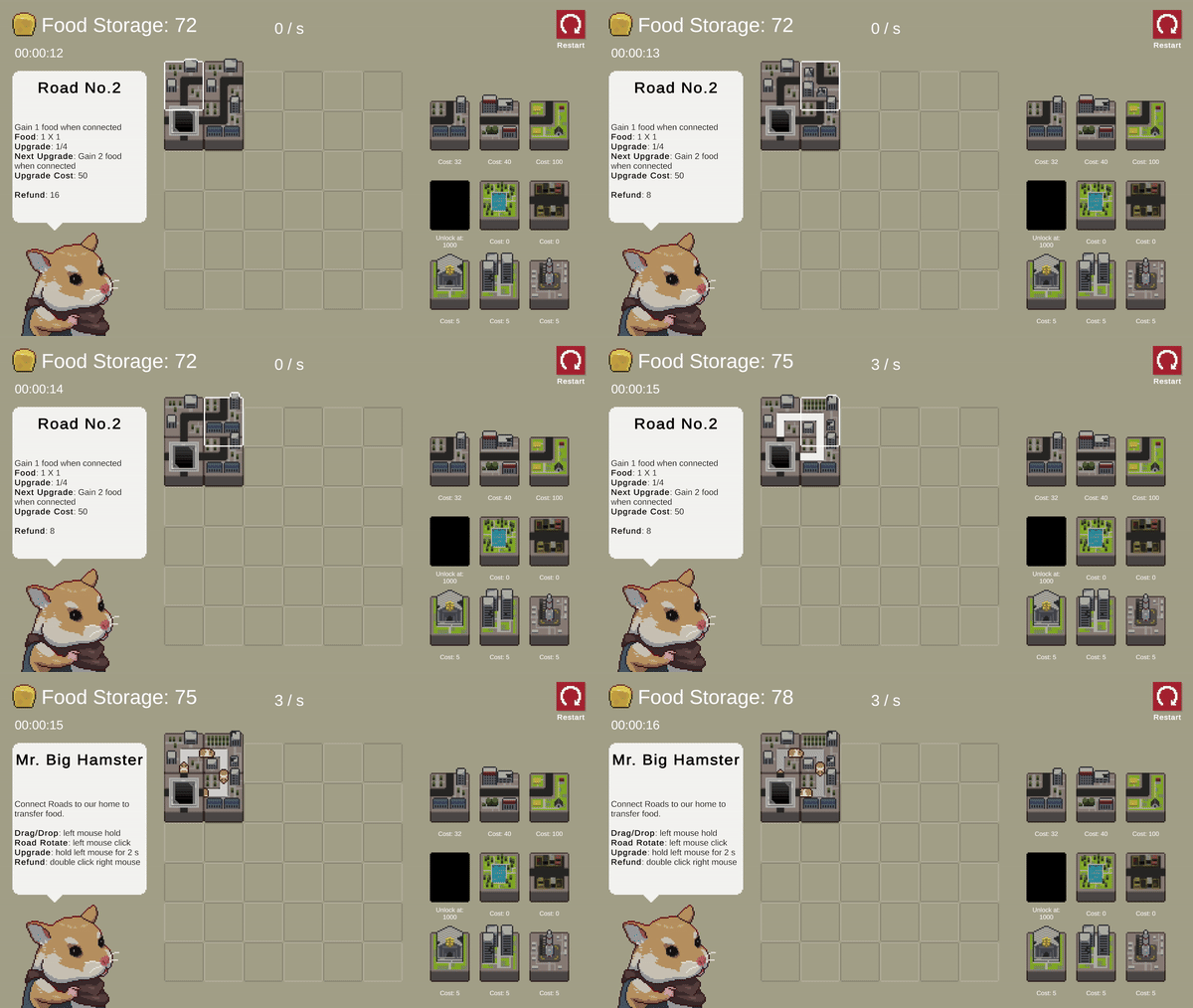
Hamster Shelter, a creation from Ludum Dare 56, offers a uniquely charming take on the post-apocalyptic genre. Instead of gritty survival, players manage tiny hamsters striving to survive in a ruined world. The core gameplay revolves around building roads to their home base and transporting food, fostering a sense of resource management and community building. The game is designed to work in the background, allowing for a relaxed and low-stress gameplay experience. This approach distinguishes it from more demanding survival titles, offering a contemplative and endearing simulation that provides a gentle escape. Its innovative premise and relaxed pace demonstrate the versatility of game jam themes, transforming a typically harsh genre into something surprisingly tranquil.
Mouse Mouse: A Nimble Platforming Challenge
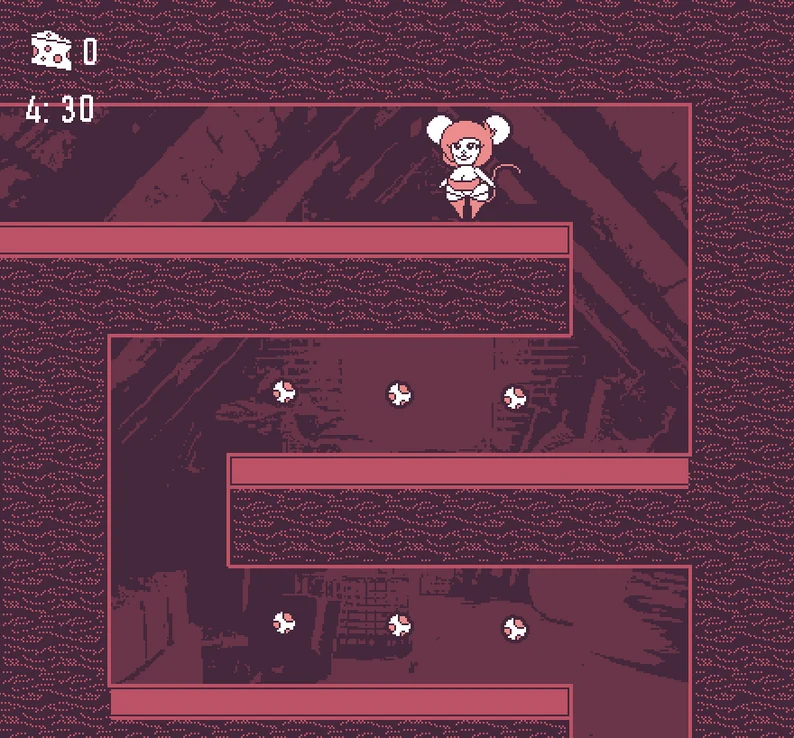
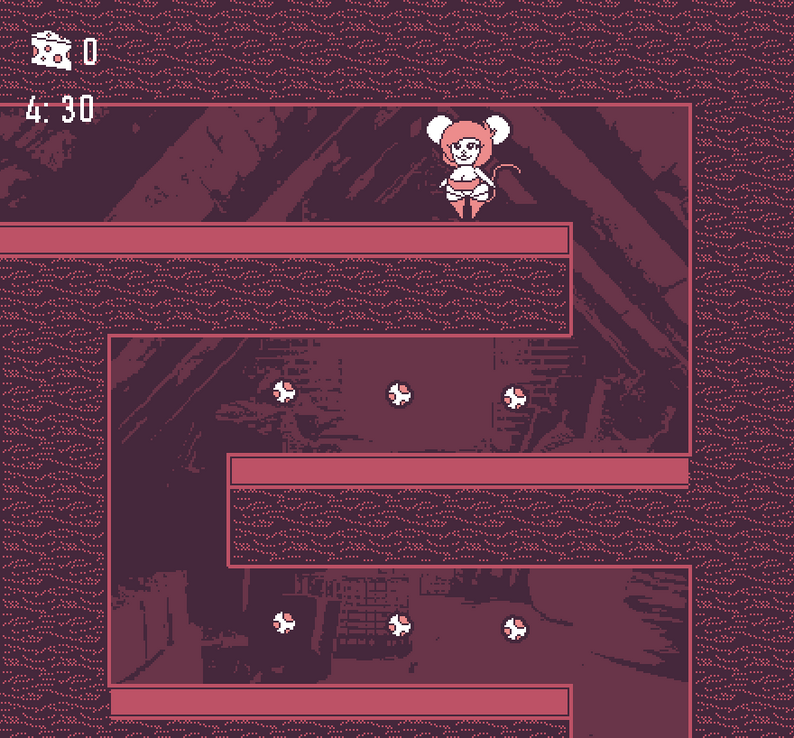
Another Ludum Dare 56 entry, Mouse Mouse, reinvents the classic platformer with a novel control scheme: the player’s mouse cursor directly controls a pixelated mouse character. This intuitive yet challenging mechanic requires players to jump, climb, and collect cheese as fast as possible. The game’s pixel art visuals contribute to its immediate appeal and clarity. Developed in just 48 hours, Mouse Mouse exemplifies the rapid prototyping and innovative spirit of game jams, showcasing how a simple yet clever twist on established mechanics can create a fresh and engaging experience. It’s a testament to how creative constraints can lead to elegant design solutions and high replayability for speedrunners.
Play With Me: The Unsettling Virtual Companion
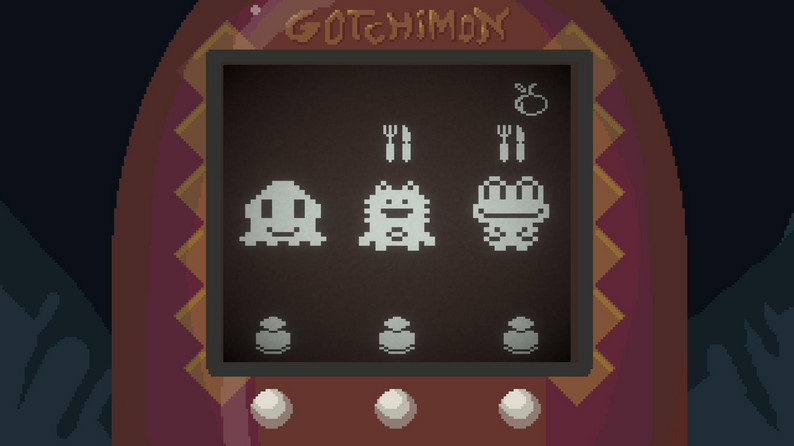
Play With Me, also from Ludum Dare 56, introduces a spooky twist to the virtual pet genre. Players interact with three mysterious creatures inhabiting a forgotten toy. Each creature offers its own set of minigames, creating varied engagement. The game’s retro-inspired visuals evoke a sense of nostalgia, which is then subverted by its eerie atmosphere, turning a typically comforting genre into something subtly unsettling. This blend of familiarity and creepiness, coupled with the interactive pet mechanics, creates a uniquely engaging and somewhat unnerving experience. It explores themes of neglect and the uncanny, pushing the boundaries of what a virtual pet simulation can be.
Jelly Gang: Physics-Driven Collective Chaos
Jelly Gang, another Ludum Dare 56 standout, is a physics-based puzzle platformer with an ingenious core mechanic. Players control a sprawling group of 30 squishy characters, but only those within a dynamic "focus region" around the mouse cursor respond to commands. This adds a strategic layer to navigation and puzzle-solving, as players must constantly manage their collective and adapt to the unpredictable, yet realistic, physics of the "jelly" characters. The game challenges players to think about movement and interaction in a non-traditional way, offering a fresh and often humorous take on the platformer genre. It highlights the creative potential of physics engines in browser games, turning a simple concept into a complex and rewarding challenge.
Developer Insights and Community Engagement
The community interaction surrounding these featured games on itch.io further illuminates the vibrant ecosystem the platform fosters. Developers frequently express gratitude for the visibility provided by itch.io’s editorial team, as seen in comments from creators like aplovestudio (developer of Mouse Mouse). Other developers, such as yogurtthehorse (creator of Head’quarters from LD56), engage directly with itch.io editors, seeking feedback and understanding the curation process. This open dialogue not only helps developers improve their craft but also reinforces itch.io’s role as a supportive hub for indie creators. Players, in turn, contribute to this dynamic by sharing their excitement and intentions to try out the games, demonstrating the immediate impact of such curated lists. The "Support this post" feature also allows users to directly contribute to itch.io’s efforts, further cementing the symbiotic relationship between the platform, its developers, and its audience.
The Enduring Appeal of Instant Play: Implications for the Gaming Landscape
Itch.io’s consistent promotion of browser-based games carries significant implications for the broader gaming landscape. Firstly, it champions accessibility as a core value, demonstrating that compelling gaming experiences do not require high-end hardware or extensive financial investment. This democratizes gaming, making it available to a wider global audience. Secondly, it highlights the continuous innovation stemming from the indie sector and game jams. These environments are fertile grounds for experimental mechanics, unique art styles, and diverse narratives that might not fit traditional publishing models.
Furthermore, the emphasis on instant-play titles speaks to a growing consumer demand for low-commitment entertainment. In an increasingly busy world, the ability to jump into a game with a single click, enjoy a fulfilling experience, and then easily step away, holds considerable appeal. This contrasts with the often time-consuming nature of modern AAA blockbusters.
Finally, itch.io’s curation reinforces its position as a vital community builder. By shining a light on these often-underrated gems, it connects talented developers with eager players, fostering a supportive environment where creativity is celebrated and diverse voices can find an audience. The ongoing conversation in the comments section, where players and developers interact, exemplifies this active and engaged community. As technology continues to advance, the role of browser-based gaming, championed by platforms like itch.io, is poised to remain a crucial and ever-evolving segment of the global gaming industry, providing instant fun and fostering endless creativity.
About the Author