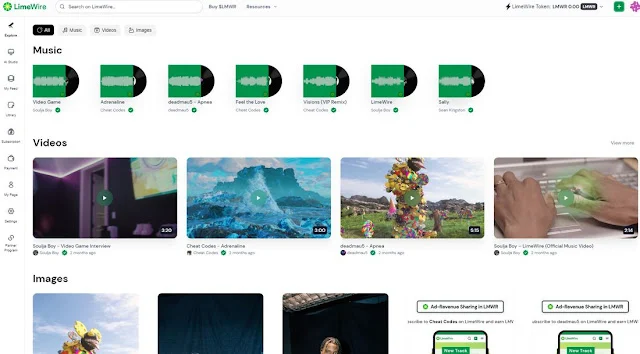
In the ever-evolving landscape of artificial intelligence and digital content, a familiar name from the early 2000s has resurfaced with a radical transformation. LimeWire, once synonymous with peer-to-peer file sharing, has been reborn as a sophisticated AI content publishing platform, aiming to democratize creativity and offer novel avenues for artists to share and monetize their work. This new iteration of LimeWire is not merely an AI tool; it’s an ecosystem designed to empower creators, from visual artists to musicians, by leveraging cutting-edge generative AI and integrating it with blockchain technology for ownership and revenue generation.
The platform’s resurgence marks a significant pivot, moving away from its controversial past to embrace the burgeoning potential of AI. By offering a suite of tools for content creation, particularly in AI image generation, LimeWire is positioning itself as a key player in the new digital economy. The platform’s strategy involves not only providing free and accessible tools but also building a community where creators can connect with their audience, control their intellectual property, and earn income through various innovative models, including ad revenue and the trading of Non-Fungible Tokens (NFTs).
From File Sharing to Creative Frontier: The Genesis of the New LimeWire
The original LimeWire, launched in 2003, became a household name, albeit for its role in facilitating widespread copyright infringement through music and media file sharing. The platform was eventually shut down in 2010 following legal battles. However, the brand’s recognition and association with digital content laid the groundwork for a potential comeback. In 2022, the company was acquired and relaunched with a completely new mission and technological foundation, steering clear of its previous activities and focusing entirely on the ethical and innovative application of AI.
This strategic reimagining of the LimeWire brand taps into the growing demand for user-friendly AI tools that can produce high-quality creative output. The company’s leadership has emphasized a commitment to building a platform that is both accessible to newcomers and powerful enough for seasoned professionals. The introduction of LimeWire Studio serves as the central hub for this new ecosystem, where users can register, create, share, and engage with AI-generated content.
Empowering Creators: Features and Benefits of LimeWire Studio
LimeWire Studio distinguishes itself by offering a multifaceted approach to content creation and distribution, with a particular initial focus on AI image generation. The platform supports advanced AI models, including Stable Diffusion 2.1, Stable Diffusion XL, and DALL-E 2, providing users with a robust toolkit for transforming textual prompts into visual art. This allows for a wide range of artistic expression, from simple, evocative phrases to complex, detailed descriptions.
The user experience is designed to be intuitive, catering to both novice creators and experienced digital artists. Users can easily experiment with different AI models and seamlessly switch between various artistic styles. These styles encompass a broad spectrum, including cinematic, digital art, pixel art, anime, and analog film, among others. Each style imbues the generated images with a unique aesthetic, enabling creators to explore diverse visual identities and refine their artistic vision.
Beyond the core generation capabilities, LimeWire Studio incorporates features like samplers, which allow for fine-tuning of image quality and detail. Comprehensive customization options and prompt guidance further enhance the creative process, ensuring that users can achieve precise results. The platform is also actively developing its proprietary AI model, a move that signifies a long-term commitment to innovation and a desire to offer even more advanced and tailored image generation capabilities. This ongoing development promises to expand the creative horizons for LimeWire users, solidifying its position as a dynamic and evolving platform in the AI-driven art world.
Beyond Images: The Future of AI Content Generation on LimeWire
While AI image generation is the current cornerstone of LimeWire Studio, the platform has ambitious plans for expansion. The company has announced its intention to introduce AI music and video generation tools in the near future. This strategic move aims to transform LimeWire into a comprehensive AI content creation suite, offering creators even more avenues for expression and engagement with their audiences. The integration of these new modalities is expected to unlock a new wave of innovative content and artistic possibilities, further solidifying LimeWire’s position as a forward-thinking platform.
NFT Integration: Ownership and Authenticity in the Digital Realm
A defining characteristic of the new LimeWire is its seamless integration of Non-Fungible Tokens (NFTs). Upon creating content within LimeWire Studio, users have the option to publish their work, and the platform automatically facilitates the minting of these creations as NFTs. This process is supported by two prominent blockchain networks: Polygon and Algorand. By minting content as NFTs, LimeWire imbues each creation with a unique digital signature, establishing its authenticity and securing ownership in the decentralized digital space.
This NFT integration provides creators with a powerful mechanism for asserting ownership and control over their digital assets. It also opens up new possibilities for community engagement and the trading of digital collectibles. The ability to "own" a piece of AI-generated art, verified on the blockchain, adds a significant layer of value and legitimacy to the creative output.
Monetization Strategies: Earning Revenue in the Creator Economy
LimeWire has designed its platform with a strong emphasis on empowering creators to earn revenue from their work. This is achieved through a combination of strategies, including NFT sales and ad revenue sharing.
When creators publish their NFT-minted content, they have the choice to make it publicly accessible or exclusively available to their premium subscribers. Publicly released NFTs can be discovered and traded by the wider LimeWire community, creating a vibrant marketplace for digital art. A key incentive for creators is the royalty structure: they earn a 2.5% royalty fee on every subsequent trade of their NFT content. This passive income stream can become a significant source of revenue over time, especially for popular creators.
In addition to NFT royalties, LimeWire offers a share of ad revenue generated from content views. Creators receive 70% of the ad revenue generated from users who view their images, music, and videos on the platform. This model is particularly beneficial for designers and artists who are experimenting with AI tools, allowing them to earn a modest income while sharing their creations with a broader audience.
The Role of LMWR Tokens
The revenue earned by creators on LimeWire is distributed in the form of LMWR tokens, the platform’s native cryptocurrency. These tokens are designed to be liquid and tradable on major cryptocurrency exchanges such as Kraken, ByBit, and UniSwap, providing creators with flexibility in managing their earnings. Furthermore, LMWR tokens can also be utilized within the LimeWire ecosystem itself, serving as a payment method for prompts when using the generative AI tools. This creates a self-sustaining economy where creators can earn tokens and then reinvest them into further content creation.
Pricing and Accessibility: A Freemium Model for Broad Appeal
LimeWire adopts a freemium pricing model, aiming to make its AI tools accessible to a wide range of users. The platform offers a free tier that provides users with 10 credits, allowing for the generation of up to 20 AI images per day. Free tier users also receive a 50% share of ad revenue. This generous free offering allows individuals to explore the capabilities of AI image generation without any upfront financial commitment.
For users who require more extensive usage and advanced features, LimeWire offers several premium subscription plans:
- $9.99 per month: Includes 1,000 credits per month (up to 2,000 image generations), early access to new AI models, and a 50% ad revenue share.
- $29 per month: Provides 3,750 credits per month (up to 7,500 image generations), early access to new AI models, and a 60% ad revenue share.
- $49 per month: Offers 5,000 credits per month (up to 10,000 image generations), early access to new AI models, and a 70% ad revenue share.
- $99 per month: Grants 11,250 credits per month (up to 22,500 image generations), early access to new AI models, and a 70% ad revenue share.
All premium plans come with additional benefits such as a Pro profile badge, access to full creation history, faster image generation, and an ad-free experience. This tiered structure ensures that users can select a plan that best suits their creative needs and budget.
Broader Implications: Reshaping the Creative Landscape
The emergence of platforms like LimeWire signifies a broader shift in how creative content is produced, owned, and monetized. By lowering the barrier to entry for sophisticated AI tools and integrating them with blockchain technology, LimeWire is democratizing the creative process. Artists no longer need extensive technical skills or expensive software to produce professional-quality visuals or potentially music and videos in the future.
The implications of this trend are far-reaching. It could lead to an explosion of diverse and unique content, as more individuals are empowered to express their creativity. For established artists and musicians, platforms like LimeWire offer new revenue streams and direct engagement with their fanbase, bypassing traditional intermediaries. However, it also raises questions about copyright, attribution, and the long-term economic impact on creative industries. The ability to earn royalties on secondary sales of NFTs, for example, could fundamentally alter how artists are compensated for their work in the digital age.
The platform’s success will likely depend on its ability to foster a vibrant and supportive community, maintain technological innovation, and navigate the evolving regulatory landscape surrounding AI and cryptocurrencies. As LimeWire continues to expand its offerings and refine its models, it stands poised to play a significant role in shaping the future of digital creativity and the creator economy. The transformation of a brand once associated with digital disruption into a platform championing ethical content creation and creator empowerment is a compelling narrative in the ongoing evolution of the internet.
About the Author