Creating video games is a profoundly complex undertaking, demanding a unique blend of technical acumen, artistic vision, and strategic planning. The journey from concept to a playable product necessitates specific knowledge, specialized skills, and mastery of a diverse array of game design tools, stylistic approaches, and modern technologies. This inherent complexity often makes the prospect of entering the game development industry seem daunting. Consequently, many aspiring developers are gravitating towards 2D video game development as a highly accessible and strategically sound entry point. This segment of the industry offers an optimal balance between creative expression and technical challenge, providing an environment where newcomers can learn, iterate, and refine their skills seamlessly.
This article delves into the foundational aspects of 2D video games, examining their historical significance, technical underpinnings, and enduring appeal. It aims to provide a comprehensive overview for those looking to embark on their game development journey, offering insights into what constitutes a 2D game, its advantages over 3D counterparts, popular genres, notable examples, and a structured approach to building one’s own title.
The Enduring Legacy and Definition of 2D Video Games
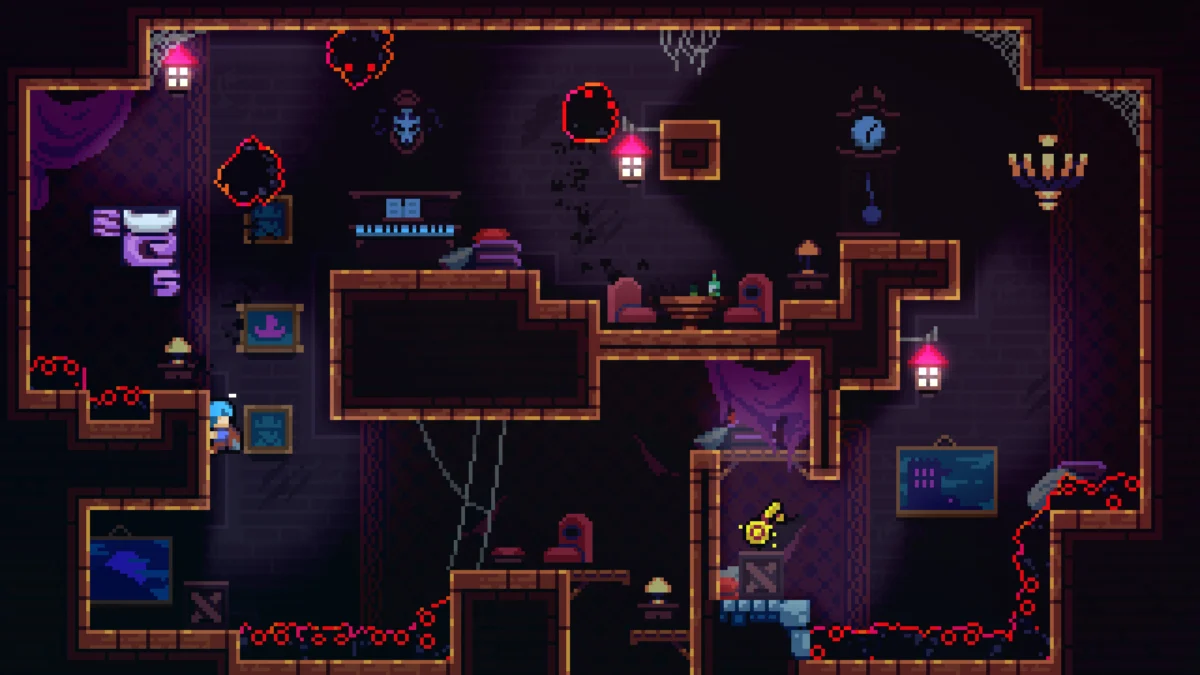
A 2D video game operates within a two-dimensional visual space, where all graphical elements exist on a flat plane. These experiences are predominantly sprite-based, utilizing pre-rendered images or pixel art to represent characters, objects, and environments. Players typically navigate along horizontal and vertical axes, often with a fixed camera perspective, such as a side-scrolling view (e.g., classic platformers), a top-down perspective (e.g., early RPGs or arcade shooters), or an isometric illusion that gives a sense of depth without true 3D geometry. Due to these spatial constraints, 2D games heavily rely on distinctive artistic styles, compelling narratives, and engaging gameplay mechanics to foster immersion and captivate players. The visual fidelity might be simpler, but the depth of experience is often paramount.
A Brief History: From Arcades to Indie Renaissance
The lineage of 2D gaming stretches back to the very dawn of the video game industry. Iconic titles like Pong (1972), Space Invaders (1978), and Pac-Man (1980) laid the groundwork, defining fundamental gameplay loops and interaction models within a purely two-dimensional framework. The golden age of arcade gaming and the subsequent rise of home consoles like the Nintendo Entertainment System (NES) and Super Nintendo Entertainment System (SNES) solidified 2D gaming as the dominant paradigm. Games like Super Mario Bros., The Legend of Zelda, and Metroid established genres and mechanics that continue to influence game design today, proving that limited dimensions do not equate to limited imagination.
While the advent of powerful 3D hardware in the mid-1990s shifted industry focus towards realistic, immersive 3D worlds, 2D gaming never truly disappeared. It persisted in niche markets, mobile platforms, and, crucially, found a vibrant resurgence with the indie game revolution of the 21st century. Titles such as Cave Story (2004), Braid (2008), and Minecraft (whose early iterations and core mechanics were heavily 2D-inspired) demonstrated that independent developers could achieve critical and commercial success by leveraging the unique strengths of 2D design. This period marked a renewed appreciation for artistic expression, innovative mechanics, and narrative depth, often unburdened by the immense technical and financial demands of high-fidelity 3D production.
2D vs. 3D Video Games: A Fundamental Distinction
The primary distinction between 2D and 3D video games lies in their visual representation and the underlying technical architecture. 2D games operate on a flat X and Y axis, where sprites are rendered without true depth information. Movement is typically confined to these two axes, though clever design can simulate depth through parallax scrolling or layering. In contrast, 3D games introduce a Z-axis, allowing for full three-dimensional geometry, volumetric spaces, and complex camera controls that can rotate and pan around objects and environments.
From a development perspective, this difference is profound. 3D projects inherently involve a more intricate design pipeline, requiring advanced modeling, texturing, rigging, animation, complex lighting, and sophisticated physics engines to simulate a realistic world. The tools and expertise required are often more specialized and resource-intensive. 2D development, while still demanding, generally has a lower technical barrier to entry. Asset creation often focuses on sprite sheets and tile sets, programming for collision detection and movement is typically simpler, and performance optimization can be less challenging, making it an attractive starting point for individuals or small teams.
Advantages of 2D Video Games in Modern Development
Despite the allure of photorealistic 3D graphics, 2D video games offer a compelling array of advantages that maintain their relevance and appeal in the contemporary gaming landscape. Industry analysts and developers frequently cite these benefits as key drivers for the continued innovation and success within this segment.
-
Lower Barrier to Entry and Technical Accessibility: Developing a 2D game typically requires less specialized knowledge in areas like 3D modeling, advanced physics, and complex rendering pipelines. This makes it more accessible for aspiring developers who may be learning programming, game design principles, or digital art for the first time. The focus shifts to core mechanics and creative problem-solving rather than mastering highly complex tools.
-
Faster Development Cycles: With fewer assets to create (e.g., sprites instead of detailed 3D models), simpler physics, and generally less intricate engine configurations, 2D games can often be developed and iterated upon much faster than their 3D counterparts. This agility allows developers to test ideas quickly, gather feedback, and pivot designs without significant resource expenditure.

-
Cost-Effectiveness: Reduced development time and asset complexity directly translate into lower production costs. This is a critical factor for independent developers and smaller studios operating with limited budgets. Less time spent on asset creation, debugging, and optimization means fewer resources are needed for personnel, software licenses, and hardware.
-
Artistic Freedom and Unique Stylization: The constraints of 2D graphics often foster incredible artistic creativity. Developers can explore a vast spectrum of visual styles, from classic pixel art and hand-drawn animations to vector graphics and intricate papercraft aesthetics. This allows for the creation of distinct visual identities that stand out in a crowded market, often conveying more character and charm than attempts at photorealism.
-
Focus on Core Gameplay and Mechanics: Without the pressure to create expansive, graphically intensive worlds, 2D development often allows designers to concentrate more intensely on fundamental gameplay loops, innovative mechanics, tight controls, and compelling level design. Many of the most critically acclaimed 2D games are celebrated for their intricate systems and engaging challenges rather than their visual spectacle.
-
Broader Hardware Compatibility: 2D games generally have lower system requirements, enabling them to run smoothly on a wider range of hardware, including older computers, low-spec laptops, and various mobile devices. This expands the potential player base significantly, reaching markets that might be underserved by high-end 3D titles.
-
Nostalgia and Timeless Appeal: 2D games tap into a deep sense of nostalgia for many players, evoking memories of classic gaming experiences. This timeless appeal ensures that well-designed 2D titles continue to resonate across generations, proving that engaging experiences transcend graphical fidelity.
-
Easier Prototyping and Iteration: The simplified asset pipeline and reduced complexity of 2D projects make them ideal for rapid prototyping. Developers can quickly mock up ideas, test core mechanics, and receive early feedback, allowing for more agile development and a greater chance of refining the game into a polished product.
Popular Genres Thriving in 2D Environments
The inherent versatility of 2D video games allows them to seamlessly adapt to and even excel within a broad spectrum of game genres. The simplicity of their visual presentation often highlights the ingenuity of their design.
- Platformers: This genre, epitomized by titles like Super Mario Bros. and Celeste, thrives on precision movement, intricate level design, and environmental puzzles within a side-scrolling or sometimes top-down view.
- Role-Playing Games (RPGs): From classic JRPGs like Final Fantasy to modern indie darlings like Stardew Valley and Undertale, 2D RPGs leverage rich narratives, character development, and strategic combat, often with a top-down perspective or side-view battle screens.
- Metroidvania: Named after Metroid and Castlevania, these action-adventure games feature expansive, interconnected 2D maps, requiring players to acquire new abilities to unlock previously inaccessible areas. Hollow Knight is a modern masterpiece in this genre.
- Puzzle Games: Many innovative puzzle experiences, such as Limbo or the 2D portions of Portal, rely on clever environmental interactions and logic, which are often perfectly suited for a fixed 2D perspective.
- Fighting Games: While some fighting games have transitioned to 3D, many classic and popular titles like Street Fighter II and Guilty Gear Strive (which uses 3D models rendered in a 2D style) demonstrate the enduring appeal of 2D plane combat.
- Shoot ’em Ups (Shmups): Vertical or horizontal scrolling shooters, where players control a spaceship or character battling hordes of enemies, are inherently 2D, focusing on bullet patterns, reflexes, and scoring.
- Survival/Crafting: Games like Terraria demonstrate how deep crafting, exploration, and survival mechanics can be implemented effectively within a 2D sandbox environment.
Iconic 2D Video Game Examples: A Testament to Creativity
The notion that 2D games limit creativity or impact is thoroughly disproven by a wealth of iconic titles that have achieved immense critical and commercial success, often rivaling their 3D counterparts in influence and cultural significance.
- Stardew Valley (2016): Developed almost entirely by one person, Eric Barone (ConcernedApe), Stardew Valley is a testament to the power of passion and meticulous 2D design. This farming simulation RPG captivated millions with its charming pixel art, deep mechanics (farming, mining, fishing, combat, social simulation), and heartfelt narrative. Its success underscored the viability of solo development and the enduring appeal of 2D experiences focused on player agency and long-term engagement.
- Cuphead (2017): Studio MDHR’s Cuphead is celebrated for its breathtaking, hand-drawn animation style, meticulously replicating the aesthetics of 1930s rubber hose cartoons. This run-and-gun platformer is renowned for its challenging boss battles and unique visual flair, demonstrating how artistic innovation in 2D can create an unforgettable and highly stylized experience that transcends typical graphical expectations.
- Hollow Knight (2017): Team Cherry’s Hollow Knight masterfully blends Metroidvania exploration with challenging combat and a hauntingly beautiful hand-drawn art style. Its intricate world-building, responsive controls, and enigmatic lore have garnered widespread acclaim, solidifying its place as a modern classic and proving the depth and atmosphere achievable within a 2D framework.
- Celeste (2018): Developed by Matt Makes Games, Celeste is a precision platformer celebrated for its challenging gameplay, elegant level design, and profound narrative exploring themes of anxiety and self-discovery. Its vibrant pixel art and tight mechanics, combined with an emotional story, illustrate how 2D games can deliver both intense gameplay and meaningful artistic expression.
- Undertale (2015): Toby Fox’s Undertale is an RPG that redefined player choice and narrative impact. Its simple pixel art graphics belie a deeply innovative combat system, memorable characters, and multiple branching storylines that react profoundly to player decisions, proving that narrative and mechanical innovation can thrive without high-fidelity visuals.
How to Make Your Own 2D Game: A Step-by-Step Approach
Embarking on 2D video game development becomes significantly more manageable when broken down into clear, actionable steps. This structured approach helps aspiring developers navigate the complexities and build their first game effectively.
-
Conceive Your Game Idea and Define Scope: Begin with a clear concept. What is the core gameplay loop? What genre does it fit into? Who is your target audience? Crucially, define a realistic scope. For a first game, keep it small and focused (e.g., a single-level platformer, a simple puzzle game). Over-scoping is a common pitfall.
-
Develop a Game Design Document (GDD): While not strictly mandatory for very small projects, a GDD serves as a blueprint. It outlines the game’s mechanics, story, characters, art style, sound design, level progression, and technical requirements. This document evolves throughout development and ensures everyone involved (even if it’s just you) is aligned with the vision.
-
Choose Your Tools and Game Engine: Select a game engine that suits your skill level and project needs. Popular choices for 2D development include:
- Unity: Powerful, versatile, supports C#, large community.
- Godot Engine: Open-source, lightweight, uses GDScript (Python-like) and C#.
- GameMaker Studio 2: User-friendly, event-based scripting (GML), ideal for pixel art games.
- Construct 3: Browser-based, no-code/low-code, excellent for rapid prototyping.
- PICO-8/TIC-80: "Fantasy Consoles" for highly constrained, retro-style development.
Choose graphics software (e.g., Aseprite for pixel art, Photoshop/Krita for digital painting) and audio tools.
-
Create Your Art Assets: This involves designing and creating all visual elements. For 2D games, this typically means:
- Character Sprites: Animations for idle, walk, jump, attack, etc.
- Tile Sets: Reusable background elements for level construction.
- Environmental Art: Specific objects, foreground/background layers.
- UI Elements: Menus, health bars, icons.
Consistency in art style is key.
-
Program Core Mechanics: Begin coding the fundamental systems. This includes:
- Player Movement: Inputs, physics (gravity, jumping).
- Collision Detection: How the player interacts with the environment and enemies.
- Enemy AI: Basic movement patterns, attacks.
- Game State Management: Scores, health, level transitions.
Break down programming tasks into small, manageable chunks.
-
Design and Build Levels: Use your chosen engine’s level editor to construct game environments using your tile sets and art assets. Focus on pacing, challenge, and visual appeal. Iteratively playtest your levels as you build them to ensure they are fun and fair.
-
Integrate Sound and Music: Add sound effects (SFX) for actions, UI interactions, and environmental cues. Compose or source background music that complements the game’s mood and theme. Audio design significantly enhances immersion.
-
Test, Refine, and Iterate: This is an ongoing process. Play your game frequently, identify bugs, balance gameplay, and gather feedback from others. Be prepared to make significant changes based on testing results. Iteration is crucial for polishing a game.
-
Marketing and Release: Once the game is polished, plan your release. This involves creating promotional materials (screenshots, trailers), building an online presence, and choosing distribution platforms (e.g., Steam, Itch.io, mobile app stores). Understanding how to present your game is as important as building it.
The Business Case and Future Implications of 2D Gaming
Beyond its educational and creative benefits, 2D gaming holds significant commercial viability. The indie game market, largely fueled by 2D titles, has seen explosive growth over the past decade. Platforms like Steam, Nintendo eShop, and various mobile app stores provide accessible avenues for developers to publish their creations. The lower development costs mean that even modest sales can lead to profitability, a stark contrast to the multi-million-dollar budgets often required for successful 3D AAA titles. This economic model empowers smaller teams and individual creators, fostering an ecosystem of innovation and diverse experiences that might not otherwise see the light of day.
Industry trends indicate a continued appreciation for 2D games, not just as a stepping stone but as a legitimate and highly respected art form. The resurgence of pixel art, the popularity of hand-drawn aesthetics, and the consistent critical acclaim for well-crafted 2D titles underscore their enduring cultural and market significance. Furthermore, 2D games often lend themselves well to emerging platforms, including mobile gaming, educational software, and even simplified virtual reality experiences that prioritize interaction over complex visual fidelity.
Final Thoughts: Simplicity Meets Endless Creativity
Whether inspired by the agricultural charm of Stardew Valley or the challenging artistry of Cuphead, creating a 2D video game stands as one of the most accessible and rewarding avenues to embark upon a game development journey. It not only provides promising opportunities for learning and growth but also taps into a timeless appeal that transcends generations of players. 2D games never truly "get old"; instead, their foundational nature allows seasoned developers to continuously challenge themselves, experiment with novel mechanics, and innovate within established frameworks. With a strategic approach and a dedication to craft, even a seemingly simple concept can evolve into a memorable and impactful experience that stands proudly alongside the most complex AAA productions.
For those serious about building their first 2D video game, understanding the financial implications is also crucial. A comprehensive breakdown of video game development costs can provide further insight into budgeting and resource allocation for projects of varying scales. The journey into 2D game development is not merely about learning to code or draw; it is about cultivating problem-solving skills, fostering creativity, and understanding the core principles that make games engaging, accessible, and enduringly popular.
About the Author