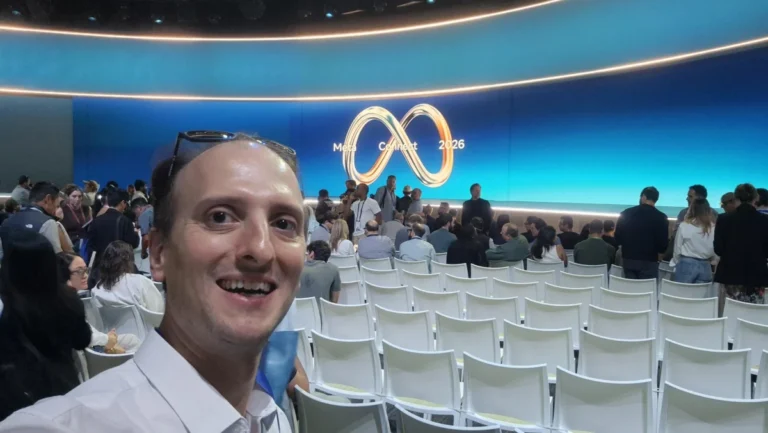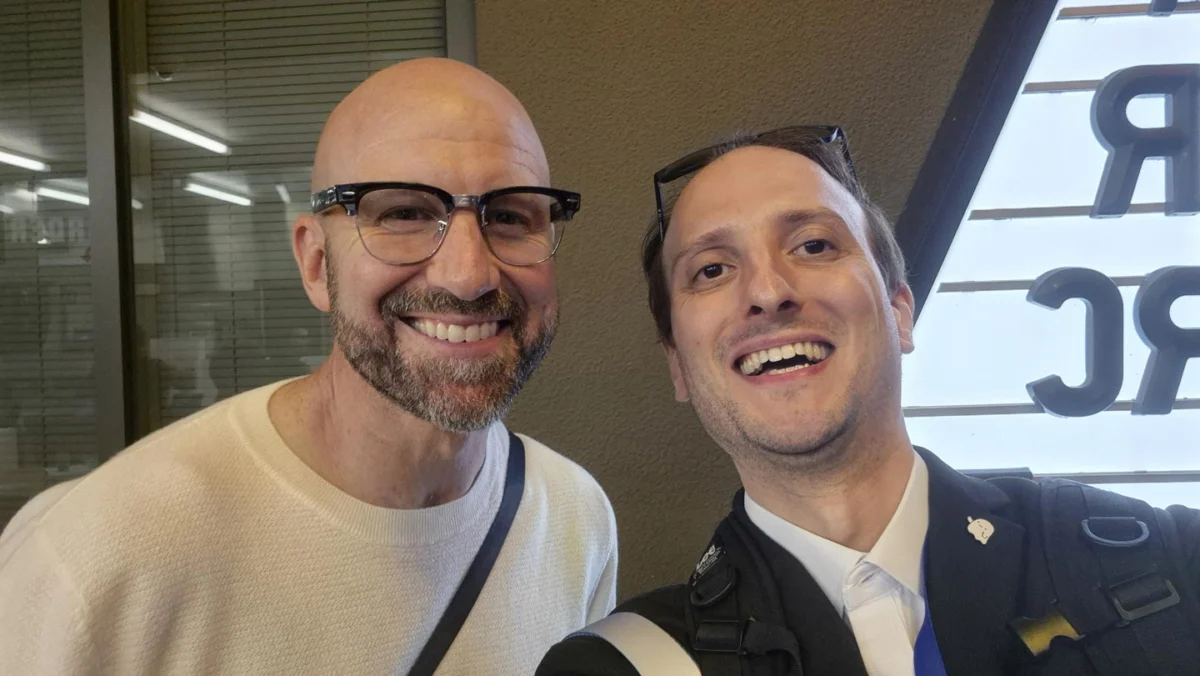
The annual Meta Connect conference, a pivotal event for the extended reality (XR) and artificial intelligence industries, served as the backdrop for a rare and spontaneous exchange between Meta’s Chief Technology Officer, Andrew “Boz” Bosworth, and the independent developer community. During a casual encounter at the event, Bosworth provided significant insights into Meta’s hardware sales performance, the technical limitations of smart contact lenses, and the company’s long-term vision for augmented reality (AR). This impromptu discussion comes at a critical juncture as Meta transitions from a virtual reality (VR) focused company to one centered on the "Metaverse" and integrated AI hardware.
The Evolution of Meta’s Hardware Strategy
A central theme of the discussion was the consumer reception of Meta’s current headset lineup, specifically the Quest 3 and the newly released Quest 3S. Industry analysts had largely expected the Quest 3S, positioned as a more affordable entry point into the ecosystem, to significantly outsell the premium Quest 3. However, Bosworth revealed that the Quest 3 has maintained a surprisingly strong sales trajectory, performing nearly on par with its more budget-friendly counterpart.
This data point suggests a shift in consumer behavior within the XR market. It indicates that users are increasingly prioritizing high-quality optics, such as pancake lenses, and improved form factors over lower price points. Bosworth noted that this trend has provided Meta with the "confidence" to accelerate its development of lightweight AR glasses. The company’s strategy now appears to focus on maintaining a high-quality, lightweight form factor while progressively working to reduce manufacturing costs and consumer prices over the next several hardware generations.

Technical Barriers to Smart Contact Lenses
When questioned about the potential for Meta to develop smart contact lenses—a concept often cited as the "holy grail" of invisible computing—Bosworth offered a pragmatic assessment of the current technological landscape. He stated that Meta is not currently pursuing this path due to fundamental engineering hurdles.
According to Bosworth, the primary issue lies in power and heat dissipation. To house the necessary components for a powered display and wireless communication, a smart lens would likely need to be a "scleral lens"—a large-diameter lens that covers the entire corneal surface and rests on the "white" of the eye (the sclera). Bosworth noted that he has yet to see a solution that balances the requirement for a power source with the need for a non-bulky, breathable design that is safe for long-term wear. Until a breakthrough occurs in micro-battery technology or wireless power delivery, Meta remains focused on spectacles-based AR, such as the Project Orion prototypes recently showcased.
Leadership and Vision: The Role of the CTO
Beyond hardware specifics, Bosworth shared his philosophy on technical leadership within a global corporation. Having served as Meta’s CTO since 2022 and previously leading the Reality Labs division, Bosworth emphasized that effective leadership is rooted in consistency and trust rather than popularity.
He defined the role of a CTO as being the steward of a long-term vision. "Leadership is about having a vision, being consistent, and being someone people can trust," Bosworth remarked. He argued that a successful leader must establish clear principles that employees can follow even in the leader’s absence. Furthermore, he addressed the necessity of making unpopular decisions, such as project cancellations or resource shifts, stating that while the workforce may not always agree with a specific move, they must trust that the decision was made for the right strategic reasons. This insight reflects the broader corporate culture at Meta following the "Year of Efficiency," where the company streamlined its operations to focus on core AI and XR goals.

Chronology of Meta’s Recent XR Milestones
To understand the context of Bosworth’s remarks, it is essential to look at the timeline of Meta’s hardware development over the past 24 months:
- October 2023: Meta releases the Quest 3, featuring full-color passthrough and pancake lenses, marking a significant step toward mixed reality (MR).
- Early 2024: Internal reports suggest Meta is focusing heavily on "Project Orion," a high-end AR glasses project intended to demonstrate the future of the platform.
- September 2024: Meta Connect sees the launch of the Quest 3S, intended to replace the aging Quest 2 as the volume-driver for the ecosystem.
- Present: Bosworth confirms that premium features are driving sales, signaling that the market is ready for more sophisticated (and potentially more expensive) hardware than previously thought.
Market Implications and Industry Reaction
Bosworth’s revelation regarding the Quest 3’s sales performance has significant implications for the broader XR industry. It validates the "premium-lite" category, suggesting that competitors like Apple, with the Vision Pro, and HTC, with the Vive XR Elite, are operating in a market where users are willing to pay for better ergonomics.
However, the "Phoenix" headset—a codename often associated with Meta’s future ultra-lightweight VR or MR goggles—remains a point of high interest for developers. While some attendees at Meta Connect expressed disappointment over the lack of hands-on demos for certain future-leaning prototypes, Bosworth’s confirmation that he and CEO Mark Zuckerberg were satisfied with the keynote’s live demos indicates that Meta is confident in its current hardware stability.
Industry analysts suggest that Meta’s refusal to chase "moonshot" technologies like smart contact lenses in favor of refined AR glasses demonstrates a more mature, disciplined approach to R&D. By focusing on the "spectacles" form factor, Meta is leveraging its partnership with EssilorLuxottica (the makers of Ray-Ban) to bridge the gap between fashion and high technology.

Conclusion: The Path Toward Mainstream AR
The spontaneous interview with Andrew Bosworth underscores a pivotal moment for Meta. The company is no longer just "trying" to make VR happen; it is actively analyzing consumer data to refine the path toward mainstream AR. The strong performance of the Quest 3 against the Quest 3S suggests that the path to the "next billion users" may not be through the cheapest possible device, but through the one that offers the most seamless and comfortable experience.
As Meta continues to iterate on its lightweight AR frames, the industry will be watching closely to see if the company can translate its dominance in the VR space into a leadership position in the burgeoning AR market. For now, Bosworth’s message is clear: the vision is set, the hardware is evolving, and the focus remains on building a platform that users can trust for the next decade of computing.
About the Author