The extended reality (XR) landscape experienced a surge of significant developments during the final week of August, ranging from unexpected hardware performance boosts to high-profile media depictions and shifting corporate strategies. As the industry prepares for the traditionally busy product launch window of September and October, the current state of the market reveals a complex dichotomy: technical innovation continues at a rapid pace, yet established studios are facing economic headwinds that have resulted in rare workforce reductions.
Technical Breakthroughs: Meta Quest 3 Achieves Unprecedented Refresh Rates
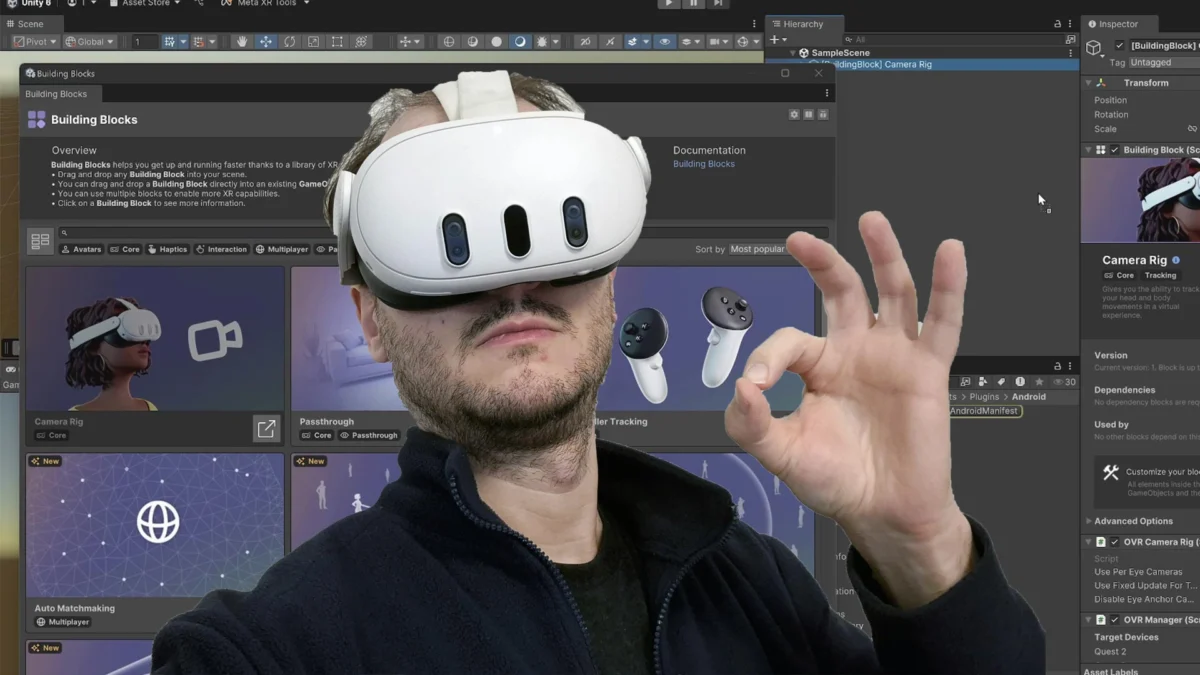
In a move that surprised both developers and consumers, Meta announced a significant software-driven performance increase for the Quest 3 headset. Through a firmware update, the device now supports a maximum refresh rate of 207Hz under standard conditions. Furthermore, by enabling developer mode and adjusting internal system settings, the headset can reportedly reach a refresh rate of 240Hz. This development marks a historical milestone for standalone virtual reality (VR) hardware, as most contemporary headsets typically operate within the 90Hz to 120Hz range.
The implications of this update are primarily centered on visual fluidity and the reduction of motion sickness. Higher refresh rates decrease latency between user movement and display updates, creating a more stable and comfortable immersive experience. However, industry analysts note that the practical application of these rates remains limited. Most high-fidelity VR titles currently struggle to maintain a stable 90Hz on mobile chipsets; consequently, only applications with minimalist graphics or highly optimized architectures are likely to utilize the 207Hz ceiling.
The first major application to capitalize on this update is Virtual Desktop. The software’s developer has already launched a beta version featuring a 144Hz mode. Because Virtual Desktop relies on a tethered or wireless PC connection to handle rendering, it is uniquely positioned to leverage higher refresh rates without being constrained by the Quest 3’s internal graphical processing limitations. To access these features, users must be operating on HorizonOS v2.7 or later and possess the Quest 3 hardware.
Cultural Visibility: Virtual Reality Depicted in GTA VI Gameplay
Rockstar Games recently released an extended gameplay showcase for Grand Theft Auto VI (GTA VI), one of the most anticipated titles in the history of interactive entertainment. Within the footage, a brief segment depicted a character utilizing a VR headset in a domestic setting. The inclusion is viewed by industry observers as a testament to the mainstream normalization of VR technology.

The depiction featured a character wearing a black headset—resembling the aesthetic of the original Oculus Quest—engaging in suggestive physical movements. While the scene serves as a satirical commentary typical of the Rockstar Games franchise, its presence in a high-profile trailer suggests that VR has achieved a level of cultural ubiquity sufficient for inclusion in the game’s world-building. Furthermore, the PC community has already begun speculating on the possibility of unofficial VR mods for GTA VI following its eventual release on that platform, mirroring the successful VR modifications previously seen for Grand Theft Auto V and Red Dead Redemption 2.
Economic Shifts: Schell Games Announces First Layoffs in Two Decades
Contrasting the technical advancements in the sector, Schell Games, the studio behind acclaimed titles such as Among Us VR and the I Expect You To Die series, announced a 10% reduction in its workforce. This marks the first time in the company’s 20-year history that it has resorted to layoffs.
Leadership at Schell Games attributed the decision to a "VR Winter," characterized by a cooling of venture capital and a strategic disinvestment in external content by major platforms like Meta. To remain viable, the studio indicated it would pivot from a strategy of focusing on a few large-scale projects to a broader portfolio of smaller, leaner projects. This shift is intended to allow the company to test market viability more efficiently before committing significant resources to full-scale development.
Corporate Strategy: Meta’s "Project OT" and Privacy Initiatives
A recent investigation by Reuters has brought to light a controversial internal initiative at Meta known as "Project OT" (Organization Transformation). According to the report, the project was designed to leverage artificial intelligence (AI) to automate significant portions of the company’s workflow, with the ultimate goal of reducing headcount. In some departments, the proposed staff reductions were reportedly as high as 60%.
The initiative ultimately stalled due to a combination of internal resistance—where employees reportedly refused to train the AI systems intended to replace them—and the technical reality that current AI models are not yet capable of performing complex human roles without significant supervision.
Concurrently, Meta is addressing ongoing privacy concerns regarding its Ray-Ban Meta smartglasses. Following reports that users were able to disable the privacy LED (which signals when recording is active) using simple methods like black tape or paint, Meta released a firmware update designed to disable the camera if the LED is obstructed. The company has committed to an iterative update cycle to stay ahead of potential tampering methods. Additionally, Meta has launched a public education campaign using billboards in major cities to inform the public that an active LED is a mandatory indicator of recording.

Emerging Research: Volumetric Video and Hardware Patents
The field of spatial computing research has seen significant movement this week with the unveiling of "4DAnyone." This project aims to democratize the creation of volumetric video by allowing users to generate 4D Gaussian Splats (4DGS) from standard monocular smartphone footage. Historically, volumetric video required expensive multi-camera arrays and complex post-processing. 4DAnyone utilizes skeletal pose estimation and visual inference to reconstruct a subject from multiple simulated angles, potentially allowing average consumers to create high-quality spatial memories in the near future.
In the hardware sector, ARM has submitted a patent for a system designed to mitigate motion sickness in XR through the use of ultrasound waves. The technology aims to provide non-invasive vestibular stimulation, tricking the inner ear into aligning with the visual movement perceived in the headset. If successful, this could solve one of the primary barriers to long-term VR adoption.
Industry Outlook and Competitive Landscape
As the industry moves toward the final quarter of the year, several strategic shifts among major players have been identified:
- Apple: Reports indicate a shift in focus under executive John Ternus, who is reportedly prioritizing AI development over the expansion of the Vision Pro ecosystem. This suggests a more cautious approach to spatial computing at Apple as the company seeks to integrate AI across its more established product lines.
- Google: The company is reportedly developing a live translation feature specifically for Android-powered XR glasses, aiming to provide real-time subtitles during face-to-face conversations.
- Meta: Plans are underway to spin off Horizon Worlds into a standalone mobile application, separating it from the core Horizon social app to increase accessibility for non-VR users.
- Location-Based VR (LBVR): Analysis of the out-of-home entertainment market suggests that LBVR remains a robust sector, avoiding the "winter" affecting the home consumer market. Success in this field is increasingly tied to high-throughput experiences and recognizable intellectual property.
The developments of late August underscore a period of transition for the XR industry. While hardware capabilities are reaching new heights and cultural integration is increasing, the economic realities of content development and the ethical challenges of AI automation continue to shape the trajectory of the major platforms. The upcoming product launches in September are expected to further clarify the competitive landscape for 2025.
About the Author