The global extended reality (XR) industry is currently navigating a period of significant structural realignment as major players and independent developers recalibrate their expectations for market growth. Meta Platforms Inc., the dominant force in the virtual reality (VR) sector, has recently signaled a major shift in its long-term strategy, moving away from aggressive first-party content development and toward a more decentralized, mobile-centric ecosystem. This transition comes amid broader industry trends characterized by a cooling of venture capital hype, a rise in specialized military applications, and a challenging economic environment for even the most successful independent VR studios.
Meta Platforms Adjusts Trajectory Amid Slower VR Adoption
Andrew "Boz" Bosworth, Chief Technology Officer at Meta, recently addressed the company’s recent workforce reductions and disinvestment in specific XR projects. According to Bosworth, these moves are a direct response to the reality that the VR market has grown less quickly than the company initially projected. While the Meta Quest 2 experienced a surge in sales during the COVID-19 pandemic, the subsequent Quest 3 has not reached the multi-million unit milestones the company anticipated for this stage of its lifecycle.
As part of this strategic pivot, Meta is fundamentally altering the direction of Horizon Worlds, its flagship social metaverse platform. The company plans to prioritize mobile phone accessibility for the platform, moving away from a VR-first approach. Bosworth noted a "positive pickup" in mobile user engagement, leading to the decision to compete directly with established mobile social platforms such as Roblox, Fortnite, and Zepeto. To facilitate this shift, Meta is replacing the controversial "Horizon Feed" on Quest headsets with a new "Navigator" interface, aimed at streamlining user discovery and navigation within the Meta ecosystem.
Furthermore, Meta appears to be stepping back from its role as a primary funder of high-budget first-party VR games. Bosworth indicated that the company intends to let the VR gaming market be driven primarily by third-party developers and the indie ecosystem. While this allows for a more organic growth of content, it raises questions regarding the level of financial support Meta will continue to provide to independent studios in a market that remains relatively niche.

In contrast to its reduced focus on high-end VR gaming, Meta is doubling down on wearable technology. The company recently announced the "AI Glasses Impact Grants," a $2 million initiative providing grants of up to $200,000 to developers working on innovative smartglass projects. Currently, this program is restricted to developers based in the United States, signaling Meta’s intent to lead the emerging market for AI-integrated eyewear.
The Emergence of Open Ecosystems: The Lynx R2
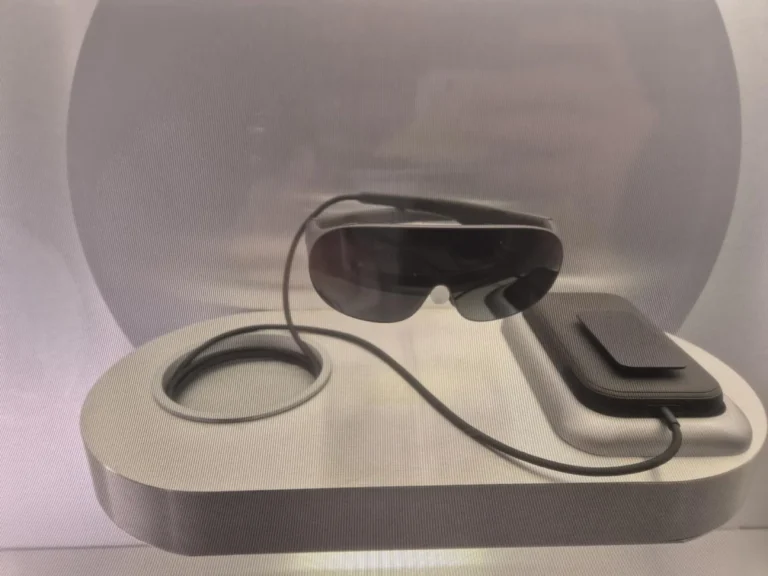
While Meta moves toward a more mobile-integrated strategy, the French startup Lynx is attempting to capture the high-end enthusiast and research market with the unveiling of its new standalone mixed reality (MR) headset, the Lynx R2. The device is positioned as a versatile alternative to closed ecosystems, emphasizing transparency and community-driven development.
The Lynx R2 features notable hardware specifications, including the Qualcomm Snapdragon XR2 Gen 2 chipset and a 90Hz refresh rate. One of its most distinctive features is a 120-degree field of view (FOV), providing a significantly wider visual experience than many of its competitors. The headset utilizes dual 2.5K x 2.5K LCD panels and is designed with an "open" philosophy. Lynx has committed to releasing hardware schematics to allow the community to modify the device and will provide raw sensor access for researchers and industrial developers.
Despite the technical promise of the R2, industry analysts note that its commercial success will depend heavily on its final price point and release date, neither of which have been officially confirmed by the company.
A Divergent Landscape for VR Content Success
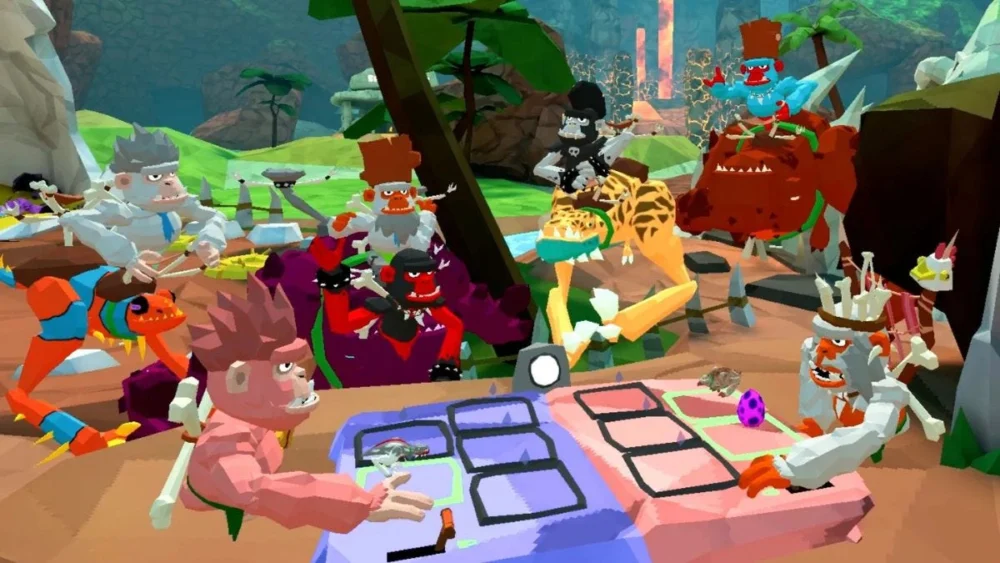
The VR gaming sector is currently witnessing a stark contrast between massive commercial hits and sudden studio contractions. One of the most significant recent success stories is "UG," a dinosaur-themed pet management game on the Meta Quest Store. Despite receiving less mainstream media coverage than titles like "Gorilla Tag," UG has amassed over 245,000 reviews with a nearly perfect 4.9-star rating, making it one of the most consistently popular titles on the platform.

Other established titles have also reached major milestones. Owlchemy Labs reported that "Job Simulator" has reached 6 million lifetime installs, while its latest project, "Dimensional Double Shift," surpassed 1 million installs within its first year. Similarly, Devs United Games announced that "Real VR Fishing" has sold 1 million copies since its 2019 debut.
However, these successes are tempered by financial instability elsewhere in the market. Mighty Coconut, the developer behind the critically acclaimed "Walkabout Mini Golf," recently announced a 25% reduction in staff. The studio cited the need for sustainability in a difficult market, resulting in a $1 price increase for future downloadable content (DLC) and the suspension of its mobile application development. The fact that one of VR’s most recognizable and successful titles is facing such pressures highlights the precarious nature of the current XR economy.
Market Forecasts and the Shift from Hype to Utility
The broader market sentiment toward VR has shifted significantly over the past decade. Recent data compiled by IDC and analyzed by industry experts shows a dramatic decline in headset shipment predictions compared to forecasts made in 2014 and 2016. During the initial "hype cycle," analysts predicted that VR would quickly reach mainstream adoption on par with smartphones. Current data suggests that the industry has entered a more sober phase, recognizing VR as a specialized niche rather than a mass-market commodity for the immediate future.
Despite the cooling of the consumer market, industrial and military applications for XR are expanding. Finnish startup Distance Technologies recently announced the Field Operator HUD (FOH), an XR headset designed specifically for military vehicle operators. The system integrates data from thermal sensors and night vision cameras, allowing operators to "see through" the walls of armored vehicles. This focus on "visual intelligence" underscores a growing trend where XR hardware is finding high-value utility in defense and heavy industry.
Legal and Technical Challenges in Immersive Media
The industry is also grappling with the limitations of current hardware in delivering high-fidelity media. Apple’s recent immersive broadcasts of NBA games for the Vision Pro have been praised for their realism and sense of scale. However, reviewers have noted that the weight of the headset makes it uncomfortable for the full duration of a game, and the fixed-camera nature of immersive video requires excessive head movement from viewers.

Simultaneously, the VR modding community is facing legal hurdles. Luke Ross, a prominent developer known for creating VR mods for titles like "Cyberpunk 2077," recently removed his entire catalog from Patreon following a Digital Millennium Copyright Act (DMCA) notice from CD PROJEKT RED. The publisher requested that the mods be made free to avoid copyright infringement related to paywalled content. The resulting dispute has sparked a debate within the community regarding the ethics of "paywalling" modifications for existing intellectual property. In the wake of this controversy, other modders, such as Nomoreflat, have begun transitioning their work to free-to-access models to avoid similar legal challenges.
As the XR industry moves through 2026, the focus has shifted from speculative growth to operational sustainability. While hardware continues to advance, the path to mainstream adoption appears increasingly tied to mobile integration, specialized industrial use, and the ability of independent developers to survive a tightening economic landscape.
About the Author