San Francisco, CA – At the highly anticipated GDC Festival of Gaming on March 11, 2026, Microsoft lifted the veil further on the technical underpinnings of its forthcoming next-generation console, codenamed Project Helix. The reveal, led by Xbox VP of Next Generation, Jason Ronald, set a high bar for future gaming experiences, emphasizing a revolutionary leap in hardware architecture, rendering techniques, and developer tools designed to push the boundaries of interactive entertainment. This deep dive into Project Helix’s capabilities signals Microsoft’s aggressive strategy to redefine performance, efficiency, and creative potential in the console space.
A New Era of Gaming: Unifying Console and PC Ecosystems
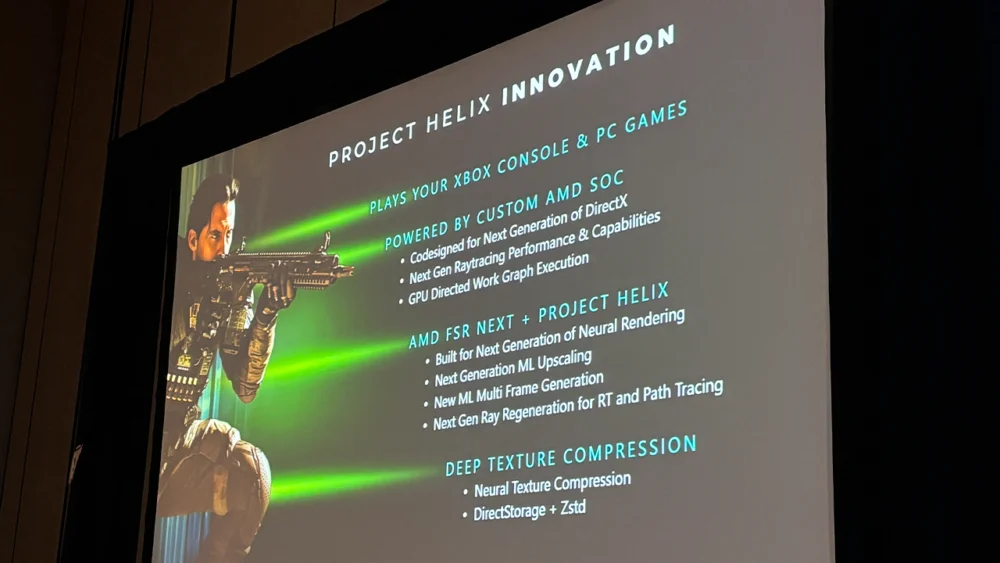
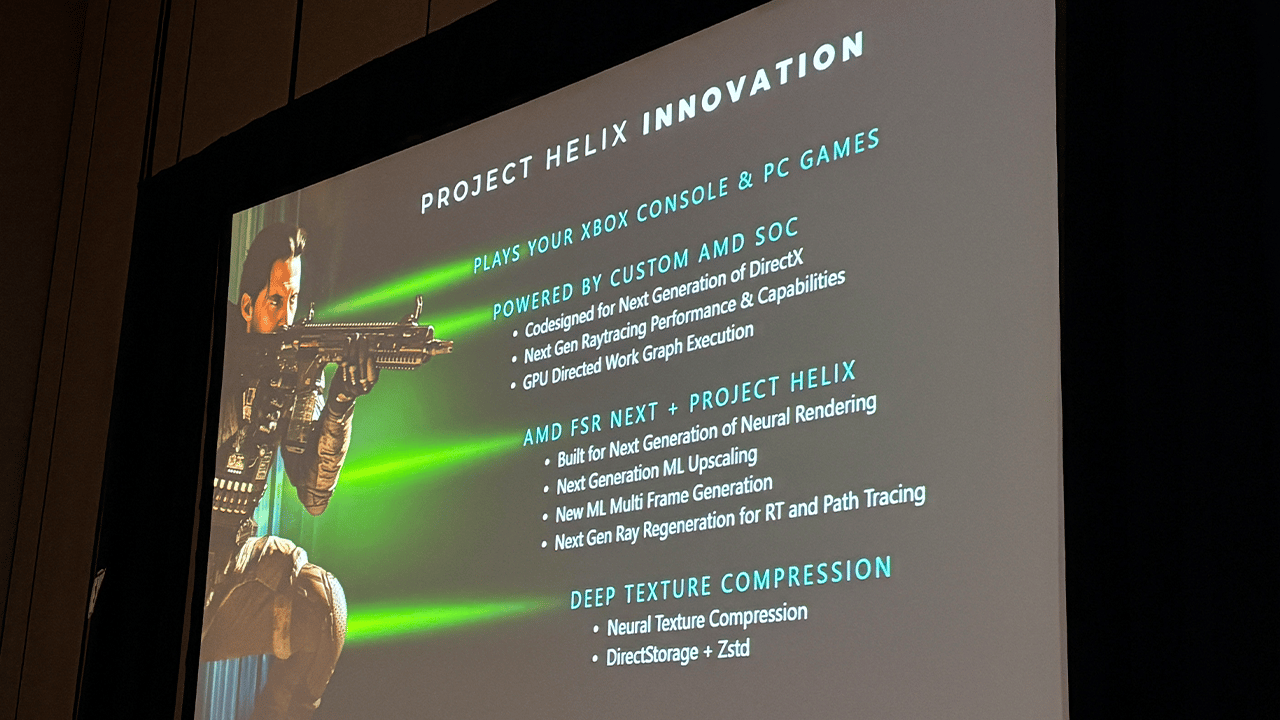
Ronald commenced a day of pivotal discussions by elaborating on Project Helix’s foundational philosophy: a device explicitly engineered to bridge the gap between console and PC gaming. Microsoft had previously confirmed this convergence, and Ronald reiterated its significance, stating, "Project Helix is designed to play your Xbox console and PC games, delivering high performance and providing the ultimate player-first experience. We’re partnering closely with AMD to define the next generation of rendering and simulation." This strategic decision to support both ecosystems from the ground up suggests a future where game development might become more streamlined, allowing creators to target a broader audience with less friction, and players to enjoy a unified library across their preferred platforms. The implication is a blurring of lines, potentially fostering a more integrated gaming community and offering unprecedented flexibility in how and where players access their content. This move also aligns with Microsoft’s broader strategy of expanding the Xbox ecosystem beyond dedicated console hardware, as evidenced by Game Pass’s availability on PC and cloud platforms.
The Powerhouse Within: Custom AMD SOC and Next-Gen DirectX
At the heart of Project Helix lies a custom AMD-based System-on-a-Chip (SOC), meticulously co-designed with Microsoft for the next generation of DirectX. This bespoke silicon is not merely an incremental upgrade but a foundational shift, according to Ronald. He detailed how the console will "bring intelligence directly into the graphics and compute pipeline" to deliver "step change functions and gains in efficiency, scale, and visual ambition."
The partnership with AMD is a continuation of a long-standing collaboration that has seen AMD powering Xbox consoles for multiple generations. This deep integration allows for hardware and software to be optimized in tandem, ensuring that DirectX – Microsoft’s suite of APIs crucial for game development on Windows and Xbox – can fully exploit the new architecture. The phrase "intelligence directly into the graphics and compute pipeline" points towards dedicated AI accelerators or machine learning capabilities embedded within the GPU itself, enabling tasks previously handled by the CPU or external processors to be executed with unprecedented speed and efficiency directly where the graphics are being rendered. This integration is critical for the advanced rendering techniques discussed, such as neural-assisted rendering and complex real-time simulations. Historically, such tight hardware-software co-design has been a hallmark of successful console launches, allowing developers to extract maximum performance from fixed hardware.
Revolutionizing Visuals: Ray Tracing and GPU-Driven Workloads
One of the most striking claims made by Ronald was the promise of an "order of magnitude" increase in ray tracing performance and capability, significantly surpassing what is currently possible with the Xbox Series X and S. Ray tracing, a rendering technique that simulates the physical behavior of light, has been a flagship feature of current-generation consoles but often comes with a substantial performance cost. An "order of magnitude" jump implies a tenfold or greater improvement, which could transform ray tracing from a supplementary visual enhancement to a fundamental component of game rendering, enabling hyper-realistic lighting, reflections, and shadows in real-time.
Crucially, this ray tracing leap is coupled with the unlocking of "GPU directed work graph execution to eliminate CPU bottlenecks." Traditionally, CPUs have been responsible for orchestrating much of the work for GPUs, leading to performance limitations when complex scenes require the CPU to manage millions of draw calls or intricate simulations. GPU-directed work graphs allow the GPU to generate and manage its own workloads dynamically, in real time, freeing the CPU from these bottlenecks. Ronald explained that this translates to a "massive uplift" in performance, enabling "massive real-time simulations that involve complex worlds using runtime generated geometry and large-scale interactive worlds." This capability is a game-changer for open-world games, destruction physics, and highly dynamic environments, allowing for unprecedented levels of interactivity and visual complexity without compromising frame rates. Developers will be able to create truly living, breathing worlds where every action has a more profound and immediate visual impact, moving beyond pre-baked animations and environmental elements to genuinely dynamic and reactive landscapes.

The Dawn of Neural-Assisted Rendering
Project Helix is also being engineered for the "next generation of neural-assisted rendering," a bold step forward that acknowledges the limitations of conventional rendering techniques. Ronald stated, "We’ve reached some of the limitations of what’s possible with traditional rendering techniques, and if we want to continue advancing the state of the art we have to invent brand new technology." This statement underscores a shift towards AI and machine learning not just as ancillary tools, but as core components of the rendering pipeline itself.
A key component in achieving this will be the integration of the next version of AMD FSR (FidelityFX Super Resolution) into the Project Helix development kit. FSR, AMD’s open-source upscaling technology, uses advanced algorithms to reconstruct higher-resolution images from lower-resolution inputs, boosting performance without a significant loss in visual quality. The "next version" of FSR, deeply integrated with the console’s hardware, suggests even more sophisticated algorithms, potentially leveraging dedicated AI cores for superior image reconstruction and temporal stability.
Ronald further elaborated on the diverse applications of neural rendering techniques:
- Neural Materials: Imagine materials whose properties (reflectivity, texture, interaction with light) are not just static maps but dynamically generated or enhanced by AI, reacting to environmental conditions or even player actions in real-time. This could lead to unparalleled realism in surface depiction.
- Generated Images: This could involve AI generating parts of a scene, environmental details, or even entire textures on the fly, reducing the need for developers to manually create every asset and allowing for truly infinite procedural generation that looks handcrafted.
- ML-based Upscaling/Super Resolution Techniques: Beyond traditional FSR, these advanced techniques could use machine learning to predict and generate missing pixels with incredible accuracy, leading to cleaner, sharper images from lower resolutions than ever before, further enhancing performance without visual compromise.
- ML-based Multi-frame Generation: This could refer to techniques similar to frame interpolation but powered by AI, generating entirely new frames between rendered frames to achieve ultra-high frame rates, or synthesizing multiple frames to create a more stable and high-fidelity output.
- Ray Regeneration Technique: This innovative approach aims to deliver high-performance ray tracing for both real-time ray tracing and path tracing. Instead of computing every single ray path, AI could intelligently regenerate or infer ray paths, significantly reducing the computational load while maintaining visual fidelity, making highly complex global illumination and physically accurate light transport feasible in real-time.
These advancements collectively suggest a future where AI plays a pervasive role in how games look and perform, enabling levels of visual fidelity and simulation complexity that were previously confined to offline rendering farms or pre-rendered cinematics.
Efficiency Through Deep Texture Compression and Direct Storage
Beyond raw power, Microsoft is keenly focused on efficiency, particularly through what the company calls "deep texture compression." Ronald highlighted this as a crucial feature, especially as "storage and memory prices continue to swell," allowing developers to push visual boundaries while leveraging hardware more efficiently. This focus on optimized data handling is vital in an era where game sizes are escalating rapidly, and graphical assets demand ever-increasing memory bandwidth.
"There’s a ton of work that we can do on the hardware side. There’s a ton of work that we can do on the software side, but it’s also about how you take advantage of this as developers," Ronald explained. Deep texture compression on Project Helix will incorporate the "latest neural texture compression techniques" alongside heavy integration of "Z standard." Neural texture compression utilizes AI to analyze and compress textures more effectively than traditional methods, potentially achieving higher compression ratios with less perceptual quality loss. Z standard (Zstd) is a fast lossless data compression algorithm, widely used for its excellent balance of compression ratio and speed. Its hardware acceleration within Project Helix could mean incredibly fast decompression of game assets, which is critical for minimizing load times.
This compression strategy directly synergizes with Direct Storage, a technology designed to dramatically accelerate game loading by allowing data to stream directly from the NVMe SSD to the GPU, bypassing the CPU. Ronald emphasized that this capability enables developers to "stream assets directly off of the storage drive and be much more sensitive in how you’re actually using memory, because you can actually stream it directly off of the SSD itself." This means games can load vast, highly detailed worlds almost instantaneously, and developers can design experiences that continuously stream high-resolution assets without hitting memory ceilings or causing loading hitches. The combination of advanced compression and Direct Storage is a powerful tool for creating seamless, expansive, and visually rich gaming environments.
Development Timeline and Industry Anticipation
For developers eager to harness this next-generation power, Ronald provided a crucial timeline: Microsoft will begin sending alpha versions of Project Helix to developers starting in 2027. While "2027" presents a broad window, this firm commitment provides studios with a clear horizon for planning and adaptation. Historically, console development kits are distributed years in advance of a public launch, with alpha kits representing an early, functional iteration of the hardware. Given this timeline, industry analysts widely anticipate a public launch for Project Helix sometime in late 2028 or 2029.
The early distribution of alpha kits allows developers ample time to familiarize themselves with the new architecture, experiment with its unique capabilities like neural rendering and GPU-directed workloads, and provide valuable feedback to Microsoft. This collaborative approach is essential for ensuring a robust launch lineup and a smooth transition for the development community. The lead time is particularly important given the significant shifts in rendering techniques and system architecture, which will require developers to rethink traditional approaches to game creation.
Broader Implications and Industry Impact
The technical details revealed for Project Helix underscore a significant shift in console design philosophy, moving beyond raw horsepower increases to a more integrated, intelligent, and efficient architecture.
For Developers: The promise of eliminating CPU bottlenecks, vastly improved ray tracing, and neural-assisted rendering presents both immense opportunities and considerable challenges. Studios will need to invest in new tools, talent, and workflows to fully exploit these capabilities. However, the potential for creating truly groundbreaking experiences – from hyper-realistic simulations to infinitely generative worlds – is unprecedented. The unification of console and PC development could also streamline processes, potentially reducing the cost and complexity of multi-platform releases.
For Players: The benefits are clear: games with unparalleled visual fidelity, more dynamic and interactive worlds, virtually non-existent load times, and potentially new genres of experiences enabled by advanced AI. The "player-first experience" mantra suggests a focus on seamless gameplay, high frame rates, and immersive visuals that will redefine expectations for home entertainment.
For the Console Landscape: Project Helix’s aggressive embrace of AI-driven rendering and its hybrid console/PC approach could intensify competition with Sony’s PlayStation. Each generation sees a leapfrog in technology, and Microsoft appears to be betting heavily on machine learning and architectural efficiency as its key differentiators. This could spur further innovation across the industry, pushing all platform holders to explore similar cutting-edge technologies. The emphasis on efficiency amidst rising memory and storage costs also sets a precedent for future hardware design, where smart resource management becomes as critical as raw processing power.
In conclusion, Project Helix represents a bold vision for the future of gaming, blending cutting-edge hardware with intelligent software to empower creators and captivate players. The GDC Festival of Gaming served as a critical platform for Microsoft to articulate this vision, signaling that the next generation of Xbox is not just about more pixels or faster processing, but about fundamentally reimagining how games are made and experienced through a potent combination of AMD engineering, DirectX evolution, and the transformative power of artificial intelligence. The journey to Project Helix’s public unveiling in the coming years will undoubtedly be one of intense innovation and anticipation.
About the Author