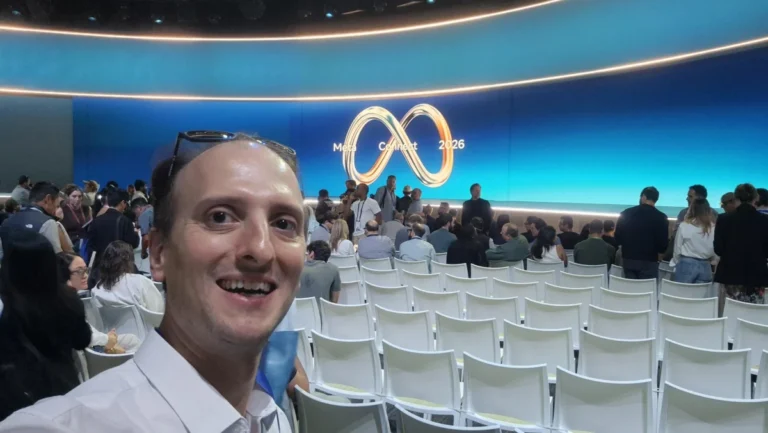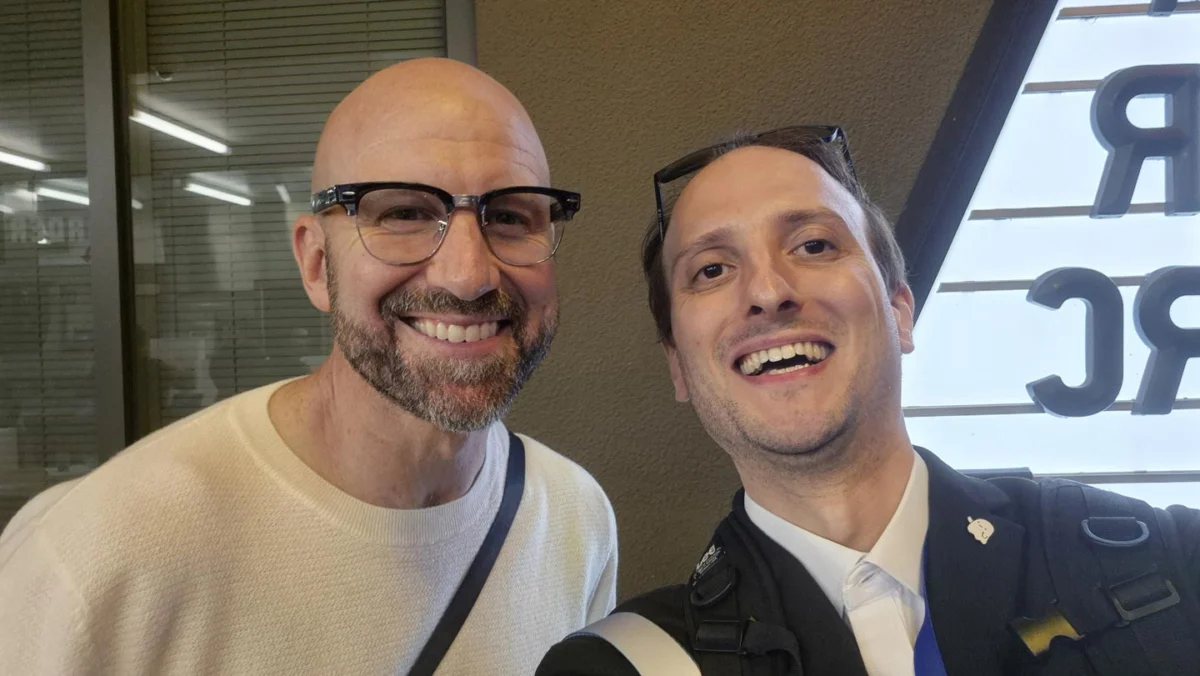
The exchange comes at a pivotal moment for Meta’s Reality Labs division, which continues to balance aggressive research and development spending with the need for mainstream consumer adoption. Bosworth’s comments suggest a strategic pivot toward lighter form factors, informed by recent consumer purchasing data that indicates a shift in user priorities.
Strategic Shift in Consumer Preferences: Quest 3 vs. Quest 3S
One of the most significant revelations from the exchange involved the sales performance of Meta’s current hardware lineup. Bosworth noted that internal expectations initially favored the Quest 3S, the more affordably priced entry-point into the Meta ecosystem. However, actual market data revealed that the premium Quest 3 model performed nearly as well as its budget-conscious counterpart.
This trend is indicative of a maturing market where users are increasingly willing to pay a premium for enhanced comfort, higher resolution, and a superior form factor. The Quest 3, featuring pancake lenses and a slimmer profile compared to the Fresnel lenses used in the Quest 2 and 3S, appears to have validated Meta’s hypothesis that physical ergonomics and visual fidelity are as critical to the consumer experience as the $200 price differential.
According to Bosworth, this consumer behavior has given Meta the "confidence" to aggressively pursue the development of lightweight AR and VR glasses. The objective is to maintain the high-quality experience found in the Quest 3 while drastically reducing the weight and bulk of the device. This strategy aligns with the unveiling of "Orion" (previously referred to under the codename Phoenix), Meta’s prototype for true AR glasses, which aims to bridge the gap between traditional wearables and high-performance spatial computing.

Chronology of Meta’s XR Evolution
The insights provided by Bosworth follow a decade-long trajectory for Meta’s immersive technology division. To understand the context of this interview, one must look at the timeline of Meta’s hardware development:
- 2014: Facebook (now Meta) acquires Oculus VR for $2 billion, signaling a long-term bet on the metaverse.
- 2019: The launch of the original Oculus Quest marks the beginning of the standalone VR era, removing the need for external sensors and PC tethers.
- 2020: Quest 2 is released, becoming the most successful VR headset in history with an estimated 20 million units sold.
- 2023: Meta introduces the Quest 3, prioritizing mixed reality (MR) through high-fidelity color passthrough and pancake optics.
- 2024: Meta Connect highlights the diversification of the lineup with the Quest 3S and the first public demonstration of high-end AR glasses prototypes.
This chronology illustrates a move away from "VR-only" devices toward "Mixed Reality" and "Augmented Reality," where the digital and physical worlds are layered seamlessly.
Technical Barriers in Miniaturization: The Case Against Smart Contact Lenses
When questioned about the potential for XR-enabled contact lenses—a concept often popularized in science fiction—Bosworth provided a pragmatic technical assessment. While several startups have attempted to develop "smart" contacts, Meta currently views the technology as unfeasible for mass-market adoption due to fundamental physics and biological constraints.
Bosworth identified the primary hurdle as power delivery. To provide a functional display and sustain a wireless connection, a contact lens requires a power source that current battery technology cannot safely or comfortably accommodate in a standard lens format. He noted that existing prototypes often rely on bulky scleral lenses—large-diameter lenses that cover the entire white of the eye (the sclera). These are far more invasive than standard soft contact lenses and present significant challenges regarding oxygen permeability and long-term wearer comfort. Consequently, Meta’s Reality Labs is focusing its resources on spectacles and lightweight glass frames rather than ocular implants or overlays.
The Principles of Technical Leadership
Beyond hardware, Bosworth shared his philosophy on serving as the CTO of one of the world’s most influential technology firms. His approach emphasizes vision and consistency over popularity. Bosworth argued that leadership is defined by the ability to establish a clear set of principles that employees can follow even when the leader is not present in the room.

"Leadership is not about being popular," Bosworth stated. "It is about having a vision, being consistent, and being someone people can trust."
He further explained that a CTO’s primary role is to hire exceptional talent by selling them on a long-term vision. Once that talent is in place, the leader must make difficult, often unpopular decisions. According to Bosworth, the goal is not to ensure everyone is happy with every decision, but to ensure that the workforce trusts that the decision was made for the right reasons and in alignment with the company’s stated goals.
Market Analysis and Broader Implications
The impromptu nature of these statements does not diminish their significance for industry analysts. Meta’s Reality Labs has faced intense scrutiny from investors regarding its "burn rate," which often exceeds several billion dollars per quarter. Bosworth’s emphasis on the Quest 3’s performance serves as a counter-narrative to the idea that VR is a "race to the bottom" on price.
Industry data from firms like IDC and Counterpoint Research suggest that Meta currently holds approximately 70% to 80% of the global VR headset market share. However, the entry of Apple with the Vision Pro and the resurgence of HTC and Pico in the enterprise space have increased the pressure on Meta to define its "North Star."
Bosworth’s confirmation that Meta is doubling down on the "lightweight form factor" suggests that the company is moving toward a future where "smart glasses" eventually replace the smartphone. This transition requires overcoming significant hurdles in thermal management and custom silicon—areas where Meta has been investing heavily through its partnership with Luxottica (Ray-Ban Meta glasses) and its in-house chip development teams.

Official Stance on Meta Connect Success
Reflecting on the Connect conference itself, Bosworth expressed satisfaction with the technical execution of the event. He noted that both he and CEO Mark Zuckerberg were pleased that the live demonstrations—which are notoriously difficult to execute in the XR space—proceeded without technical failure. This reliability is seen as a crucial step in proving to developers and partners that Meta’s software ecosystem, recently rebranded as Meta Horizon OS, is stable enough for third-party hardware integration.
The interview concluded with a reiteration of Meta’s commitment to the developer community, which Bosworth credits as the backbone of the platform’s ten-year survival and growth. As the company enters its second decade in the XR space, the focus appears to be shifting from "if" the technology will become mainstream to "how" the hardware can be made invisible enough for daily use.
In providing these insights, Bosworth has outlined a roadmap that prioritizes premium experiences, acknowledges technical limitations in ocular displays, and reaffirms a leadership style rooted in transparency and long-term vision. For the broader tech industry, these comments serve as a benchmark for the current state of spatial computing and the strategic direction of its most dominant player.
About the Author