The landscape of immersive media is undergoing a significant shift as Radiant Images introduces a modular, portable approach to volumetric video capture, moving away from the traditional, prohibitively expensive fixed-studio model. Unveiled during the recent Augmented World Expo (AWE), the company’s new system utilizes independent "columns" of iPhones to record high-fidelity 3D data, specifically optimized for the creation of 4D Gaussian Splats. This innovation addresses a long-standing bottleneck in the extended reality (XR) industry: the requirement for actors and subjects to travel to massive, specialized recording domes, such as those operated by Microsoft Mixed Reality Capture Studios. By decentralizing the hardware, Radiant Images, led by CEO Michael Mansouri, is providing a scalable solution that can be deployed globally within standard checked luggage.
The Shift from Fixed Infrastructure to Mobile Capture
For over a decade, volumetric video—video that allows a viewer to walk around a subject in a virtual environment—has been the domain of high-budget productions. Traditional setups involve a "capture dome" consisting of dozens, sometimes hundreds, of synchronized industrial cameras. These facilities require massive server racks for data ingestion, specialized lighting rigs, and a permanent physical footprint, often housed in large warehouses. The operational costs of these facilities, combined with the logistical expenses of transporting high-profile talent to specific locations, have historically limited the technology to enterprise-level training and AAA entertainment.
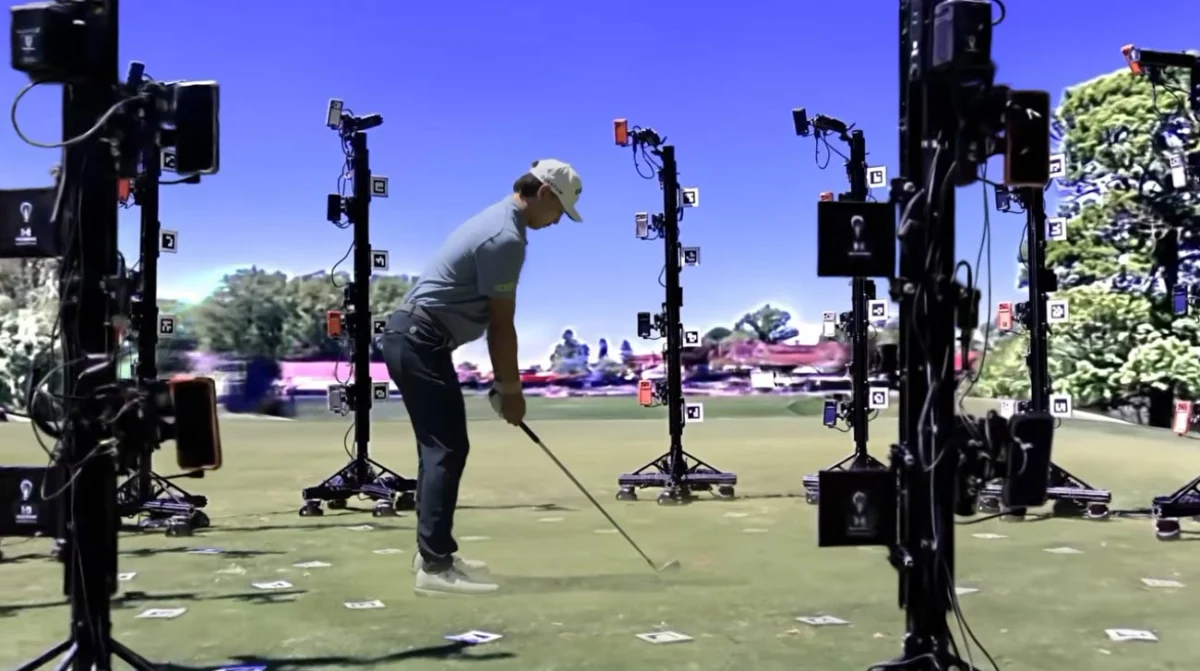
Radiant Images’ solution disrupts this model by replacing the fixed dome with modular units. Each unit is a self-contained "tower" or "column" equipped with multiple iPhones. Because these units are battery-powered and operate independently, they eliminate the need for complex cabling and localized server infrastructure. This allows production teams to bring the studio to the talent, rather than the reverse. The portability factor is significant; Mansouri confirmed that the entire setup can be packed into standard luggage and shipped via commercial airlines, a feat previously impossible for volumetric systems of this caliber.
Technical Architecture and the Power of Edge Processing
The choice of the iPhone as the primary recording device is a strategic technical decision rather than a consumer-facing gimmick. Modern iPhones are equipped with sophisticated LiDAR (Light Detection and Ranging) sensors and are capable of recording 4K video at 60 frames per second. However, the primary advantage lies in the iPhone’s onboard processing power.
In traditional volumetric setups, "raw" data from every camera must be sent to a central server for processing, creating a massive data bottleneck. The Radiant Images system utilizes the iPhone’s internal processor to perform "edge computing." Each device can handle initial tasks such as color grading and "masking"—the process of isolating the subject from the background—locally. By pre-processing the data at the source, the system significantly reduces the volume of data that needs to be transferred and synthesized in the final stage. This efficiency not only lowers costs but also accelerates the turnaround time from capture to the final 3D asset.
Furthermore, the modular nature of the towers allows for variable precision. A production requiring lower fidelity can utilize fewer towers to save on costs, while high-end cinematic productions can surround a subject with a higher density of units to achieve 360-degree coverage with no occlusion.
The Rise of Gaussian Splatting in 3D Reconstruction
The emergence of Gaussian Splatting (GS) has provided the perfect software counterpart to Radiant Images’ hardware. Unlike traditional volumetric video, which relies on polygonal meshes (a collection of vertices and triangles), Gaussian Splatting uses a cloud of semi-transparent "splats" to represent 3D space. This method is particularly effective at rendering complex textures that have historically plagued 3D reconstruction, such as human hair, semi-transparent fabrics, and reflective surfaces.
Radiant Images serves as the hardware and capture specialist in this ecosystem, providing the high-quality source data necessary for these renders. One of their primary partners in the final output stage is Gracia, a company specializing in 4D Gaussian Splatting. While Radiant Images handles the physical recording, Gracia’s algorithms process the synchronized video feeds into a "4D" format—effectively a 3D model that changes over time. The result is a photorealistic "hologram" that maintains the nuances of human movement and lighting, which can then be viewed in mixed reality headsets like the Apple Vision Pro or Meta Quest 3.
Chronology of Development and Event Context
Radiant Images has operated in the digital cinema and specialized capture space for over 20 years, originally focusing on traditional film and television equipment. Their pivot toward volumetric capture reflects the broader industry trend toward spatial computing.
The timeline of this specific development began with the public release of Gaussian Splatting research in late 2023. While 3D reconstruction techniques like NeRF (Neural Radiance Fields) were already in use, they often required significant "bake" times and were difficult to render in real-time. The introduction of Gaussian Splatting offered a more efficient path to real-time 3D viewing. Radiant Images spent the subsequent months adapting their modular camera tower designs—initially used for 360-degree cinema—to integrate the LiDAR and processing capabilities of the latest smartphone technology.
The demonstration at AWE served as a proof of concept for the enterprise market. During the event, the system was used to record attendees in real-time, showcasing the speed of setup and the reliability of the battery-operated modules in a high-interference environment like a convention center floor.
Market Analysis and Industry Implications
The implications of portable volumetric capture extend far beyond entertainment. In the corporate sector, this technology allows for the creation of "digital twins" of executives or trainers for global distribution. In the sports world, as demonstrated by Radiant Images’ work with professional golf tournaments, it allows for the capture of athletes in their natural environments rather than a sterile studio, providing more authentic data for broadcast and analysis.
From a cost perspective, while Mansouri noted that the service remains at an "enterprise" price point, it represents a significant reduction in the Total Cost of Ownership (TCO) for volumetric content. By eliminating the overhead of a permanent studio and the travel costs of talent, the "per-minute" cost of volumetric video is expected to decrease, making it accessible to mid-tier production houses and specialized marketing agencies.
Furthermore, the system is designed to be future-proof. Because the infrastructure is built around the iPhone’s form factor, upgrading the capture quality is as simple as replacing the handsets with newer models as they are released. This avoids the hardware obsolescence that often plagues proprietary industrial camera systems.
Official Responses and Future Outlook
Industry observers at AWE noted that the Radiant Images setup represents one of the most practical applications of Gaussian Splatting seen to date. By focusing on the "ingestion" phase of the pipeline, Radiant Images has filled a critical gap in the XR workflow.
"We are entering an era where the barrier between the physical and digital presence is dissolving," Mansouri noted during his presentation. The company’s goal is to make the capture of human performance as mobile as traditional cinematography.
As mixed reality hardware becomes more prevalent in the consumer market, the demand for photorealistic 3D content is projected to grow exponentially. The ability to record high-quality 4D Gaussian Splats in the field, rather than in a controlled lab, is likely to be a cornerstone of this new media landscape. Radiant Images plans to continue its collaboration with software partners like Gracia to refine the compression and streaming of these assets, ensuring that the "holograms" of tomorrow are as easy to view as a standard YouTube video is today.
About the Author