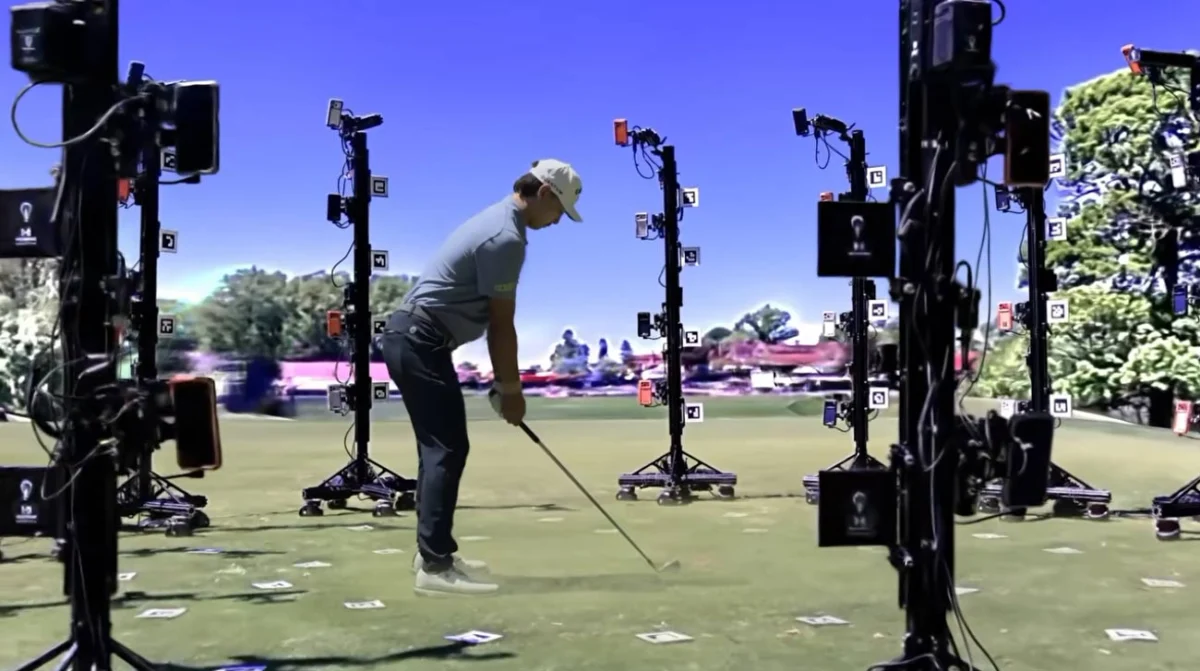
The landscape of spatial computing and digital content creation is undergoing a significant transformation as Radiant Images, a veteran in the cinematic and immersive technology space, introduces a modular, portable solution for high-fidelity volumetric video capture. Unveiled at the Augmented World Expo (AWE), the new system leverages Gaussian Splatting (3DGS) and mobile hardware to address the long-standing logistical and financial barriers associated with creating photorealistic digital humans. Led by CEO Michael Mansouri, the company aims to decentralize the production of volumetric assets, moving away from the "fixed-dome" studio model toward a flexible, on-location approach that utilizes edge computing and advanced rasterization techniques.
The Evolution of Volumetric Capture and the Rise of Gaussian Splatting
For over a decade, the creation of "holographic" or volumetric video—content that can be viewed from any angle in a three-dimensional space—has been the exclusive domain of high-end production facilities. Traditional methods typically involve massive, stationary arrays of dozens or even hundreds of synchronized cameras. Microsoft’s Mixed Reality Capture Studios, for example, pioneered this field but required permanent installations in large warehouses, necessitating that talent travel to specific geographic hubs. These traditional captures often relied on mesh-based reconstructions, which, while effective, can be computationally heavy and struggle with fine details like hair, transparent materials, or complex lighting.
The emergence of Gaussian Splatting in 2023 has fundamentally altered this trajectory. Unlike traditional photogrammetry, which creates a geometric mesh, Gaussian Splatting represents 3D scenes as a collection of "splats"—mathematical functions that describe the shape, color, and opacity of points in space. This method allows for significantly higher visual fidelity and faster rendering times on modern hardware. Radiant Images’ integration of 4D Gaussian Splatting (4DGS) adds the dimension of time, enabling the capture of moving subjects with a level of realism that mimics physical presence in mixed-reality environments.
Technical Specifications: The Modular Recording Tower
Radiant Images’ innovation centers on a modular architecture composed of independent recording "columns." Each column serves as a self-contained unit, housing multiple iPhones and integrated lighting systems. This design departs from the rigid synchronization hardware of the past in several key ways:
- Independent Power and Connectivity: Every tower is battery-powered, providing several hours of continuous operation without the need for external cabling or local power grids. This independence allows for rapid setup in unconventional environments, ranging from athletic fields to private residences.
- Edge Pre-Processing: By utilizing iPhones as the primary capture devices, Radiant Images leverages the onboard processing power of Apple’s A-series and M-series chips. Each device can perform localized tasks such as color grading, background subtraction, and data optimization. This "edge computing" approach reduces the volume of raw data that must be transferred to central servers, streamlining the post-production pipeline.
- Sensor Fusion: The system utilizes the iPhone’s 4K 60fps video capabilities in tandem with its built-in LiDAR sensors. The LiDAR data provides accurate depth mapping, which serves as a foundation for the Gaussian Splatting algorithms to accurately place "splats" in 3D space.
- Scalability: The modular nature of the system allows producers to scale the number of towers based on the required fidelity or the complexity of the subject’s movement. A smaller number of towers can be used for budget-conscious projects, while a full 360-degree array can be deployed for cinematic-grade results.
Chronology of Development and Market Entry
Radiant Images has spent over 20 years at the intersection of traditional cinema and emerging tech. The company’s journey into volumetric capture began long before Gaussian Splatting became a standard industry term. Initially focusing on high-end camera rentals and custom rig builds for Hollywood, the company pivoted toward immersive media as virtual reality (VR) and augmented reality (AR) gained enterprise traction.
The development of the current modular system followed a clear chronological path:
- Phase 1 (Legacy Capture): Utilization of traditional DSLR and cinema camera arrays for mesh-based volumetric video.
- Phase 2 (Mobile Integration): Experimentation with mobile device arrays to reduce the physical footprint of capture rigs.
- Phase 3 (Gaussian Integration): The adoption of 3DGS and 4DGS as the primary output format, moving away from labor-intensive mesh cleaning.
- Phase 4 (AWE Debut): The public demonstration of the portable tower system, showcasing its ability to be shipped in standard checked luggage and deployed globally.
During the AWE event, the system was demonstrated through live captures, including a collaboration with the volumetric processing firm Gracia. This partnership highlights a strategic division of labor: Radiant Images focuses on the physical capture and data integrity, while Gracia provides the software infrastructure to process and render the final 4D Gaussian Splat videos.
Economic and Industry Implications
The shift toward a portable, iPhone-based system has profound economic implications for the entertainment and marketing industries. Traditionally, the cost of volumetric capture was inflated by the "travel and lodge" expenses of high-profile talent, as well as the capital expenditure (CAPEX) of maintaining a permanent studio.
By making the studio transportable, Radiant Images converts these costs into operational expenditures (OPEX). The ability to "bring the studio to the actor" significantly lowers the barrier to entry for professional sports leagues, luxury brands, and celebrity estates. While the pricing remains at an enterprise level, the efficiency gains in setup time and data processing represent a significant reduction in total project costs compared to the warehouse-sized rigs of the previous decade.
Furthermore, the choice of hardware provides a unique "future-proofing" mechanism. As Apple releases new iterations of the iPhone with improved sensors and processors, Radiant Images can upgrade its capture fleet by simply swapping the handsets, leaving the structural and power infrastructure of the towers intact.
Analysis of Broader Impact on Spatial Computing
The availability of high-quality, easily produced volumetric content is a critical component for the success of spatial computing platforms like the Apple Vision Pro, Meta Quest 3, and various AR glasses. Currently, the "uncanny valley" and the high cost of content creation are major hurdles for the adoption of 3D media.
Radiant Images’ solution addresses the "content gap" by enabling the creation of "digital idols" or photorealistic human twins that can be placed in a user’s home environment. In the context of the recent golf tournament recordings mentioned by the company, this technology allows fans to view a professional athlete’s swing from any angle in their own living room, with lighting and textures that match the real-world environment.
Industry analysts suggest that as 4D Gaussian Splatting continues to mature, it may eventually replace traditional video for certain types of instructional and entertainment content. The modularity demonstrated at AWE suggests a future where volumetric capture is not a rare event occurring in a specialized lab, but a standard production tool available on any film set or at any live event.
Conclusion and Future Outlook
Radiant Images has positioned itself as a bridge between high-end cinematic quality and the logistical flexibility required by modern digital production. By decoupling volumetric capture from the fixed studio environment and embracing the efficiencies of Gaussian Splatting, the company is facilitating a new era of 3D content. As the technology scales, the focus will likely shift toward further automating the processing pipeline and expanding the compatibility of 4DGS assets across a wider array of consumer XR devices. The success of the AWE demonstrations indicates a strong market appetite for solutions that prioritize portability without sacrificing the visual fidelity necessary for professional-grade immersive experiences.
About the Author