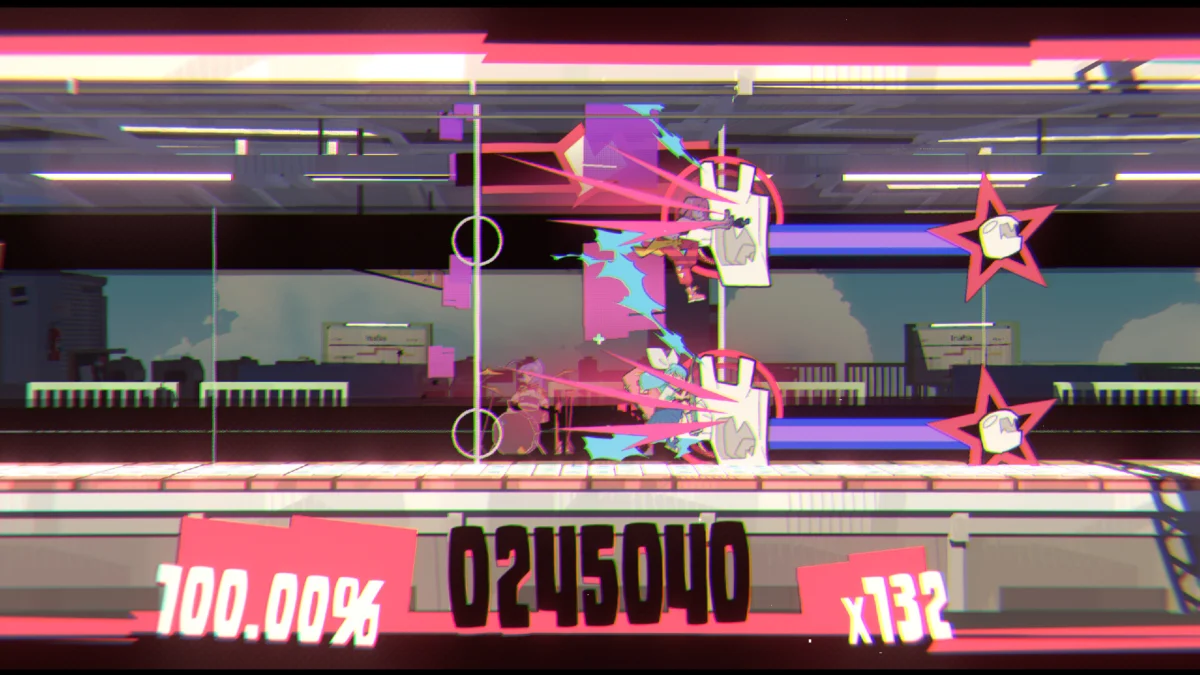
D-Cell Games’ highly anticipated rhythm adventure title, UNBEATABLE, has made a resounding impact on the gaming landscape following its late 2025 release, cementing its status as a pivotal example of how interactive entertainment can deliver profoundly raw and meaningful narratives without sacrificing exhilarating gameplay. Published by Playstack, also known for the breakout hit Balatro, UNBEATABLE stands out for its audacious approach to storytelling, blending tight rhythm mechanics with a deeply personal, emotionally charged sci-fi odyssey. The game’s distinctive narrative style, which deliberately eschews explicit exposition in favor of player interpretation, has sparked considerable discussion among critics and players alike, challenging established conventions of game writing.
A Bold New Beat: UNBEATABLE’s Narrative Innovation
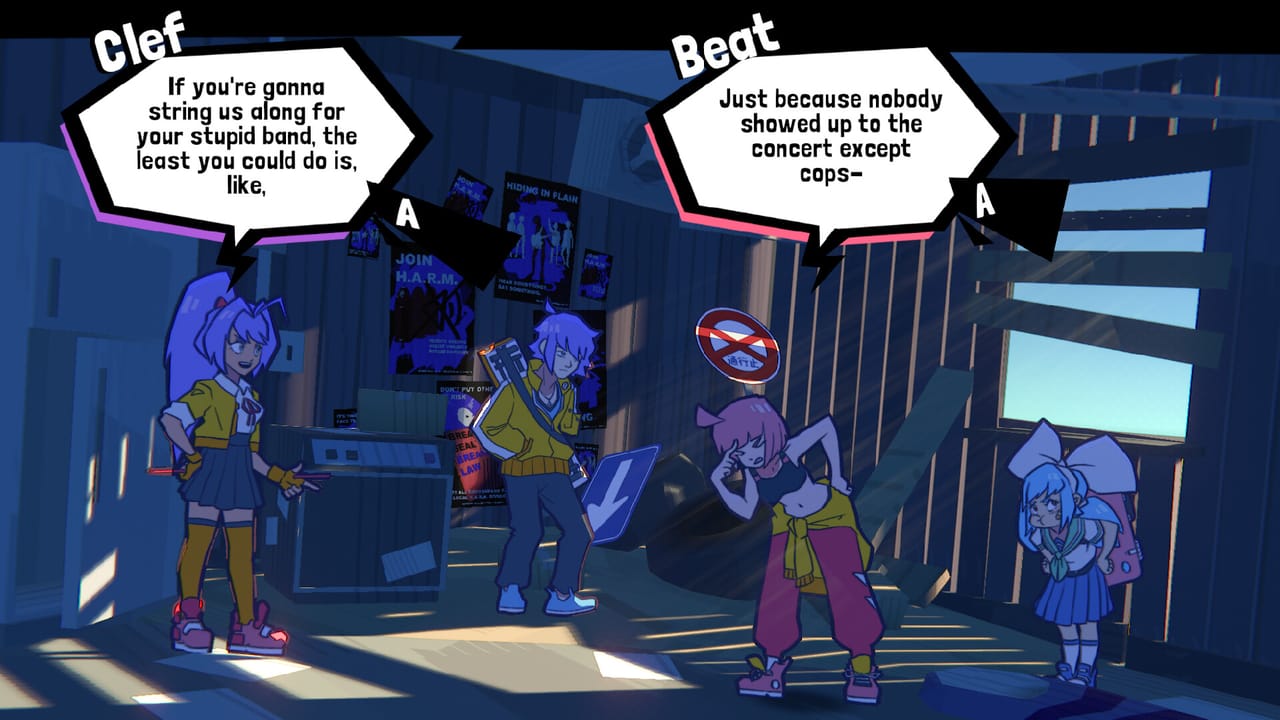
UNBEATABLE thrusts players into a vibrant, 2000s-inspired rock-punk universe where music is not just a soundtrack but an illegal, potent force. At its core, the game explores the intense emotional crisis of its protagonist, Beat, who finds herself transported from a world grappling with self-loathing into a dystopian reality where her deepest feelings manifest as powerful, enigmatic creatures. This fantastical setting serves as a powerful allegory for Beat’s internal struggles, with the act of playing music becoming a defiant, revolutionary act against a repressive regime. Alongside fellow outlaw musicians Quaver, Treble, and Clef, Beat embarks on a journey that is as much about confronting external threats – police forces and mysterious entities – as it is about navigating her own tumultuous psyche.
What truly sets UNBEATABLE apart is its masterful, yet intentionally "obtuse" storytelling. Co-director and game writer RJ Lake has championed a narrative philosophy that deliberately withholds explicit explanations for the world’s secrets, the nature of the enigmatic creatures, or even the precise mechanism of Beat’s journey between worlds. This approach, a direct defiance of the "instructional" element prevalent in most game narratives, compels players to actively engage with the unfolding events, piecing together the overarching lore and character motivations through inference and emotional resonance rather than direct exposition. Lake explains this decision as a desire to avoid "robbing someone of their own experience," echoing the sentiment that "art is feeling," a principle ironically articulated by the game’s antagonist, Sforzando. This statement, rather than a moral lesson from the hero, serves as a dark secret underpinning the game’s very existence, highlighting the dangerous power of unfiltered emotion and artistic expression within the game’s universe.
The Genesis of an Unconventional Vision

The development journey of UNBEATABLE, while culminating in critical acclaim, was not without its challenges, particularly concerning its narrative direction. RJ Lake revealed in an essay for the inkle-published Game Writing Kaleidoscope that earlier in the game’s development cycle, he faced significant pressure to conform to more conventional storytelling structures. He was repeatedly directed to rewrite the story based on the premise that "if you can’t jump into a scene of a movie in the middle and know everything about the story, it’s a bad movie." This directive represented a fundamental clash with the core artistic vision of UNBEATABLE, which thrives on ambiguity and gradual revelation.
This experience, which Lake described as a "trauma response to writing," underscored the pervasive industry pressure to prioritize immediate accessibility and explicit narrative clarity over nuanced, interpretive storytelling. The fear that the game’s unique narrative would be "mangled" and overlooked was a profound source of anxiety for the team. Ultimately, the D-Cell Games team, supported by Playstack, persevered in realizing their original vision, demonstrating the critical importance of creative autonomy in fostering truly innovative game design. This triumph highlights a broader conversation within the indie development scene about balancing artistic ambition with commercial viability and the occasional need for publishers and partners to trust the unconventional.
Drawing Inspiration from the Abstract: Music Videos and Cinematic Flair
The aesthetic and narrative flow of UNBEATABLE draw heavily from the evocative power of music videos and cinematic "needle drops." While co-director Andrew Tsai and RJ Lake cite influences from film title sequences and the strategic use of music in movies, the game’s overall presentation evokes the "artificial reality" often found in classic music videos. This manifests in the seamless, almost dreamlike transitions between scenes and the absence of explicit setup for fantastical events.
For instance, the game opens with a rock band’s lead singer preparing for a performance, a seemingly conventional start for a music game. However, a sudden, jarring cut transitions to Beat lying in a field, encountering Quaver, without any logical bridge explaining her arrival in this dystopian world. This stylistic choice mirrors the unexplained scenarios in music videos, such as Vanessa Carlton playing a piano while driving through Los Angeles in "A Thousand Miles" – the "how" is irrelevant; the emotional impact and immediate immersion are paramount. This narrative shorthand allows UNBEATABLE to bypass laborious exposition and directly convey emotional states, immersing players in Beat’s subjective experience. The game functions as a "10-hour music video," where the narrative beats and emotional arcs are intrinsically tied to the rhythm and energy of its high-BPM, rock-punk soundtrack. This direct emotional communication is crucial for a game that aims to embody "feeling" rather than merely describe it.
The "Trailer-First" Philosophy and Crafting Instant Excitement
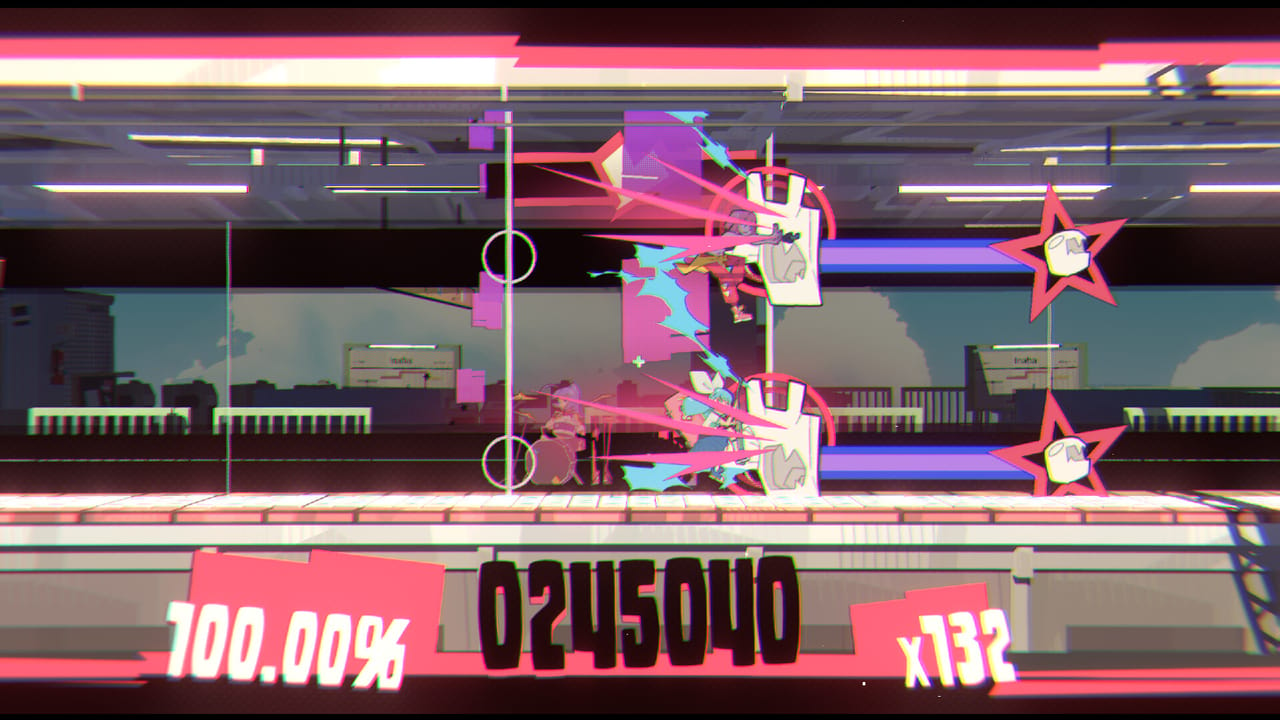
Adding another layer to D-Cell Games’ unique development approach is their "trailer-first" philosophy. RJ Lake articulated that "making trailers forces you to articulate [what you’re making] better than even words can, because it forces you to examine it from a completely merciless standpoint of ‘how am I going to make this exciting to someone instantly?’" This strategic emphasis on crafting compelling, concise visual and auditory summaries from the outset influences the game’s pacing, its impactful visual design, and its ability to communicate complex themes through evocative imagery and sound bites rather than lengthy dialogue.
This approach aligns perfectly with the game’s broader narrative strategy of "show, don’t tell." By distilling the game’s essence into impactful trailers early in development, the team inherently trained themselves to think in terms of immediate engagement and emotional punch, translating directly into UNBEATABLE’s dynamic and visually rich gameplay sequences. This method not only serves as a powerful marketing tool but also acts as a creative constraint that hones the narrative team’s ability to communicate core ideas non-verbally, making every scene, every beat, and every character interaction count towards building the player’s understanding of the world and its emotional stakes.
Impact and Implications for Narrative Design and the Rhythm Genre
UNBEATABLE’s success carries significant implications for the future of narrative design in video games, particularly within the rhythm-adventure genre. It champions a move away from didactic storytelling towards more experiential and interpretive narratives, inviting players to co-create meaning rather than passively consume it. This aligns with a growing trend in interactive media where player agency extends beyond mechanical choices to encompass intellectual and emotional engagement with the story’s ambiguities.
The game demonstrates that a narrative can be deeply meaningful and emotionally resonant precisely because it doesn’t spell everything out. This approach fosters a stronger connection with players, allowing them to project their own experiences and interpretations onto Beat’s journey. For many, like the author, who found solace in music during difficult teenage years, UNBEATABLE resonates deeply because it embodies the feeling of music as an escape and a coping mechanism, rather than merely telling a story about music. The rebellious sci-fi adventure, infused with the energy of 2000s rock-punk, feels like an externalization of Beat’s internal world, an "Isekai"-style adventure playing out within her mind, making the player’s connection to her struggles profoundly personal.
Furthermore, UNBEATABLE revitalizes the rhythm-adventure genre by integrating narrative depth typically reserved for RPGs or adventure games. While games like Hi-Fi Rush have recently shown the genre’s capacity for strong storytelling, UNBEATABLE pushes the boundaries further by making the narrative itself a puzzle to be solved through emotional understanding, rather than purely logical deduction. This could inspire a new wave of rhythm games that prioritize complex thematic exploration alongside engaging musical gameplay.
The Broader Landscape: Indie Development and Creative Freedom
The narrative surrounding RJ Lake’s early development struggles and eventual creative vindication serves as a powerful testament to the often-fraught relationship between artistic vision and commercial pressures in game development. In an industry increasingly dominated by formulaic approaches and risk-averse strategies, UNBEATABLE stands as a beacon for creative freedom. Its success underscores that audiences are hungry for experiences that challenge them, that demand intellectual and emotional investment, and that are unafraid to defy conventional wisdom.
This also highlights the crucial role of supportive publishers like Playstack, who, despite initial pressures, ultimately backed D-Cell Games’ unconventional vision. Such partnerships are vital for the indie scene, providing the financial and logistical support necessary for ambitious projects to flourish without compromising their unique artistic integrity. Without this trust, truly innovative voices risk being stifled, and the industry as a whole suffers from a lack of diverse and challenging narratives.
In conclusion, UNBEATABLE is more than just a rhythm game; it is a profound artistic statement. It rules not just because of its tight mechanics and electrifying soundtrack, but because it fearlessly embraces the idea that "music is feeling. Art is feeling." By demanding its audience rise to the occasion of interpretation and by embodying the raw, unadulterated essence of emotional struggle and musical catharsis, UNBEATABLE sets a new benchmark for narrative ambition in interactive entertainment, proving that the most impactful stories are often those that allow players to find their own beat within the rhythm of the game. Its influence will undoubtedly resonate through the gaming world for years to come, encouraging developers to imbue their creations with genuine feeling and to trust their audience to feel it too.
About the Author