The global wearable technology sector has witnessed a significant shift toward specialized hardware, as evidenced by the release of the Reebok by Lucyd Octane smartglasses. This collaboration between the heritage athletic brand Reebok and the smart eyewear developer Lucyd—a subsidiary of Innovative Eyewear, Inc.—represents a strategic move to capture the intersection of the "hearables" market and the performance eyewear industry. Designed specifically for high-impact activities such as running and cycling, the Octane model prioritizes functional aesthetics and situational awareness over the high-complexity visual overlays often associated with augmented reality (AR) devices.

Strategic Partnership and Market Context
The development of the Octane line follows a multi-year licensing agreement between Innovative Eyewear, Inc. and Authentic Brands Group, the parent company of Reebok. This partnership leverages Reebok’s significant brand equity in the fitness world and Lucyd’s proprietary open-ear audio technology. The goal is to provide a seamless transition for athletes who currently juggle traditional sunglasses and wireless earbuds.

Market data suggests that the smart eyewear industry is poised for substantial growth. According to industry analysts, the global smart glasses market was valued at approximately $5 billion in 2023 and is projected to reach nearly $13 billion by 2030, growing at a compound annual growth rate (CAGR) of over 14%. Within this segment, audio-only smartglasses are gaining traction due to their lower price points and longer battery life compared to display-heavy AR glasses. The Reebok by Lucyd Octane enters this competitive landscape as a targeted solution for the "active lifestyle" demographic, competing with established players like Bose and newer entrants in the tech-fashion space.

Technical Specifications and Design Architecture
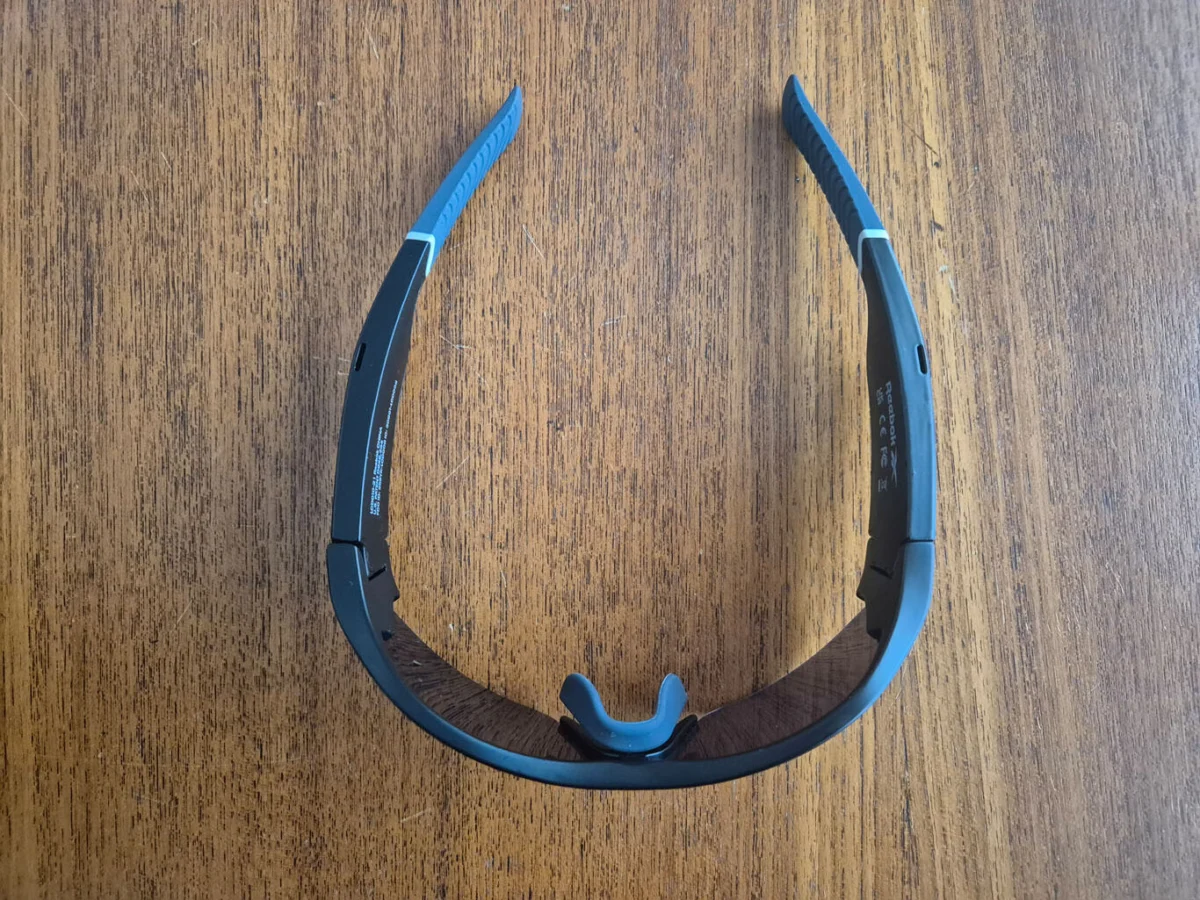
The Reebok by Lucyd Octane is characterized by its aerodynamic wrap-around frame, a design staple in the competitive running and cycling sectors. Weighing approximately 50 grams, the device remains lightweight enough for prolonged use, a critical factor for endurance athletes. The frames are constructed with a focus on durability, featuring adjustable rubber nose pads and temple tips that allow users to customize the fit to their facial structure.

A primary technical highlight of the Octane is its lens technology. The device utilizes adaptive photochromic polarized lenses. These lenses automatically adjust their tint based on the intensity of UV exposure, transitioning from light to dark to accommodate changing weather conditions or varying times of day. Furthermore, the lenses offer UV400 protection and are treated with anti-fog and anti-scratch coatings. This multi-layered approach to optics ensures that the device functions primarily as high-quality protective eyewear, even when its "smart" features are disengaged.

Open-Ear Audio and Connectivity
The core of the Octane’s "smart" functionality lies in its dual-speaker system integrated into the temples. Unlike traditional earbuds that sit inside the ear canal, Lucyd’s open-ear design delivers sound via speakers positioned just above the ear. This configuration is essential for outdoor safety; by leaving the ear canal unobstructed, runners and cyclists can maintain auditory awareness of their surroundings, such as approaching vehicles or ambient urban noise.

Connectivity is handled via Bluetooth, allowing for a 20-second pairing process with most modern smartphones. The device supports high-fidelity audio for music and podcasts, as well as hands-free telephonic communication. During voice calls, the integrated microphones utilize noise-reduction algorithms to maintain clarity, though users have noted that high volume levels can occasionally lead to sound leakage, resulting in a slight echo for the person on the other end of the line.

User Interface and Battery Performance
The Octane employs a simplified control scheme consisting of two physical interfaces: a primary power/function button and a volume lever. The power button manages pairing, call answering, and track navigation through a series of timed presses. While the interface is designed for accessibility during movement, the high number of functions assigned to a single button requires a learning curve for new users.

Battery life remains a competitive advantage for the Octane, with a claimed duration of up to eight hours of continuous playback. This is sufficient to cover most marathons or long-distance cycling events. Charging is facilitated through a proprietary magnetic attachment that connects to the right temple, exposing a standard USB-C port. This magnetic system prevents accidental damage to the charging pins and ensures a secure connection during the charging cycle.

Chronology of Development and Distribution
The timeline of the Reebok by Lucyd series began in late 2023 with the initial announcement of the partnership. By early 2024, the Octane and its sister model, the Nitrous, were rolled out to major international eyewear retailers, including SmartBuyGlasses.

- Q4 2023: Innovative Eyewear, Inc. announces the successful integration of AI features into the Lucyd app, intended to support the upcoming Reebok line.
- Q1 2024: Official launch of the Octane and Nitrous models.
- Q2 2024: Expanded distribution into European and Asian markets through digital retail platforms.
While the hardware has been generally well-received for its build quality, the software ecosystem has faced challenges. The Lucyd companion app, which promises ChatGPT integration and real-time AI translation, has seen mixed performance in initial deployments. Reports indicate issues with Bluetooth stability within the app and inconsistencies in the AI voice interface. Lucyd has signaled that software updates are ongoing to rectify these digital bottlenecks.

Comparative Analysis: Octane vs. Nitrous
To cater to the widest possible audience, the Reebok by Lucyd line is split into two distinct models. The Octane is the non-prescription version, focusing on photochromic and polarized lens performance. Conversely, the Reebok by Lucyd Nitrous is designed specifically for users requiring corrective vision. The Nitrous supports a prescription range from SPH -8.00 to +7.00 and CYL -4.00 to +4.00.

This dual-track strategy addresses a common pain point in the smart eyewear market: the difficulty of obtaining high-tech frames that also accommodate complex optical prescriptions. By offering a prescription-ready alternative at a similar price point ($154 for the Nitrous vs. $160 for the Octane), the brand ensures that the 60% of the global population requiring vision correction is not excluded from the wearable tech trend.

Broader Industry Implications
The release of the Reebok by Lucyd Octane underscores a broader trend of "invisible technology" in the wearable space. Unlike early smartglasses that featured bulky cameras or conspicuous displays, the Octane is indistinguishable from standard athletic eyewear. This "stealth" design philosophy is increasingly preferred by consumers who seek the benefits of connectivity without the social stigma or privacy concerns associated with more intrusive devices.

Furthermore, the emphasis on open-ear audio aligns with a growing emphasis on pedestrian and cyclist safety in urban planning. As more cities move toward "quiet" electric vehicles, the ability for athletes to hear their environment becomes a life-saving feature.

In conclusion, the Reebok by Lucyd Octane represents a mature stage in the evolution of audio smartglasses. By focusing on a specific niche—the outdoor athlete—and prioritizing comfort, optical quality, and safety, the partnership has produced a product that serves a clear utility. While the companion software requires further refinement to meet the standards of the hardware, the Octane stands as a significant entry in the 2024 wearable market, bridging the gap between traditional athletic gear and the digital future.
About the Author