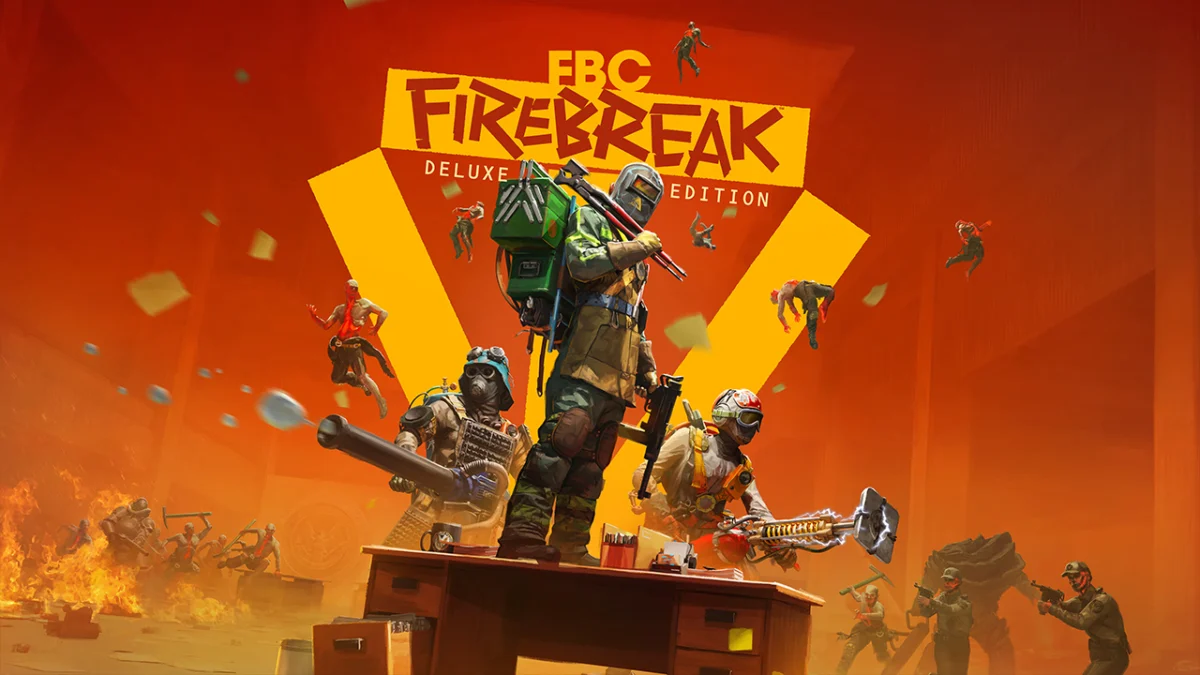
Helsinki, Finland – March 18, 2026 – Remedy Entertainment, the acclaimed Finnish game development studio renowned for its narrative-driven titles, has announced the cessation of major content updates for its cooperative multiplayer spin-off, FBC: Firebreak. Less than a year after its launch on June 17, 2025, the game, which represented Remedy’s inaugural foray into self-publishing and the live-service genre, will transition into a maintenance-only phase. This decision follows a period of commercial underperformance and significant internal restructuring, including a change in leadership at the executive level.
The announcement from Remedy confirms that while new content development will conclude, the studio is committed to ensuring FBC: Firebreak remains online and playable for "years to come." Engineering efforts have reportedly been completed to optimize the relay server infrastructure for sustainable operation, even with lower player volumes. In conjunction with this strategic shift, a permanent price reduction has been implemented, setting the base game at $19.99 and the deluxe edition at $29.99, aiming to enhance accessibility for potential new players. The final content injection, dubbed the ‘Open House’ update, introduces new ‘Endless Shift’ arenas, incorporates gameplay refinements and balance adjustments inspired by the Control universe, and adds a ‘Friend’s Pass’ feature designed to allow existing owners to invite non-owners to their sessions.
Remedy’s Strategic Pivot: A Bold Experiment
FBC: Firebreak was not merely another title in Remedy’s portfolio; it was a significant strategic experiment. For decades, Remedy had cultivated a reputation for crafting critically acclaimed, story-rich single-player experiences like Max Payne, Alan Wake, and most recently, Control. The latter, a breakout success that garnered widespread critical acclaim and a dedicated fanbase, established the Federal Bureau of Control (FBC) as a compelling universe ripe for expansion. FBC: Firebreak was conceived as a "proof-of-concept," an ambitious endeavor to transpose the unique aesthetic and supernatural elements of Control into a cooperative multiplayer framework, diverging sharply from Remedy’s established narrative-focused template.
Crucially, Firebreak also marked Remedy’s first venture into self-publishing. This move was widely interpreted by industry analysts as a play for greater creative control, increased revenue share, and direct engagement with its player base—a common aspiration for many established developers seeking independence from traditional publishing arrangements. This strategic pivot, aiming to diversify their portfolio and tap into the lucrative live-service market, represented a substantial investment in resources, technology, and a new operational philosophy for the studio. The Northlight engine, Remedy’s proprietary technology, was adapted to handle the demands of a persistent online multiplayer experience, a stark contrast to its prior optimizations for linear, single-player narratives.
A Challenging Launch and Subsequent Struggles
Upon its launch on June 17, 2025, FBC: Firebreak initially demonstrated promising technical reach, accumulating over 1 million players within its first ten days. This early metric suggested a considerable initial curiosity for a multiplayer Control experience, perhaps fueled by the brand’s existing popularity and the novelty of Remedy’s new direction. However, this early player acquisition did not translate into sustained commercial success or long-term engagement.
By July 2025, barely a month post-launch, Remedy issued a candid assessment, stating that the title was "underperforming on a commercial level." Former Remedy CEO Tero Virtala elaborated on the challenges, noting, "The game’s initial onboarding experience and mission structure resulted in high early player drop-offs and an influx of negative reviews." This feedback highlighted a critical disconnect between the game’s design and player expectations, particularly for a live-service title that relies heavily on a compelling initial hook and a clear progression path to retain its audience. While Virtala acknowledged that "as players spent more time in the game and we released updates improving the game, sentiment in reviews turned more positive," these efforts were seemingly insufficient to reverse the commercial trajectory. The report also underscored that Firebreak‘s commercial performance was "largely driven by the Xbox and PlayStation subscription service agreements," indicating weak direct sales and a reliance on platforms that provide a lower per-unit revenue share compared to direct purchases.
The challenges faced by FBC: Firebreak were not isolated. The live-service market is notoriously competitive, with a high barrier to entry and even higher requirements for sustained success. Many titles struggle to carve out a niche against established giants and newer, well-funded competitors. Analysts at the time suggested that Firebreak‘s issues likely stemmed from a combination of factors: an identity crisis in blending Remedy’s narrative strengths with multiplayer mechanics, a crowded market, and perhaps an underestimation of the unique complexities involved in developing and maintaining a live-service game. Unlike single-player titles that have a definitive end, live-service games demand continuous content creation, robust community management, and a dynamic meta-game to keep players engaged over months and years.
Financial Repercussions and Executive Overhaul
The commercial difficulties of FBC: Firebreak quickly translated into significant financial pressure for Remedy. A few months after the game’s launch, the studio issued a profit warning, a clear signal to investors and the market that its financial outlook had deteriorated. This direct impact on the company’s profitability underscored the substantial risks associated with high-investment, experimental projects, particularly when self-published.
The underperformance of Firebreak also precipitated a period of significant leadership transition. Shortly after the profit warning, Tero Virtala, who had served as Remedy’s CEO since 2016 and overseen the company’s growth and diversification strategy, departed from his role. His departure, while framed as a mutual decision, was widely seen as a direct consequence of the game’s commercial struggles and the resulting investor dissatisfaction. Markus Mäki, a long-standing executive within Remedy, was appointed as interim CEO. Mäki’s immediate mandate was clear: to "instil a sense of urgency" across the organization, signaling a need for rapid adjustments and a renewed focus on core strengths to stabilize the company’s financial position and restore investor confidence.
Earlier this year, Remedy solidified its new leadership with the appointment of Jean-Charles Gaudechon as its permanent CEO. Gaudechon, an industry veteran with a background at Electronic Arts, took the helm with a stated intention to "scale the company in a way that builds lasting value." His appointment from outside the studio was seen by some as a move to bring fresh perspectives and potentially a more disciplined approach to project management and portfolio strategy, especially concerning live-service ventures.
The ‘Open House’ Update and the Path Forward
The ‘Open House’ update, now released, serves as the definitive final content package for FBC: Firebreak. Its features—new ‘Endless Shift’ arenas, gameplay refinements, and a ‘Friend’s Pass’—reflect a final push to enhance player experience and potentially attract a fleeting surge of new interest before the game settles into its maintenance phase. The ‘Friend’s Pass’ feature, in particular, is a common tactic employed by struggling multiplayer games to leverage their existing player base for organic growth, albeit often as a last resort.
Remedy’s commitment to keeping the servers online for "years to come" is a commendable gesture, preventing a complete abandonment of its player base and preserving the technical investment made in the game. However, without new content, the long-term player retention will inevitably dwindle, reducing FBC: Firebreak to a niche experience for its most dedicated fans. The permanent price drop further solidifies its position as a legacy title, now available at a reduced cost that reflects its altered status in the market.
In a statement accompanying the announcement, Remedy laud the FBC: Firebreak development team for their "passion and experimentation." This acknowledgment, while offering internal support, also serves as a public recognition of the effort despite the commercial outcome, framing the project as a valuable learning experience rather than an outright failure.
Broader Implications for Remedy and the Industry
The trajectory of FBC: Firebreak carries significant implications for Remedy Entertainment and the broader video game industry. For Remedy, the experience serves as a costly lesson in the complexities of diversifying into new genres and self-publishing live-service titles. While the studio’s ambition to innovate and expand its creative horizons is evident, the commercial realities of the market proved challenging.
The incident is likely to prompt a re-evaluation of Remedy’s self-publishing strategy. While the allure of greater control and higher revenue share remains, the substantial financial and operational risks associated with it have been starkly illustrated. Future self-published titles, if any, might adopt a more cautious approach, perhaps leveraging smaller-scale projects or established IP to mitigate risk.
Furthermore, FBC: Firebreak‘s performance will undoubtedly influence the development and strategic positioning of other projects within the Control universe, particularly Control 2 (a traditional single-player sequel) and Codename Condor (another multiplayer spin-off). The lessons learned from Firebreak‘s onboarding issues, player retention challenges, and commercial dependence on subscription services will likely inform the design, marketing, and monetization strategies for these upcoming titles. It may reinforce Remedy’s core strength in single-player narrative experiences while refining its approach to multiplayer elements within its larger connected universe, potentially opting for a more hybrid model or partnering with experienced live-service publishers for future multiplayer ventures.
For the wider industry, FBC: Firebreak‘s story adds another data point to the growing narrative of the challenges inherent in the live-service market. Even established, critically acclaimed studios with strong IP can struggle to find sustained success when venturing into this highly competitive and demanding space. It underscores the importance of not just technical competence and creative vision, but also a deep understanding of player psychology, community building, and long-term content roadmapping—elements that are fundamentally different from those required for crafting compelling single-player narratives. As the industry continues to evolve, developers and publishers alike will continue to weigh the potential rewards of live-service models against the substantial risks and the high bar for success.
About the Author