The high-stakes legal confrontation between gaming giant Rockstar Games and 34 former employees, dismissed in October 2025, has intensified as both parties presented their opening arguments at an employment tribunal in Glasgow, UK. New legal filings, recently obtained by Game Developer from parent company Take-Two Interactive, reveal the sharply contrasting narratives that will define this landmark case, which is expected to conclude on October 16, 2026. The former employees, many of whom are members of the Independent Workers’ Union of Great Britain (IWGB), allege their dismissals were a calculated act of union busting, a claim Rockstar vehemently denies, asserting the firings were due to gross misconduct and severe breaches of confidentiality regarding highly sensitive intellectual property.
The Allegations: A Coordinated Union Busting Effort
The 34 claimants – comprising 31 union members and three non-members across the UK and Canada – have painted a stark picture of a company intent on dismantling nascent unionization efforts. In their opening submissions, the fired workers characterized Rockstar’s decision on October 30, 2025, as nothing less than a "decimation" of its workforce, drawing a historical parallel to the mutiny faced by Julius Caesar at Placentia in 49 BC to underscore the perceived ruthlessness of the action. They argue that Rockstar intentionally targeted key union leaders and active members with the explicit goal of destabilizing the IWGB group, which they contend was on the cusp of achieving significant labor recognition within the company.
A central pillar of the claimants’ case revolves around the timing of the dismissals. They assert that Rockstar only initiated the firings after the union had successfully surpassed the 10 percent membership threshold, a critical milestone required for statutory recognition in the United Kingdom. This timing, they argue, is not coincidental but rather evidence of a deliberate strategy to thwart collective bargaining.
Perhaps the most explosive accusation made by the claimants is the alleged infiltration of their private union Discord server by a company "mole." According to the filings, Rockstar is accused of having planted a junior employee, identified as [RD/p.2535] in the disclosure, within the union’s communication channels as early as February 2024. This alleged informant, under the direction of HR manager and co-studio operations director Charlie Kinloch, is said to have clandestinely monitored union activities, funneling back sensitive information. The filings detail at least 26 meetings or communications between Kinloch and the mole over a 21-month period, roughly half of which were initiated by Kinloch himself. These communications allegedly included screenshots, recordings, reports on union meetings, training sessions, union membership numbers, and the identification of individual union activists.
The claimants’ narrative suggests a rapid escalation in October 2025. As union recruitment efforts intensified and membership numbers sharply increased, the mole reportedly informed Rockstar of this surge. The 10 percent membership threshold was publicly announced on the union Discord server on October 18, and this crucial information was relayed to Mr. Kinloch on October 20 and again on October 22. In a swift response, Abid Ansari, Rockstar’s vice president of information security, reportedly sought access to the server on October 24, inquiring about the archive of screenshots and recordings compiled by the mole. By the evening of October 29, just days after the union announced reaching its recognition threshold, managers were allegedly supplied with lists of employees to be removed. The dismissals began the very next morning, October 30.
The process of dismissal itself is described as abrupt and devoid of due process. Claimants state they were invited to brief "catch-up" meetings without any prior notice or indication of alleged infractions. They were not informed of the specific case against them, nor were they given an opportunity to respond. Pre-prepared dismissal letters, handed over during these meetings, contained only generic allegations, lacking specific wrongdoing or supporting evidence. Employees with years of service and clean disciplinary records were summarily dismissed and immediately escorted from their workplaces.
The immediate aftermath, according to the claimants, saw the IWGB union server collapse, with a significant number of employees departing the platform within days. Many union members reportedly cancelled their memberships out of fear following the ousting of their colleagues. The statement asserts that "Less than two weeks after the 10 percent threshold had been crossed, the Respondent had not only removed much of the union’s organising cadre from its workforce but, though fear, had achieved a reduction in membership to ensure that the 10 percent level would not be reached in the near future or at all." This, they contend, demonstrates a clear intent to stifle union activity and prevent its statutory recognition.
Rockstar’s Defense: Upholding Confidentiality Amidst Security Threats
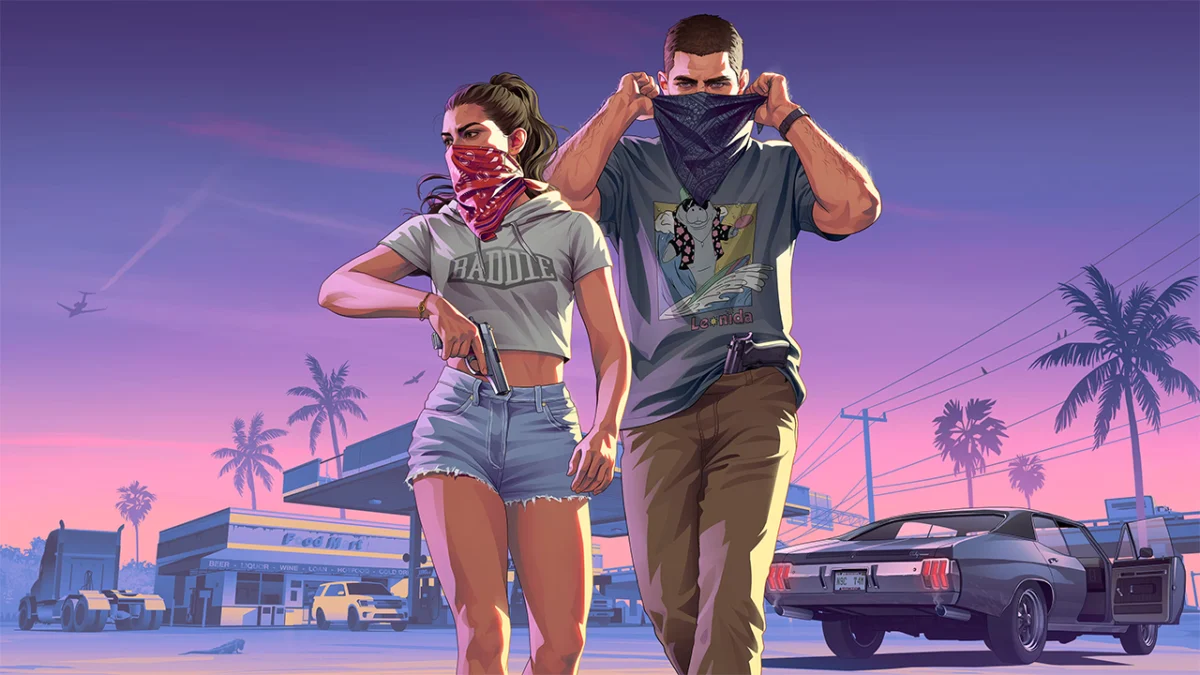
In stark contrast, Rockstar Games, identified as the Respondent, staunchly maintains that the firings of all 34 workers were a direct consequence of misconduct, specifically breaches of the company’s stringent confidentiality policies. Rockstar’s opening note frames the company as "hypervigilant" regarding its intellectual property, emphasizing an "embedded culture of confidentiality" essential for protecting highly valuable trade secrets. The studio asserts that the design frameworks behind upcoming titles, such as the eagerly anticipated Grand Theft Auto VI (GTA VI), are as proprietary and commercially vital as the secret formula for Coca-Cola or the blueprint for Apple’s iPhone.
"Guarding the secrets of the unique gameplay and design [of GTA VI] are akin to Apple protecting the iPhone or Coke protecting its formula. Information about new game features or development must not become public before release date," the filing states. Rockstar argues that its employees, particularly those working on "highly sensitive and important systems," are well aware of this stringent culture of confidentiality. The company positions itself as operating with a security posture comparable to a "Wall Street bank," with standards and expectations "exponentially beyond that of most employers."
Rockstar underscores the constant threat it faces from external security breaches. The company claims it is subject to "regular assaults on its security and systems," including attempts to photograph through office windows using drones, online harassment of staff, and sophisticated phishing and social engineering attacks designed to trick employees into revealing login credentials. These threats are not merely theoretical; the filing explicitly references a successful 2022 leak of dozens of videos depicting unfinished development footage of GTA VI, obtained through a phishing attack that granted a hacker access to an employee’s computer and, subsequently, to internal Slack communication channels. This incident, Rockstar argues, resulted in damaging press coverage and billions being wiped off Take-Two Interactive’s share value, reinforcing the necessity of their "hypervigilant" stance.

Central to Rockstar’s defense is its condemnation of Discord as an inherently vulnerable platform. The company notes that Discord was blocked by its own internal security systems and was being accessed by the claimants on their personal devices, outside the controlled environment of company infrastructure. To illustrate its concerns, Rockstar employs a vivid metaphor, likening the digital space of Discord to a series of physical rooms:
- Room A: Described as a small, locked room for IWGB Union Committee members only, or specific working groups. Rockstar claims it had no access to this room at the time of the dismissals and only saw its contents when ordered to disclose them on August 3, 2026.
- Room B: A larger room open to any IWGB members for union-related messages. Again, Rockstar asserts it had no access to this room at the time of the firings and was unaware of its contents or participants.
- Room C: This "huge" room is the primary focus of Rockstar’s concerns. When Rockstar "gained access to it in October 2025," it reportedly contained almost 350 people, including the claimants. The company highlights the anonymity afforded by online aliases, likening it to "walking into a room where some people are identifiable but hundreds are wearing masks."
Rockstar’s filing claims ‘Room C’ was populated by not only current employees but also former employees, competitors, and even a journalist. Within this "room," the company alleges that a "huge quantity of information" was being exchanged by the claimants, including "candid" discussions about game features. Rockstar argues that ‘Room C’ was "surrounded by doors" that could be used by inhabitants to funnel this sensitive information out into the public domain, posing an immense risk to intellectual property.
Furthermore, Rockstar asserts that the fired workers were "openly and vituperatively disparaging and defaming" both Rockstar and its parent company, Take-Two. The filing provides direct quotes from these communications, including derogatory terms used to describe managers ("cunt," "arseholes," "narcissistic," "abusive," "bastards") and the company hierarchy ("cowardly corporate fucks"). HR announcements were mocked, management was told to "get fucked," and the company was derided as "structurally cracking," "sliding downhill into corporate hell," and having "overspent its budget," with investors allegedly "losing confidence." Rockstar argues that "At any moment a screenshot or forwarding of any one of these messages by any one of the 350 users, or the publishing of an article about them by the journalist, could have generated enormously damaging publicity and hit market confidence and the Take-Two share price."
Rockstar concludes its defense by stating that the dismissals were a direct result of an "irretrievable breakdown in trust and confidence" caused by these incidents, rather than any anti-union sentiment. As proof, the company points out that three non-union members based in Canada were also fired for engaging in similar misconduct within the same union Discord server, demonstrating that the firings were based on actions, not union affiliation.
A Chronology of Contention
The timeline of events, as pieced together from both filings, outlines a tense escalation:
- February 2024: Alleged placement of a "mole" (RD/p.2535) by HR manager Charlie Kinloch within the union Discord server, initiating clandestine monitoring of union activities.
- February 2024 – October 2025: Over 21 months, at least 26 meetings or communications reportedly occurred between Kinloch and the mole, with the latter supplying screenshots, recordings, and information on union meetings, training, membership, and activist identities.
- October 2025 (Early): Union recruitment efforts reportedly accelerate, leading to a sharp increase in membership.
- October 18, 2025: The IWGB union publicly announces on its Discord server that it has reached the 10 percent statutory recognition threshold in the UK.
- October 20-22, 2025: Information regarding the 10 percent threshold being met is reportedly relayed to Charlie Kinloch.
- October 24, 2025: Abid Ansari, Rockstar’s VP of Information Security, allegedly seeks access to the union Discord server and inquires about the compiled archive of screenshots and recordings. He subsequently obtains content from the server’s "Announcements" and "General" channels.
- October 29, 2025 (Evening): Managers are reportedly supplied with lists of employees designated for dismissal.
- October 30, 2025: Rockstar fires 34 workers (31 union members, 3 non-union) across the UK and Canada, citing gross misconduct and confidential information leaks.
- Immediately Post-Dismissals: The IWGB union server reportedly "collapses," with a significant reduction in membership due to fear.
- August 3, 2026: Claimants are ordered to disclose the contents of "Room A" (committee-only Discord channel) to Rockstar.
- September 11, 2026: Legal filings outlining both sides’ arguments are publicly revealed as the employment tribunal proceeds.
- October 16, 2026: The employment tribunal hearing in Glasgow, UK, is expected to conclude.
Broader Industry Context and Implications
This case unfolds against a backdrop of increasing unionization efforts across the global video game industry. Historically characterized by intense "crunch" periods, precarious employment, and high turnover, the sector has seen a growing push for workers’ rights. Recent years have witnessed notable successes, such as the ratification of a historic contract for 1,900 employees at Blizzard following its acquisition by Microsoft, and union recognition at ZeniMax Studios. These developments highlight a broader movement seeking to address long-standing labor concerns. The Rockstar case, involving a company renowned for its blockbuster titles and substantial financial success, represents a critical juncture for this nascent unionization trend.
The outcome of this tribunal could set a significant precedent, not only for the game industry but for the wider tech and creative sectors. If the claimants’ allegations of a targeted union-busting campaign are upheld, it could embolden labor organizers and lead to increased scrutiny of corporate practices regarding employee surveillance and the treatment of unionizing workforces. Conversely, a ruling in favor of Rockstar could reinforce employers’ rights to enforce strict confidentiality policies and could be interpreted as a cautionary tale for employees using informal communication channels, even for union activity.
The case also brings into sharp focus the complex interplay between intellectual property protection, employee privacy, and the right to organize in the digital age. Companies like Rockstar, with multi-billion-dollar franchises and highly anticipated releases like GTA VI, operate in an environment where even minor leaks can have catastrophic financial consequences. This creates a powerful incentive for stringent security measures. However, the methods employed to protect IP, particularly when they involve alleged surveillance of private employee communications, raise fundamental questions about ethical boundaries and legal protections for workers. The interpretation of platforms like Discord, as "physical rooms" with varying levels of access and anonymity, could influence how digital communication in the workplace is viewed in future legal disputes.
The Road Ahead
As the tribunal continues its proceedings in Glasgow, both sides are poised for a protracted and intensely scrutinized legal battle. The intricate details surrounding the alleged "mole," the specific content shared on Discord, and the precise sequence of events leading to the dismissals will be meticulously examined. The tribunal’s decision will undoubtedly resonate far beyond the confines of Rockstar Games, shaping the future landscape of labor relations, digital communication policies, and intellectual property enforcement within the dynamic and ever-evolving global video game industry. The world watches to see if "justice at last feels within reach," as some fired workers expressed, or if the "irretrievable breakdown in trust and confidence" will be legally affirmed.
About the Author